You’re out of free articles.
Log in
To continue reading, log in to your account.
Create a Free Account
To unlock more free articles, please create a free account.
Sign In or Create an Account.
By continuing, you agree to the Terms of Service and acknowledge our Privacy Policy
Welcome to Heatmap
Thank you for registering with Heatmap. Climate change is one of the greatest challenges of our lives, a force reshaping our economy, our politics, and our culture. We hope to be your trusted, friendly, and insightful guide to that transformation. Please enjoy your free articles. You can check your profile here .
subscribe to get Unlimited access
Offer for a Heatmap News Unlimited Access subscription; please note that your subscription will renew automatically unless you cancel prior to renewal. Cancellation takes effect at the end of your current billing period. We will let you know in advance of any price changes. Taxes may apply. Offer terms are subject to change.
Subscribe to get unlimited Access
Hey, you are out of free articles but you are only a few clicks away from full access. Subscribe below and take advantage of our introductory offer.
subscribe to get Unlimited access
Offer for a Heatmap News Unlimited Access subscription; please note that your subscription will renew automatically unless you cancel prior to renewal. Cancellation takes effect at the end of your current billing period. We will let you know in advance of any price changes. Taxes may apply. Offer terms are subject to change.
Create Your Account
Please Enter Your Password
Forgot your password?
Please enter the email address you use for your account so we can send you a link to reset your password:
On U.S. nuclear exports, German green H2, and SpaceX

Current conditions: Aside from tides up to two feet above average on Staten Island and Long Island, the powerful nor’easter barreling toward the East Coast is likely to spare New York City • Tropical Storm Nolo is set to hit Hawaii with a potentially historic multi-day deluge • Hurricane Polo is slamming into Mexico’s Pacific coast with dangerous swells and heavy rain.
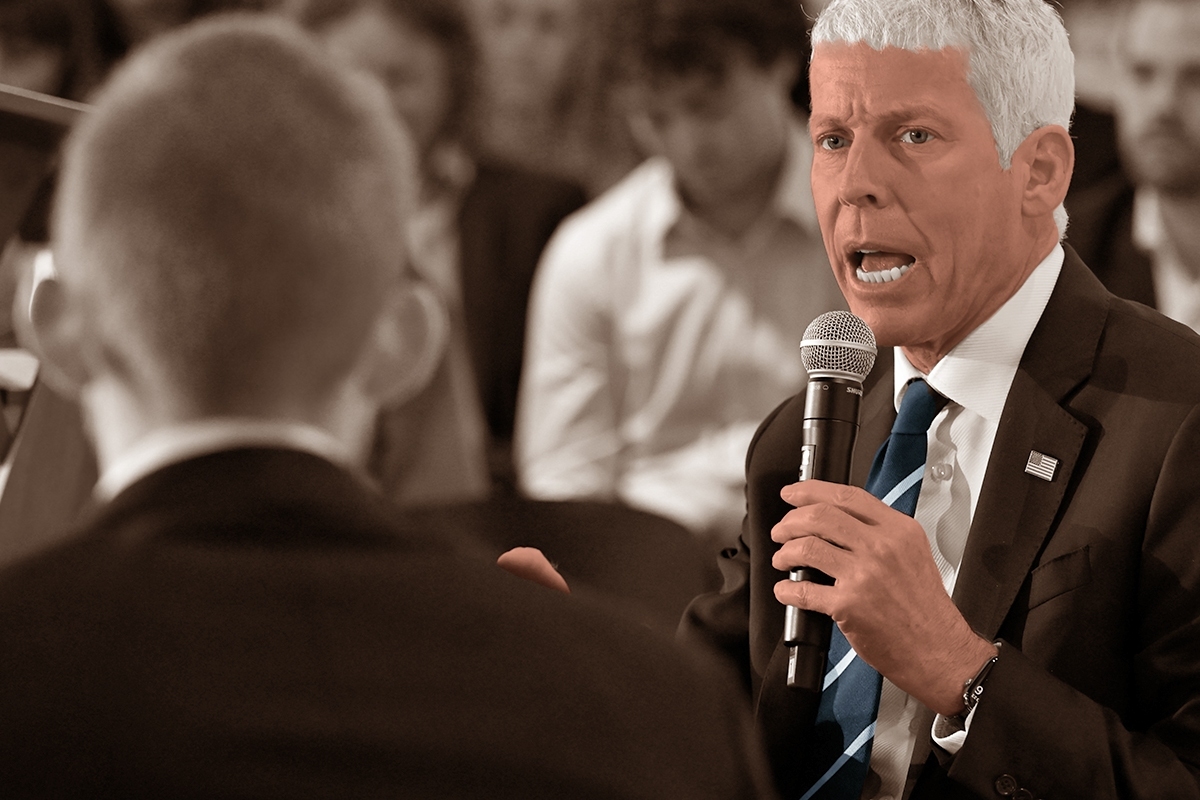
On Tuesday, President Donald Trump told reporters he had “called for” halting exports of diesel as prices roared to record highs amid a shortage of refining capacity to produce the fuel. On Wednesday, Politico reported that the administration was “preparing” a 90-day export ban. When Secretary of Energy Chris Wright took the stage at Heatmap House, our day-long summit on Wednesday in Midtown Manhattan, he told our executive editor Robinson Meyer that — contrary to the previous comments — the president “didn’t endorse” an export ban. “We are open to any ideas to lower energy prices for Americans,” Wright said at our annual event for New York Climate Week, essentially the amuse bouche before the United Nations climate summit in November. “We have a continual, thoughtful dialog based on the facts on the ground of what are the most practical steps moving forward, and it looks like right now we do need to grow the diesel supply in the United States.”
Former Vice President Al Gore, meanwhile, injected some optimism into the discussion about decarbonization. Reflecting on how climate discourse had evolved since the release of his famous film An Inconvenient Truth 20 years ago, he said booming electric vehicle sales and a global shift to renewables and nuclear power spurred by the energy shock from the war in Iran showed that “these are signs that this thing is really moving into high gear.” He added: “The fossil fuel industry is losing. They know they’re losing, and they’re trying to slow down how quickly they lose.” Yet perhaps one of the best hopes for speeding up deployment of more clean energy dimmed last night when Punchbowl News reported that increasingly bullish talks on permitting reform may be tanking. “The administration and congressional Republicans agreed to a strong bipartisan offer. The Democrats have since refused to take yes for an answer. If they think that the administration is going to freeze these concessions until the lame duck, they are severely mistaken,” a White House official told the outlet.

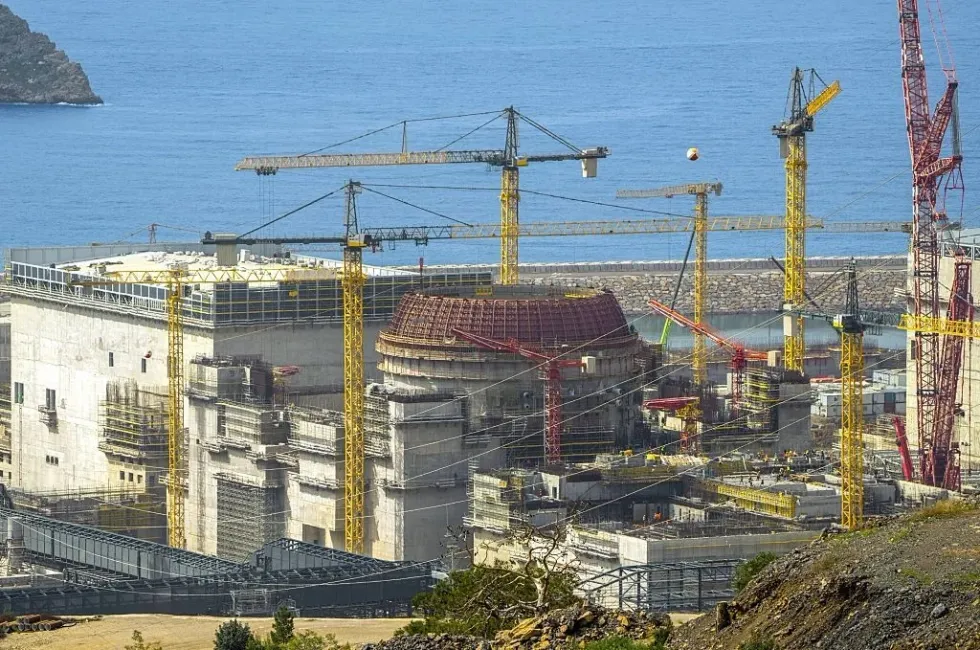
Later in the afternoon yesterday, I scurried off to the New York Nuclear Symposium, the annual conference organized by the advocacy group Nuclear New York. In the august halls of the New York Bar Association on 44th Street, policy experts and executives debated exactly what was needed to shift the excitement over atomic energy into actual projects with shovels in the ground. While some doubts persisted over how quickly anyone would commit to new fission plants in the U.S., at least beyond the various first-of-a-kind projects currently under development, the American government charged forward with export deals. Earlier this week, the U.S. Trade and Development Agency announced a partnership with Turkey to build as much as 5 gigawatts of small modular reactor power in the country. On Thursday, NucNet reported that Poland’s national nuclear company had reached a deal with the U.S. developers Bechtel and Westinghouse on the commercial terms for the European nation’s first atomic power station, a trio of Westinghouse AP1000s on the Baltic sea.
Meanwhile, the South Korean project manager and builder Samsung C&T unveiled new deals with two SMR companies in the U.S. The company pledged $100 million toward building the next-generation reactors designed by Google-backed Kairos Power. A day later, the company signed onto projects involving GE Vernova Hitachi Nuclear Energy’s 300-megawatt reactor, based on a traditional water-cooled design.
Enhanced geothermal leader Fervo Energy announced Thursday morning that it had shipped the first megawatts to the grid from its flagship Cape Station project, nearly three years to the day after breaking ground at the site. The facility in Beaver County, Utah marks a significant scale-up from the company’s earlier Project Red, located in the Blue Mountain geothermal field of Nevada, which began supplying 3.5 megawatts of electricity to the grid in 2023. Cape Station, by contrast, is the company’s first greenfield project. Phase I of the facility consists of three 33-megawatt units, the first of which has begun ramping up, while the remaining two are expected to reach commercial operations by 2027. “I could not be more proud of the years of hard work from Fervo’s employees, investors, suppliers, customers, and partners, which brought us to this moment,” Fervo CEO Tim Latimer said in a statement. “We are just getting started.”
Sign up to receive Heatmap AM in your inbox every morning:
Last month, my colleague Emily Pontecorvo and I reported on the Department of Commerce’s latest import levies on polysilicon, the main ingredient in most solar panels. The restrictions were designed to keep out cheap, subsidized competition from Chinese companies. But the nearly four-month delay in the policy’s implementation opened the door to companies stockpiling foreign-made reactors. To avoid that, the Commerce Department’s Bureau of Industry and Security has issued a temporary rule explaining how it will monitor imports, Solar Power World reported. Starting December 4, polysilicon components in a panel such as wafers, cells, and the finished rigs themselves will have a 15% tariff.
“Flooding the U.S. market with large volumes of imported products is a strategy that companies abroad have long used to undermine American manufacturers,” Andy Park, the global chief executive officer of Hanwha Qcells, said in a statement. “We have repeatedly seen import volumes surge ahead of the implementation of significant U.S. trade or industrial policies, as companies seek to exploit loopholes and gain an unfair advantage before new measures take effect.”
“When it comes to fuels, we have plenty of options, but nothing has hit the jackpot.” That’s what Ernest Moniz, former President Barack Obama’as energy secretary, told me yesterday morning on stage at a Climate Week breakfast hosted by his nonprofit, the EFI Foundation. Just 21% of the world’s end-use energy comes from electricity, meaning 79% comes from molecules — mostly natural gas and oil. The point Moniz, a Massachusetts Institute of Technology-trained physicist, was making was that we need to take green fuels such as hydrogen and biodiesel more seriously. “My bet for scalability is some or multiple colors of hydrogen,” referring to the rainbow of names that denote how hydrogen fuel is produced. Hours later, Hydrogen Insight reported that the German energy giant Uniper had signed “one of the largest” offtake deals ever for aviation fuel made with green hydrogen. As part of the deal, the Düsseldorf-based firm will buy 40,000 metric tons of green fuels for at least the next decade.
The New York State Research and Development Authority announced awards for eight energy storage facilities and 13 large-scale renewable projects on Wednesday, totaling $3.7 billion in private investment. Combined, the projects are expected to pump out 1.7 gigawatts of power. “These newly-contracted large-scale energy projects not only further the growth of clean energy and more than double the utility-scale energy storage that exists currently statewide — but they contribute to New York’s comprehensive, all of the above energy strategy,” Doreen Harris, NYSERDA’s chief executive, said in a statement. “This will help reduce costs for New York ratepayers while continuing to improve the reliability of our state’s grid.”

Log in
To continue reading, log in to your account.
Create a Free Account
To unlock more free articles, please create a free account.
Tales from a day of “thoughtful dialogues on energy, climate change, and human lives” on Day 3 of New York Climate Week.
“I’m here because I love thoughtful dialogues on energy, climate change, and human lives,” Energy Secretary Chris Wright told my colleague Robinson Meyer this afternoon. “That’s been a passion my whole life, and nothing will change that.”
It’s our passion too — and was a defining theme of Heatmap House on Wednesday at New York Climate Week, with 27 sessions across topics including clean energy development, U.S. climate policy, the future of mobility, climate tech, and reindustrialization. From Wright backpedaling on President Trump’s embrace of a diesel export ban to former Vice President Al Gore asserting that 2026 might mark “the positive tipping point on climate,” it was a full day of news, contrarian opinions, juicy predictions, and lots and lots of coffee (consumed by yours truly).
Early in the day, Carlos Araque, the CEO and co-founder of Quaise, an advanced geothermal company, started things off by addressing the elephant in the room: potentially imminent movement on permitting reform. “It’s always easy to be picky and want for more,” he acknowledged, although he added that “my ask has always been — as far back as 2018 — if you can do for geothermal what you do for oil as in terms of regulatory permitting exclusions, then you’re moving 90% of the way to the goal. So that’s happening — that’s slowly and surely happening.”
Get Heatmap in your inbox daily.
New Jersey Governor Mikie Sherrill also spoke about permitting reform at a local scale. “You cannot simply say to people, ‘Sorry, your bills are just going to keep skyrocketing,’” she stressed. “That is not the answer, which is why we’ve acted so aggressively. I approved 18 solar and battery storage projects in the first six months [of my term]. We knew the federal credits were going to run out if we did not get that done, so that’s why we had to take on permitting reform right away to make sure we were growing that.”
And while Jane Flegal, the principal at Flegal Energy Advisors, didn’t have any secret insight into the potential deal, she broke down her predictions into three buckets: reforms to conventional environmental statutes such as the National Environmental Policy Act, the Clean Water Act, and the National Historic Preservation Act; transmission, “which, no one knows what’s in there, but we all know what was in the Manchin deal, and I think we can and should expect something at least that ambitious;” and permitting certainty, which would constrain executive power to cancel permits after they’ve been issued.
Chris Hayes, the host of All In with Chris Hayes on MS NOW and a former climate reporter, took the stage just after Gore, who marked the 20-year anniversary of his Academy Award-winning documentary An Inconvenient Truth. Like Gore, Hayes was in a reflective mood. “I think to some degree, we’re kind of moving forward in this understanding that all of us are implicated in the system that’s going to change very slowly over time,” he said, calling it one of the lessons of the past 20 years. “But I think there was a high-water mark of consumer activism that is sort of gone.”
Then, of course, there was Wright. The energy secretary — whom climate insiders have described to us as the biggest climate villain in the Trump administration after Trump himself — talked to Rob about as many fuels as they could cover. Wind: “There have been very spirited dialogues in the administration about this. I do believe a successful permitting reform thing changes the playing field for anything you want to build in this country, including wind.” Nuclear: “Our thing is just to try to get it back on its feet and get out of the way.” Natural gas: “Gas in my lifetime is going to be the American energy superpower for sure, but you never want all your eggs in one basket.” Batteries: “I’m all in.” And EVs: “Should we have the broader America subsidizing, you know, the habits of wealthy people? I don’t think we should.”
Electric vehicles also came up in our mobility session, of course, along with other forms of mobility including ferries, subways, and rail. “It’s not something we talk about very much in the U.S.,” Laura Fox, the co-founder and managing partner of Streetlife Ventures, told me, adding that “we have a really great rail freight network that is underutilized and that typically saves shippers 30% to 40% when they’re shipping goods in the current environment.” (Representative Mike Levin of California also shared that if he could only connect two places in his proposed giant high-performance rail system, “I’d like to see the line between Los Angeles and San Diego solidified.”)
The evening wrapped with a focus on reindustrialization. Tom Steyer, the co-executive chair of Galvanize Solutions, told us he’s doing fine after his unsuccessful bid for California governor. (Nothing a trip to Tahoe with the family couldn’t cure.) He also shared that the climate movement may have lessons for the modern movement opposing AI and data centers. The world’s richest companies can’t just “come in and take people’s water, especially at a time when people are so water insecure,” he stressed. “How could that possibly be right?”
AI — and water — also came up in conversation with Emilio Tenuta, the senior vice president and chief sustainability officer of Ecolab, which provides industrial and commercial water and hygiene solutions. (Ecolab also sponsored our reindustrialization section.) He argued that “what we really need to focus on is the Water Efficiency Index” when evaluating, for example, semiconductor fabrication plants, because it contextualizes water use in more absolute terms than traditional metrics.
Page Crahan, general manager of Tapestry, an Alphabet X moonshot project that uses AI to develop a model of the grid’s electricity network, zeroed in on how best to use artificial intelligence. “We had 10 years to build what it took us 110 years to build globally” in order to meet anticipated energy demand, she told my colleague Jael Holzman. “And that was in 2023, before data centers.” For “computationally intensive challenges, data-heavy challenges, and certainly running simulations and insights for a system this size,” AI is a good use case, she said.
Tapestry is using its models in partnership with PJM Interconnection (as we’ve covered here at Heatmap) — and speaking of PJM, its executive director of strategic policy and external affairs, Asim Haque, spoke to my colleague Matthew Zeitlin next. “If you do not bring your own new capacity, we are going to curtail you before we curtail your average residential consumer for sure,” he said, adding, “this is a concept that is pending in front of the FERC right now. We can talk about carrots. We can talk about sticks. I don’t know which one this is. I think from the data center perspective, it’s likely a stick.”
Josh Parker, the head of sustainability at Nvidia, rounded the day out on a positive note. “The good news is, we are very quickly unlocking new capacity with clean energy,” he said, including developing new clean energy technologies like advanced fission and geothermal. “All of these technologies are benefiting from AI, and so that, coupled with the fact that data center operators with AI factories generally are some of the largest consumers of clean energy and are still are looking for all the clean energy they can, leads me to believe — and I think this is the most credible forecast — that very soon we’re going to see all of that convert over to clean as soon as we can get through the supply constraints that we’re currently in.”
If you were with us in person, thank you again. You’re what made our event one to remember. And if you weren’t able to join us this year — we hope to see you in 2027.
But wait! Before I send you on your way, you can find all of our coverage of the day below along with some additional quotes from some of my favorite conversations:
The Commonwealth Fusion Systems CEO made his case at Heatmap House.
Without billions in new federal investment the United States may lose its pole position in the global race to be the first nuclear fusion superpower, Commonwealth Fusion Systems CEO Bob Mumgaard told attendees at Heatmap House in New York City.
When asked onstage whether Commonwealth Fusion could still develop its fusion aspirations at scale without U.S. government financing, Mumgaard said: “I think so – it’s a question of the timing and the place.” Then he suggested that the company — and the industry — might go elsewhere if the country doesn’t put more capital into the growing sector. “There are offers on the table to build nuclear fission power plants not in the United States, so we can do that.”
You’d be forgiven if you thought Commonwealth and nuclear fusion was already doing well. The Massachusetts-based pioneer in fusion technologies raised $1 billion in new investment just a couple months ago. Generally speaking, innovation in nuclear power is incredibly popular in Congress, which has an influential bipartisan Fusion Energy Caucus. Commonwealth has received public support from the Trump administration’s Energy Department, as has one of the Heatmap House sponsors, Inertia.
But we’re talking about nuclear fusion, a still-futuristic form of energy generation seeking to harness the power of stars exploding in contained environments. It’s an insanely promising tech moonshot.
Mumgaard said the company is aiming for its tech to provide electrons onto the grid by the 2030s. He also said a Fusion Industry Association request to Congress and the Trump administration for $10 billion of investment might be what’s needed for that power to be American first.
“We debated that [amount] with the industry association, and you have to say what gets the job done. It’s a disservice to lowball what’s needed,” he told my colleague Katie Brigham. “This is a very important thing. It’s an entirely new industry. Let’s treat it as such.”
He added his view that U.S. fusion development is essentially an energy security maneuver, and that competition with China on fusion should be seen as parallel to the race for dominance in artificial intelligence.
“Think about what it means in a technological race. Power is the thing that powers the next economy, right?” Mumgaard said. “All the geostrategic strife we have right now is about power in the form of natural resources. Who has them? What are they? What boats are they on through what body of water? Fusion takes all of that off the table.”
Representative Mike Levin, It’s Electric, Rivian, and more showed up for the mobility session at Heatmap House.
On the surface, the climate case for electric vehicles is simple: Battery-powered cars can eliminate our need to burn dirty gasoline and diesel, and as more renewables come onto the grid, they’ll only run more and more cleanly. But the benefits that can be gained from electrifying the vehicle fleet run far deeper, a case that a variety of speakers made at Heatmap House on Wednesday as part of New York Climate Week.
Andrew Peterman, director of advanced energy solutions at the EV maker Rivian, explained how electric vehicles are becoming a multi-tiered grid solution. Rivian itself is cooperating with drivers and utilities to create automatic smart charging so that EVs can charge when energy is abundant and inexpensive, saving the user money — in some cases as much as $1,000 per year — and easing strain on the grid. Doing so helps to keep electricity prices down, which is good for the country and for the bottom line of an electric vehicle maker.
“Our ability to sell and give people value out of an electric vehicle can only be enabled if we transform the grid to be able to be affordable, reliable, and cleaner for everyone,” Peterman told Heatmap deputy editor Jillian Goodman. “We need to use our role in the energy system to enable customers to get more value out of the grid. So everything we do is about grid transformation to enable electric vehicles to have an even stronger and stronger value proposition. When we bring down electricity costs, that brings down the total cost of ownership for our vehicle owners.”
Of course, energy can go in the other direction, too. Now that millions of EVs are on the road, the multitude of kilowatt-hours stored in EV batteries can be a grid asset. That goes for vehicle-to-grid integration, where EVs can discharge energy to help balance the grid when they’re not driving. But it’s an especially compelling proposition when those batteries get older and are no longer optimal for powering vehicles. Rivian is working with partners such as Redwood Materials to recycle old EV batteries and to repurpose some as grid storage. The same is true at Waymo, whose fleet of autonomous, only-electric rideshare vehicles have racked up hundreds of thousands of miles in some cases.
“Our fleets are sometimes outlasting our batteries where they still work, but they’re just not optimal for the ride-hailing fleet,” Waymo head of environment and sustainability Adam Lenz told Nico Lauricella, Heatmap’s CEO and editor in chief. “So we’re taking those batteries out, refreshing them, and then there’s still a lot of life left on this battery. We’re working with a partner that’s based out of L.A. County where we provide service and they’re deploying those batteries to support front of the meter grid storage.” (Waymo is also a sponsor of Heatmap House.)
It’s clear that the rideshare economy will be dominated by electric vehicles, and Lenz argued that this fact helps extend the climate benefits of electrification and autonomy to people who don’t want to drive or have been priced out by the upfront costs of an EV. The promise that self-driving cars will ultimately be much safer compared to those driven by fallible humans makes it safer to walk or bike, the most sustainable transportation methods. Waymo recently introduced a partnership with Visa to give San Francisco Bay Area riders a $2.85 Waymo account credit (the price of a bus ride in S.F.) when they combine a rideshare trip with a train or bus linkup to create a mulit-modal journey — a roundabout way to create “free” buses.
Across the country, EV charging could help give New York City not only cleaner skies but also improved grid management. The city’s Green Ride Initiative is meant to have New York’s taxi and rideshare trips be majority-electric by 2030, yet NYC has been a charging desert compared to other dense cities like London. Tiya Gordon, co-founder and COO of charging company it’s electric, came to Heatmap House to discuss her company’s recent win of a contract to install 700 new street chargers in New York, which has only 88 today.
It’s not just how many chargers are going in, she said, but where — the majority will go into neighborhoods in Brooklyn and Queens where rideshare drivers live and park their cars overnight. Albert Gore, executive director of the Zero Emission Transportation Association, added: “It makes a lot of sense also when you think about the impact to the grid. If you are directing a lot of that charging at night, particularly for these high mileage use cases, that actually puts downward pressure on electricity rates. EVs are a very, very flexible load.”