The Fight

Sign In or Create an Account.

By continuing, you agree to the Terms of Service and acknowledge our Privacy Policy

Hotspots

The Renewables Battle Underway in Arizona

And more of the week’s top fights around development.

The United States.
Heatmap Illustration/Getty Images

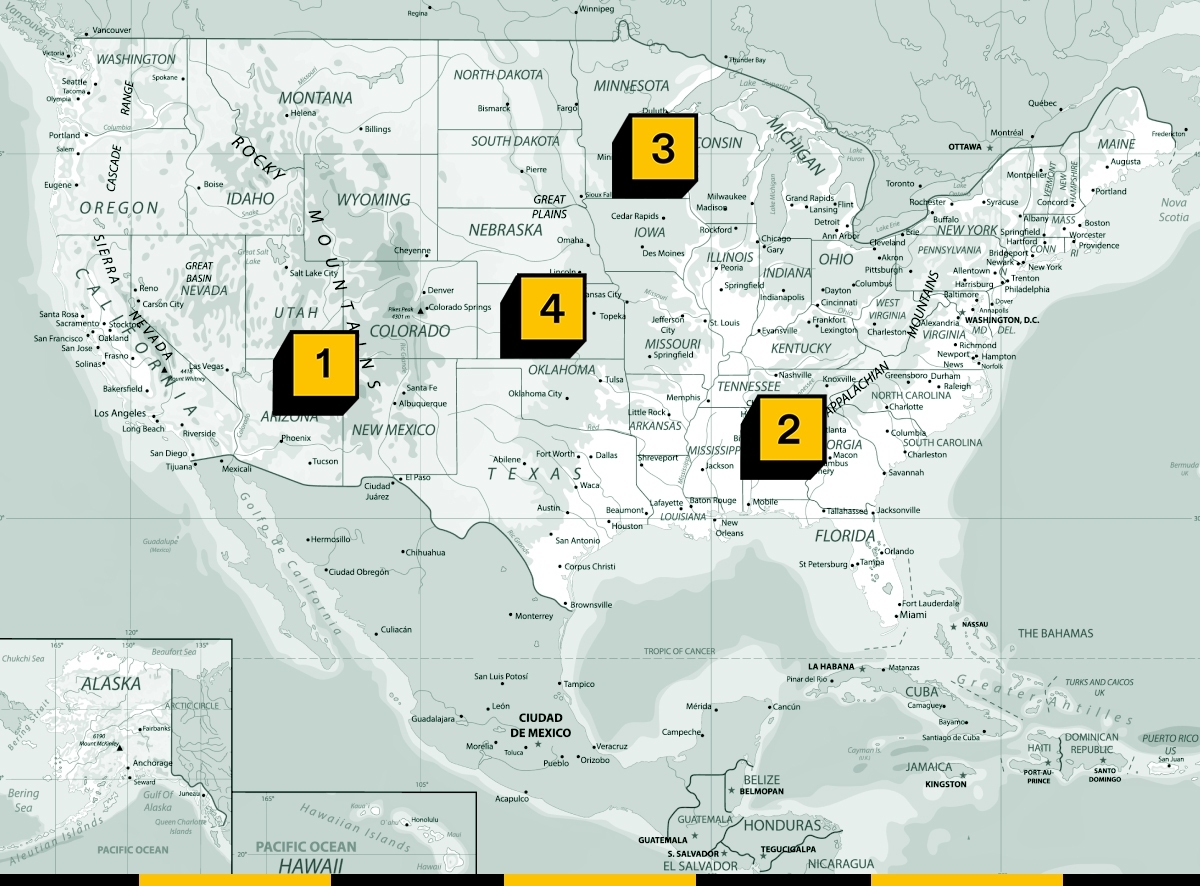
1. Apache County, Arizona – Renewables developers are trying to head off restrictions in a coveted region of the sun-swept Arizona desert.

  • I’ve detailed how this county is a crucial battleground in the fight over local restrictions on renewable energy. So profound the conflict has been over renewables in Apache County that it helped spur a failed campaign to enact a statewide pause on wind development.
  • Well, the next engagement is underway: On June 3, the Apache County Planning and Zoning Commission recommended a temporary moratorium on future solar and wind development, responding to resident-run campaigns against specific projects.
  • I’ve noticed large advocacy non-profits have begun running hyperlocal letter campaigns to the Apache County Board of Supervisors asking pro-renewables voices to weigh in against the moratorium. Arizonans for a Clean Economy is running a sponsored ad on Google, resulting in a letter campaign popping up if you search renewable energy and the name of the state. “Send a letter today and ask your Supervisor to support policies that unleash Arizona’s energy potential while keeping costs low, conserving our water, and creating energy independence for Apache County,” their letter-writing website states.
  • Meanwhile, Veterans Power America, a national organization, is asking people to tell the board: “Clean energy projects can bring new revenue and economic opportunity to Apache County for Veterans like us. Don’t shut the door on progress.” (For what it's worth, I learned of this ad from anti-wind activists complaining about it on Facebook.)
  • What happens now is a procedural waiting game. The county will now go through a public notice and comment process ahead of formal consideration of the planning and zoning commission’s recommendations. While a decision isn’t imminent, I will be watching this one like the area’s sharp-shinned hawk.

2. Montgomery County, Alabama – A so-called “AI watchman” has won the GOP nomination for Alabama Public Service Commission, indicating how deeply frustrations run in red states against the nascent infrastructure buildout for artificial intelligence.

  • Former state auditor Jim “Zig” Zeigler won a runoff for the nomination on Tuesday, defeating incumbent commissioner Chris Beeker. Zeigler, a public critic of data centers and renewable energy projects, won the nomination by at least 8,000 votes according to public reporting.
  • Zeigler ran a campaign critical of the PSC’s decision to approve the power agreement for Silicon Ranch’s solar project in Stockton – the proposal that motivated a now defunct push to ban new solar across the state. As I’ve previously explained, that solar farm is often considered linked to Meta’s data center buildout in the Montgomery metro area to the north.
  • “Alabama has been targeted by massive data centers and solar farms. They can ruin your community, consume water, and drive your electric bills up. No one in Montgomery is overseeing this,” Zeigler said in an election ad spotlighted on his campaign website. His slogan? “Your watchman.”
  • This is quite significant for many reasons. Of course, Zeigler’s now likely to win the Public Service Commission seat and then have a decision-making role in state energy policy. Nationally, this is a bellwether for future success should Republicans seek to win primary campaigns against energy regulators by bashing past decisions on data centers and renewable energy.

3. Goodhue County, Minnesota – The mayor of a small city at the center of a significant data center conflict abruptly resigned, indicating further municipal dominoes will fall because of the AI data center backlash.

  • David Friese, mayor of Minnesota city Pine Island, stepped down from his post this week shortly after work on a large hyperscale data center – Google’s Project Skyway – was halted under court order. The legal edict resulted from litigation filed on behalf of nearby landowners by Minnesota Center for Environmental Advocacy, which argued Skyway was not properly reviewed by the city.
  • The brief statement did not address data center development but noted the position would be “open for election in 2026.” Temporarily a sitting city councilor, Vernon Pahl, will hold the position until a successor is chosen by the city government.
  • Of note: the data center debate in Pine Island has grown so intense that city officials instituted a new public input decorum rule asking for “no name-calling.” Let’s see how long that stops them!

4. Reno County, Kansas – We close this week’s Hotspots with a county rejecting a data center moratorium.

  • This week commissioners in this rural Kansas county said no to saying no, voting down a proposed temporary ban on data centers and battery storage facilities. Richard Winger, one of the county commissioners, compared the idea to banning railcars from passing through their area because of hypothetical harms, noting there are no large-scale data centers being proposed in the county.
  • “You want to ban this because it has a very minute chance for danger, when we have 20-to-30 trains go through this town on a regular basis,” Winger said at the vote, per local reports. “We had a derailment not too long ago. Luckily it wasn’t hauling anything hazardous.”
  • I think we’re going to see more Wingers pop up in the coming weeks and months ahead as the backlash to AI data centers starts to foment its own backlash.
Yellow

This article is exclusively
for Heatmap Plus subscribers.

Go deeper inside the politics, projects, and personalities
shaping the energy transition.
To continue reading
Create a free account or sign in to unlock more free articles.
or
Please enter an email address
By continuing, you agree to the Terms of Service and acknowledge our Privacy Policy
Spotlight

Wind Industry Goes for Broke Against Trump

Senior executives at EDP, Apex, Pattern, and other large renewables companies did something remarkable in a recent court filing: They publicly criticized the administration.

Donald Trump and a wind turbine.
Heatmap Illustration/Getty Images

Major energy developers are going all in against the Trump administration in court, in what appears to be the first time many are publicly challenging the president in spite of any potential risk of retaliation.

As I chronicled, Trump is now effectively blocking any new wind projects in the U.S., utilizing federal authority over American aerospace to stop what was once a run-of-the-mill approval process for the height of turbines through the Federal Aviation Administration. They’ve done this by using the Defense Department to gum up the interagency review process, with the Pentagon holding up bureaucratic machinations citing vague, alleged national security concerns. Earlier this month, regional renewable energy trade groups filed a lawsuit against the Pentagon and FAA seeking a judicial order akin to what they’ve already won against the Interior Department’s anti-renewables permitting freeze. The case argues Trump can’t hold these routine processes up because, well, they’re mandated by law to ultimately clear things if they meet basic specifications. It arrives as the Trump administration appeals a separate lawsuit against the Interior Department’s de facto permitting freeze, which was formally filed today.

Keep reading...Show less
Yellow
Q&A

What Would Make the Data Center Boom Popular?

A conversation with Mark Muro, senior fellow at the Brookings Institute’s metro policy program

Mark Muro.
Heatmap Illustration

Today’s conversation is with Mark Muro, senior fellow at the Brookings Institute’s metro policy program. Too often I’m asked, what’s the version of a data center boom that people like? I reached out to Muro because he recently coauthored research into the ways communities and data centers can potentially work together to build more mutually beneficial and popular industry growth. The conversation wound up perfect for The Fight, so I had to include it in full.

The following Q&A was lightly edited for clarity.

Keep reading...Show less
Yellow
Spotlight

The Real vs. Imagined Problems with Data Centers’ Water Use

How much water is too much?

Water, a data center, and a protester.
Heatmap Illustration/Getty Images

The data center water issues are real – but they aren’t what you think.

Too often, I hear people say the number one reason they’re against data center development is water use. Heatmap’s data shows water consumption is historically the reason cited most often by activists when opposing projects. This complaint, they often say, is rooted in the fear that this nascent buildout of AI infrastructure will simply draw so much H2O it will leave little liquid left for the rest of us.

Keep reading...Show less
Yellow