Current conditions: Tropical Depression Two strengthened into Tropical Storm Bertha yesterday, recycling the name of the 1996 Atlantic hurricane season’s first major storm • Floods from the monsoon season killed at least four people in Vietnam and left as many missing • Lightning in Utah sparked the state’s latest wildfire, the Meeks Fire, near the Strawberry Reservoir.
THE TOP FIVE
1. Trump imposes 50% tariffs on Canada
President Donald Trump’s on-again, off-again feud with America’s northern neighbor is, as of Monday, back on again. The White House imposed 50% tariffs on most Canadian goods, accusing the nation’s geographically nearest ally and closest cultural bedfellow of unfairly discriminating against American automotives, alcohol, and dairy products. The move threatens to unleash what the Associated Press called “a new wave of economic chaos, with risks of higher inflation and further fraying of relations between two nations that had been closely woven together before Trump’s return” to office.
In its announcement, the Trump administration said the new tariffs would “apply to all covered goods regardless of whether a good originates under the U.S.-Mexico-Canada Agreement,” referring to the Trump-negotiated North American free trade agreement, which the U.S. opted this month not to renew. This struck my colleague Robinson Meyer as ominous. “If the White House now thinks it can levy taxes despite that pact,” he wrote in yesterday’s Heatmap Daily newsletter, “then the risks for Ford, General Motors, and their suppliers have increased.”
2. Data center demand is growing roughly as fast as support is dropping
Perhaps the only thing growing faster than voters’ antipathy toward data centers is the market’s desire for more of them. Demand for data centers is ballooning at such a rapid clip that BloombergNEF just raised its total forecast for 2035 by a jaw-dropping 83%. The latest data outlining the best-case scenario from the energy consultancy, released Tuesday morning, shows the total installed capacity of U.S. data centers reaching 194 gigawatts in the next nine years. The surge reflects how quickly new server farms are flowing into the project pipeline. In a bid to hedge against the continued expansion, BNEF created a new scenario based on the implied power demand of forecast shipments of microchips for AI computers up to 2033. This scenario implies an even greater need for power: 229 gigawatts of demand from data centers in just the next seven years. And that doesn’t count the continued growth of demand from data centers carrying out non-AI functions, such as traditional cloud computing workloads. This comes as the latest Heatmap Pro polling shows that seven in 10 Americans now oppose data centers in their backyard, a marked shift from last September, when the same survey showed voters evenly split in support and opposition.
That ballooning demand is already showing up in power markets. Of the $16.4 billion in charges from PJM Interconnection’s most recent capacity auction, $6.3 billion — some 38% — stems from data centers. That’s what Joseph Bowring, president of PJM’s independent market monitor Monitoring Analytics, told Utility Dive last week. In the last four base capacity auctions the nation’s largest grid operator held, 46% of capacity charges were driven by data centers. “PJM is continuing to act like it’s business as usual,” Bowring told the trade publication Friday. “You have to open your eyes and recognize that it is really a paradigm shift, and failing to do that imposes costs on other customers.”
3. Solar prices just dropped for the first time in two years
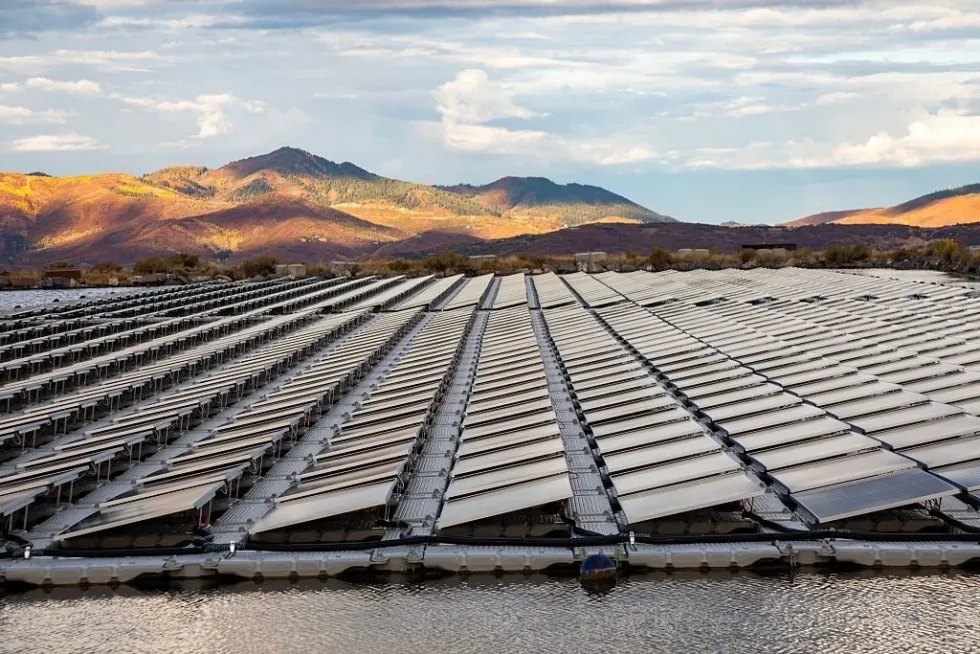
 A solar farm in Utah. Jim West/UCG/Universal Images Group via Getty Images
On a logical level, it’s a simple supply and demand problem. The supply of electricity is not growing as quickly as demand, all while the Trump administration eliminates subsidies that once buoyed investments in new supply. As a result, corporate electricity deals look poised to increase in price. But not for every generating source. New estimates from LevelTen, a marketplace for power purchase agreements, found that solar PPAs were 5% cheaper in the second quarter of this year compared to the first quarter. In a piece by my colleague Matthew Zeitlin, LevelTen attributed the decline to an especially steep drop in prices in California’s electricity market. Excluding CAISO, solar PPA prices nationwide dropped slightly less than 2%. While hyperscalers are still buying solar, LevelTen found that commercial and industrial buyers are pulling back, creating a “continued softening in the market’s buy-side.” “We saw a lot less corporate energy buyers in the space in 2025 — 40% less — and that is just due to the increase of hyperscalers and data centers getting projects and snapping them up quickly,” Sarah Wolf, LevelTen’s director of North American transactions, told Matthew.
Sign up to receive Heatmap AM in your inbox every morning:
4. In a first, EVs beat out gas and diesel in Europe’s largest auto market
Ah, Germany. The land of the Autobahn. Diesel-powered industry. The purring engines of BMWs, Porsches, and Mercedes-Benzes. The nation’s automotive might makes its latest milestone particularly important: Electric vehicles just outsold gas and diesel cars for the first time. New data from the Federal Motor Transport Authority shows that Germans registered 84,057 new electric vehicles in June, a more than 78% year-over-year increase. Traditional hybrids, meanwhile, saw 83,315 registrations, followed by gasoline-powered cars with 60,796, diesel with 33,862, and plug-in hybrids with 32,212. “The automotive history books will need a new page sooner rather than later, after electric cars outsold every other fuel type in Germany for the first time,” InsideEVs reporter Iulian Dnistran wrote. “It’s a huge shift in Europe’s biggest car market, which has traditionally been associated with diesel-powered cars that could travel hundreds of miles at highway speeds without breaking a sweat.” The Tesla Model Y was by far the best-selling EV in Germany, with nearly twice as many registrations as the No. 2 vehicle, the Volkswagen ID.3.
5. Copper prices surge again on strong Chinese demand and weaker Chilean supply
Putting on my Mesopotamian metal merchant hat again: Copper prices are back up. The price of the metal needed for virtually all electrical infrastructure rose 1.3% to just under $14,000 per metric ton, according to Mining.com. The price ultimately hovered at the red metal’s record set in early June. The spike stems from data showing rising tightness in the Chinese market, namely a hike in the premium buyers will pay in Shanghai for shipments of the metal. The price hiked further after a series of storms halted production in Chile for a few days.
THE KICKER
While the West dithers on hydrogen, China is making huge strides. It already may be too late to catch up to Beijing on manufacturing the key machinery needed to produce the zero-carbon fuel. The latest data point, via Hydrogen Insight: China just shipped its largest electrolyzer order yet to Europe, via Romania.



 A solar farm in Utah. Jim West/UCG/Universal Images Group via Getty Images

 The great localization push of 2026. OSW
 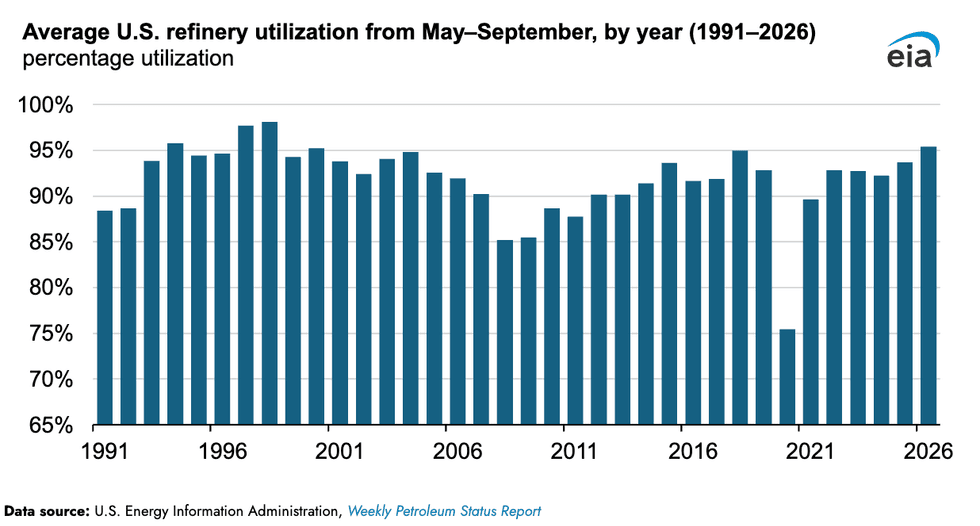 The 1990s are back. EIA