You’re out of free articles.
Log in
To continue reading, log in to your account.
Create a Free Account
To unlock more free articles, please create a free account.
Sign In or Create an Account.
By continuing, you agree to the Terms of Service and acknowledge our Privacy Policy
Welcome to Heatmap
Thank you for registering with Heatmap. Climate change is one of the greatest challenges of our lives, a force reshaping our economy, our politics, and our culture. We hope to be your trusted, friendly, and insightful guide to that transformation. Please enjoy your free articles. You can check your profile here .
subscribe to get Unlimited access
Offer for a Heatmap News Unlimited Access subscription; please note that your subscription will renew automatically unless you cancel prior to renewal. Cancellation takes effect at the end of your current billing period. We will let you know in advance of any price changes. Taxes may apply. Offer terms are subject to change.
Subscribe to get unlimited Access
Hey, you are out of free articles but you are only a few clicks away from full access. Subscribe below and take advantage of our introductory offer.
subscribe to get Unlimited access
Offer for a Heatmap News Unlimited Access subscription; please note that your subscription will renew automatically unless you cancel prior to renewal. Cancellation takes effect at the end of your current billing period. We will let you know in advance of any price changes. Taxes may apply. Offer terms are subject to change.
Create Your Account
Please Enter Your Password
Forgot your password?
Please enter the email address you use for your account so we can send you a link to reset your password:
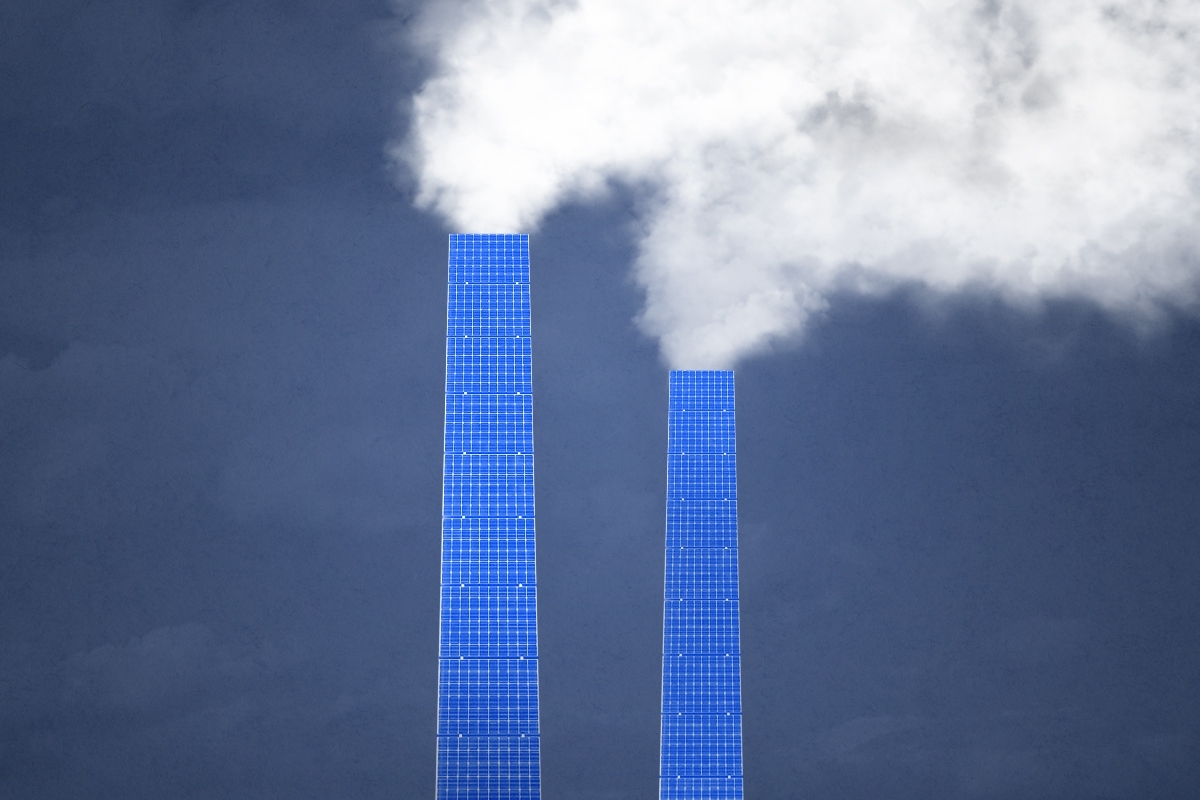
The renewables developer is expanding its business to serve “our nation’s growing energy needs.”

Two years ago, Arevia Power marketed itself as a renewable energy development powerhouse founded by solar industry veterans.
Today, the company is now also building data centers and gas turbines, Arevia chief development officer Ricardo Graf confirmed in a statement to me.
“Arevia is an energy company that delivers reliable and affordable electricity to the communities and utilities we serve,” Graf told me via email, acknowledging that “in some cases, that energy may be solar; in others, it may be gas.” He added that “yes, we also develop data center projects, but ones with accompanying power solutions to ensure ratepayers are not impacted by the data center’s energy needs.”
I’ve been keeping a close eye out to see whether any renewable energy developers, faced with the Trump administration’s squeeze on federal permits, will bet on diversifying their businesses. Maybe if they couldn’t build a solar farm on federal lands or access ample federal tax credits for constructing new projects, they’d invest in other sorts of large infrastructure projects instead.
We’ve definitely seen large U.S. energy developers such as NextEra and Invenergy take Trumpian tacks towards supplying data centers with new gas power under. Over the summer I broke the news that Clearway Energy asked the Bureau of Land Management to change a five year-old application for solar farm permits with “a proposed data center and natural gas facility.” After those plans were made public, Clearway told me in a statement to me that it was nixing the idea because it did not comport with their business strategy. “As a clean energy developer and operator, our focus in Nevada remains solar and battery storage.”
In mid-September, D.C. news outlet The Washington Sun first reported that Rhea Data, a subsidiary of Arevia Power, was behind the proposal for a giant data center and energy complex in Idaho including thousands of acres of federal land. On Thursday, the Bureau of Land Management sent me a statement confirming key details such as the inclusion of a 450-megawatt on-site gas facility. The next day, a Nebraska public radio station reported that Arevia and Graf were connected to prospective early-stage data center project site evaluation outside the city of Lincoln.
When I asked whether the company was reorienting itself toward data centers and the gas energy business, Graf acknowledged how things looked. “While this may be perceived as ‘pivoting,’ it is just a product of the evolution of our nation’s growing energy needs, which solar alone cannot satisfy,” he said over email on Friday. “Our company takes an all-above approach to helping our nation meet its increasing power demands.”
Log in
To continue reading, log in to your account.
Create a Free Account
To unlock more free articles, please create a free account.
A new study from energy company Foundry-Logic argues that simply replacing old solar panels could add significant new capacity to the grid.
All across the United States, solar panels are withering on the vine. Equipment installed 10 to 15 years ago is still capturing sunlight and pumping out electricity, but significantly less of it than when the cells were new.
This is not a story about decline, however, but about growth. America’s aging solar farms represent an opportunity to expand clean energy capacity without using more land — and potentially without having to wait years for new projects to get through the grid’s interconnection queue.
Modern panels can produce as much as 70% more energy than new ones sold 20 years ago, according to Wood Mackenzie. A report published Monday estimates that “repowering” existing solar farms, or replacing old panels with new ones, could unlock about 9.6 gigawatts of solar power by 2030, 29 gigawatts by 2035, and 67 gigawatts by 2040. (For comparison, the U.S. added 27.2 gigawatts of utility-scale solar last year.) If every project up for repowering between now and 2040 installed batteries, as well, that would add up to 13 additional gigawatts of storage to the grid by 2030, and nearly 92 gigawatts by 2040. The U.S. has just over 50 gigawatts of storage online today.
That means repowered solar farms could supply about a third of the growth in peak demand the North American Electric Reliability Corporation expects to be driven by data centers by 2035, the report found.
“Solar is entering its first replacement cycle at this moment when we are seeing a structural increase in demand,” Lisa Hansmann, the director of energy company Foundry-Logic and one of the paper’s authors, told me. “The more we dug in, the more it became clear that this market is early, but it is fast growing and ultimately could be very large.”
Advances and cost declines in battery technology are key to harnessing this generation potential. If a developer wants to increase the output of their solar farm, they’ll likely have to get a new interconnection agreement, which can take years. Adding a battery to ensure the plant doesn’t send more power to the grid than it was initially approved for can help avoid that, although it depends on the specs of the project, the location, and regional regulatory requirements.
Foundry-Logic, which published the paper in partnership with the clean energy finance company Crux, is focused on “getting more out of the installed base of energy systems.” The paper, in other words, is essentially Foundry-Logic’s sales pitch. It estimates that when combined with battery storage, repowering will represent a $10.8 billion market in 2030, growing to $51.8 billion by 2040.
The estimates are certainly on the high end of what’s possible, however, as the authors looked at technical potential rather than regulatory or economic feasibility. While the first half of the paper highlights the reasons repowering can be so attractive — existing interconnections, land leases, and permits — the second half digs into the real-world conditions that complicate that narrative.
The Federal Energy Regulatory Commission requires regional transmission organizations to offer “surplus interconnection service,” rules that allow new generators to skip the interconnection queue if they connect to the grid using the same infrastructure as an existing power source, so long as there’s “surplus” room to connect at that node. The rules vary throughout the country, however. The paper finds that the Midcontinent Independent System Operator, which covers much of the Midwest, has the most favorable regulations for repowering, followed by the Southwest Power Pool, which covers the swath of the country between Montana and the Texas panhandle. In the nation’s largest transmission region, PJM, the surplus interconnection process has historically taken nearly as long as the queue, but the regional operator recently indicated it’s considering reforming the process.
Requirements also vary widely depending on the type of project — utility-scale versus smaller solar farms versus rooftop arrays — as well as by state and region. Utility-scale projects require interconnection agreements from regional transmission operators, while smaller projects connect at the local distribution level with permission from the relevant utility.
“Policy is evolving to meet the market demand for speed to power, and that's one of the things we tried to highlight too,” Josh Price, the director of market intelligence and research at Crux, told me. Because of the data center buildout and surging energy demand, he said, state regulatory commissions have started to push their utilities to examine their distribution systems, identify where there’s available interconnection capacity, and create rules or pilot programs to leverage it.
Price added that another advantage to repowering projects is that developers don’t have to start the financing process from scratch. In most cases, they already have a lender, an equity sponsor, and potentially a tax equity partner. They might need to renegotiate terms, but they also have 10 to 15 years of real-world data into how solar performs at the site, making it a less risky investment than a brand new development.
I spoke with one solar farm operator, CleanCapital, which owns many smaller sites throughout the country that were built in the early 2010s “and are needing more love,” as Zoe Berkery, the company’s chief operating officer, put it to me. The first step in deciding what to do with them, she said, is to try to extend the offtake contract for the power. “Otherwise, there would be no justification for pouring in so much additional capital into a site that may be rolling off in just a couple of years, so that piece has been something that CleanCapital has focused on pretty intensely over the last, I would say, six years,” she said.
CleanCapital has repowered some of its projects, but only to restore the original generating capacity. It has not yet added batteries to any legacy sites. Berkery said the company looked at adding batteries in New Jersey and California, but has not been able to make the economics work. “I do think there's a lot of potential there,” she said. “It just depends on the site, the space, the market.”
Hansmann told me that a lot has changed in the past year to make it easier to add batteries to existing solar sites, including new ways to get paid for energy storage, such as through participation in virtual power plants. For example, in June, Google announced it would fund a virtual power plant in PJM run by the company Voltus, which will aggregate batteries from homes and businesses, among other distributed energy resources.. “For the first time, you're having the technical potential and the commercial potential line up in a very interesting way.”
Current conditions: In the central Pacific, Hurricane Nolo lashed Hawaii as a Category 2 storm with winds of up to 105 miles per hour • In the eastern Pacific, Hurricane Polo whacked the Southern California coast with seven-foot swells • In the western Pacific, Typhoon Surigae is barreling toward Okinawa, Japan, and the Philippines’ most populous island, Luzon.

Nearly 200,000 households across the northeastern United States lost electricity over the weekend as a powerful nor’easter storm walloped the nation’s most densely populated region with winds topping 70 miles per hour. Tens of thousands more Americans suffered outages in Hawaii as Hurricane Nolo brushed past the storm-struck archipelago state. By Sunday night, however, just over 90,000 households remained without access to the grid, according to data on the U.S. Power Outage tracker. Of those, roughly 19,000 each were located in New York and Hawaii. As of this morning, the total number dropped to just under 54,000.

Americans experienced an average of 11 hours of power interruptions in 2024, nearly twice as many as the annual average in the decade before, according to an analysis last year by the U.S. Energy Information Administration. That was largely due to an increase in powerful storms right as the grid is growing older and the equipment needed to repair and upgrade the system is in short supply. An expert cited in a feature story in The New York Times Magazine last month on the mounting risk of blackouts in the U.S. warned that the country could be thrust into darkness for 18 months or longer if saboteurs took out major transformers.
President Donald Trump plans to slash fuel efficiency rules on new cars and light trucks Monday, in his administration’s latest effort to undo regulations meant to curb emissions and save drivers money over the operating lives of their vehicles. In a post on his Truth Social platform, Trump said he had “just approved new Fuel Economy Standards,” falsely claiming that former President Joe Biden had imposed a “mandate” to buy electric vehicles under the most recent update to the rulebook. “The Dumocrats cost our Great Auto Manufacturers $Billions, forced Americans into cars they never wanted, and wasted Billions on Chargers that were never built,” he wrote. “These new Standards will take the waste out of building cars in America.” In his own post on X, Secretary of Transportation Sean Duffy said the final proposal would be released Monday. It wasn’t immediately clear how the agency would alter the rules, but the shift is expected to significantly weaken the standards. The move highlights Trump’s reliance on what the Rhodium Group described earlier this year to my colleague Robinson Meyer as “outdated economics” to justify cars that are cheaper to manufacture but more expensive to drive.
China will import at least 10 million metric tons of coal from the U.S. next year and again in 2028, according to a White House fact sheet. The deal, which came out of last week’s summit between Trump and Chinese leader Xi Jinping, is part of an overall pledge to ease tariffs on as much as $30 billion of goods exchange between the two superpowers. In 2023, the U.S. exported roughly 5.9 million metric tons of coal to China, making the People’s Republic the fifth-largest overseas buyer of American coal that year, after India, Japan, the Netherlands, and Brazil. But U.S. exports overall dropped off last year after Beijing halted orders amid the trade war Trump kicked off. The latest purchase agreement helps to restore the American market share lost due to Chinese tariffs.
Sign up to receive Heatmap AM in your inbox every morning:
New York wants to build 5 gigawatts of new nuclear reactors, the largest buildout of any other state and far more capacity than the U.S. has added nationwide in decades. During the New York Climate Week festivities last week, the head of the state energy office, the president of the grid operator, and top advisers to Governor Kathy Hochul appeared at a pro-nuclear summit to assure investors, industry officials, and rival states that Albany was moving full-speed ahead. In a public comment submitted to Hochul and state energy regulators last week, however, three dozen state legislators called nuclear reactors “environmentally destructive, expensive, and slow-to-build,” and called instead for devoting all Albany’s spending on new power generation to wind turbines, solar panels, and batteries. Of the signatories, nine lawmakers are Democratic Socialists of America, such as state senators Jabari Brisport, Julia Salazar, and Emily Gallagher — all close allies and friends of the nationally influential New York City Mayor Zohran Mamdani. Much of the rest of the list are self-described progressives.
But the former base of left-wing political power in the U.S. — labor unions — are taking the exact opposite position. In its own public comment, Climate Jobs NY, a coalition of unions that support decarbonization as a way to increase employment, said the only way for New York “to establish a carbon-free energy sector” is to “rely on nuclear power,” which just so happens to boast the most unionized workforce of any energy sector. “There is no other clean firm, or baseload power that can supply industrial operations at scale,” the organization wrote. “Solar, wind and battery storage are essential to our energy supply in the state, but they cannot provide all of the baseload power that our state depends on. For this reason, among others, nuclear must be a key part of New York’s energy future.” Fred Stafford, the pseudonymous energy writer and researcher who has written for Heatmap, pondered on X: “Can the Left be torn away from dead-end environmental nonprofits and renewables developers and instead align with the state’s climate-focused labor unions when it comes to nuclear?”
If you were looking for a sign that the European Union’s hydrogen ambitions are dimming, consider this: Brussels just announced that it was going after all but one of its member states for failing to enshrine the bloc-wide hydrogen rules into national law. The EU launched what are called “infringement proceedings” — a procedural punishment that can result in financial sanctions — against 26 of the 27 countries in the continental bloc. Brussels adopted the Hydrogen and Decarbonized Gas directive in 2024, and gave countries two years to pass national laws that match the guidelines for establishing domestic clean fuel industries. When the deadline passed early last month, just one nation had met the qualifications, according to Hydrogen Insight: Italy.
When I interviewed Ernest Moniz, the secretary of energy under former President Barack Obama, at a Climate Week event last Wednesday, he told me “nothing has hit the jackpot” on clean fuels just yet. But given that only 21% of end-use energy worldwide is served by electricity, the hunt for affordable, scalable, clean molecules is central to any potential decarbonization effort in the future.
Ford Motor produces more than 300,000 pickup trucks and sports utility vehicles at its assembly plant in Hermosillo, Mexico, every year. But the facility has been plagued lately by the kind of pest you normally find on city streets: pigeons. Enter: El Charro. The automaker’s “latest employee of the month,” according to The Wall Street Journal, is a hawk the Mexican plant brought on to hunt the pigeons. “It has given very good results,” Jesus Teran, central maintenance manager at Hermosillo and a 25-year veteran at the facility, told the newspaper. The bird’s name harkens to the Mexican term for cowboy.
A permitting deal seems closer than ever — but possibly delayed til after the election.
This is an edition of Heatmap Daily, an evening review of the day’s news written by our executive editor. Sign up for it here.
Good afternoon and happy Friday.
Let’s start with the news: The new episode of our podcast, Shift Key, is my full interview with U.S. Energy Secretary Chris Wright, which we recorded at Heatmap House in New York on Wednesday.
Listen to it here. You can find it on Heatmap’s website or wherever you get your podcasts. You don’t need to be a Heatmap subscriber to tune in.
My colleagues at Heatmap have covered a few takeaways from our conversation — including Secretary Wright’s prediction that there will not be a “blanket ban” on U.S. diesel exports, which he then hedged slightly — but we haven’t previewed everything, and I think the conversation is still worth your time. A few highlights:
We discussed the Trump administration’s lengthy war on wind and whether it might end in the future. “I do believe a successful permitting reform … changes the playing field for anything you want to build in this country, including wind,” Wright said. He also explained why he thought congressional Democrats should trust the administration’s word about that.
Wright hit on the Energy Department’s program to build a new fleet of nuclear reactors across the country, which could (if successful) bring roughly 10 gigawatts of zero-carbon electricity capacity online across five sites. There are now “well more than five” companies interested in entering the deal, he said, meaning that five will soon be selected. Allegedly there was a dinner last night to discuss the program, but we haven’t heard anything more about it.
Also up for discussion: whether the United States is leaning too hard into natural gas, how China has buttressed the global economy from the Strait of Hormuz oil shock, and why Wright thinks China is now the “swing importer” of oil globally and has successfully “taken off the peaks” of global pricing.
“If [China] were listening to me for their energy policy — and they are not — but if they were, I’d have them ramp up those refineries more rapidly because they have oil, the world has oil, but we’re very, very tight on refining capacity right now,” he said.
It was a fascinating conversation. Some of it pointed to ways that American energy policy will need to evolve in the future, regardless of which president or party is in charge. You can find it wherever you get your podcasts: Apple Podcasts, Spotify, Amazon, YouTube.
***
I’d be loath not to mention — at least briefly — all the movement in the past week on permitting reform.
When we last checked in on permitting over the summer, Daniel Palken, the head of infrastructure at Arnold Ventures, helped me understand the emerging outline of a bipartisan compromise deal on energy and infrastructure permitting. Senator Martin Heinrich of New Mexico also sketched the state of negotiations for us in August.
Since then, I had heard that Senate negotiators were making progress, but had not heard many concrete details. But this week we saw a flurry of activity. At the beginning of the week, the White House seemed to want to move quickly to seal a compromise, promising to allow stalled solar and wind projects to proceed in return for getting something inked before the midterm elections. (That said, actually getting a law passed before the November 3 elections would have required Speaker Mike Johnson to bring his caucus back to Washington, D.C.)
But late on Wednesday, Senate Democrats signaled that they want to slow down the talks and seemingly delay any deal until after November. “We believe there is a good deal to be had,” the lead Democratic negotiators, Senator Heinrich and Senator Sheldon Whitehouse, said in a statement today. But “getting that [deal] right has to matter more than election-year deadlines.”
As a reminder, any permitting deal will need at least 60 votes in the Senate in order to clear the filibuster hurdle. That means such a deal will almost certainly need to be bipartisan — and therefore that a deal can only come together in a political environment where legislators from both parties feel like they can plausibly prosper in the near-term by making it easier to build. Right now, it seems like both parties do feel that way, even if they’re bickering about whether to get a deal done before or after November.
I have been careful not to endorse any bill until I see it, of course. It will all depend on what’s in the final text. But it would be a mistake, I think, for House and Senate Democrats to let this legislating opportunity pass them by if they are indeed so close to a deal that the decarbonization hawks Whitehouse and Heinrich feel good about. Just because Congress reaches a deal now doesn’t mean it can’t reach another one in the future. As we’ve discussed on Shift Key, recent history suggests that when lawmakers adjust one part of the law or one statute, they feel more comfortable returning to it in the future, making further addendums as needed.
Remember: Because federal permitting laws chiefly constrain what the government can do, they act as a brake primarily on public infrastructure. It took years, recall, for state and local governments in New York to get the permits necessary to implement their own scheme to tax traffic congestion in New York City. If you want to build big new infrastructure in the United States, be it high-speed trains, transmission lines, or zero-carbon power plants — and if you specifically want the government to build public works faster and better than it has in recent decades — then you should want a different federal permitting scheme than we have now. Let’s hope congressional Democrats remember that in the days, weeks, and months to come.