The Fight

Sign In or Create an Account.

By continuing, you agree to the Terms of Service and acknowledge our Privacy Policy

Hotspots

The Most Important Data Center Vote You Haven’t Heard About

Plus more on this week’s biggest development fights.

The United States.
Heatmap Illustration/Getty Images

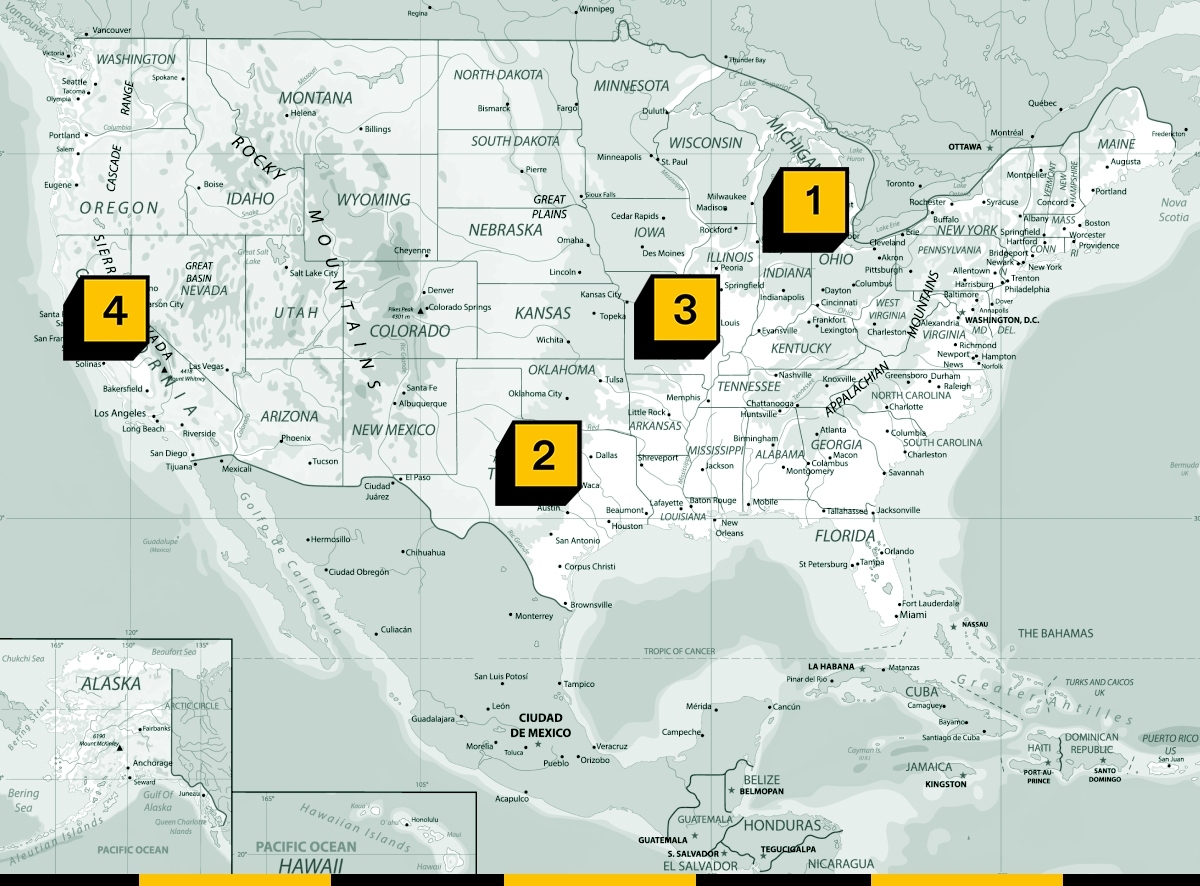
1. Washtenaw County, Michigan — The Mitten State made itself the center of the data center backlash this week, as multiple AI skeptics won key Democratic congressional primaries. Yet the most significant election result wasn’t a primary vote, but rather a quiet referendum in a small town outside Ann Arbor.

  • On Tuesday, the town of Augusta voted by a nearly 9-1 margin to overturn a land use ordinance enacted by the township government the previous year allowing a data center on agricultural land. This means developer Thor Equities will either have to find a way around clear local rejection or abandon Augusta for its proposed data center.
  • Augusta sits on the border of Michigan’s 7th congressional district, where Sunrise Movement cofounder Will Lawrence pulled off a surprise upset against a moderate establishment-backed candidate. Lawrence’s victorious primary campaign was rooted almost entirely in advertising against data center development and tying his opposition to supporting the industry.
  • I believe the Augusta result proves the case made by Lawrence’s candidacy — voters will resoundingly back ways to fight data centers. A Lawrence campaign memo published by Politico after the primary makes the argument he will defeat incumbent Republican Tom Barrett almost entirely on this issue, too, calling it “the hyperscale elephant in the room.” The memo also claims there are “data center voters” who have “not traditionally been available to Democrats [but] have been highly motivated by hyperscale development in mid-Michigan.”
  • “Will’s strong stance on this issue and his consistency in showing up and standing alongside residents in data center fights expands his potential voter base in the general,” the memo states.

2. Travis County, Texas — I’ve been getting a lot of texts from sources about Texas Governor Greg Abbott issuing a stop to data center permitting. Let’s get into what really is happening here.

  • On Tuesday, as folks like me were awaiting election results, we were met with a shocker: Abbott issued a directive that reads a lot like a data center moratorium, instructing the Public Utility Commission of Texas and the Electric Reliability Council of Texas to do a comprehensive “audit” of data centers and the electricity grid’s capacity to handle them. Abbott also asked the commission and regional transmission organization to craft energy and water requirements for data centers, adding that the audit must be completed “before any data center project moves forward.” After that, any project that “fails to comply with the requirements” will be “denied connection to the Texas grid.”
  • QTS, a large developer, announced it would comply with and support Abbott’s proposed standards for data center development. The governor celebrated the industry affirmation, and his office said it was part of a trend of welcoming his approach that also includes Amazon and Google. “QTS is setting an example of responsible data center development by embracing my standards, and any company that wants to do business in Texas should expect to do the same.”
  • On its face, this looked like a win for data center critics, and was reported by national media that way. But it’s clear the directive did not go far enough to please those holding the governor’s feet to the fire on the issue, as both former Texas Agriculture Commissioner Sid Miller and GOP-focused data center watchdog advocates Human First called on the governor to also call a special legislative session to put new data center laws on the books.
  • Humans First also sent Abbott a letter from numerous GOP officials in rural Texas counties calling for action ASAP. “We cannot afford to wait until the regular 2027 legislative session,” the letter reads. “Every month, additional land is acquired, permits are approved, infrastructure is financed, and communities lose opportunities to shape decisions that will affect them for decades. By the time lawmakers reconvene, many of today’s most consequential decisions will already be made.”
  • One of the major issues here is unincorporated land rights. A recent Texas Tribune analysis found that roughly half of all data centers under development in the state are sited in unincorporated areas, where local and county governments are limited in their legal authority to halt projects under Texas state law. Abbott previously called for a ban on data center development in these places but that would require a new law and it’s clear some GOP politicos at minimum believe there’s an immediate political risk ahead of the midterms. At maximum? The potential for a land rush before lawmakers return for a normal session next year.

3. Jefferson County, Missouri — Data center opposition can win a Republican political primary, too, as demonstrated this week in this rural pocket of the Show-Me State.

  • On Tuesday, Ann Moloney narrowly won the primary to be the GOP nominee for the 114th Missouri state house district. The district is primarily Jefferson County, home to the city of Festus, where residents made national headlines by ousting almost all city leaders over support for data centers. Roughly half the county is expansive farmland and prairie. It essentially screams “don’t develop here”: the county has a 99 clean energy opposition risk score and a 92 data center development risk score in Heatmap Pro.
  • Moloney previously sought a state house seat unsuccessfully on a campaign built around pro-life messaging. She initiated her race after the person holding it passed away last year and claims data center opposition became her new primary focus, saying it is the “number one” issue she hears from would-be constituents.
  • Still, data center angst can’t win them all. Voters this week also rejected a ballot initiative to cut the state income tax that supporters tried to pitch as repealing data center subsidies. It was a questionable claim to make in campaign ads in the first place and wound up having little sway with voters.

4. Santa Clara County, California — We conclude this week’s Hotspots with a warning about the dire political straits of battery storage technology.

  • AES canceled its Jewelflower battery storage project in San Jose this week after a mountain of upset over its location in Coyote Valley on farmland acreage conservationists called to preserve from industrial development. The Santa Clara Valley Open Space Authority, a special land use district created by the state that oversees the project proposal area, unanimously opposed Jewelflower in May.
  • “After careful consideration, AES has decided not to move forward with the proposed Jewelflower battery energy storage project,” the company said in a statement posted to its website. “As with every project in early development, we evaluated a range of factors, including project economics, infrastructure requirements, market conditions, community considerations, and long-term investment priorities.”
  • This comes after multiple high profile BESS rejections this year in California and other large states with considerable energy needs and strained grids like Texas. It’s becoming clear that anxiety around fire safety is overwhelming any desire to improve local resilience, even amidst public concerns about the rising data center power demand.
Yellow

This article is exclusively
for Heatmap Plus subscribers.

Go deeper inside the politics, projects, and personalities
shaping the energy transition.
To continue reading
Create a free account or sign in to unlock more free articles.
or
Please enter an email address
By continuing, you agree to the Terms of Service and acknowledge our Privacy Policy
Q&A

How to Talk to Climate-Minded Investors About Data Centers

A chat with Colette Lamontagne, senior director for electric power at Ceres.

Colette Lamontagne.
Heatmap Illustration

This week’s conversation is with Colette Lamontagne, senior director for electric power at the sustainability finance advocacy group Ceres. Her team just released a shareholder engagement guide for the utility space around data center development. I’ve been wondering when the ESG crowd would enter into the AI infrastructure fray, so I asked if I could chat with Colette about what the guide could teach my lovely readers and whether the data center backlash portends a new wave of boardroom fights between electric companies and institutional investors.

Our conversation was lightly edited for clarity.

Keep reading...Show less
Yellow
Spotlight

How the National Park Service Wound Up in a Data Center Deal

The agency is reportedly considering a land swap that would allow AI infrastructure in one of northern Virginia’s largest green spaces.

The Prince William Forest Park entrance.
Heatmap Illustration/Getty Images

A national park site and Civil War conflict area in Virginia is now a battleground in the fight over data center development on federal real estate — and Congress is starting to get involved.

On July 23, the Prince William Times reported that Trump’s National Park Service is “considering a land swap” to allow “at least four data centers” on land within the boundaries of Prince William Forest Park in northern Virginia, one of the largest green spaces in the Washington D.C. metro area and a flashpoint during the Civil War. Since then, my colleagues and I have confirmed based on interviews with sources familiar with the plan, public lobbying disclosures, and previously unreported correspondence from Congress to the Park Service that, indeed, there has been a concerted behind-the-scenes effort to make this swap happen, going back more than a year. Many of those concerned about the idea of this exchange told me they’ve been unable to get clear answers from the Park Service on the likelihood of the swap.

Keep reading...Show less
Yellow
Spotlight

Inside the Data Center Lobby’s Quiet Ad Blitz

What’s the deal with all those “America Connects” videos?

Data center.
Heatmap Illustration | Unsplash

The data center lobby is launching a big PR blitz on television and social media, racking up millions of views on evidently AI-generated content boasting economic impacts from new projects and hitting against criticism around energy and water use.

In an interview with me Wednesday, Data Center Coalition CEO Josh Levi explained how and why his organization – the largest and most prominent data center trade group – stood up an “evolving” national advertising campaign called America Connects.

Keep reading...Show less
Yellow