The Fight

Sign In or Create an Account.

By continuing, you agree to the Terms of Service and acknowledge our Privacy Policy

Hotspots

The Trump Administration Is Still Messing with Offshore Wind Farms

And more of the week’s top news around project fights.

•
The United States.
Heatmap Illustration/Getty Images

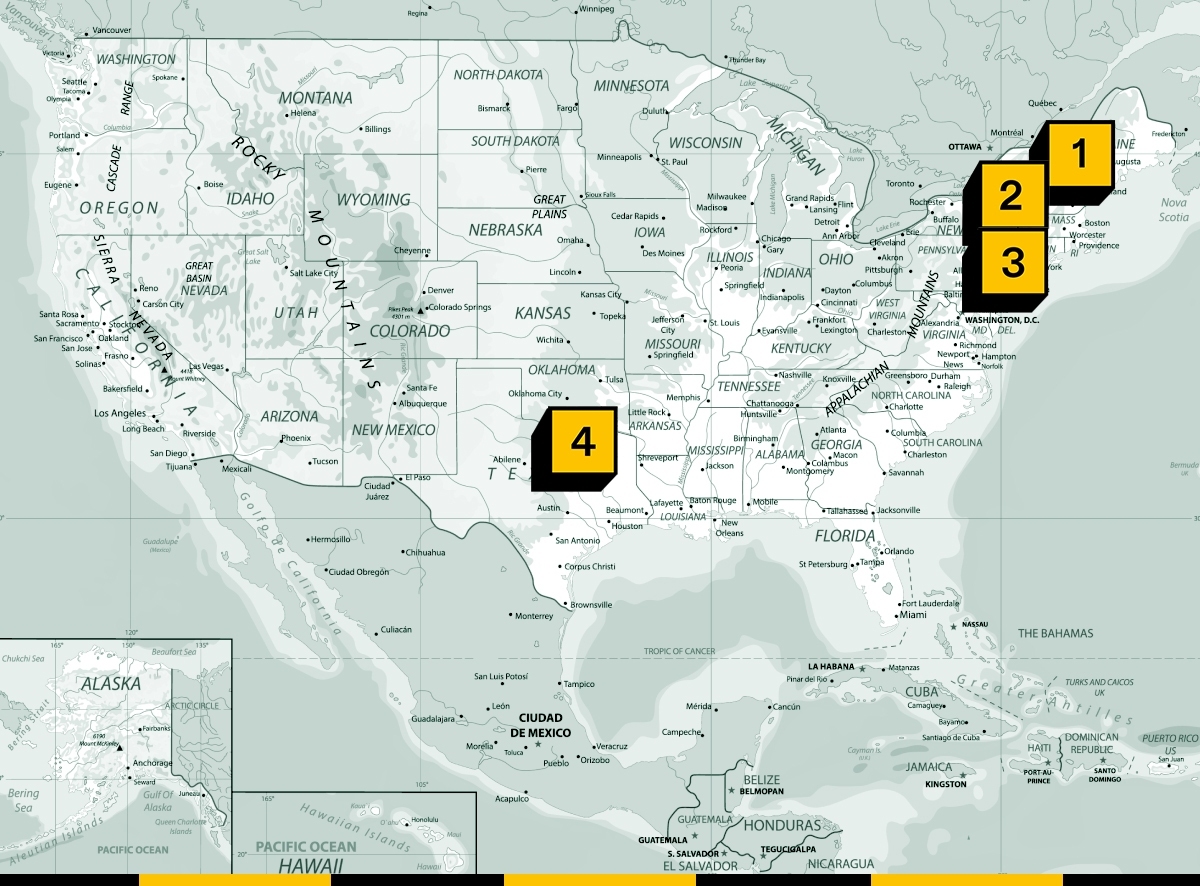
1. New England (and Maryland) – The Trump administration is still messing with offshore wind farms, even while trying to pass a permitting reform deal. Examining the court filings reveals why they may feel empowered to do it — and I’m not sure how this ends.

  • Last Friday, in a legal case brought by anti-wind activists, the Justice Department submitted a motion in federal court to send the construction and operations plan for Orsted’s Revolution Wind project in New England back to the Interior Department for more analysis. On Wednesday, the DOJ entered a similar motion in another case challenging the construction and operations plan for U.S. Wind’s MarWin project off the coast of Maryland in a lawsuit brought by the state’s coastal community of Ocean City.
  • Trump’s actions led some to question whether the president was sabotaging the deal, and others to claim the media coverage itself was an attempt to kill it. Going further, supporters of the bipartisan bill claimed the DOJ's motions were precisely why the bill should become law, implying it would guard offshore wind farms against this sort of maneuver.
  • However, for the bill’s backers, it’s worth considering why the Trump administration believes it has the legal authority to do this. It’s also time to ask whether the bill would actually protect these wind farms against this tactic.
  • To answer those questions, you have to rewind. On May 1, 2025, the Interior Department withdrew a Biden solicitor’s opinion instructing the agency to “strike a rational balance” between wind power and fishing interests. This revocation document is technically not in effect at the moment; one year later, a federal court ruled the opinion was potentially illegal as a part of a preliminary injunction on five anti-renewables actions requested by solar and wind trade groups. The Trump administration is contesting that ruling, and the administration has filed a notice of appeal.
  • In August, despite that opinion being in doubt, a federal judge granted Trump permission under the Outer Continental Shelf Lands Act to remand the construction and operations plan for the now-defunct Atlantic Shores offshore wind farm in the waters of New Jersey. U.S. District Judge Jia Cobb specifically wrote that Atlantic Shores failed to demonstrate the federal government had limitations under OSCLA on revisiting these plans and that the injunction from the litigation on appeal “did not prohibit all reevaluation of agency action.”
  • In the recent Revolution and MarWin filings, Trump’s Justice Department argues the construction and operations plans should be remanded under OSCLA without being vacated. The DOJ motions include claims that previous decision documents did not adequately explain impacts to commercial fishing and other industries that use OSCLA waters. It’s not clear if the administration will win these motions.
  • The bipartisan permitting bill would bar the Interior Department and other federal agencies from taking “any new action that would revoke, rescind, withdraw, terminate, suspend, amend, or alter a federal authorization or permit in effect on or after September 16, 2026,” or “any other action to interfere with or prevent the construction or operation at full capacity of a project that has secured all necessary federal authorizations and permits.” The restriction exempts cases where “the agency is required to take such action by order of a court.” As I wrote in our lengthy piece explaining the bill, this provision has a damages component that allows companies impacted by violations to pursue financial compensation.
  • Here’s the billion-dollar question I expect we won’t have answered unless the bill language is enacted and then litigated: Would the court order exception apply to rulings that grant these motions? Or would the developers be able to sue for damages?

2. Columbia County, N.Y. – New York’s renewable energy permitting office has rejected an upstate solar farm on farmland as a House Democrat representing the area joined hands with the Trump administration in publicly railing against the project.

  • The Office of Renewable Energy Siting on Wednesday denied the construction permit for Hecate Energy’s Shepherd’s Run project in the small town of Copake on the Connecticut-Massachusetts border. ORES interim executive director Jason Zehr wrote in a final decision that Hecate’s application failed to adequately address wetlands and floodplain concerns.
  • This is the third time ORES has rejected a renewable energy project’s permit applications, according to the agency, and the second time they’ve done so to Shepherd’s Run. This comes after Agriculture Secretary Brooke Rollins publicly supported halting development of the solar farm after being questioned in Congress. “I’m not sure that there’s a more righteous battle than to battle to save this farmland,” Rollins said in June at a House hearing after Josh Riley, the Democratic Representative for the area, asked for her support fighting against the project.
  • Also worth noting: Shepherd’s Run was one of more than two dozen renewables projects Governor Kathy Hochul celebrated the state contracting with last year. Meanwhile, Republican gubernatorial candidate Bruce Blakeman visited Copake in April and opposed the solar farm. Maybe things are changing and bipartisanship is coming back to New York.

3. Cumberland County, N.J. – The Vineland data center project is impacting the sector’s reputation in the Garden State.

  • If you aren’t familiar with this story yet, DataOne’s project in the small South Jersey city of Vineland is one of the more notorious data center development noise pollution stories. In late September, state regulators fined DataOne for the alleged culprit: more than 60 gas generators brought on site, allegedly without state permits as required. The state Department of Environmental Protection said it was the largest single penalty ever levied against a data center in New Jersey.
  • Now, residents are suing Vineland for approving the data center, alleging the city looked past the project’s likely stormwater management issues. It is lawsuit number two after a separate case was brought in May over the noise complaints. And now the Vineland situation is reportedly being brought up in other data center fights.
  • Vineland is in the congressional district of Jeff Van Drew, one of the biggest offshore wind opponents in Congress. His Democratic opponent, Bayly Winder, is running on a national AI data center moratorium and has focused on the DataOne site during his campaign.

4. Hood County, Texas – It looks like this corner of Hill Country is going back to court over a data center.

  • At least that’s what Sailfish Investors, a developer trying to build a data center near Dinosaur Valley State Park, told the Hood County Commission this week after it voted to reject what Sailfish called compromises, including reducing the project size, property setbacks, and closed-loop cooling.
  • The battle over data center development in Hood County is an issue in the U.S. Senate race, as the county commission sought legal support against other projects from Texas Attorney General Ken Paxton. That appeared to be to no avail. On Thursday, Paxton’s office said it sent letters to more than 150 data center developments in the state requesting compliance with water use reporting standards, including at least one in Hood County, per his office’s news release. But that’s a different story entirely, and his office did not publicly release the letters.
Yellow

This article is exclusively
for Heatmap Plus subscribers.

Go deeper inside the politics, projects, and personalities
shaping the energy transition.
To continue reading
Create a free account or sign in to unlock more free articles.
or
Please enter an email address
By continuing, you agree to the Terms of Service and acknowledge our Privacy Policy
Q&A

The Developer that Builds Local Support with ‘Right-sized’ Data Centers

A conversation with Harmol Samra of Host Digital

•
The Q&A subject.
Heatmap Illustration

This week’s conversation is with Harmol Samra, CEO of data center developer Host Digital. I asked Samra for a conversation because his team expressed a willingness to offer candid views on the industry’s problems with social license to operate — namely, why is the industry botching this so badly? From his point of view, many could learn a lot from industrial revolutions of the past, and they should be careful not to let mega-project expansions get in the way of broader acceptance of the data center sector.

The following conversation was lightly edited for clarity.

Keep reading...Show less
Yellow
Q&A

Why the Wilderness Society Backs a Data Center Moratorium

Talking with Dan Hartinger, the land conservation group’s senior policy director.

•
The Q&A subject.
Heatmap Illustration

This week’s Q&A is with Dan Hartinger, senior policy director for The Wilderness Society, a prominent land conservation organization in D.C. that this week called for a moratorium on data center development on public land. The public statement was relatively scant on details about the group’s stance, and a decade of reporting on policy in Washington has taught me that its positions are quite influential, especially in more traditional outdoor recreation and conservationist circles that are also often bipartisan. So I reached out and asked if someone could further explain the society’s position, and Dan obliged.

The following chat was lightly edited for clarity.

Keep reading...Show less
Yellow
Hotspots

Data Center Outrage Catches Up to Renewables Outrage in Michigan

Plus more of the week’s biggest development fights.

•
The United States.
Heatmap Illustration/Getty Images

1. Central Michigan – I regret to inform you of this back-and-forth between candidates running for Congress and a would-be constituent because it’s a warning sign for the renewable energy sector (and sort of broke my brain).

  • This week brought the first and likely only debate between Rep. Tom Barrett and Sunrise Movement cofounder Will Lawrence, who are locked in a tight contest over the Michigan 7th congressional district. As I’ve written, their race is a must-watch not only for control of the U.S. House but also the political fortunes of the data center sector.
  • The debate contained a remarkable exchange: Moderators played taped remarks from Paula Caltrider, identified as “a local resident” in the city of Mason to ask the candidates a question about data centers. Instead, she offered a comment. “You know, you can’t be a part of this no data center movement without renouncing the large solar farms and dangerous battery storage facilities that power these data centers.” (Quick TL;DR on Caltrider: She’s been quoted in national media coverage of the data center backlash and last year won a legal settlement after allegedly being fired for refusing a vaccine mandate.)
  • Barrett then ran with Caltrider’s baton. “I appreciate Paula linking these together, the stripping away of local control that took place in pursuit of this Green New Deal agenda in Lansing that took away control from communities” – a reference to the state’s primacy law that other Michigan Republican candidates have opposed.
  • Lawrence, whose support for a federal data center moratorium made him a national political test case, did not take the bait, nor did he criticize renewable energy. Instead, this part of the debate became a tit-for-tat about whether the sitting congressman once backed tax breaks for data centers. “He stuck his finger up into the wind, saw which way it was blowing, did a complete 180 on this issue,” Lawrence said. Then Barrett and Lawrence got into a confusing back-and-forth about whether the Inflation Reduction Act was a giveaway to data centers.
  • To the best of my knowledge, this is the first time the Data Center Trojan Horse has reared its ugly head on any kind of prominent debate stage, but it won’t be the last. For example: The Wisconsin gubernatorial debate is Oct. 21, and we’ve warned you about that one.

2. Doña Ana County, New Mexico – I suggest you pay closer attention to the federal permitting fight playing out over Oracle’s Project Jupiter.

Keep reading...Show less
Yellow