Governors are increasingly throwing their weight around in the technocratic and often obscure utility ratemaking process. The latest example is Virginia Governor Abigail Spanberger, who last week published a Washington Post op-ed announcing that she would intervene in the attempted acquisition of the state’s dominant utility, Dominion, by Florida utility and energy development company NextEra Energy.
Spanberger is “deeply skeptical about whether selling our primary state-regulated utility to an out-of-state company is good for the commonwealth,” she wrote. While she didn’t go so far as to oppose the merger, she did insist that NextEra maintain jobs in the state, comply with Virginia’s clean energy goals, and come up with cost savings for Virginians. And while the state’s utility regulators will make the ultimate decision themselves, she said, she wanted to use her leverage as the state’s highest ranking and most visible elected official “to make sure Virginians have a voice in the process.”
It’s not unheard of for a governor to try to influence utility regulators by picking members of state utility commissions — or simply by haranguing them. But as electricity bills rise to their highest level ever, according to Heatmap and MIT’s Electricity Price Hub, governors in particular have started responding to pressure from voters to do something — anything — about it.
In New Jersey, Governor Mikie Sherrill won office in part by promising to freeze electricity rates — then used her influence over the utility regulators to make it happen.
In Indiana, Governor Mike Braun replaced the head of the state utility regulator after his predecessor agreed to a rate increase from the utility AES Indiana.
In North Carolina, Governor Josh Stein publicly called on the state’s dominant utility, Duke Energy, to reduce a rate increase request.
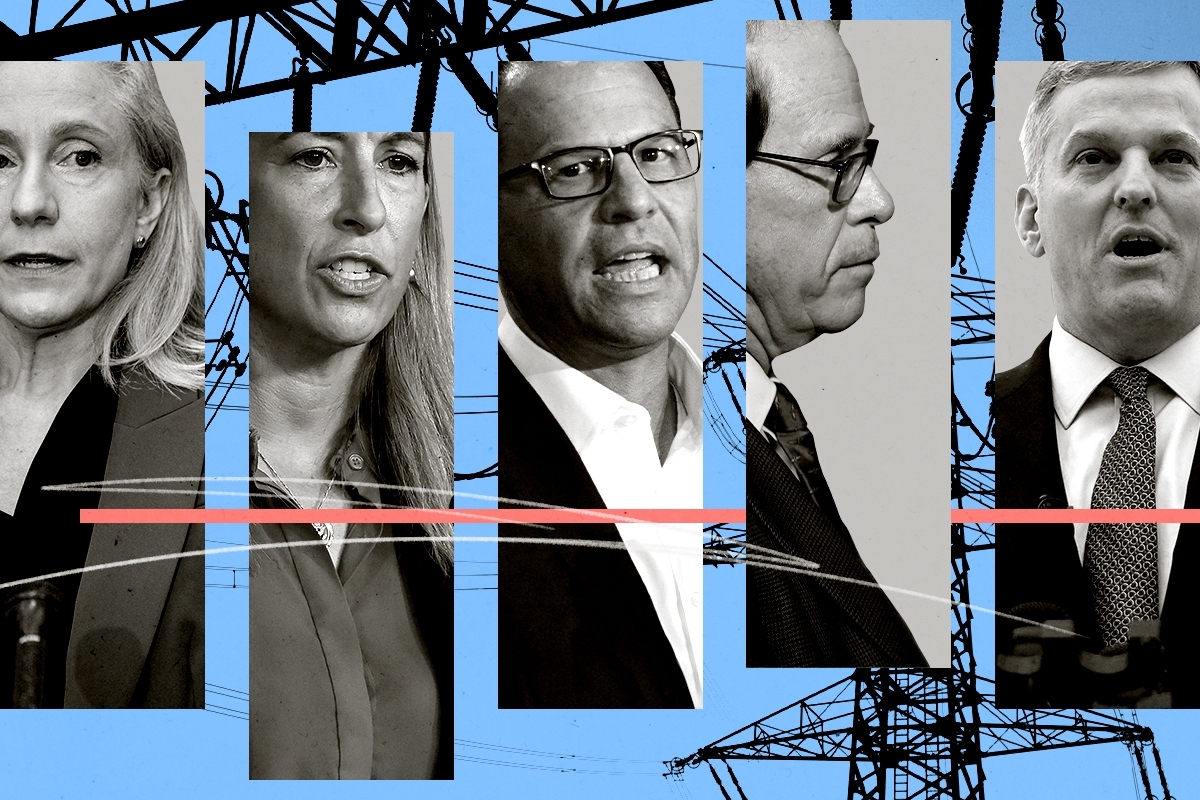
And the whole PJM Interconnection market, which includes Indiana, Virginia, and New Jersey, exists under a capacity price cap worked out in litigation initiated by Pennsylvania Governor Josh Shapiro, who has also led an effort alongside the White House to procure more generation and pressured the utility PECO to withdraw a rate case.
“Governor Shapiro is maybe the pioneer of this,” Eric Miller, the interim vice president of the states program at Evergreen Action and a former climate and energy official under former New Jersey Governor Phil Murphy, told me. “Legislators, they hear from their constituents about utility issues, whether it’s shut-offs or high prices. They go to their elected officials, and those elected officials engage with the governor’s office,” he said.
Utility regulation and ratemaking exists in a netherworld between public policy and private business. Most customers in the U.S. are served by investor-owned electric utilities, but the prices they pay are set by boards whose members are typically appointed by governors after a long, quasi-judicial process.
The process by which rates are set is wonky by design, with thousands of pages of filings and analysis explaining what costs need to be recovered at what rate paid by ratepayers. “Intervening” in a public service commission decision typically involves quietly slipping a document into a large docket, to be seen solely by utility regulators and lawyers (plus a few enterprising reporters.) To the extent the public or elected officials get to weigh in, it’s often through non-governmental advocacy groups or state officials designated as advocates for the public.
That governors are now openly taking responsibility for such a painfully bureaucratic process is “an indication of just how central utility rates are to overall energy affordability concerns that governors are hearing,” Jeff Dennis, executive director of the Electricity Customer Alliance and a former Department of Energy and Federal Energy Regulatory Commission official, told me.
With prices as high as they are, “the stakes are higher, and so the governors feel like in order to fulfill their campaign promises or their job as the top elected official in the state, that they’ve got to be directly heard,” he said. In Virginia, for example, typical bills have grown over 45% in the past five years, and by almost 12% in the past year alone.
When it comes to assigning responsibility for high electricity prices, Americans are most likely to blame their state government and their utility (and, increasingly, data centers), according to Heatmap polling.
Governors, who have a direct mandate from the public, can exert a unique countervailing force in a process that many critics argue is weighted towards utility interests. “Despite a lot of fences to prevent regulatory capture and rent seeking, it happens,” Miller said, “and having an executive weigh in directly can shake that up.”
There are risks, however, to governors getting more directly involved in the ratemaking process. One is that it could encourage short-term thinking, leading to measures that hold down prices at the expense of potentially necessary investments to maintain reliability or building out the infrastructure necessary to bring on new sources of power like wind and solar.
On top of that, “There’s certainly always a risk that the proceedings get more political,” Dennis told me. But he noted that ultimately, it’s utility commissions making the decisions, and they’re obligated to provide a record of filings and data to support their decisions.
Governors getting involved more formally could also have upsides, Dennis said, by shining a spotlight on the process that ultimately affects every resident and business in the state. “It brings a lot more spotlight to how utilities are making decisions about investments and how customers are impacted by those decisions, and I don’t think that that’s necessarily a bad thing.”
Governors also have a different set of mandates and responsibilities than the utilities do. While utilities have a mandate to provide reliable electric service — and thus spend whatever they can convince their regulators is necessary to do so — Miller argued that governors have to balance reliability and affordability for their constituents.
“The regulatory monopoly that utilities have is a political creation made by the elected officials in that jurisdiction.” Miller told me. “It is well within the authority of those same elected officials to decide to take a very hard look at whether that model is delivering the type of outcome that they want.”







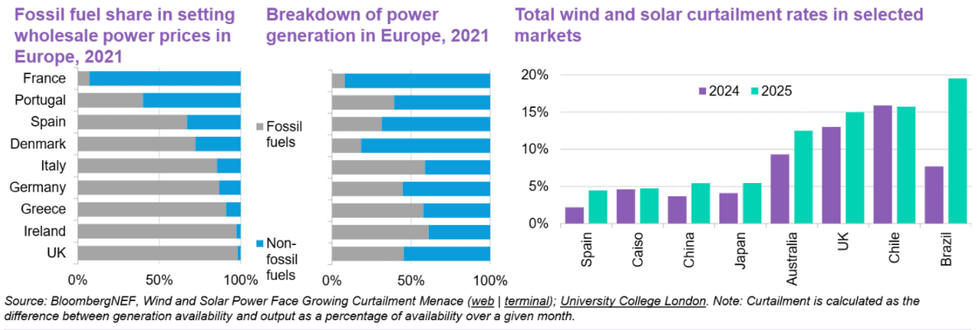 Curtailments are on the rise. BNEF