You’re out of free articles.
Log in
To continue reading, log in to your account.
Create a Free Account
To unlock more free articles, please create a free account.
Sign In or Create an Account.
By continuing, you agree to the Terms of Service and acknowledge our Privacy Policy
Welcome to Heatmap
Thank you for registering with Heatmap. Climate change is one of the greatest challenges of our lives, a force reshaping our economy, our politics, and our culture. We hope to be your trusted, friendly, and insightful guide to that transformation. Please enjoy your free articles. You can check your profile here .
subscribe to get Unlimited access
Offer for a Heatmap News Unlimited Access subscription; please note that your subscription will renew automatically unless you cancel prior to renewal. Cancellation takes effect at the end of your current billing period. We will let you know in advance of any price changes. Taxes may apply. Offer terms are subject to change.
Subscribe to get unlimited Access
Hey, you are out of free articles but you are only a few clicks away from full access. Subscribe below and take advantage of our introductory offer.
subscribe to get Unlimited access
Offer for a Heatmap News Unlimited Access subscription; please note that your subscription will renew automatically unless you cancel prior to renewal. Cancellation takes effect at the end of your current billing period. We will let you know in advance of any price changes. Taxes may apply. Offer terms are subject to change.
Create Your Account
Please Enter Your Password
Forgot your password?
Please enter the email address you use for your account so we can send you a link to reset your password:
On Texas solar, Total’s deal, and Rivian’s revving

Current conditions: The storms soaking the American South with as much as 10 inches of rain are tamping down the region’s wildfire risk • Cavite, the Philippine port city on a peninsula at the southern lip of Manila Bay, is facing its eighth straight day of temperatures nearing 110 degrees Fahrenheit • North Korean state media just issued a warning of a “severe” and “unusual” drought, killing off crops and threatening food shortages in the infamously famine-afflicted hermit kingdom.

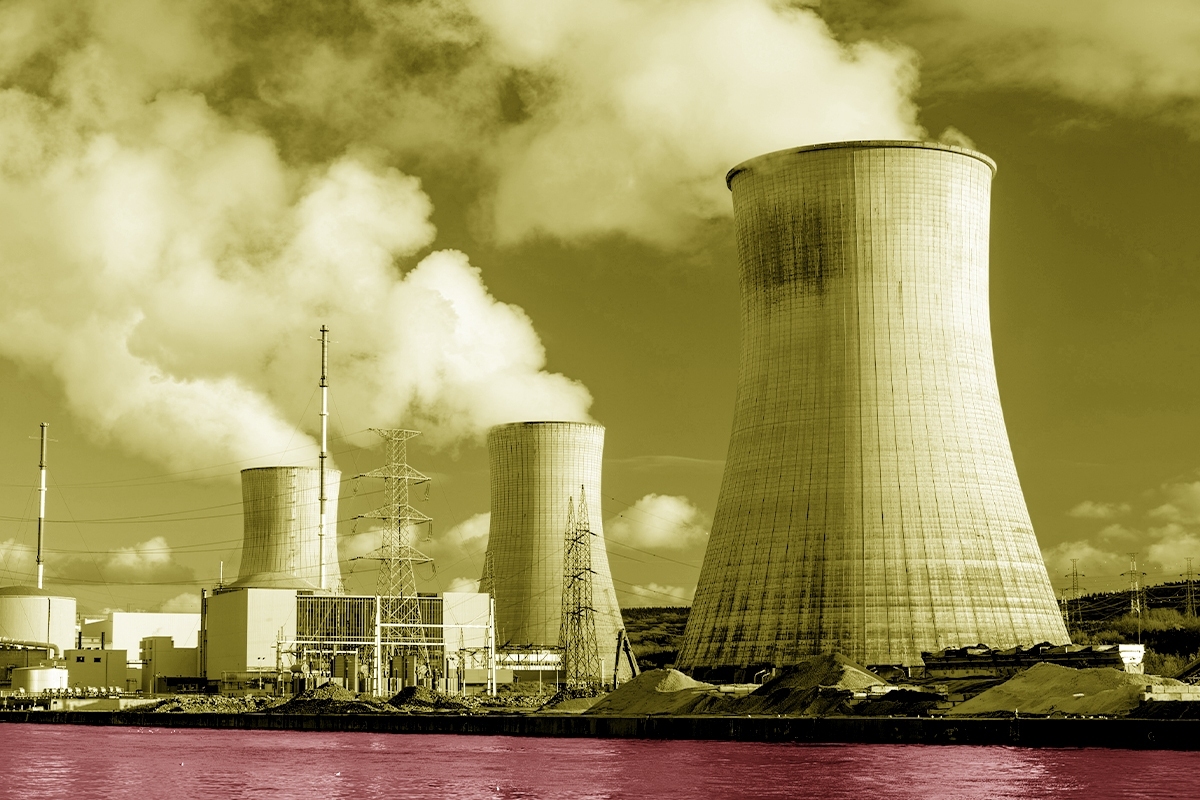
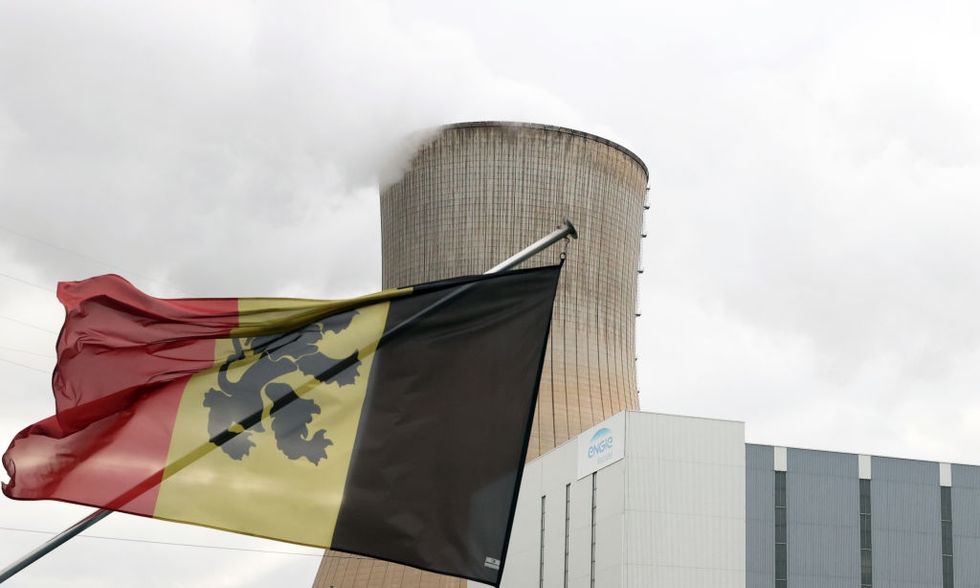
Belgium has long ranked as the world’s No. 4 biggest user of nuclear energy as a percentage of its electricity mix, generating nearly half its power from fission. But the country passed a nuclear phaseout law in 2003. Since 2022, when Brussels started to weigh delaying the shutdowns, the European Union’s capital nation has closed five of its seven commercial reactors. The policy divided the government, with liberals fighting to preserve the reactors and Green Party officials, including former Energy Minister Tinne Van der Straeten, who previously worked at a private law firm that counted Russian gas giant Gazprom as one of its biggest clients, pushing for a full atomic exit. Now Belgium is halting the decommissioning of its last two reactors and nationalizing its nuclear plants in a bid to save the industry. In a Thursday post on X, Prime Minister Bart De Wever said his government had reached an agreement with the French utility giant Engie to “initiate the necessary studies for a full takeover” of Belgium’s nuclear industry. Engie owns all seven nuclear plants in the country. “This government chooses safe, affordable, and sustainable energy,” De Wever wrote, “with less dependence on fossil imports and more control over our own supply.”
France, which generates more of its power from fission than any other nation, followed a similar approach, fully nationalizing the utility Électricité de France in 2023 as part of a plan to shore up and expand the reactor fleet. Last month, EDF, as the French giant is known, announced a $117 million investment in a factory to build parts for France’s flagship nuclear reactor, the EPR2. On Wednesday, meanwhile, the Canadian government put out a statement vowing to develop “a transformative” new national nuclear strategy on Wednesday that would focus on the country’s natively-designed CANDU technology and burgeoning uranium mining sector.
America’s solar boom may look slightly dimmer since the Trump administration cracked down on permitting and eliminated key tax credits. But construction has begun on the 140-megawatt Iron Spur Solar project in Snyder, Texas, ensuring that the facility locks in tax credits before the phase-out in July, I can exclusively report for this newsletter. It’s the biggest U.S. project yet funded by Energea, a solar financing startup that allows investors to buy shares in networks of solar farms in the U.S., Brazil, Colombia, and South Africa. Iron Spur is expected to start producing electricity in 2029. Now that the company is looking for offtakers to buy the electricity, co-founder and managing partner Mike Silvestrini said “something has changed.”
“In the past, it was an ass-kissing process of communicating with guys at these big IT companies,” he told me. “It’s turned. All of a sudden, having the power production abilities gives us the upper hand, and we’re able to negotiate from higher ground than we ever have before. It’s a noticeable change. That’s going to continue.” With the tax credit going away, he said, “the cheapest source of new power generation is about to get more expensive. That pretty much guarantees that domestic energy rates go up after July 5, as there are no longer projects with that tax credit available.” In fact, he added, Energea is better off waiting to negotiate a power purchase agreement, offering some insight into how the solar market could change if Republicans don’t manage to pass legislation to salvage the tax credits. “It behooves companies like ours and projects like Iron Spur to be patient and see how markets respond to a now-finite number of investment tax credit projects,” he said.
Get Heatmap AM directly in your inbox every morning:
As I told you at the start of the week, the Trump administration is replicating the $1 billion deal it made with TotalEnergies to convince the French energy giant to abandon its two offshore wind projects in the U.S. Reporting by Heatmap’s Emily Pontecorvo later showed that the legal justification for the federal government’s cash offer was shaky at best, and that the actual text of the agreement contained no definite assurances that the company would invest any more than it had already planned to. Now Congress is getting involved. On Wednesday, as Emily reported, two House Democrats sent a letter to Total CEO Patrick Pouyanné announcing that they have opened a formal investigation into the deal. “We’re going to get every document, every email, every last receipt on this deal, and every person who had a hand in this is going to answer for it,” Jared Huffman, the ranking member of the House Natural Resources Committee from California, said in a press release. “What I have to say to TotalEnergies is this: Consider yourself on notice, we’re coming for you.”
A former official at the Department of the Interior told Utility Dive this week that the deals set a new precedent that could be abused: “You wouldn’t want to create a situation where you are allowing companies, for instance, to buy up leases for anti-competitive purposes and just not do anything on them for a period of time and then give them back and get their money back.” In Virginia, where Dominion Energy just started up its first offshore wind farm, Governor Abigail Spanberger signed legislation this week meant to support training and expansion of the new energy sector’s workforce, per offshoreWIND.biz. Total, for its part, isn’t eschewing renewables everywhere. The company just started construction on a 440-megawatt solar farm in the Philippines, PV Tech reported.
Sign up to receive Heatmap AM in your inbox every morning:
More than 50 countries have agreed to work on trade measures to cut demand for fossil fuels. The pact came out of the Santa Marta climate summit in Colombia, in what the nonprofit Covering Climate Now called “a game-changing moment.” Climate scientist Johan Rockstrom told delegates at the First Conference on Transitioning Away from Fossil Fuels: “You are a light in the tunnel of darkness.” For all the reversals of decarbonization policies we’ve seen over the past two years, however, the world is rapidly looking for alternatives to fossil fuels as the war in Iran drives up prices. “We decided that the transition away from fossil fuels could no longer remain a slogan but must become a concrete political and collective endeavor,” Irene Vélez Torres, environment minister of Colombia, told the Financial Times. Notably, the six-day confab did not include the world’s biggest emitters: China, the U.S., and India, who are responsible for more than 40% of current emissions.
Rivian is set to produce up to 300,000 vehicles at its Georgia factory, up 50% from its initial estimate. The electric automaker announced the news Thursday as part of its first-quarter earnings call. The company said it had reworked a loan deal with the Department of Energy to borrow just $4.5 billion of the original $6.6 billion awarded under the Biden administration, TechCrunch reported. Overall, Rivan’s earnings beat analysts’ expectations, according to Sherwood.
Genetically modified crops are widely considered to be essential to feeding a growing human population on a planet with a rapidly changing climate. That’s especially true now with the Iran War causing fertilizer shortages at the start of the growing season. Now the EU, long a bastion of GMO policy, is authorizing four more genetically engineered crops for import and use in food and animal feed. The approval, per Fertilizer Daily, is for one new soybean variety and renewed approvals for one maize and two cotton products.
Log in
To continue reading, log in to your account.
Create a Free Account
To unlock more free articles, please create a free account.
Rob chats with Ember’s Nicholas Fulghum about the think tank’s newest report.
Here’s some good news: Clean power met all electricity demand growth last year for the first time since the COVID-19 pandemic. That’s according to a new report on global electricity trends from Ember, a U.K. think tank that tracks energy data from around the world. The new review suggests that solar and batteries are continuing to remake the global power system — and outcompeting gas and coal in some of the world’s fastest growing economies.
On this week’s episode of Shift Key, Rob is joined by Nicholas Fulghum, the lead author of Ember’s new report and an energy and climate data analyst at the think tank. They discuss why solar keeps breaking records, whether India’s energy development trajectory has changed, and how the Iran War could change this year’s numbers.
Shift Key is hosted by Robinson Meyer, the founding executive editor of Heatmap News.
Subscribe to “Shift Key” and find this episode on Apple Podcasts, Spotify, Amazon, or wherever you get your podcasts.
You can also add the show’s RSS feed to your podcast app to follow us directly.
Here is an excerpt from their conversation:
Nicholas Fulghum: It’s not just the absolute growth there. It’s just also the speed of growth that we’re not really expecting from sources in the past. Usually when a source scales to this level, where you have a maturing technology that is dominating parts of the market, the growth rates come down. But with solar, what we’ve seen is that actually 2025 had the highest growth rate, with 30%, that we’ve seen in eight years. And that’s quite unusual for something that’s really reached scale.
Robinson Meyer: Why is it dominating now? Because you’re absolutely right, we’ve been talking about the story for so many years in a row. This is the one thing we’ve come to expect about the electricity system globally, is that we’re just going to add all this solar every year. So why did it accelerate last year?
Nicholas Fulghum: The solar story as a whole is essentially a story of technology, and the learning curve that solar has been on hasn’t really stopped. So we’re still seeing cost declines. And they are really accelerating the deployment further.
If you think about where the cost has come from, we have a decline of about 90% over the last decade. It really just completely changes the use cases and where solar is applicable. We now have seen rapid solar buildout in so many different contexts. We’ve seen it in big utility installations in the U.S. We’ve seen the sort of hybrid deployment that we see in Australia, where it’s both utility-scale and distributed. Same, very similar approach in Germany, as well, a mix between utility and distributed. But we’ve also seen the very grassroots, not very organized but equally rapid deployment in countries like Pakistan. And this versatility is not something that is applicable to any other electricity source — not just now, but in history.
You can find a complete transcript of the episode here.
Mentioned:
Ember’s Global Electricity Review 2026
Previously on Shift Key: Nobody in the West Knows How to Respond to the ‘Electrotech Revolution’
This episode of Shift Key is sponsored by ...
Salesforce is the No. 1 AI CRM, where humans with agents drive success together. We invest in bold climate technologies and leverage agentic AI to accelerate nature-based solutions that benefit people and the planet. Learn more.
Music for Shift Key is by Adam Kromelow.
This transcript has been automatically generated.
Subscribe to “Shift Key” and find this episode on Apple Podcasts, Spotify, Amazon, or wherever you get your podcasts.
You can also add the show’s RSS feed to your podcast app to follow us directly.
Robinson Meyer:
[1:53] Hello, it’s Friday, May 1st. Happy May Day. And we have some good news for you today. The global electricity system became slightly less fossil fuel intensive last year. In 2025, clean power met all global electricity demand growth for the first time since the COVID-19 pandemic. That’s according to the new report from the think tank Ember, which is headquartered in the UK and has become one of the most important and interesting organizations tracking the energy transition over the past few years. You might remember last year we had Kingsmill Bond, one of their energy strategists, on to talk about electrostates and the rise of electricity technology.
Robinson Meyer:
[2:29] Transforming global industry in China and around the world. Their data, though, beyond Kingsmill’s work, has been central to understanding the inexorable rise of solar energy, of batteries, and of how clean power is now driving fossil fuels out of the energy system. You know, our tagline here at Shift Key, which I say every episode, is that we look at the shift away from fossil fuels. But lately, there hasn’t been as much shifting in what we talk about.
Robinson Meyer:
[2:54] So today, I thought we would look at the shift for once, at least and have some good news for once too. Joining us today is Nicholas Fulghum. He’s the lead author of Ember’s new 2025 Electricity Review. He’s also a senior energy and climate data analyst to Ember. I wanted to talk to him about the biggest changes in global power systems last year, whether what’s happening in California and Western Europe is the same as what’s happening in Southeast Asia, why solar in particular keeps growing in such an unstoppable way, and how the Iran war might change the numbers for 2026. I’m Robinson Meyer, the founding executive editor of Heatmap News, and it’s all coming up on Shift Key. Nick Fulghum, welcome to Shift Key.
Nicholas Fulghum:
[3:36] Thanks so much for having me.
Robinson Meyer:
[3:38] So you recently published this report, Ember’s Big Annual Report on the Global Electricity System. It’s an amazing document, as always. And I feel like the story that comes out just hits you right on the face when you look at it this year is the absolute growth of solar, this total dominance of solar in the electricity system. So why did solar dominate last year? And what is the story of the electricity grid in 2025 as you understand it as the lead author?
Nicholas Fulghum:
[4:06] Yeah, for those of us that have been following this story for a while, solar breaking records is not really a new thing. But what keeps happening every year is that the scale and just the absolute amount of solar growth just keeps edging up more and more. And in 2025, we got to the point where solar growth alone met 75% of the increase in electricity demand. Now, that brings it from just a fast-growing source by historical standards to really the dominant driver of any change in the global power sector. And that increase that we had, the 636 terawatt hours of new solar generation that was added in 2025, that’s equivalent to twice the UK’s annual electricity demand. So we’re really talking about system-level change now.
Robinson Meyer:
[4:58] So we’re adding basically two UK size electricity systems entirely made of solar every year.
Nicholas Fulghum:
[5:04] Yeah, that’s right. And it’s not just the absolute growth there. It’s just also the speed of growth that we’re not really expecting from sources in the past. Usually when a source scales to this level where you have a maturing technology that is dominating parts of the market, the growth rates come down. But with solar, what we’ve seen is that actually 2025 had the highest growth rate with 30% that we’ve seen in eight years. And that’s quite unusual for something that’s really reached scale.
Robinson Meyer:
[5:36] Why is it dominating now? Because you’re absolutely right. We’ve been talking about the story for so many years in a row. This is the one thing we’ve come to expect about the electricity system globally, is that we’re just going to add all this solar every year. So why did it accelerate last year?
Nicholas Fulghum:
[5:54] The solar story as a whole is essentially a story of technology. And the learning curve that solar has been on hasn’t really stopped. So we’re still seeing cost declines. And they are really accelerating the deployment further. If you think about where the cost has come from, we have a decline of about 90% over the last decade. It really just completely changes the use cases and where solar is applicable. We now have seen rapid solar build out in so many different contexts. We’ve seen it in big utility installations in the U.S. We’ve seen the sort of hybrid deployment that we see in Australia, where it’s both utility scale and distributed. Same, very similar approach in Germany as well, a mix between utility and distributed. But we’ve also seen the very grassroots, not very organized, but equally rapid deployment in countries like Pakistan. And this versatility is not something that is applicable to any other electricity source, not just now, but in history.
Robinson Meyer:
[6:58] Basically, what this means is that you have a situation like what I understand to be happening in Pakistan, where there’s now a lot of electricity available during the day, or are we seeing, we haven’t talked about batteries, but does the concomitant rise of batteries mean that actually this generation is not as time-locked as solar by itself would be.
Nicholas Fulghum:
[7:20] Yeah, historically, at least over the last few years, while solar has seen its initial rise, it’s been used in varying ways. So in Europe, for example, it’s mostly used to displace fossil generation in the middle of the day. And that’s also the case in the U.S. where in California is displacing gas generation. In a country like Pakistan, solar was deployed in a response to a failing state electricity grid. So it was about the actual availability of solar power. And increasingly, as you say, batteries now make that not just a daytime solution, but a solution that works around the clock. And we’re seeing that increasingly both on that very distributed level, but also on a utility scale.
Robinson Meyer:
[8:06] Is that where the solar growth is coming from? What part of the solar equation here is growing more? Is this mostly a story about developing countries adding solar because it’s a modular energy technology that individuals can purchase and then have access to electricity? Or is this a story about places like Texas or California or Western Europe just continuing to hammer their midday fossil share?
Nicholas Fulghum:
[8:31] Yeah, well, the interesting thing there is that the story is that it’s all of those things at the same time. Yeah, it’s both. So in China, for example, it’s a relatively evenly distributed amount of distributed generation and utility scale solar. And China is by far the largest contributor to solar growth globally. So more than half of the increase in solar generation in 2025 was in China. So we have both geographically a lot of diversity, obviously dominated by one country in this case, but also in the use case, it’s very much you have distributed solar and utility solar scaling at the same time at similar rates as well.
Robinson Meyer:
[9:14] Speaking of China, one of the huge findings you have in this report is that fossil generation fell in both China and India. It sounds like solar was responsible for that trend in China, but can you talk a little bit about how we know that and whether you expect these trends to continue?
Nicholas Fulghum:
[9:33] Yeah. So over the last two decades, people have become very familiar to huge increases in fossil generation year after year in China and in India. And together, they were by far the largest contributors to that fossil generation growth that was also still happening at the global level. But actually, if we look at the aggregate, outside of China, since 2018, fossil generation had actually already been flat. So if you take China out of the equation, but we still had fossil generation growth, even globally. So the question was, when is China going to turn? And 2025 is kind of that moment where we see what that turning can look like. Now, China and the world are very mirrored stories. In China, the reason that we didn’t have an increase in fossil generation is because clean generation grew enough to meet and exceed the growth in electricity demand.
Nicholas Fulghum:
[10:27] And that’s what we saw on the global level as well. So China is leading that trend and on the global level, turning the tide on fossil generation growth as a whole.
Robinson Meyer:
[10:38] I think one of the biggest questions about China is fossil generation fell in 2025. Obviously, now there’s this energy crisis caused by the closure of the Strait of Hormuz and the war in Iran. Do you expect this trend to continue? Let’s just start with in China, because looking back in the clock, right, in 2021 and 2022, they think there were big coal increases in China as the country kind of redoubled down on coal. Do you expect to see it respond to the current energy crisis in the same way? Or is it wrong to even understand that change in 21 and 22, like in response to Ukraine and the post-Ukraine energy crisis? Or was it all about internal Chinese power market dynamics?
Nicholas Fulghum:
[11:22] Yeah, I think what can help us understand the situation is looking at Dissecting the structural drivers, so the longer term trends from those moments in energy history, so to speak. So 2020, obviously everyone remembers COVID pandemic, demand destruction on a large scale, globally electricity demand, you know, growth tanks compared to previous years and years after. The same happened in China as well. So 2020 is actually a really interesting case because we didn’t have fossil generation growth at the global level. But the reason wasn’t large scale adoption of clean power, even though it was already growing quite fast. It was that demand wasn’t growing. And the big difference in 2025 is that demand growth is really robust. So 5% was the increase in China. At the global level, it was 2.8%, which is basically in line with the 10 year average. So both globally and in China, we have robust demand growth. And that’s where 2025 is really different, because that’s not something we’ve seen before. Robuster mangrove and falls in fossil generation. So that’s the structural element where clean power is just now growing fast enough. And in response to the crisis in the Strait of Hormuz, what a lot of people were expecting is we’re going to get a big shift back to coal.
Nicholas Fulghum:
[12:44] But that’s not a shift away from clean power. That is, if anything, a short-term shift within fossil fuels. If gas is really expensive, so LNG in that case in Asia, then maybe coal becomes slightly more attractive relative to that in the market. But what it doesn’t do is become more attractive than solar and wind, which is what China has predominantly looked towards to meet its additional power demand. So we’re not going to see a turn towards coal over clean sources.
Robinson Meyer:
[13:17] Can you say a little bit more about that? Because I feel like that countries don’t, especially China, I think doesn’t make decisions between clean and dirty when it’s kind of planning its energy system. It makes decisions between secure and insecure. And so why does gas being really expensive? I understand that China has relatively low LNG share, but why maybe when we look at Southeast Asia or outside of China, would we expect to see gas lose out to coal rather than kind of coal step up?
Nicholas Fulghum:
[13:46] Yeah, so if we go back to the previous crisis, and I guess this is also a separate point, is that we’re talking about consecutive crises every few years in the fossil fuel sector. If we go back to the previous one in 2022, we actually had sort of a double whammy with prices going up for gas and prices going up for coal at the same time. So you had power markets that were really dependent on imports like South Korea and Japan really suffer the consequences.
Nicholas Fulghum:
[14:17] And this time around, gas is significantly more affected just because the trade route through the Strait of Hormuz just has more gas exports. And as we know, some of that infrastructure in countries that weren’t actively involved in the conflict, like in Qatar, were also affected where some of the production capabilities might be inhibited for more than just a few months. We’re talking about years that some of that infrastructure needs to be rebuilt for. So that means that the price for LNG is rising. Surprisingly, it’s actually not risen as much as many people expected. And that might just point to some panic and illiquidity in the market where people are afraid to even trade some of those longer term contracts, given that these prices currently change on the daily with, you know, tweets coming out of the White House affecting prices, basically. So we don’t know the full impact of this specific crisis yet. But what we can say is that historically, power markets have been relatively flexible, especially in countries that have both of these sources available, so both coal and gas. But the overwhelming trend and the voices that we’ve heard from governments in South Korea, Japan, Indonesia, is that they want to double down on reducing their import reliance through renewables and away from coal and gas altogether.
Robinson Meyer:
[15:42] We’ve kind of hinted at it a few times, but what was the story in India last year? Because from an emission standpoint, I think actually several years ago, we passed the point where, you know, the OECD countries plus China are most of the emissions that we expect to see going forward, kind of the big questions about where the climate system is going to wind up and how much temperature rise we’ll experience in the 21st century is actually primarily a question about about India and Indonesia and the Southeast Asian and Sub-Saharan African countries. So India is like the country at the front of that pack, right? It’s the furthest along its development pathway. And it kind of tells us the most about how countries are choosing to develop at this moment. What was the story of its electricity system last year?
Nicholas Fulghum:
[16:27] Yeah, so India is super interesting because we have with China, we have a country that many see just a few years further that ahead of India in the clean power deployment journey. And in China, we’ve seen that break even point where they can meet new demand. Now for India, the question was how far behind are they on that curve? And in 2025, they did also meet all of the increase in demand with clean power, largely led by solar power, which increased by more than 50 terawatt hours, which was also a massive new record growth in India as well.
Nicholas Fulghum:
[17:03] India wasn’t really meant to get to this point so early. So there’s two things that were going on in 2025. The first one is this record renewables growth, which was twice as high as the previous ELE record. So this year was 98 terabyte hours increase for clean power or for renewables. And in 2022, which was the previous record, it was 49 terabyte hours. So a huge boost in clean power growth. And at the same time, we’ve had relatively mild demand growth. And the reason for that was simply that temperatures were quite low during the monsoon period when usually you need a lot of electricity for cooling. And that just didn’t really happen to the same degree this year. So you get this temporary relaxation and demand growth. And as a result, it surpassed demand growth actually by quite a lot. And we had a significant decline in coal generation and fossil generation as a whole. And if we look a little bit further back, that increase in renewables would have come close to meeting the demand growth in the last four years where we had much more robust increases in demand of over 5% and over 6%. So we’re really now at a point where we do expect next year to be probably a small increase in fossil generation again. But we’re just not talking hundreds of terabyte hours per year. We’re talking more about maybe 20, 30, 50 terawatt hours.
Nicholas Fulghum:
[18:28] And as we get closer to 2030, 2035, India is also going to get to this place where it can structurally meet all of its increase in demand with clean power sources and not grow coal generation further. And now that’s a vast departure from the projections that many people had five to 10 years ago.
Robinson Meyer:
[18:48] Do we have a sense, maybe it’s from China, maybe it’s from European countries, maybe it’s from California, of what happens in power markets and what happens in electricity grids as the fossil share begins to tip over? Because there’s been discussion of this in liquid fuels and transportation for a long time, where the idea is, you know, yes, you’re going to get a point where EVs penetrate further enough into vehicles that oil demand will be flat. And then the question is, is oil demand flat for a long time? Does it plateau? What kind of things happen in that plateau. In some ways, the UAE’s announcement this week to leave OPEC is actually very indicative of what we might expect to see in a world of flat oil demand. But there is a question about kind of how fast things begin to fall off and how long that plateau lasts. Obviously, it will be a different story in the electricity system. But what does China or, I don’t know, Germany, California, What do countries that are further down the chain here, or jurisdictions, tell us about what the future of the grid might look like in a world where clean is just straight up out-competing fossil, at least for the marginal electron?
Nicholas Fulghum:
[19:53] Yeah, so in Europe, for example, fossil power has been falling for quite a long time. Even in the U.S., the peak for fossil generation was in 2007. So this is a while ago and over that course, demand didn’t drop significantly either. So this is just direct displacement of fossil generation in the power sector. What we see at a more granular level, particularly with the introduction of solar, is that power markets change pretty significantly. You have much bigger intraday swings between the middle of the day when there’s a lot of solar power on the system and the evening peak demand hours. Now, one of the most famous examples for how to overcome this is the deployment of utility-scale battery storage in California. And there we’re now seeing that this solar profile, if you think about it, this distribution, very, very smooth distribution, the middle of the day, most of the output smooths out towards the evening, disappears for the night. That profile is now being stretched in both directions. So batteries are deploying and they’re not going to be able
Nicholas Fulghum:
[21:01] In the morning, when the morning peak demand is happening, and in the evening, during evening peak demand. And it’s essentially stretching that profile out. And if you follow it over the years, that stretch is getting wider and wider. So it’s really penetrating the evening and night hours as well now. At peak demand, it can now meet more than 40% of California’s electricity demand. And that’s just batteries, where 90% of those were installed in the last five years. So we’re really talking about a surprisingly quick pickup in a technology that basically wasn’t on the market five years ago.
Robinson Meyer:
[21:37] One big question I feel like in electricity right now is how exactly to think about the utility of a marginal additional solar panel. And so I think there are some folks who would say, and to some degree the like advocacy line, right, is that solar is basically always the cheapest form of electricity anywhere in the world. And it’s always better to add solar. And if you are not adding solar, there’s some other reason, there’s some other dislocation in the system causing you not to add solar. I will say I’m a little skeptical of that line. I think if that were the case, we’d be adding more solar in a lot of places. Obviously, we’re adding an enormous amount of solar, but there’s still reasons why solar might be tricky. And maybe it has to do with land costs, maybe it has to do with permitting. But like looking at the global electricity system, What is the right way to think about … We know solar is cheap. We know it’s an absolute powerhouse. We know it’s absolutely transforming the global electricity system. But what is the most rigorous way to think about how cheap it is compared to other forms of power and how countries are adding it to their electricity mix right now?
Nicholas Fulghum:
[22:41] Yeah, so bottlenecks are real. And I think it’s totally fair to acknowledge that, especially for technology that has risen in the market so quickly. It would be shocking if it was smooth sailing on all fronts. But we have some really good examples of what the second and third stage of that solar growth can look like. We already mentioned California, where the bottleneck did appear a few years ago already, where you had larger curtailment in the middle of the day. It was really difficult for rooftop solar installations to actually be used economically within the distribution grids. So there were real bottlenecks. Those are being resolved actively. So it’s kind of As we’re coming up to these technological hurdles, technology is overcoming them relatively quickly. And if you thought the falling costs in solar panels was quick in the last few years, the fall in costs in battery prices is even faster. At the pack level, those pack prices have come down 45% in 2025. And that’s on top of 20% in the year before and another double-digit percentage decline before that. So we have this huge drop in battery prices. If you think about it in the context of other applications in your life, what does a 50% reduction in price for other consumer electronics, for example, look like? If cars were half the price or twice the price, the application in the world would be completely different.
Nicholas Fulghum:
[24:06] That’s how batteries work as well. So that bottleneck is being resolved. The second point is that actually for most of the world, the system integration of solar isn’t as big of a problem yet. So at a global level, the share of solar generation is now 8.7%. Now, there’s a really nice way to illustrate what that actually means on a daily basis. So 8.7% is about 25% in the middle of the day. So that’s just for the global average. Which is quite an important milestone. So in May, for example, the biggest solar month, that’s when solar is meeting a quarter of global electricity demand in the middle of the day. So a lot of headroom to grow without significant flexibility concerns. But then if you go into the specific markets, that number can scale up quite quickly. So in Hungary, for example, which is the country with the highest solar share globally of 27%, during the peak month in June, solar is meeting 90% of the demand at midday. So it scales relatively quickly. You can do about 3x in your sunniest month is your actual penetration relative to your average penetration throughout the year. So it does create a bottleneck at that point. So for those systems, the fact that battery prices are coming down now is unlocking that bottleneck that was really fast, fast approaching.
Robinson Meyer:
[25:31] But it sounds like part of the story here is that solar is able to dominate because in some ways the global system on an average basis is closer to where California was maybe 10 or 15 years ago where you can just keep adding solar to that thing and it’s going to reduce your marginal costs and you can add batteries too and that’s awesome. But you’re not hitting these questions about ramping or firm power that I think we’re beginning to encounter in California and I also think a little bit in Texas now.
Robinson Meyer:
[26:02] How do we know? I mean, this is a methodological question about Ember, but, one constraint we’ve begun to run into in the United States, I think especially from big tech firms that do a lot of renewable buying, is that the accounting techniques that, previously were good enough to lower emissions, like saying, okay, well, we used 500 megawatt hours of electricity last year. So we’re going to go buy 500 megawatts of solar and wind production. And we’re going to say that’s close enough. If you try to match on an annual basis the amount of energy you’re using and the amount of energy that renewables are producing and you just go buy that renewable power in the open market, you’re actually still going to be producing a lot of emissions. And so when Ember looks at... The global electricity system and says the fossil share is declining or solar’s you know eating into fossil in this way like how do we know that solar is actually eating into demand growth or that renewables are actually eating into demand growth and not just that say solar is generating all this electricity in the middle of the day but if demand’s a little higher it’s actually just boosting fossil a little bit overnight there.
Nicholas Fulghum:
[27:10] Are two things here so one is at the aggregate level we can see this very clearly. So if we imagine a world where solar and wind power hadn’t been deployed, that demand would have had to be met. Maybe demand growth would have been slightly lower because of the higher power prices that would have caused. But still, that demand would have most likely been met by fossil generation, given that we don’t really have other sources that can grow quickly. Nuclear power is growing by 1% per year. Hydropower is growing by 1% per year. Those are not the growth rates that can give you 2% to 3% global electricity demand growth. It just can’t meet that. So historically, we know exactly what happens when solar and wind don’t grow. Because if you go back 20 years, it means that fossil generation increases every single year by a pretty significant percentage. So we know what the counterfactual is. And then on the specific reporting side,
Nicholas Fulghum:
[28:08] Fossil generation reporting is actually the most accurate reporting. The tricky thing with solar often is that we do get some really excellent national level reporting that includes estimates for rooftop solar. There are some countries that are doing a really great job with that. U.S. reporting of both utility scale and estimated rooftop solar is excellent, for example. But then for Pakistan, you do not get excellent national level data. So you have to estimate it based on the amount of solar panels that were imported over the years, the expected deployment. Some people are doing satellite estimation of what’s actually on the ground. So the solar side is a little bit more difficult to do. But there’s two ways we can figure out what’s going on here. We can look at demand profiles on a daily basis. We know exactly how solar power looks in the market. We know exactly the shape of it. So when we see that demand destruction in the middle of the day,
Nicholas Fulghum:
[29:06] we know where that’s coming from. So that’s one way to estimate this difference in where solar is coming from. And then the other one is we already know what fossil generation is.
Nicholas Fulghum:
[29:19] So the big power plants are much easier to account for. These are big coal-fired power stations in China, and China reports their generation pretty accurately. So that means we know that the fossil growth isn’t happening this year. That’s certain. The slight uncertainty is more in the size of the solar growth, but it does give us a little bit more certainty because we know also what kind of electricity demand growth we should expect. And those are the levels that we see when we combine that solar with the growth in fossil generation.
Robinson Meyer:
[29:54] Last question. We are constantly talking about solar and batteries. We have spent very little of this interview talking about wind. Should we stop talking about renewables at this point and just talk about a solar and battery story being the primary driver of global electricity decarbonization and say,
Robinson Meyer:
[30:11] yeah, sure, wind can be an important addition to that in some especially developed settings. But this is primarily right now a story about solar and batteries just absolutely driving decarbonization globally. And we should kind of stop talking about the renewable category as a category.
Nicholas Fulghum:
[30:30] It’s a fair point to the renewable category as a whole, where we also include things like hydropower, for example, which, as I said, doesn’t really have fast growth rates. I do think that wind is quite different there. So wind was still the second fastest growing source globally, at the second highest increase with 205 terawatt hours, so a really substantial amount. And if we didn’t have that increase in wind generation year after year, we would be quite a few years behind on the curve of bending down that fossil generation curve in the short and medium term. So wind is still really competitive with solar as well. It’s one of the lowest cost sources of electricity globally. And solar and wind together as of 2024, so that’s already more than a year ago, were the cheapest source of new power. Where they were installed in 90% of installations, it was cheaper than the cheapest fossil fuel alternative. That’s in 2024. Costs have since come down a little bit as well. So we know that wind is a really important piece of the puzzle. And if you think about the global distribution where people are living, a lot of demand growth is going to happen in countries that are very sunny.
Nicholas Fulghum:
[31:43] We compared in the report the growth in fossil generation that we’re currently seeing from countries where it’s still increasing. So countries like Egypt, India to some degree structurally over the last few years has still seen an increase, Indonesia, these are the countries where fossil generation is still growing. Almost every country with fossil generation growth has above average solar potential. Very, very few are actually in areas where solar doesn’t have high potential. But there are quite a few with a large stock of fossil generation, like Europe, like the U.S., that really benefit from a more balanced approach. Europe, for example, has incredibly good complementarity between summer and winter. and trying to get to a more decarbonized power system in Europe without wind is virtually impossible, at least on a low cost basis. The overbuild for solar to go solar alone in Europe is just not feasible at all. So wind gives the additional clean power piece that fits in really nicely with solar. And in regions where solar is so much cheaper just because of its abundance and high solar potential, they might need slightly less wind generation. But overall, there’s nothing that speaks against driving up the deployment for wind as well.
Robinson Meyer:
[33:08] Such an interesting conversation. We’re going to have to leave it there. But Nick Fulghum, thank you so much for joining us.
Nicholas Fulghum:
[33:13] Thanks so much.
Robinson Meyer:
[33:19] And that will do it for us today. We’ll be back early next week with a new episode of Shift Key. Stick around after the credits, by the way, for a message and a conversation with our friends at Salesforce. Very excited about that. Until then, Shift Key is a production of Heatmap News. Our editors are Jillian Goodman and Nico Lauricella. Multimedia editing and audio engineering is by Jacob Lambert and by Nick Woodbury. Our music is by Adam Kromelow. Thanks so much for listening. We’ll see you next week.
Mike Munsell:
[33:49] Hi, my name is Mike Munsell, and I’m the Vice President of Partnerships with Heatmap. Last week, I spoke with Sunya Norman from Salesforce about how they’re approaching AI and sustainability. Today, we’re diving into a specific piece of that, AI and water. So in our last conversation, I know you talked a bit about Salesforce and its AI energy score and how it’s thinking about sustainability as it pertains to AI, but I’d like to really dive deeper into this conversation and looking at what is Salesforce’s relationship to data centers and in particular water, as I know that’s become something pressing of an issue.
Sunya Norman:
Sustainability has been a core value of Salesforce’s for a very long time. And we think at the highest level about how we make our entire operations more sustainable. And one of the things I love about sustainability is it’s a field where you always need to be evolving, adapting, and learning. And one of the things that we’re all collectively learning in the field is how important water is, especially for the technology sector.
Sunya Norman:
[34:53] Just looking at the data and grounding folks in where fresh water is used, it’s primarily dominated by agriculture and industrial use and the cities where we all mostly live. And so for a long time, the technology sector didn’t think that water was the most material issue for us. However, now with data centers and compute and the data showing us that there’s likely to be this hockey stick in AI demand in terms of energy and accompanying water, water has really risen in importance and prominence. And especially when you overlap maps that show water-stressed regions with AI infrastructure. So really important to understand how to mitigate the impacts on local watersheds and communities from AI infrastructure. Salesforce is not at all the first company to recognize the importance. I’ve really learned a lot from following our hyperscalers. Folks like AWS, Google Cloud, Microsoft, many of them have water positive strategies and are making strategic investments in the communities that surround their data infrastructure.
Mike Munsell:
[36:08] Can you talk more about some of those watershed initiatives that Salesforce is backing?
Sunya Norman:
So we see climate and nature as two interconnected crises. And when you look at our water program, it focuses on three things. It’s about resilient data centers, resilient power supply, and resilient watersheds. The initiatives that I wanted to share with you, our most recent investments, are in that resilient watershed bucket. And it’s about looking again at water stress regions and seeing how we can support communities in making sure that we can reverse or at least slow down the trajectory of water stress that’s really local. You know, it’s specific watersheds. In Brazil, we supported a project from Conservation International, and it’s focused on a river basin that’s actually a water source for 9 million people in Sao Paulo. So just think about how critical that water is and that water basin is. Everything from clean water for drinking to sanitation to industry, very, very important and also critical for the ecosystem.
Sunya Norman:
[37:22] Mexico is another area where we’ve made an investment. Similarly, around the watershed of Mexico City. I wasn’t aware of this before we made this investment, but that area around Mexico City and this wetland, it’s known for something called floating garden farming. This has been something that the community has been practicing since the Aztecs. Something that deserves to be preserved, an ecosystem that’s really critical, not only ecologically, but culturally.
Mike Munsell:
[37:53] Do you see a future where water usage becomes a reported or regulated metric for AI, similar to carbon disclosures?
Sunya Norman:
Yeah, I think the top line thing to know about water is it’s significantly undervalued. All experts and scientists agree, from the UN to World Wildlife Fund, the true cost of water is consistently much, much higher than what consumers pay in terms of utility pricing or what businesses pay when they purchase water. And it’s only in the last few years that even the sustainability space has really been paying attention to how critical an issue this is. Specific to AI, as I mentioned, this is really closely linked with compute. So I think the tech sector must remain laser focused on compute because when you address that compute, you’re actually addressing the energy impacts as well as the water impacts from cooling. In terms of the type of regulation we might see, I think it’ll start first with carbon and energy, because those are the most mature spaces. But I think it’s incredibly encouraging that companies like Salesforce, who traditionally haven’t felt like this is the core focus of their strategy, are waking up to understand how all these issues are interconnected.
Mike Munsell:
[39:01] On the impact side, how is Salesforce thinking about its investments in water generally?
Sunya Norman:
One of the things that I’ve really been excited to learn more about is an initiative we’ve been supporting for several years called the Mangrove Breakthrough Initiative. Mangroves are this incredible species of tree that sits at the intersection of water and land. They not only buffer coastlines from storms, flooding, and erosion, they filter out pollutants, they create safe space for all sorts of species to breed, and they store three to five times more carbon than your average terrestrial tree. So they’re just this incredible nature-based solution. And essentially, the initiative is reaching out to the main countries that have these mangrove ecosystems to get commitments of conservation. And then what Salesforce has been funding is best practices around that conservation or in areas of mangrove loss, how to actually reforest those mangroves and revitalize those ecosystems because so much of coastal economies is wrapped up in these ecosystems.
PJM is back open for business, but the new generation applying to interconnect is primarily natural gas.
America’s largest electricity market is looking at hooking up new power generation again, and a lot of it is natural gas.
PJM stopped evaluating new generation in 2022, when the backlog of projects awaiting interconnection studies stood at 2,664, of which 1,972 — representing 107 gigawatts, about two-thirds of the total — were renewables.
“They’ve been spending these past four years working through the backlog, studying everything that’s in there, and that process is up,” Jon Gordon, senior director at Advanced Energy United, told me.
The electricity market announced last August that applications for the first cycle of interconnection studies under a new, reformed process would be due this week. Some 811 projects with a combined capacity of 220 gigawatts made the Monday deadline, PJM said Wednesday. This time around, the mix looks a little different.
While solar, storage, and solar-and-storage projects make up more than half the queue by number (536 in total), by capacity, nearly half is natural gas, with 106 gigawatts out of around 220 gigawatts total.
For years, some of the strongest advocates of interconnection queue reform at PJM have been advocates for renewables. With the wait for interconnection stretching up to eight years, solar and wind projects in particular found themselves in trouble. Even as the cost of solar had been dropping dramatically, higher inflation and higher interest rates following the COVID pandemic and Russian invasion of Ukraine made developing renewables more expensive — and that was before Donald Trump regained the White House and declared war on clean energy.
Since 2020, PJM said in a March blog post, 103 gigawatts of interconnection agreements resulted in just 23 gigawatts of new generation being added to the grid. Three-quarters of projects that PJM studied withdrew from the process at some point before sending power to the grid.
PJM spent the past four years reviewing old projects and developing a process designed to get interconnection service agreements done in two years at most. The round of projects submitted up through this week will not be evaluated on the “first-come, first-served” model that had bedeviled the previous system. Instead, PJM has adopted a “first-ready, first-served approach,” which the organization says will mean “prioritizing projects that are more advanced and better positioned to move forward.”
The reformed queue couldn’t come soon enough. Over the past four years, PJM has become desperate for more power to serve exploding data center demand and help alleviate high prices.
Since 2020, electricity prices in PJM have risen almost 50%, from 12.6 cents per kilowatt-hour to 18.7 cents per kilowatt-hour, according to data from Heatmap and MIT’s Electricity Price Hub. Typical electricity bills have risen from around $128 a month to about $161.
“Current projections show a potential capacity shortfall of 50 GW to 60 GW in the next decade, primarily driven by large load growth,” PJM said last month. For reference, a gigawatt is enough to power a city of around 800,000 homes. PJM’s existing installed capacity is around 180 gigawatts.
When I asked Gordon about the large presence of natural gas in the new queue, he pointed to data centers, which “have become a massive sea change to the whole landscape of energy.” That goes especially for the scale of planned facilities, such as a planned 1.4-gigawatt data center campus on a 700-acre footprint in Cumberland County, Pennsylvania.
“Now they're talking gigawatt-size data centers that would require, potentially, an enormous natural gas plant — maybe more than one,” Gordon said. Getting the requisite financing and permitting for renewable and storage resources to power such a large-scale project would be “enormously challenging,” he added. Meanwhile, “natural gas has risen to the fore here, and it’s getting a lot of tailwind from the Trump administration.”
(Something else eagle-eyed readers may have spotted in the numbers on new planned projects: their average size is much bigger than those in the queue as of 2022. The new batch comes in at an average size of nearly 272 megawatts each, compared to around 60 megawatts for the old one. That holds especially for solar, storage, and solar-plus-storage projects, which clock in at nearly 198 megawatts on average, compared to just 54 in 2022.)
Earlier this year, governors of states in the PJM region, led by Pennsylvania’s Josh Shapiro, and the White House agreed on a $15 billion special auction for procuring new generation in PJM. That came after PJM’s most recent capacity auction — in which generators bid to be compensated for their ability to stay on the grid in times of need — failed to meet even PJM’s preferred reliability margin.
Pressure continued to mount on the electricity market following the capacity auction, as federal regulators took it to task for its failure to get more generation online. Two weeks ago, PJM put some meat on the bones of the White House agreement by proposing a two-stage process, whereby power customers would directly contract for new generation with power supplies starting in September and PJM would facilitate an auction for whatever was still necessary to meet its capacity increase goals by March of next year.
The plan met a cool reception in Washington, where Federal Energy Regulatory Commission Chair Laura Swett said she was “a bit perplexed” by the PJM proposal, adding it didn’t meet the timeline set out by the White House and the PJM governors to hold an auction this year
While PJM may be able to reform its own processes or come up with special procurements, there’s still the same old issues that have bedeviled energy buildouts everywhere.
Projects that have already been approved are facing “hurdles such as state permitting and supply chain backlogs,” PJM said Wednesday.
That being said, renewables and storage can still benefit from an improved interconnection process, Gordon told me. “Renewables would have always benefited, and still will benefit from improved interconnection,” Gordon told me. That’s largely because renewable projects tend to be smaller on a per-project basis than gas, let alone nuclear, and are more plentiful in number, and therefore stand to benefit disproportionately from faster reviews.
The real tragedy, Gordon said, is that more renewables couldn’t come online when the political and economic winds were blowing in their favor. Projects that were submitted to the queue before its closure in 2022 were “probably very economic back then,” he told me. “They died on the vine as they waited in the queue.”