Just three years ago, enthusiasm for geothermal energy was lukewarm at best. In a sign of just how marginal it seemed, the firehose of federal money directed at clean energy investments under the Biden administration contained just $84 million for geothermal, specifically for next-generation technologies. By contrast, the next-generation nuclear industry received roughly 40 times more.
Geothermal electricity generation uses heat from the Earth’s molten core to spin turbines that generate carbon-free, 24/7, renewable energy — a pretty attractive offer in today’s age of rampant climate change and soaring demand. Though the technology has been in use since 1913, it’s been stymied since then by the industry’s dependence on finding rare and unique underground reservoirs of hot water.
Then in 2023, a little-known startup backed by Bill Gates, among others, achieved a breakthrough at a pilot project in Nevada, showing that fracking technology could be used to harvest energy from hot, dry rocks, which can be found virtually anywhere in the world.
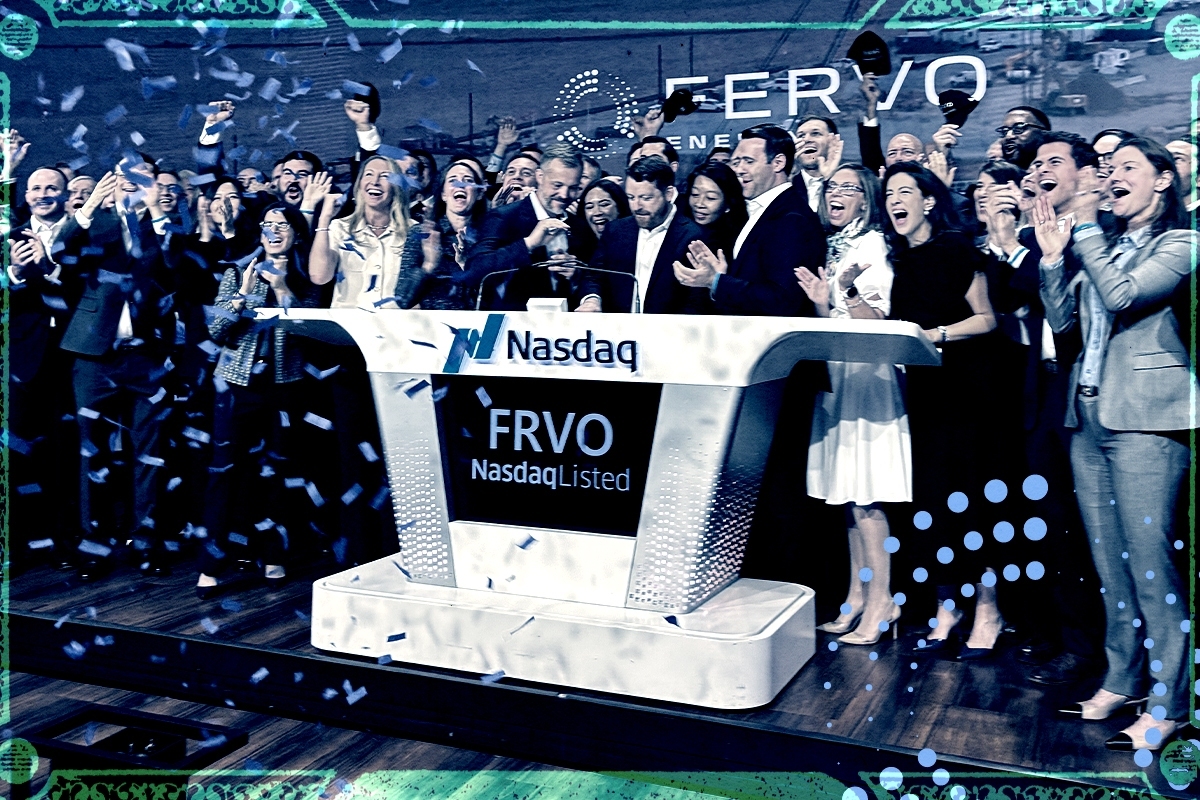
Fervo Energy’s announcement hit the geothermal industry’s smoldering embers like a splash of gasoline. Investors saw a reliable new source of carbon-free electricity that could tap into existing oil and gas supply chains and workforces and clamored to put their money into the startup, which had raised roughly $1.5 billion from private investors prior to the IPO. As the need for more energy to power data centers for artificial intelligence has grown, that interest has only intensified. Case in point: The company actually upsized its initial public offering on the Nasdaq stock exchange this week.
The money from the IPO, the company said in its initial filing with the Securities and Exchange Commission, would go to Fervo’s flagship installation at its debut 500-megawatt Cape Station plant in Utah. When all was said and done after the company’s Tuesday debut, it had netted nearly $1.9 billion — about 50% more than the initially planned $1.3 billion. When trading picked up again on Wednesday, the price soared more than 30%, to over $36 per share.
Late Wednesday afternoon, I spoke to Sarah Jewett, Fervo’s senior vice president of strategy, to discuss the IPO and what’s next for the company. The transcript of our conversation, conducted over Zoom, has been lightly edited for clarity and length.
Congratulations, Fervo has just made quite the stock market debut. Just a few days ago, the company upsized its initial public offering. Then yesterday, when the FRVO ticker officially launched at the Nasdaq, you ended up raising nearly $1.9 billion, beyond the $1.3 billion you initially anticipated. You must be feeling pretty good today.
I’m teeing you up for the pun here, Alexander: Geothermal is so hot right now. The IPO is not a finish line for Fervo. It is a financing milestone that facilitates the build out of more clean, firm, reliable, affordable energy. That is what we are most excited about as we ring the bell in Nasdaq. As we celebrate, we are more excited than anything to get back to work, to put clean megawatts in the grid.
Well then, let’s drill down on that. What were you seeing from investors before the IPO?
Investors, when we went around to sell, sell, sell , they were familiar with the need for energy. They were familiar with what’s happening in tech and AI. They were familiar with the existing solutions for power. They saw us as a new entrant into the scene that is highly capable of bearing the weight of resolving this intense energy crunch. Because of that, as we sold our story over the IPO roadshow, we just saw insane demand and decided it was the right idea to upsize the round.
Beyond the big player in conventional geothermal, Ormat Technologies, there haven’t really been many pure-play options in the retail market for people who want a piece of the action more broadly within geothermal. Where do you draw the line between where investors are buying into Fervo, specifically, and where they are buying into geothermal, generally?
These are really sophisticated investors. It’s overly reductive to say they’re just investing in us because we are a leading contender in an interesting industry to them. These are sophisticated investors who have vetted our technology, our performance, our execution to date, how we think about growth. They really bought into that story, specifically, as being a story that they believe to have real sustainability.
Where do you see the biggest potential competition? Do you think it will come from an incumbent player who makes a pivot into the next-generation market? Or do you think one of these other startups in the mix such as Sage Geosystems or XGS Energy or Quaise Energy could find similar success to Fervo?
We’re driving a rising tide that should lift all boats. I’m not going to publicly place bets on who I think will be the closest follower. But I’m hopeful that we will start to see more successful competitors in the years to come. The market that we’re addressing is massive right now. Because of that, we should see enhanced competition going forward. In some ways, we would be disappointed if that weren’t the case. We have developed a technological solution that is really meaningful. It should encourage others to come try to do the same.
Fervo is really differentiated in the years of execution that we have under our belt. At this point in time, we’ve drilled 40 horizontal geothermal wells. That is a huge differentiating factor at this point in time. The demand is here now. We are well positioned to meet that demand in a way that is rapidly scalable. We are in the right place at the right time.
We like to say internally that, coming to this point, we didn’t have to contend with Fervo. Now competitors will have to contend with Fervo. We obviously believe in the geothermal energy industry, which is why we’ve been so public with publishing our data and talking about what we’re trying to do. But we do really think that we have a substantial lead on the market, just in execution. And then, of course, we have immense amounts of IP and data and learnings to go with it.
Do you plan for the primary business to remain electricity production? Do you foresee going into industrial heat, or district heating in Europe?
We will pursue all of those as business lines in the future. Right now, we are proving ourselves to be uniquely good at delivering power projects. That will be our focus for the near term.
I know you have been focused on the U.S. Where are you looking internationally?
The U.S. is a substantial market at this point in time, so while we do plenty of business development outside of the United States, right now we’re focused on developing at home.
How long will it take for the company and for the industry more broadly to start developing overseas projects in a big way?
We’re close to that already. It’s just a question of what is smart from a business model perspective, and when the timing is right. I’m probably not at liberty to say right now when the timing will be right to really lean into a thriving export side of the business.
If you had to estimate, what would you say is the share of your investors now who are classic energy investors — the types of people who would have been buying into or did buy into shale — versus the share you think are motivated by climate concerns and the clean energy potential of what geothermal is doing? Obviously I realize there’s plenty of overlap. But if you had to discern between those camps, where would you say you’re more indexed?
I would say the majority of energy sector specialists who are investing in this deal are either technology agnostic or are focused on the clean energy side of the business. We do have some marquee shale investors that we will be bringing on as part of the public offering that we’re really, really excited about. So, it’s probably a healthy mix.
Is the shale industry the best analog for how you expect geothermal to scale?
Certainly on the subsurface side it is the closest analog to what we’re doing. We are taking technology that was developed for the shale industry in the subsurface, then we’re deploying it in a similar fashion, which is just over and over and over repeated wells to ensure that we are learning at a really rapid rate and then achieving cost reduction on a learning curve in a single basin. That is a big part of our cost reduction story.
The other thing that we talk a lot about internally is bringing a manufacturing mindset to geothermal energy. It is an industry that has historically been much more akin to a construction industry, building bespoke projects that are tailored for a bespoke commercial need. That is not what we’re trying to do. We’re trying to build a much more scalable business. In order to build a scalable business, you have to establish what is the unit that you are standardizing around and iterating upon. We intend to standardize our design, and iterate and optimize off of a standardized design to allow us to move really fast and to get a lot better, to pull costs out of the business and to be able to scale.
Given how much faster you guys are coming to market, obviously, you have an advantage here over some of the new nuclear technologies being promoted right now. Do you think geothermal is mostly going to eat into the potential market that those could serve? Or do you see nuclear as having different use cases than what geothermal can do?
It’s an overlapping use case, for sure. We don’t talk a lot about eating market share, because the pie is really, really large right now.
How soon before we can anticipate building enhanced geothermal systems on the East Coast and in the Northeast, places where the subsurface heat is not as easily accessible as in the Southwest?
We like to remind people that the demand in the West is massive right now. Probably 18 months ago, we weren’t having as productive conversations with hyperscalers about siting the West as we are today. Today we are having tons and tons of conversations about siting and co-locating alongside geothermal projects in the Western U.S. So the market is really big. We like to mention that just to remind people that expansion is not the only marker of success here.
That said, there is hot rock everywhere, it’s just a question of how deep that hot rock is. We, through our standardized and iterative and repetitive approach in the subsurface, are meaningfully driving cost out of the subsurface, making depth much more of an economic question. If it is more expensive to drill to a certain depth but you already pulled an immense amount of cost per foot out of your drilling, then temperature at depth becomes more accessible even when it’s deeper.
Because drilling is just a portion of the capex of these projects, and a power plant doesn’t care whether it’s located in the West or the East, we basically think that we can move into the Eastern U.S. sooner than we probably had originally thought. It is our goal to do that sometime in the next decade.
In the scant polling I have seen on partisan attitudes on geothermal, most American voters are unaware of it, but among those who are, there seems to be a pretty close match to nuclear in terms of emerging as a rare purple form of energy with closely aligned support between Democrats and Republicans. As you grow, how are you thinking about maintaining that broad appeal and reaching more of those Americans still in the dark?
We benefit from being in an incredibly bipartisan seat right now, and that has been so helpful for our growth and development and is very important to us to maintain going forward. There’s no reason why it shouldn’t be bipartisan. It is a story that is relatable to all. We are highly adjacent to the oil and gas supply chain and oil and gas workforce. We are reliable energy. We are driving towards affordability. We are a clean energy industry with no operating emissions. And really, more than anything, we’re trying to build in a sustainable fashion. We’re trying to deliver projects the right way. It’s something that we have really been able to gain support on both sides of the aisle.
Obviously, that’s been hugely beneficial as we think about extending tax credits. Geothermal energy benefited from increasing tax credits under the Inflation Reduction Act, under President Biden. Then President Trump preserved geothermal energies tax credits in the One Big Beautiful Bill Act. That was hugely helpful to Fervo’s early development.
As we look to bring the cost of the technology down, we hope to continue educating a large group of stakeholders about this technology going forward, and continuing to bring people along with the story, no matter which side of the aisle they sit on.




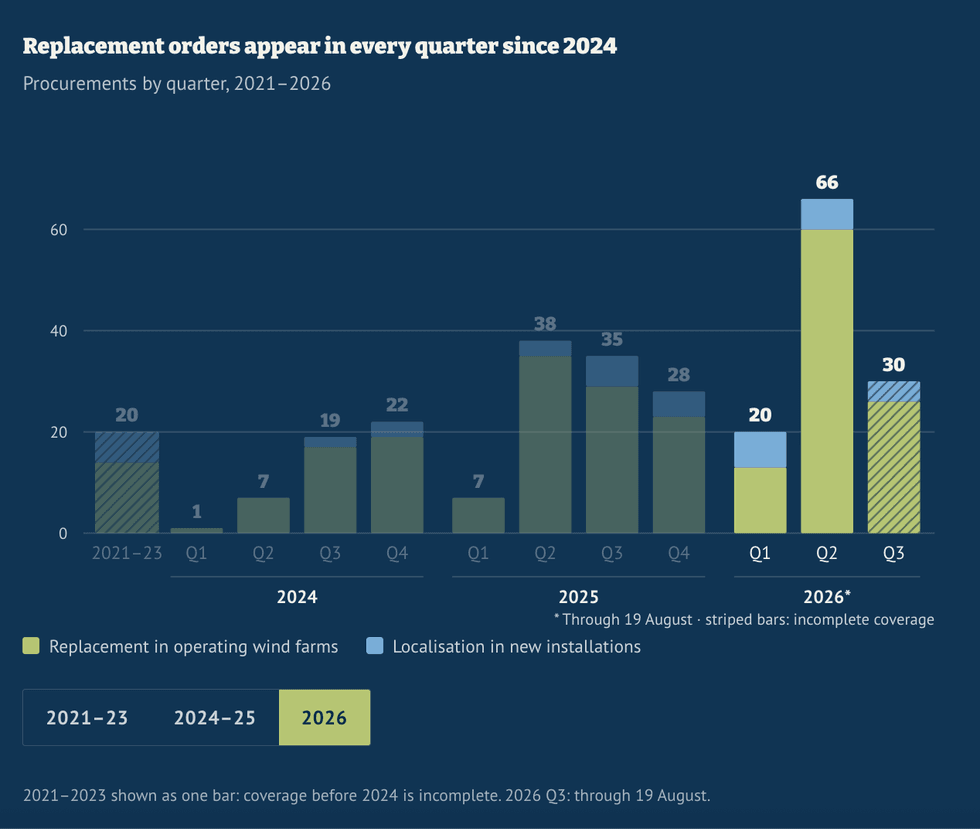 The great localization push of 2026. OSW
  The 1990s are back. EIA