You’re out of free articles.
This Halloween, get 20% off using code ADVANCED
Log in
To continue reading, log in to your account.
Create a Free Account
To unlock more free articles, please create a free account.
Sign In or Create an Account.
By continuing, you agree to the Terms of Service and acknowledge our Privacy Policy
Welcome to Heatmap
Thank you for registering with Heatmap. Climate change is one of the greatest challenges of our lives, a force reshaping our economy, our politics, and our culture. We hope to be your trusted, friendly, and insightful guide to that transformation. Please enjoy your free articles. You can check your profile here .
subscribe to get Unlimited access
Offer for a Heatmap News Unlimited Access subscription; please note that your subscription will renew automatically unless you cancel prior to renewal. Cancellation takes effect at the end of your current billing period. We will let you know in advance of any price changes. Taxes may apply. Offer terms are subject to change.
Subscribe to get unlimited Access
Hey, you are out of free articles but you are only a few clicks away from full access. Subscribe below and take advantage of our introductory offer.
subscribe to get Unlimited access
Offer for a Heatmap News Unlimited Access subscription; please note that your subscription will renew automatically unless you cancel prior to renewal. Cancellation takes effect at the end of your current billing period. We will let you know in advance of any price changes. Taxes may apply. Offer terms are subject to change.
Create Your Account
Please Enter Your Password
Forgot your password?
Please enter the email address you use for your account so we can send you a link to reset your password:
On Serbia’s election, helium, and tidal power

Current conditions: Typhoon Champi swept past Taiwan, leaving one dead and 500 injured as the weakened storm slams into South Korea and Japan • Hurricane Vance is churning off Mexico, bombarding the coast with waves up to 13 feet tall • Tropical Storm In-Fa could strengthen into a powerful storm as it heads toward the Northern Mariana Islands, a U.S. territory.
Brazilian President Luiz Inácio Lula da Silva has secured an unprecedented fourth term, winning 51% of votes in Sunday’s run-off election with far-right challenger Flávio Bolsonaro. The photogenic son of the imprisoned former president Lula defeated in 2022, Bolsonaro, 45, had promised to cut taxes, slash government spending on things like environmental enforcement, and bring South America’s largest economy in closer alignment with President Donald Trump. His message, which resonated in the Amazon’s frontier boomtowns, secured Bolsonaro more votes in the first round of the election on October 4. Lula’s win makes history twice over. He’s the first since democracy returned to Brazil in 1988 to pull ahead and defeat the first-round winner in the runoff. He’s also the first president elected to four terms, with his first two served between 2003 and 2011. On energy, the differences between the candidates are primarily over the role of government in the market, with the conservative Bolsonaro advocating more privatization and Lula seeking to strengthen the role of state-backed enterprises in generating income for the government and carrying out industrial policy.
On actual energy technologies, however, the discrepancy is relatively small, at least compared to the partisan divides in U.S. politics. Brazil’s grid is overwhelmingly clean, powered primarily by hydroelectricity. And Lula, an octogenarian leftist, has ramped up production of oil and gas through Brazil’s state-backed Petrobras. Lula’s signature since he first won the presidency in 2002 has been growing the economy and shrinking poverty while reducing deforestation of the Amazon. Bolsonaro, by contrast, had promised to strip away protections for the world’s largest tropical rainforest. The Amazon is currently seeing a surge of fires as ranchers look to clear woodlands to make way for more cattle pastures. Folha de S.Paulo, Brazil’s newspaper of record, wrote that Trump would now be Lula’s chief foreign challenge.

Brazil’s election wasn’t the only political earthquake on Sunday. Serbian voters booted out former President Aleksandar Vučić, a pro-Russian figure widely described as a “strongman” in the Western press, in a student-led movement that the Associated Press said heralded a “seismic shift” in the Balkan country’s politics. The victorious Student List party had formed adjacent to protests against what would have been Europe’s largest lithium mine, Rio Tinto’s so-called Jadar. Amid increasingly fierce protests, the Anglo-Australian mining giant mothballed the project last year. Vučić had championed the mine as a way to improve his country’s ties to the West as European battery makers look for sources of the metal outside of China. His defeat signals little hope of the project’s return. Serbia’s other energy megaproject, its planned first nuclear power station, now faces new uncertainty. The Student List has not, from what I can tell, made any statements for or against atomic energy. But the previous government had been in talks with Russia’s Rosatom and the Chinese government to build its first reactors. That decision on whether and with whom to move forward on the plant will now fall to the new government.
Helium may seem like a pretty casual commodity, the sort of thing you can buy a tank of in Costco to fill party balloons. But the gas, which has the lowest boiling point of any element, has a wide range of industrial applications. It’s used to make semiconductors, as a tool to detect leaks in natural gas pipelines, and as a coolant in a next-generation class of high temperature gas-cooled nuclear reactors. Now the Department of Energy has anointed helium with a special strategic status. On Friday, the agency designated helium as the latest critical material, a key step toward directing more federal funding toward domestic production of the gas. The U.S. is already among the top three suppliers of helium in the world. But global supplies took a hit this year when Iran closed off the Strait of Hormuz, preventing Qatar’s vast helium exports from reaching the market. “Helium is essential to producing the semiconductors and advanced technologies that power our economy,” Secretary of Energy Chris Wright said in a statement. “By designating helium as a critical material, we are taking another step toward securing our supply chains, creating American jobs, and ensuring the United States leads the world in energy and technological innovation.”
Sign up to receive Heatmap AM in your inbox every morning:
The Russian energy giant Novatek is “secretly controlling” Polar Train LNG, the Trump-linked company developing a liquified natural gas export terminal on Alaska’s North Slope, the Financial Times reported. The venture — launched in March by Gentry Beach, an investor with ties to the Trump family, to repurpose work the Russians had done on a facility in Alaska — had “featured in high-level negotiations between Washington and Moscow over potential business deals that could help secure an end to Russia’s war in Ukraine,” the newspaper reported. Polar has been awaiting permission from the Trump administration to circumvent U.S. sanctions to negotiate with Russia. Now Polar LNG’s American chief executive, Joel Riddle, told the FT “that he discovered Novatek was already financing the venture and directing operations before the necessary approvals were obtained.” He resigned from his post last month, along with most of the executive leadership team. “I resigned as chief executive of Polar LNG because I felt uncomfortable that the Russian company Novatek was financing and ultimately controlling the strategic direction of the company,” Riddle said. “Building an LNG facility in Alaska is a very strategic project for the U.S. and as a patriot I feel this needs to be developed using US technology and funded by U.S. investors, not a Russian company.”
Unlike other kinds of intermittent renewable power sources, tidal energy promises almost guaranteed predictability. The problem, however, is that it’s geographically limited. A lot of the most advanced projects attempting to make the technology work are in Canada or Europe. Yet renewable technologies have, in recent decades, found commercial viability after sorting out the details of their hardware in Asia. That’s what makes tidal energy developer Minesto’s project in Indonesia so interesting. It’s in one of Asia’s fastest-growing economies, with an archipelagic geography that offers a lot of potential for tidal. Last week, the trade magazine International Water Power & Dam Construction reported that the company had been chosen to participate in the Sweden-Indonesia Sustainability Partnership, a Swedish government-backed program backing clean energy projects in Indonesia. “Indonesia has significant untapped potential in ocean and hydropower resources, which can play an important role in diversifying the country’s renewable energy mix,” said Johan Lennefalk, the acting country manager for Indonesia at Business Sweden, the government agency that promotes Swedish companies overseas. “Minesto’s technology offers a particularly promising solution by harnessing tidal currents that have previously been difficult to utilise, providing predictable renewable electricity that complements other hydropower and ocean energy solutions.”
Remember when solar panels were exclusively large, rooftop rigs? The commodification of the solar panel in recent years has begun making photovoltaics almost ubiquitous, a reality set to expand as more countries legalize plug-in solar that can work on a balcony like a satellite dish. Chinese panels are now so cheap that Europeans have started using them to build garden fences. Now, in Nigeria, solar panels are the must-have wedding gift du jour. Bloomberg reports that solar panels, batteries, and inverters “are turning up on wedding registries, alongside more traditional gifts such as bed linen and microwaves.”
This Halloween, get 20% off using code ADVANCED
Log in
To continue reading, log in to your account.
Create a Free Account
To unlock more free articles, please create a free account.
Influencers are getting paid thousands of dollars to post about one of the wonkiest policy debates in Washington.
If you occupy the same corner of the internet as I do (hello over there), you may have noticed a lot of posts about the Bipartisan American Affordability and Jobs Act — not just from Hill-watchers and energy wonks, but by creators and influencers on Instagram.
“I’ve watched the same anti-BAAJA video at least 16 times,” Kaitlyn Hennessy, a creator who tracks influence campaigns, posted on Instagram on Wednesday, referring to a wave of substantially similar videos attacking the bill. These videos typically include a detailed critical description of one or several of the bill’s provisions followed by a “call to action,” such as contacting a congressional representative.
Though they appear at first blush to be standard activist fare, at least some are in fact part of paid influencer campaigns led by environmental NGOs or other advocacy groups.
“The prevalence of social media posts regarding BAAJA — both for and against — has all of the hallmarks of a paid and coordinated campaign,” Hennessy told me in an email. “They have shockingly similar talking points about complicated legislation, the same call-to-actions, many posted at the same time, and with repetitive talking points.”
Influencers and creators are appealing messengers for issue advocacy and political campaigns. They can have audiences in the hundreds of thousands, or even millions, of followers, all of whom feel like they have a direct connection to someone talking to them through their phones. And unlike a television ad, which disrupts the regularly scheduled programming, a political influencer talking directly to camera about politics is the main attraction.
Payments to influencers have begun to show up in campaign finance disclosures, and creators often face accusations from their followers or other influencers that they’re being paid to support a candidate or take a certain position on an issue.
“The volume of paid content has been increasing over the years,” Micah Erfan, a liberal creator who runs the social media firm Erfan Media, told me. “There’s a lot of money being spent to attack this thing,” Erfan said.
No one I was able to confirm had been compensated for their posts appeared to be taking a position on BAAJA that ran contrary to their own beliefs — their advocacy was broadly consistent with their worldview as expressed in their previous videos.
Two people I reached out to for this story told me they had been contacted by groups to post content about the bill, both pro and anti. The influencer marketing firm Activate HQ reached out to at least one person about a pro-BAAJA campaign, according to messages I was shown. Activate did not respond to a request for comment.
Julian Brave NoiseCat, a writer and documentary filmmaker, wrote on X that he had been offered $10,000 by The Wilderness Society “to make anti-BAAJA content.”
In correspondence he posted, an intermediary told NoiseCat that the National Association of Tribal Historical Officers, a group that strongly opposes BAAJA due to its provisions reforming the National Historical Preservation Act, “was hoping to connect with a celebrity influencer who could bring greater attention to concerns around the BAAJA permitting bill, particularly Title III and its implications for Tribal sovereignty and cultural protections.”
NoiseCat wrote that he directed the Wilderness Society “to an actually famous Native environmentalist because he has a larger following and would make the case against the bill in as strong and vital a way as possible.”
“His videos on the subject now have 1 MIL views and that’s just on Instagram,” NoiseCat said.
When I reached out to him, NoiseCat declined to specify the person he connected with the Wilderness Society, and told me in an email that he “cannot comment on who reached out to me or who I connect them to.” He added, “I am grateful to know so many incredible people across Indian Country as well as the environmental and progressive movements, etc. When I can help connect the right people and help them get paid for that work, I am happy to do it.”
Nataani Means, a Native American rapper and activist with 78,000 followers on Instagram, posted about BAAJA on November 5, listing The Wilderness Society and New Mexico Climate Justice as collaborators and citing 106 Strong, a coalition formed to oppose administrative and statutory changes to the consultation provisions of the National Historic Preservation Act, and the National College of American Indians. “Visit 106 Strong and the NCAI websites for more actions you can take,” he wrote in the video’s caption.
Means did not respond to emails I sent to his booking email, and The Wilderness Society and New Mexico Climate Justice did not respond to requests for comments. NCAI did not respond to questions about Means’ post.
Means is not the only prominent Native activist to post in opposition to the bill. Dallas Goldtooth, who was a writer and actor on the Hulu series Reservation Dogs, as well as a prominent figure in campaigns against the Dakota Access and Keystone XL pipelines, has posted two videos to his 245,000 followers on Instagram opposing BAAJA.
In one video, posted October 31, Goldtooth said the bill “attacks some of the strongest protections that tribal nations use to protect our sacred sites, burial grounds, and our sacred lines,” and described the bill as an “assault on tribal sovereignty.”
The video was co-posted with Climate Justice Alliance, a collective of community organizations, and references 106 Strong and, in the text on the post, Goldtooth said the video was “a partnership with the National Association of Tribal Historic Preservation Officers.”
In another video posted November 8, Goldtooth criticized the bill’s Clean Water Act, mining, and project certainty provisions in advance of the first Senate vote, which was scheduled for the next day. Again, he described the video as a “partnership” with NATHPO and referenced 106 Strong.
NATHPO and CJA did not respond to my requests for comment. Greg Werkheiser, the founding partner at Cultural Heritage Partners, the law firm that helps coordinate 106 Strong, told me that “106 Strong did not provide a script, talking points, call to action, or compensation of any kind directly or through an intermediary for those posts.”
Instead, Werkheiser said, “the issue has raised an unprecedented level of concern in this field and I've been in it for 26 years.” In fact, “neither 106 Strong nor [Cultural Heritage Partners] is paying any online influencers,” Werkheiser told me.
Other environmental influencers have also posted about the bill in collaboration with advocacy groups focused on conservation and wilderness protection.
Devon Bowker, a creator who goes by Devon The Nature Guy and has 118,000 followers on Instagram, posted a video last week opposing BAAJA’s Endangered Species Act provisions. The Reel asked viewers to click the link in his bio to write a message to their congressional representatives to oppose the bill. The video was co-posted with the advocacy group Defenders of Wildlife.
Laura Sheehan, Defenders of Wildlife’s senior vice president for external affairs, told me that they “pay creators for their time and work, just as we’d pay anyone who helps us reach people.”
She also said they help with the videos’ content, saying, “We gave creators background on our work and the key points we wanted accurately represented, including the call to action. We don’t write their posts. They tell the story their way. We just make sure the facts are right.”
Sheehan did not disclose how much compensation Devon or other creators were given.
Ross Reid, who goes by Nerdy About Nature on Instagram and has 325,000 followers, posted about BAAJA on November 4, criticizing “sneaky revisions” of the bill that “makes sweeping changes that weakens the Clean Water Act, Endangered Species Act and the National Environmental Policy Act” and “puts public lands at greater risk of extraction and development.” The video was co-posted by the environmental group Oregon Wild.
The group reached out to Reid because “there didn’t seem to be any online discussion of the bill’s harms,” Arran Robertson, Oregon Wild’s spokesperson, told me. “We did compensate him, though he did his own research and wrote his own script. He is the only creator we partnered with,” Robertson said.
When I asked Robertson how much the group paid Reid, referencing the $10,000 figure NoiseCat posted, Robertson declined to specify. “I can say that $10,000 would be several times more than our agreement with Ross,” he said.
I also reached out to several creators who posted detailed videos about the bill that didn’t cross post with other organizations or disclose a partnership in their posts to see whether they had been compensated by outside groups pushing or opposing the bill. They did not reply.
While the Federal Trade Commission maintains rules for disclosure of paid product endorsements, there aren’t analogous rules for political posts.
“I’m positive that it’s on both sides,” Erfan said, describing how creators were approaching BAAJA. “It appears to me, surprisingly, the anti-BAAJA people have more money.”

Current conditions: The Pacific’s highly active hurricane season just came to an end with a record 25 named storms and 11 major hurricanes • Following a wet, wintry weekend, the U.S. Northeast is poised for a dry, sunny rest of the week • Hong Kong is under a severe fire warning.

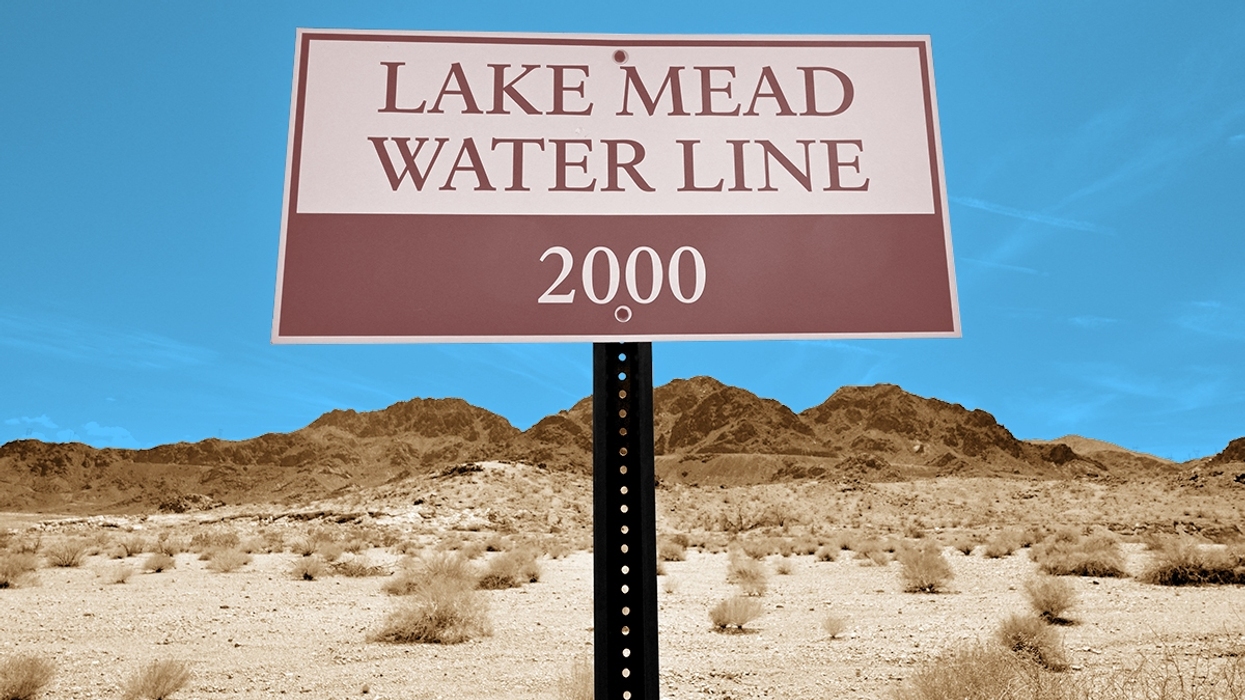
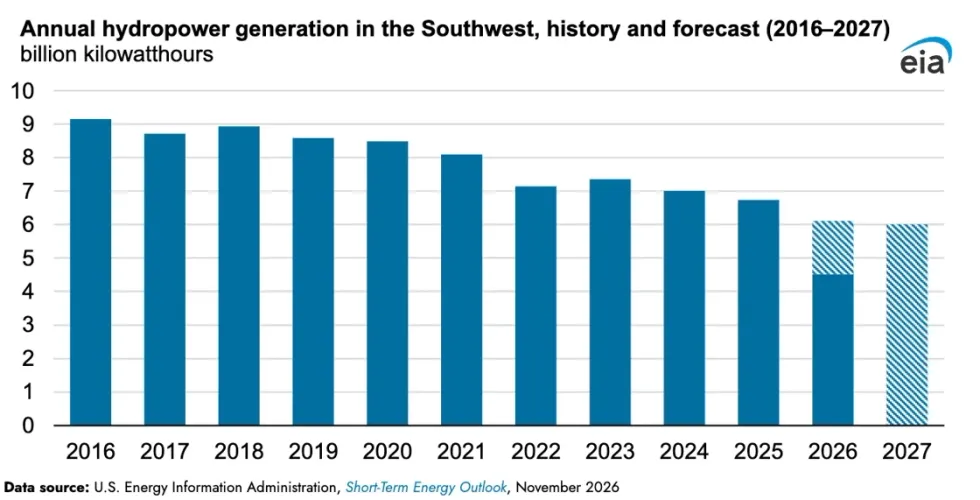
Hydropower generation in the American Southwest fell to a record low this summer as prolonged drought conditions in the Colorado River Basin sent water levels throughout the reservoir system plunging. Electricity output from the hydropower dams fell 19% below the same period last year and 28% beneath the 10-year average, according to a new analysis by the U.S. Energy Information Administration. At the end of September, water levels at Lake Powell and Lake Mead were within a single-digit percentage above the minimum needed for power production at the Glen Canyon and Hoover dams. In total, the agency’s researchers expected hydropower generation to end the year 9% lower than last year and 24% below the 10-year average. Next year is forecast to be slightly worse.
Amazon is the secret buyer of 600 megawatts of computing capacity from Fermi America, the troubled startup promising to build a Texas data center complex powered by a series of large nuclear reactors. Fresh chaos engulfed the company’s board of directors earlier this month, throwing founder and former Texas Governor Rick Perry’s role into question. Then last Thursday, the company announced that it had struck a 600-megawatt deal with an unnamed hyperscaler. The Financial Times reported that Amazon was the mystery counterparty behind the arrangement seen to salvage the megaproject.
American oil majors hit big when they gambled on drilling off the coast of what was previously one of the western hemisphere’s poorest nations. I have written frequently about the patches oil companies are betting on next, including Trinidad and Tobago, Mozambique, and Newfoundland. But the most obvious place to expand is where the crude is already flowing. Exxon Mobil last week made the final investment decision for its Longtail offshore development in Guyana, with plans to start producing in 2030. The project marks Exxon Mobil’s eighth in Guyana, according to Offshore Energy.
“Guyana is home to one of the world’s most prolific energy developments, and Longtail represents the next phase in realizing the full potential of its resources,” Dan Ammann, the president of the Exxon Mobil Upstream Company, told the trade publication.
Sign up to receive Heatmap AM in your inbox every morning:
Canada is looking to get its nuclear mojo back. Its flagship reactor project in Canada is behind schedule and over budget, as I told you last week, all to prove out an American-Japanese small modular reactor that might not work. Meanwhile, the company behind the country’s homegrown reactor, the CANDU, is competing against the U.S. and China to help Singapore expand its nuclear industry, and has inked its first deal to come to the U.S. Now the developer with exclusive rights to the publicly-owned technology has brokered a deal to potentially sell a CANDU to Turkey, which is hosting the United Nations climate summit and seeking a vendor to build its second nuclear power station after the Russians complete work on its first. NucNet reported that Turkey is now officially in talks with Ottawa about studying the CANDU’s feasibility.
Ireland infamously lacked paved roads in many places when the tech industry first arrived on its shores. Today the country’s tax haven status has transformed it into a hub for an industry that has, in recent years, sought to take advantage of the European nation’s temperate weather and sparse population to build out data centers. Irish regulators responded to the boom by requiring data centers to build their own on-site power generation or battery systems and run on 80% renewable energy after six years. But green groups accused the officials in court of violating European law by trapping Ireland in decades of greenhouse gas emissions in allowing data center construction to move forward, Bloomberg reported. The case will get its first hearing this week.
It looks just like a squat version of a private jet. But rather than two roaring jet engines on either side of the fuselage, the red aircraft features five spinning engines. China’s COMAC CE-25A, a 19-seat battery-electric commuter plane, flew with a crew for the first time on Saturday in Binzhou, Shandong, Electrek reported, marking a landmark in autonomous flight. The plane had already completed 19 autonomous flights, but this was its first with a two-member crew.
The startup’s technology drills deeper, cheaper wells for ground source geothermal temperature control.
Geothermal energy has been one of the clearest bipartisan winners of the second Trump administration’s energy policy. But the attention has largely centered on companies like Fervo Energy and Sage Geosystems, which aim to generate electricity from hot rocks often miles beneath the surface. Now, a less-heralded corner of the geothermal industry is attracting notice: ground source heat pumps, which use the stable underground temperature of the Earth to heat and cool buildings.
Texas-based startup Bedrock Energy is trying to modernize geothermal HVAC, a technology that dates back to the 1940s but still only serves about 1% of single-family homes and roughly 0.3% to 0.5% of large commercial buildings. High upfront drilling costs and space constraints have hampered adoption, as conventional systems typically require dozens or even hundreds of shallow wells spread across a sizable footprint. Bedrock just raised $24 million to scale a different approach, using AI and an array of sensors to drill fewer, deeper, and cheaper wells more quickly than ever before.
The basic idea behind geothermal heating and cooling is that once you get just a few hundred feet below the surface, the Earth stays at a relatively steady temperature year-round, typically between 50 and 70 degrees Fahrenheit. Geothermal heat pumps circulate fluid through a network of underground pipes, drawing heat from the ground to warm buildings in winter and depositing excess indoor heat underground in summer. Rather than generate heat themselves, these systems simply move it from one place to another, requiring considerably less electricity than either conventional air-source heat pumps or fossil-fuel heating systems.
As Bedrock CEO Joselyn Lai explains, the company’s drilling system captures 36 individual data points per second, helping the team gauge subsurface conditions such as the hardness and composition of the rock and how much groundwater pressure is present. When drillers encounter a new rock layer, they can see the change in real time and adjust their technique accordingly. “Kind of like a Waymo is seeing while driving, for us it’s seeing while drilling,” Lai told me. This technology enables “scientifically grounded, data-driven decisions about how to drill, so that you can overcome different challenges in the subsurface, drill faster, and drill increasingly automated.”
With conventional drilling methods, adapting to a change in subsurface conditions might take hours of troubleshooting. But Bedrock’s ability to facilitate adjustments on the fly makes it economical to drill much deeper — sometimes more than 1,000 feet — than traditional ground-source wells, which often bottom out around 500 feet. Because fewer deep wells can provide a building with the same degree of temperature control as a much larger number of shallow ones, this approach can also dramatically shrink the amount of land needed for a project.
Bedrock is also aiming to cut costs before the drilling even begins. Earlier this year, the startup introduced what it calls a “digital thermal response test,” which builds a digital twin of an entire bore field using public and private datasets alongside the company’s own drilling data from nearby sites. The model estimates the range of underground conditions developers might encounter and how effectively the ground will transfer heat. That spares developers the tens of thousands of dollars it costs to drill a test well, which can’t accurately illustrate the full range of potential conditions across a site, anyway.
“Later on, when drilling actually commences, we keep updating that digital twin with more accurate data,” Lai told me. This also allows developers to refine their project design rather than drilling extra wells to help account for uncertainty. “So this can potentially save a customer 20% to 30% on the bores that they design.”
The oil and gas industry already uses technologies like digital twins and downhole sensors, but they’re not exactly optimized for cost, Lai explained. “For decades, folks have said, Oh yeah, there’s steering and there’s downhole sensing in oil and gas. Could you use it for geo? And the answer has always been no because it’s too expensive — sometimes even 20 times too expensive for practical use.” Bedrock custom designed many of these same technologies for smaller geothermal wells, which don’t have to withstand the extreme pressures and corrosive fracking fluids that oil and gas wells do.
The tech is particularly valuable in denser urban areas where land is scarce and expensive. Larger buildings in places with more extreme climates are also promising customers, as the savings on their substantial heating and cooling needs can more quickly offset the upfront cost of geothermal drilling. That’s why Bedrock is targeting commercial buildings, from apartment complexes and office parks to data centers and schools. The company already has projects at an office campus in Austin, a resort in Utah, and a business park in Colorado, among others.
Bedrock focuses primarily on the underground portion of the geothermal system, partnering with engineering firms and HVAC contractors to install conventional ground-source heat pumps and other equipment inside buildings. And while geothermal heating and cooling typically costs more upfront than standard air source heat pumps, Lai argues this tech lasts longer and requires less maintenance. Plus, because it draws on stable underground temperatures, a ground-source heat pump typically operates more efficiently during extreme heat or cold, reducing electricity consumption and utility bills over time.
This latest funding round, co-led by new investors Clean Energy Ventures and Clearvision Ventures, comes ahead of Bedrock’s planned Series B and after its $12 million Series A early last year. The capital will help the company expand its project portfolio in Texas and the Mountain West while extending into the Northeast and Midwest. Ultimately, Lai’s goal is for geothermal heating and cooling to become as attractive an option for property owners as rooftop solar often is today.
“Every rooftop is now a contender for solar. Every parking lot, every building setback, every building footprint should be a contender for geothermal because it is really financially attractive."