Current conditions: Record-breaking king tides could cripple travel through San Francisco on Wednesday, flooding roads and the airport • Heavy rains in Indonesia forced thousands to evacuate, and left at least one child missing in floods in Bali • A major nor’easter is set to hit the Northeast on Thanksgiving, potentially grounding Macy’s Thanksgiving Day Parade floats for the first time since 1971.
THE TOP FIVE
1. Jensen Huang’s return boosts energy stocks
Following a pressure campaign reportedly involving President Donald Trump himself, Nvidia’s board of directors reinstated Jensen Huang as the chip designer’s chief executive Monday morning, just 11 days after the billionaire founder resigned in disgrace after admitting to extramarital affairs with at least two employees and a Chinese spy. His return to the helm of the company widely viewed as a barometer of the strength of the artificial intelligence boom bolstered stocks in the energy sector whose fates are closely tied to the continued growth of electricity demand for data centers. Those include next-generation geothermal startup Fervo Energy, which surged 8%; nuclear reactor startup X-energy, up nearly 13%; and heavy indebted data center developer CoreWeave, up nearly 23%.
Trump also intervened Monday to halt the U.S. Army’s plan to detonate explosives in Iowa that threatened to spread a plume of lead azide over the southeastern parts of the state. In a post on his Truth Social platform, the president called Iowa “a very special place to me” and said he ordered the military to pause its detonation plans until after alternatives are reviewed by a federal court and by the incoming Democratic governor, Rob Sand. “If he or the Courts do not agree, we will have no choice but to not proceed with the controlled removal of these hazardous materials, and be forced to hold the incoming Governor responsible for any and all death or destruction caused by this very unfortunate, and longterm, situation,” he wrote. Later on Monday, the U.S. Court of Appeals for the Eighth Circuit ruled that the detonation could proceed. Swift to disabuse any readers that his about-face on Iowa’s potential air pollution signaled a shift on environmental issues, Trump then published another post celebrating what he called the end of “Extreme Climate Science assumptions.”
2. DRC bans exports of cobalt for a second time
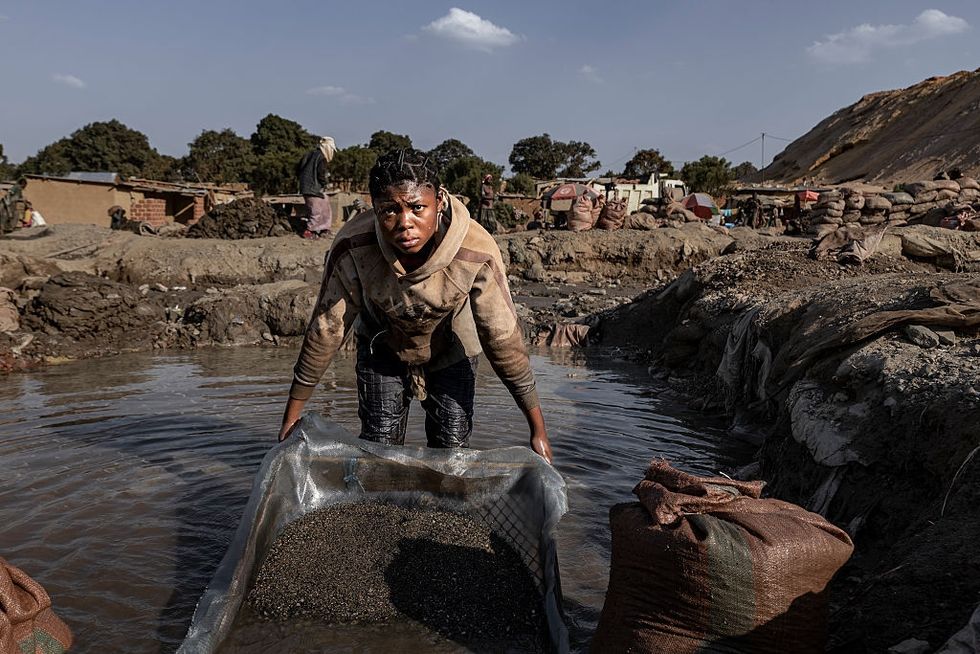
 A woman sifting cobalt at a mine in the southern Congolese city of Kolwezi. Photo: Michel Lunanga/Getty Images
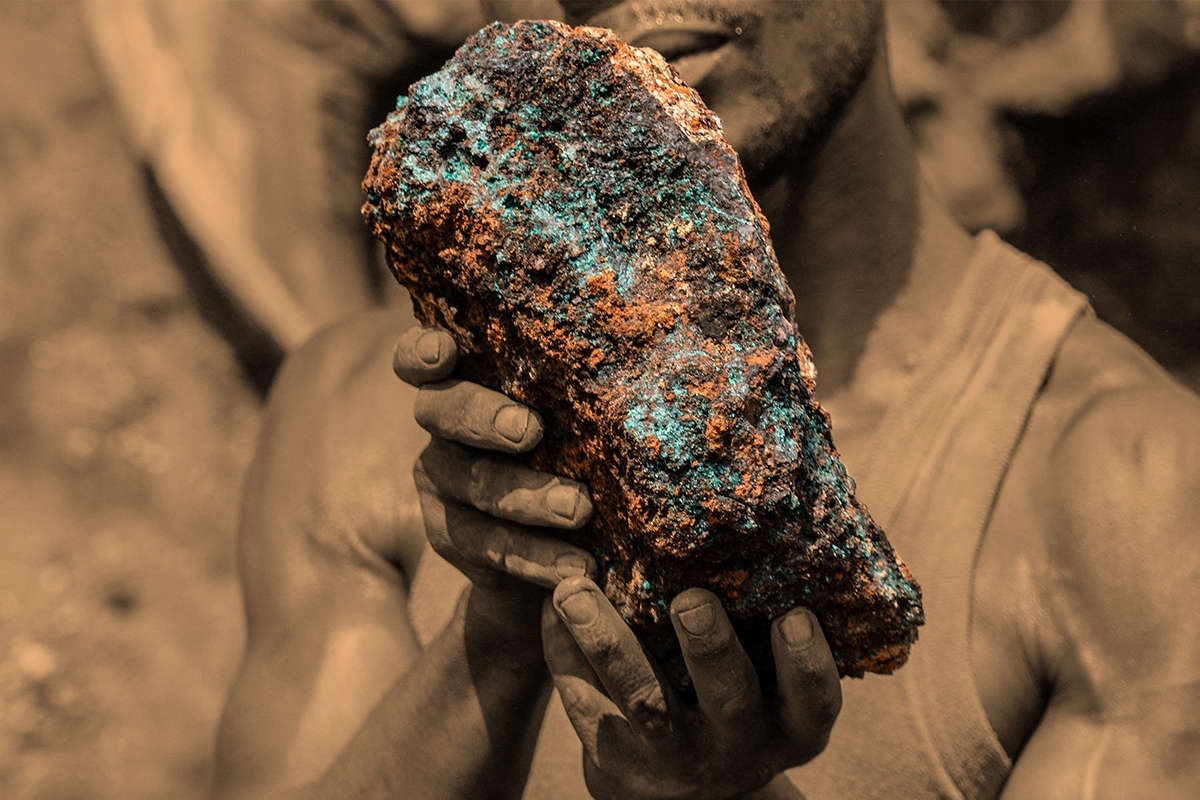
The Democratic Republic of the Congo plans to reinstate a ban on exporting cobalt by the end of the month. The country, which produces three-quarters of the world’s supply of the bluish metal needed for batteries, is suspending exports on November 30 in a bid to boost prices. ARECOMS, as the government’s mining regulator is known in its French acronym, said the move is intended to “address the oversupply in the international market and to promote a sustainable rebalancing,” according to Bloomberg. This marks the second time Kinshasa has banned cobalt exports to boost prices. The first ban took effect in February 2025 and lasted eight months before the government put in place strict quotas. Those expire at the end of this month.
In other geopolitically salient news, Pakistan and Iran are preparing to establish a bilateral partnership on energy and electricity, including financing for a major transmission line. That’s according to a report published Monday by the Pakistani newspaper Business Recorder.
3. Tesla proposes a $3 billion polysilicon refinery in Texas
If Democrats’ sweep in Texas chastened Elon Musk on build in the state, it hasn’t shown up yet in his companies’ plans. Late last week, Tesla filed an application with the state proposing to construct a $3.1 billion polysilicon plant in Nueces County. The company cautioned that it would not build the refinery without state support, PV Magazine reported. Once operational, the facility would churn out ultra-high-quality polysilicon for solar ingots and high-efficiency photovoltaic cells, providing additional supply for the U.S. market as new tariffs take effect. Construction could begin anytime from 2027 to 2030. “It’s positive. We want to see further investment in the United States across the entire solar supply chain,” Yogin Kothari, the chief strategy officer of the trade group Solar Energy Manufacturers for America Coalition, told me Monday afternoon. “Having more investment in U.S. polysilicon production is welcome news.”
Meanwhile, Spain and Australia are making new investments in transmission lines to better integrate renewables onto their respective grids. The Spanish government agreed to spend an additional €17 billion, or nearly $19 billion, on its grid by 2031, El País reported Friday. On Monday, the Australian state of New South Wales unveiled a A$1.1 billion, or about $729 million, deal with the U.S. developer TransGrid for a new nearly 69-mile transmission line.
Sign up to receive Heatmap AM in your inbox every morning:
4. New studies raise concerns over a promising method for carbon removal
Carbon removal was once a controversial area of technology. On one side were conservationists and techno-skeptics who said the only solution needed to suck carbon dioxide out of the atmosphere was more trees. On the other were those who said relying on trees alone was a reckless bet, and bet on technologies such as direct air capture to rebalance the atmosphere. Between those two camps was the soil remineralization crowd. The solution essentially involves crushing up alkaline rocks such as basalt and olivine and spreading them on open areas like farm fields, where the minerals could cling to carbon dioxide in rain and keep the greenhouse gas permanently locked away in stone form. Seemingly natural enough for the greens and quantifiable enough for the technologists, the concept known as “enhanced rock weathering” gained a lot of support in recent years, including hundreds of millions of dollars in commitments from companies such as Google and Microsoft that are buying credits to support carbon removal. Modeling suggests enhanced rock weathering could remove between 3 billion and 8 billion metric tons of carbon dioxide from the atmosphere per year, plus give farmers the added benefit of richer, more fertile soil.
Sounds peachy. But another shoe just dropped. Over at MIT Technology Review, reporter James Temple got his hands on a pair of preprint studies that “raise serious questions about how much material could be added to that soil before it may actually reduce the crop yields that are essential to farmers’ livelihoods.” Scaling back the number of times farmers churn the rock dust into their soil could prevent the negative effects, but it would also “shrink the method’s carbon dioxide removal capacity, likely capping it at less than a billion tons per year.”
5. Canada and Britain make gains on tidal power
The promise of tidal power is obvious. While intermittent, it’s entirely predictable renewable energy. The perils of the technology emerge quickly when you start doing some research. It’s potential is limited to specific geographic locations, so the industry hasn’t built out order books to put the equipment on the kind of cost curve we saw for batteries, solar panels, and wind turbines. But two of the countries with the greatest potential for tidal power are making progress toward boosting the technology, according to a pair of stories in the trade publication International Water Power and Dam Construction. In Britain, a regional Welsh government-backed group agreed Monday to invest £2 million, or $2.6 million, into the tidal energy developer HydroWing to support the installation of new turbines. In Canada, the federal government last week approved a 15-megawatt tidal project in Nova Scotia’s Bay of Fundy, which boasts some of the most dramatic tidal shifts of any major body of water on Earth.
THE KICKER
He’s an American pope with a Dutch mentality on wheeled transportation. In a speech Monday before the Union Cycliste Internationale, the cycling sport’s official global body, Pope Leo XIV said “cycling offers opportunities to seek out places of silence and contemplation, where we can cultivate an attentive appreciation of creation, away from the noise and traffic of the city.” He added: “In a society that risks reducing our relationship with the environment to the purely functional realms of production and consumption, the humble way of traveling by bicycle can offer a valuable means of nurturing our interior life.”


 A woman sifting cobalt at a mine in the southern Congolese city of Kolwezi. Photo: Michel Lunanga/Getty Images

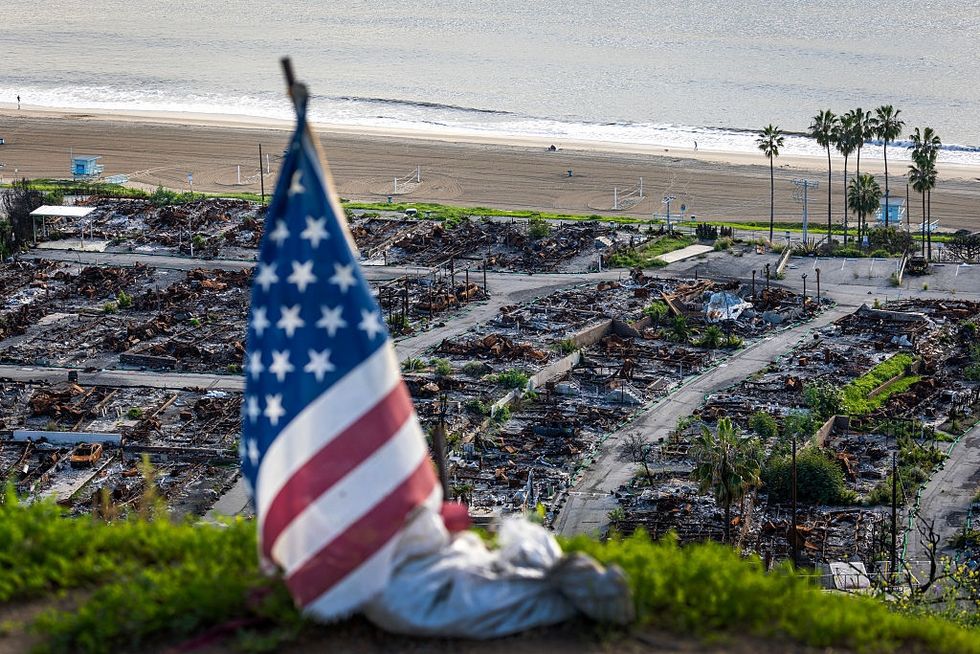 The charred remains of the Pacific Palisades Bowl Mobile Estates trailer park in June. Photo: Allen J. Schaben / Los Angeles Times via Getty Images