Current conditions: Hurricane Simon is lingering off Mexico’s coast as a new tropical depression that could form into a powerful storm begins gathering strength • Iceland has issued an orange-level warning — the notch just below the most severe — across the whole country ahead of an intense storm that could bring vicious winds and snow • The mountain areas surrounding Los Angeles are on red alert for wildfires throughout the rest of the week.
THE TOP FIVE
1. Trump reopens the fight over Orsted’s Revolution Wind
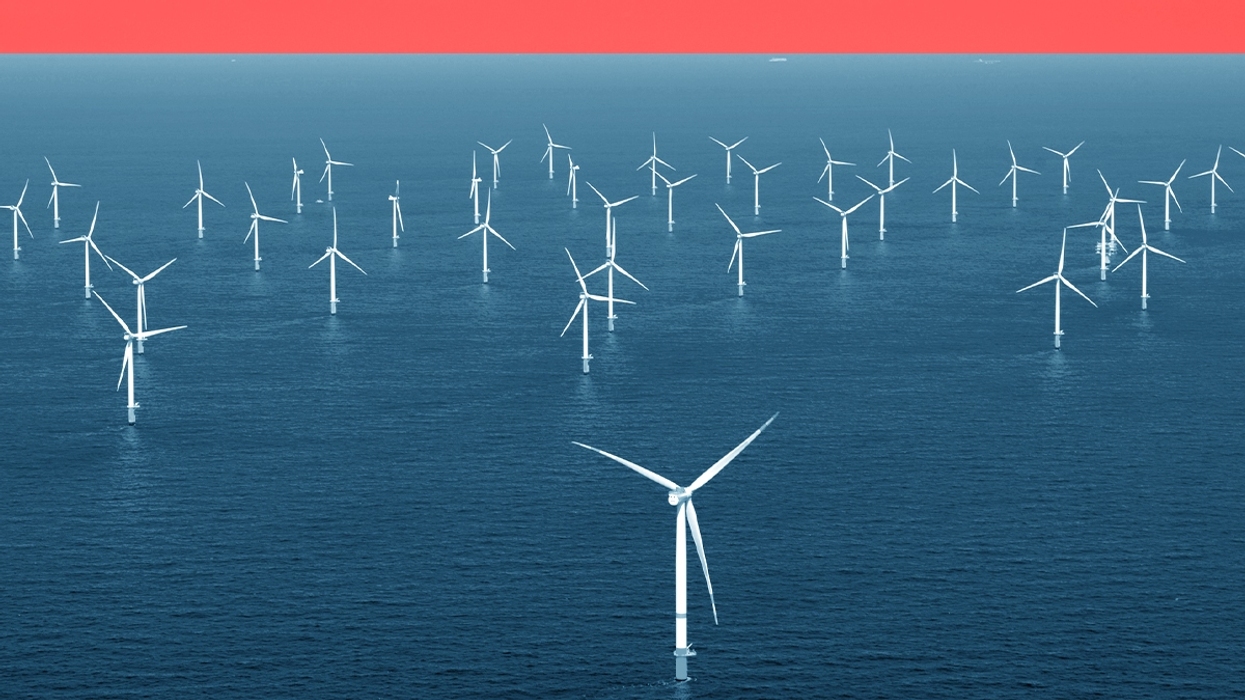
Over Labor Day weekend, I found myself on the upper deck of the ferry to Block Island, a rustic little vacation enclave between Rhode Island and New York’s Long Island, marveling at a seemingly endless horizon of spinning wind turbines. Revolution Wind, Orsted’s first big chunk of the Northeast’s offshore wind buildout, was, as its name implied, an act of defiance. The Trump administration had tried for months to kill the project, which was nearly finished when President Donald Trump returned to office last year. But the Danish energy giant won one battle after another in court, and ultimately brought the 704-megawatt turbine array online. Its completion, however, isn’t the end of the fight.
On Friday, the Department of Justice asked a federal court to rescind the Department of the Interior’s approval of a construction and operation plan for Revolution Wind. Citing a regulatory filing, Bloomberg broke news yesterday that the Interior Department wants to reconsider whether the permit complies with federal law. In response, my colleague Robinson Meyer asked last night whether Trump was “trying to blow up the permitting deal,” which includes a whole section on project certainty. (See my colleague Jael Holzman’s reporting on the bill for more.) White House energy advisor Jarrod Agen appeared to suggest the legal move was a negotiating tactic, calling on “the media” to “stop their attempts to blow up a GREAT deal for the American people.” In a post on X, he said, “This is an old lawsuit brought by the local community—who had serious concerns about this project—against the Biden Administration! The White House maintains support for PERMITTING REFORM! We look forward to the Senate voting on this historic legislation.” In a joint statement Senators Sheldon Whitehouse of Rhode Island and Martin Heinrich of New Mexico, the chief Democratic negotiators of the permitting deal, said “the administration needs to start showing good faith progress on wind permits.”
2. Trump issued more than a third of all executive orders on coal in the past 33 years
Of the 1,583 executive orders presidents have issued since 1993, 22 explicitly mention coal. More than a third of those bore Trump’s signature. That’s according to a new analysis by the Financial Times, whose reporting found that lobbying by the coal industry has significantly increased in Trump’s second term. “When we would meet with the Biden administration they were like, ‘Let’s just keep that coal in the ground,’” Michelle Bloodworth, chief executive at trade association America’s Power, told the newspaper. “It’s been just amazing, unbelievable to have President Trump and the administration talk so publicly about the importance of coal.”
Meanwhile, there’s an optimistic climate case for fossil fuel that has driven the shift away from coal and reducing America’s emissions. The problem with natural gas has always been that, despite producing less carbon when burned, the drilling and transportation of the fuel leaks methane, a powerful greenhouse gas that stays in the atmosphere for less time but traps more heat throughout those decades. But methane emissions from the U.S. oil and gas sector are remaining steady despite surging production, according to new research by Johns Hopkins University. The study, published yesterday in the peer-reviewed journal Communications Earth & Environment, highlights a big reason: “Companies have built more infrastructure needed to better capture methane — a vital component of natural gas — and transport it for sale as a fuel, providing a financial incentive to limit the amount escaping into the atmosphere.” That’s a double-edged sword, the paper’s author said. “The good news is that emissions have not markedly increased, as many scientists feared would happen after an enormous increase in natural gas production in the decades following the hydraulic fracturing boom,” Scot Miller, an associate professor of environmental health and engineering at Johns Hopkins University who studies greenhouse gases, said in a statement. “The bad news is that oil and gas production is still a large percentage of U.S. methane emissions, and we do not find any evidence that a flurry of federal legislation had an impact on emissions.”
3. Cheap wind and solar aren’t reducing utility bills
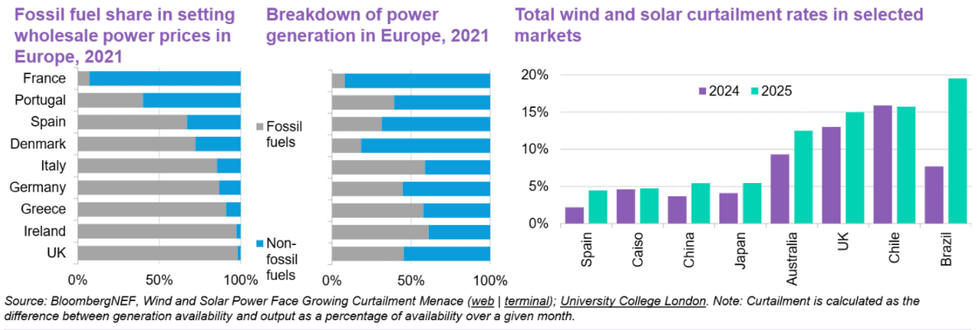
 Curtailments are on the rise. BNEF
Wind and solar is cheap to build, and even cheaper to operate. But data suggests “there is no meaningful relationship between wind and solar deployment” and lower wholesale electricity prices, according to a new analysis from the consultancy BloombergNEF. “This is also the case when considering all renewable generation, and renewable-plus-nuclear power.” That’s because, in many markets, renewables bid at or below zero, and are thus tapped first. As a result, fossil fuels set the marginal price during the hours when they’re in demand as a dispatchable resource when the sun isn’t shining or the wind isn’t blowing. On average, fossil fuels such as gas or coal set the price in Europe roughly 58% of the time in 2021, despite a declining share of generation. In the United Kingdom, it was around 90% in the early 2020s, but has since shrunk to 60%. In PJM Interconnection, the second-largest U.S. grid system, natural gas set the marginal price 60% of hours last year. A big problem is the high rate at which renewable power plants are forced to reduce output below maximum levels to keep from overloading the grid. Across 27 markets worldwide, BNEF found that the average rate at which wind and solar are curtailed was 10.5% last year. “Indeed, more wind and solar deployment may increase other cost inputs for retail prices unless other fundraising mechanisms are used,” the report warned. “For example, renewables integration is a key driver of grid expansion and reinforcement, for which network charges in consumer bills have been a crucial source of funding in many markets.”
So, when will wind and solar actually start reducing bills? It depends on where you’re talking about. Over the next decade, Germany’s prices are set to fall by 20% below the 2025 average. Britain’s offshore wind and solar buildout are expected to reduce prices by 26% over that same period between now and 2035. Spain, on the other hand, is forecast to see steady power prices over the next few years followed by an increase as its nuclear plants come offline. In the U.S., prices in PJM and the Electric Reliability Council of Texas are set to soar “partly due to the phaseout of wind and solar tax credits” and “delays to new gas-fired capacity and transmission build.” The Texas grid in particular could see prices soar by 160% over 2025 levels by 2035. But the Midcontinent Independent System Operator, the nation’s largest grid spanning the Midwest, and New York’s statewide grid are poised for “a gradual decline from 2026 driven by steady renewable additions, lowering the need for thermal generation.”
Sign up to receive Heatmap AM in your inbox every morning:
4. Energy Department invests $581 million into the TVA’s grid
The Department of Energy is pumping $581 million into upgrading the Tennessee Valley Authority’s grid system. The agency said Tuesday the funding would support 84 transmission and distribution projects across eight states in the federally owned utility’s territory, adding about 2.5 gigawatts of capacity. While $331 million will go to cost-share programs that require the TVA and local utilities to kick in funding, another $250 million will come as direct federal funding. “America’s electric grid cannot become a roadblock to economic growth,” Katie Jereza, the assistant energy secretary of the Office of Electricity, said in a statement.
5. Poland formally sets plans for a second nuclear plant
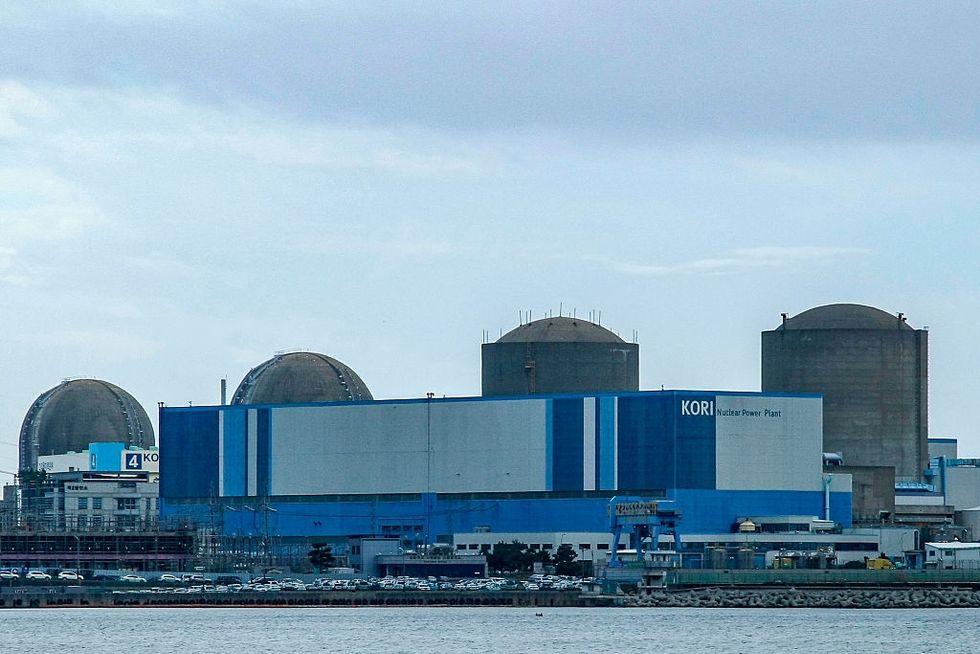
When I visited the site where Poland plans to build its first nuclear power station with a trio of America’s flagship reactors, Westinghouse AP1000s, the area was little more than a cleared portion of a rural field on the Baltic Sea, where crews were conducting seismic tests. But as I told you last week, Poland cemented its plans by approving the purchase of long lead-time items. All along, the country had planned to build at least one more atomic power station. At first, the second plant was supposed to be financed with private capital and use South Korean technology. But those plans have largely fallen to the wayside in recent years.
Now the same state-owned firm behind the AP1000 facility has officially committed to building a second plant. The U.S., France, and Canada have all begun bidding to build the No. 2 facility, according to World Nuclear News.
THE KICKER
Last month, I told you that the AI energy software provider Verse had tripled that amount of power capacity under its control. Now, I can reveal exclusively for this newsletter, the company is out with a new calculator that shows the potential impact of the data center buildout on Texas ratepayers. Without new power supply, data centers would add $624 per year to the average household’s bills, Verse’s calculations found. But requiring data centers to build their own power would reduce that increase to $35 per year. But data centers that respond to grid demand with flexibility, ramping down when supply when is lower, could actually reduce households' electricity bills by $223 per year. You can play with the calculator here for yourself.



 Curtailments are on the rise. BNEF



 A South Korean nuclear plant in Busan. Seung-il Ryu/NurPhoto via Getty Images