Current conditions: Severe storms are drenching a broad swath of the Midwest with heavy rain from Des Moines to Fort Wayne • Intense downpours put all 76 of Thailand’s provinces, or changwat, on a five-day flooding alert, ending on Sunday • Tropical Storm Dujuan has strengthened in the Pacific en route to Japan.
THE TOP FIVE
1. Trump is gutting the Endangered Species Act
 The endangered Great Lakes piping plover. Alexandra Buxbaum/Majority World/Universal Images Group via Getty Images
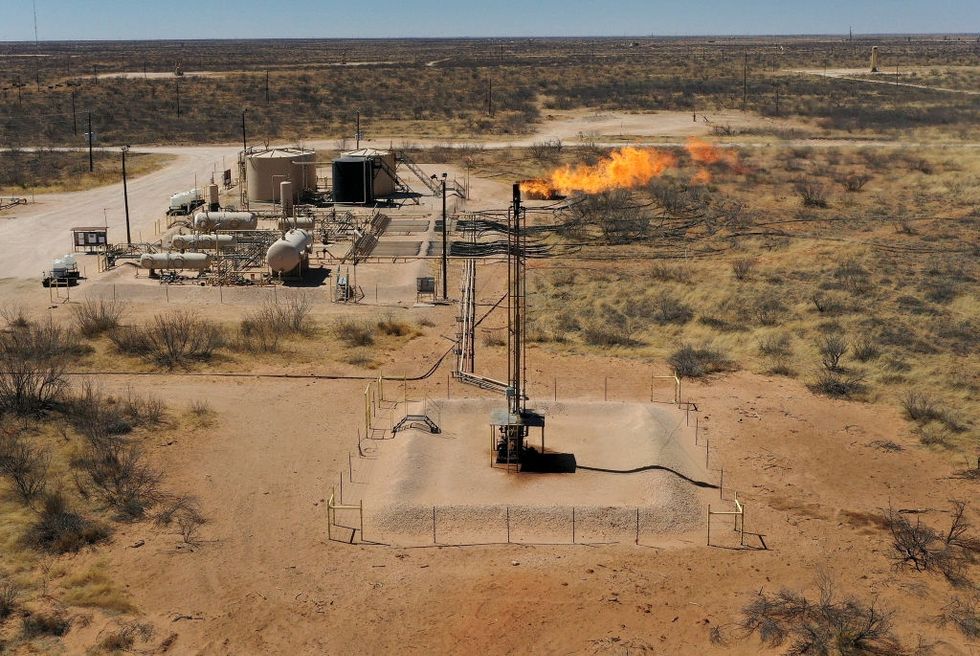
The Trump administration has narrowed the federal government’s interpretation of the Endangered Species Act to only consider intentional targeting of protected animals illegal. The move, part of what The New York Times called “a seismic shift” in the application of one of the nation’s bedrock conservation laws, would essentially free energy companies from the need to, for example, invest in infrastructure to keep migratory birds from making deadly landings in ponds of oil and gas slurry. Killing endangered animals “almost always happens incidentally, in the course of economic activity,” the newspaper noted. It’s unclear whether the legal change would also apply to one of the industries President Donald Trump most frequently antagonizes for its accidental killing of birds: the wind industry.
2. Half of Russian diesel refineries are now offline
When President Donald Trump announced an energy truce between Ukraine and Russia, he promised that a halt to attacks on pipelines and refineries would lower prices on diesel worldwide, insisting the Iran War wasn’t to blame. But half of Russia’s six top diesel-producing refineries were forced to significantly cut back or completely stop production this month due to damage from Ukrainian drone attacks, according to a Reuters analysis published Wednesday. Russian President Vladimir Putin, meanwhile, is making a $135 billion bet on Arctic oil that OilPrice.com suggested “could save his Ukraine war.”
U.S. energy companies, meanwhile, are storming into a country in America’s backyard that — unlike the Kremlin’s attempt at a blitzkrieg capture of Kyiv’s leaders in 2022 — successfully decapitated a rebellious regime and reasserted Washington’s regional dominance. I’m talking, of course, about Venezuela. Harold Hamm, the oil tycoon behind the U.S. shale boom, told the Heartlander News yesterday that his company had signed a tentative agreement to explore one of the South American nation’s oil fields. New York-based Heeney Capital is eyeing a gold mine in Venezuela, per Reuters. Bloomberg reported that the company is also looking to ship aluminum from Venezuela to the U.S. Exxon Mobil, meanwhile, is “nearing a preliminary deal” to invest in Venezuela oil, according to The Wall Street Journal.
3. Fed hikes rates for the first time since 2023
The Federal Reserve raised the benchmark federal interest rate by a quarter point Wednesday. The U.S. central bank’s first rate change since Chairman Kevin Warsh took over in May, and its first rate hike since 2023, will bring the federal funds rate to between 3.75% and 4%. The increase could make raising capital “more difficult” for “capital-intensive renewable and clean energy industries,” my colleague Matthew Zeitlin wrote yesterday.
Sign up to receive Heatmap AM in your inbox every morning:
4. House overwhelmingly approves the Ratepayer Protection Act
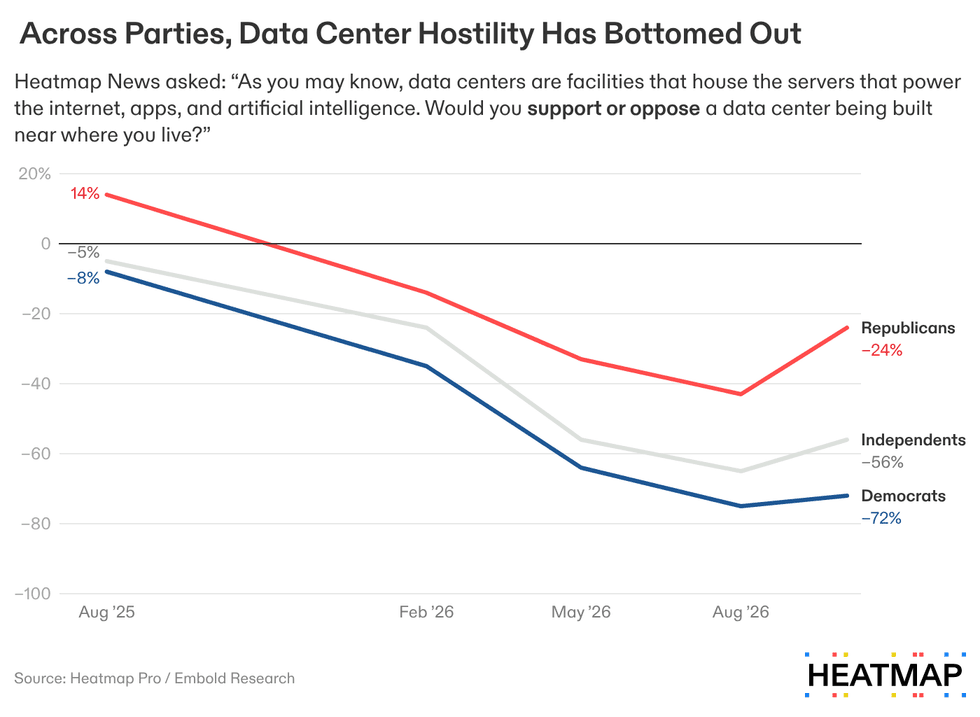
Lawmakers in the House of Representatives overwhelmingly passed the first major bill to curb the costs of the AI boom with legislation Politico described as “intended to shield Americans from potential energy costs associated with data centers.” The Ratepayer Protection Act passed in a 417 to 3 vote. The bipartisan win hands the GOP a victory ahead of the November election on one of the issues firing up voters the most. The bill would require states to consider a federal standard guaranteeing that large power consumers pay for 100% of the costs of new generation and transmission upgrades, but falls short of a direct mandate.
Meanwhile, the House split along partisan lines for another bill on California’s right to regulate pollution more strictly than the federal government. The chamber voted 216 to 211 to bar California from setting strict new limits on air pollution from ships docked at the state’s ports, marking what The New York Times called “the latest salvo by Republicans against the state’s pioneering environmental policies.” The move comes after Congress last year banned Sacramento from imposing a ban on gasoline-powered vehicles by 2035.
5. Holtec is suspending its IPO
One of the most significant nuclear stock market debuts of the past few years has hit a major hiccup. On Wednesday night, Holtec Nuclear Corporation suspended plans for an initial public offering, citing “market conditions.” Bloomberg and Reuters first reported the postponement, which I confirmed with Holtec last night. “Holtec will continue to evaluate the timing of the offering in the future,” the company told me. With plans to restart a nuclear reactor for the first time in U.S. history in the coming months, Holtec is the only company likely to bring (somewhat) new atomic electricity onto the grid before 2030. The company owns several other decommissioning nuclear plants, where it plans to build its own in-house small modular reactors.
Another major player in the burgeoning nuclear market, meanwhile, hit a major regulatory milestone. Blue Energy, a developer that bills itself as “agnostic” to reactor technologies, is instead focused on building facilities that will initially run on gas and eventually transition to reactors, with GE Vernova Hitachi Nuclear Energy’s BWRX-300 — the closest rival to Holtec’s SMR-300 — centering in those plans at the moment. On Wednesday, Blue Energy submitted its application for a construction permit to the Nuclear Regulatory Commission for its inaugural gas-to-nuclear project in Port of Victoria, Texas. The submission makes Blue Energy one of just five companies so far to ask the NRC for permission to begin building. “This is serious work done by serious people for a serious project,” Blue Energy CEO Jake Jurewicz said in a statement. “This is another huge step towards building the world’s first gas-to-nuclear power plant and proving the Blue Energy approach to build nuclear in the safest, quickest, and most scalable way possible.”
THE KICKER
The wine-dark sea is getting more briny. As its temperatures rise faster than the global ocean surface average, the Mediterranean Sea is growing saltier. The upper 100 meters of the sea between Europe and Africa have been about 2 degrees Celsius warmer than their 1950 to 1999 average, according to a study published in Geophysical Research Letters. “For us, what was alarming was the rate at which this is changing and the depths that such significant changes reach,” Elena Terzić, a physical oceanographer at the Ruđer Bošković Institute and lead author of the study, told Bloomberg. “The warming and salinification are statistically significant down to three or four thousand meters, and the speed-up itself reaches down to about 2,500 meters.”



 The endangered Great Lakes piping plover. Alexandra Buxbaum/Majority World/Universal Images Group via Getty Images

 A hot deal. Joe Raedle/Getty Images