Current conditions: Portland, Oregon, just broke a 60-year heat record yesterday, with temperatures topping 95 degrees Fahrenheit • The South Fork Fire in Nebraska's Panhandle has now scorched nearly 40,000 acres • Winds of up to 45 miles per hour are whipping half of Vanuatu’s six provinces.
THE TOP FIVE
1. Oil prices plunge after Trump unveils ceasefire with Iran
The price of crude fell to its lowest level in three months Monday after President Donald Trump announced the bones of a ceasefire agreement to end the war with Iran and reopen the Strait of Hormuz. In response to Sunday evening’s news of a memorandum of understanding, which New York Times reporter David Sanger called “more like a table of contents” on yesterday’s episode of “The Daily,” oil prices dropped by nearly 5% on the main European benchmark. Murban crude, the index used for oil coming out of the United Arab Emirates’ biggest port, plunged by 7%.
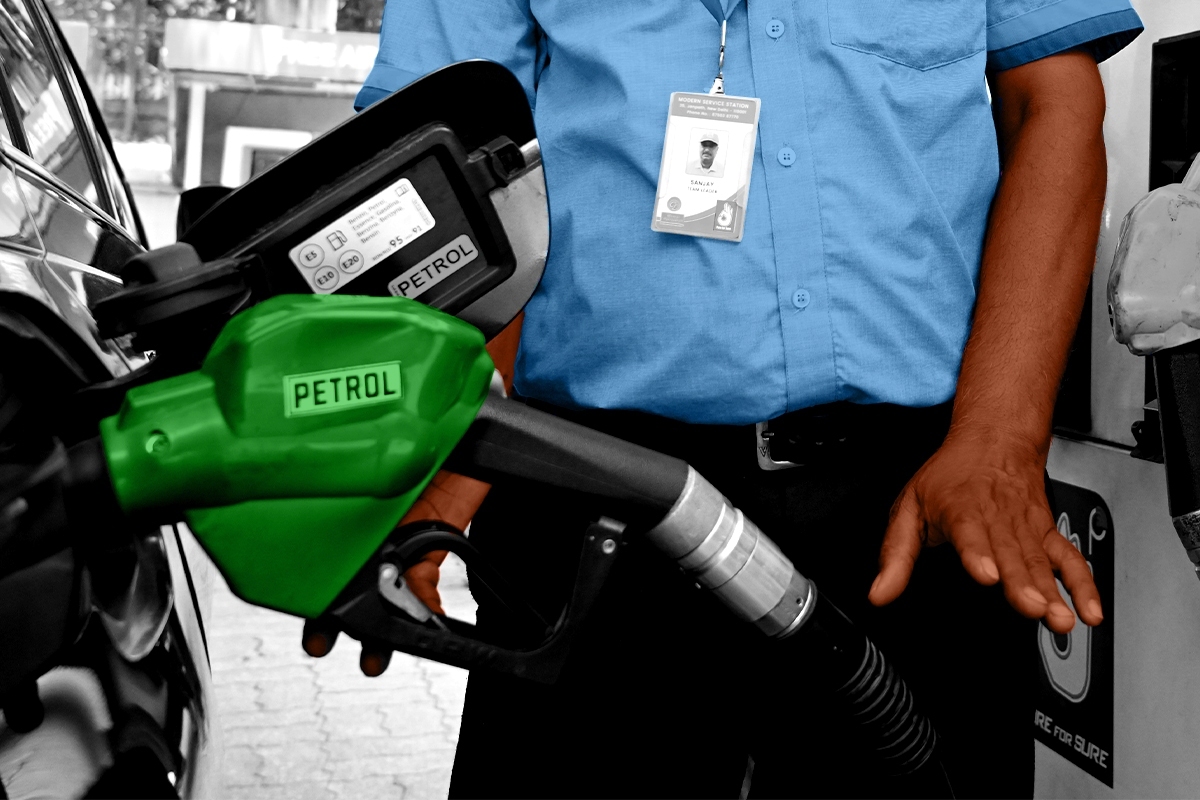
The truce news comes as GasBuddy data shows national U.S. price averages for gasoline falling by $0.093 over the last week. The national average is down $0.52 from a month ago, though it’s still $0.91 higher per gallon than a year ago. “Average gasoline prices fell in 47 states over the last week, with the national average dropping below $4 per gallon late Sunday for the first time since mid-April,” Patrick De Haan, head of petroleum analysis at GasBuddy, wrote in a post on X. “The decline came as oil prices moved sharply lower in reaction to news of a potential deal between the United States and Iran, though it remains to be seen whether the agreement will hold.”
2. Exclusive: 60% of Americans support reforming federal permitting
Americans are rooting for Washington to work out its on-again, off-again effort to overhaul federal permitting on energy infrastructure. That’s according to a new poll from Blue Rose Research shared exclusively with me for this newsletter. Asked about making it faster and easier to build energy infrastructure, 60% of voters said they supported such policy reforms. Another 62%, including half of self-identified Trump supporters, said the president should not have unilateral authority to cancel approved projects, a key Democratic demand in Congress’ bipartisan negotiations. When the survey, taken in late May, asked its roughly 20,000 participants about support for data centers near their homes, the results aligned with Heatmap Pro’s most recent polling. But the poll found that views softened on data centers if companies made concrete commitments to bring electricity costs down.
The findings come as a bipartisan Senate duo introduces legislation to limit the White House’s power to cancel or slow-walk approvals for all forms of energy projects, E&E News reported. On Tuesday, Senators Tom Cotton, the Arkansas Republican, and Catherine Cortez Masto, the Democrat from Nevada, will introduce the FREEDOM Act. While it’s unclear how closely they’re aligned, I reported earlier this year on details of the bill’s House version.
3. One of America’s biggest solar-plus-storage projects secures $3.5 billion in financing
If you’re looking for a sign that American solar is going to keep booming even after the federal tax credits for building and generating power from panels expire in a few weeks, it’s worth taking a look at the Steel River Energy Center. The project in Arkansas aims to add 1.6 gigawatts of solar power and 1.9 gigawatt-hours of battery storage in a two-phase buildout. The California-based developer, Cypress Creek Energy, said last week it had locked down $3.5 billion in financing. A third phase, set to come online in 2029, will round out the total project capacity to 2.5 gigawatts of solar generation and 2.9 gigawatt-hours of storage, making it one of the largest solar and storage builds in the U.S., according to Power Magazine. The entire project is set to use panels produced by First Solar, one of the largest domestic manufacturers in the U.S.
Meanwhile, the long duration energy storage startup Energy Dome inked a deal Monday with Salt River Project to sell the utility that serves the greater Phoenix metropolitan area a 19-megawatt, 10-hour CO2-based battery. As I told you last summer, Energy Dome has a partnership with Google to deploy the technology, which looks something like an indoor tennis tent filled with carbon dioxide that can store energy for far longer without any losses than a lithium-ion battery. The Phoenix project is part of the Google partnership. “Arizona’s sustained growth makes it one of the most compelling energy markets in the country,” Claudio Spadacini, Energy Dome’s founder and chief executive, said in a statement. “At a time when AI growth and rising demand are reshaping America’s energy landscape, the CO2 Battery offers the scalable, dispatchable capacity needed to strengthen U.S. energy dominance.”
Sign up to receive Heatmap AM in your inbox every morning:
4. Japan looks to tap Greenland’s minerals
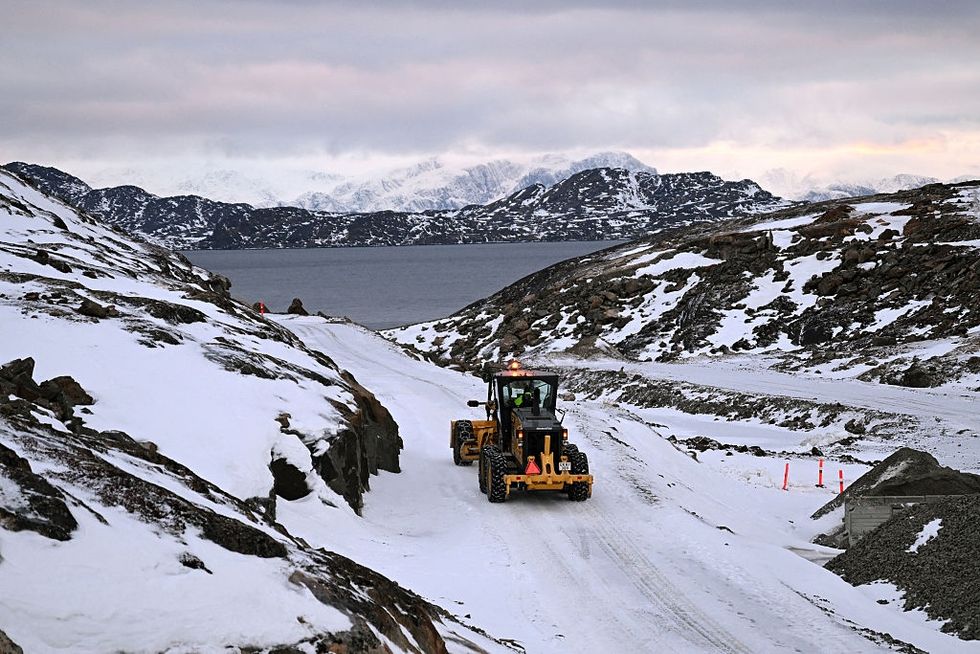
 Greenlandic students practice driving excavators at a training program for potential mining workers.Ina FASSBENDER / AFP via Getty Images
The Japanese government is laying out plans to develop potential mining projects in Greenland to meet its demand for rare earths and other critical minerals without relying on China. That’s according to a report in Nikkei over the weekend. As I told you back in February, Japan is stepping up its efforts to secure new mineral supplies, including taking a leading role in establishing a new deep sea mining industry.
A sizable chunk of that $550 billion that Tokyo pledged to invest in the U.S. last year, meanwhile, is headed toward building out an export supply chain for nuclear technology. At least, that’s the latest update Secretary of Commerce Howard Lutnick gave to the Japanese financial newswire last week.
5. Honda cancels its North American electric vehicle plans
Honda has pumped the brakes on its entire North American electric vehicle effort as the Japanese auto giant stares down its first annual loss since 1957, expected to top $15.7 billion. The move comes less than two years after Honda went all in on the O Series that Automotive Manufacturing Solutions called “deliberately, provocatively unlike anything the brand had previously produced.” Today, the trade publication noted, “every legacy OEM’s electrification strategy is now under scrutiny.”
THE KICKER
It’s been a good few days for Rolls-Royce. The iconic British industrial manufacturer just won a deal to build Sweden’s next nuclear plant and joined a United Kingdom-Japanese effort to work on building modern, large-scale, high-temperature gas-cooled nuclear reactors. The deals come less than two months after Rolls-Royce secured a deal with the British government to build its small modular reactors in Britain. “This is another major endorsement of Rolls-Royce SMR’s technology and a significant boost for Britain’s nuclear export ambitions,” Nuclear Industry Association CEO Tom Greatrex, who heads the largest British nuclear trade group, said in a statement. “Coming so soon after its selection by Great British Energy – Nuclear, it underlines the growing international confidence in the technology and the strength of the British nuclear industry.”


 Greenlandic students practice driving excavators at a training program for potential mining workers.Ina FASSBENDER / AFP via Getty Images

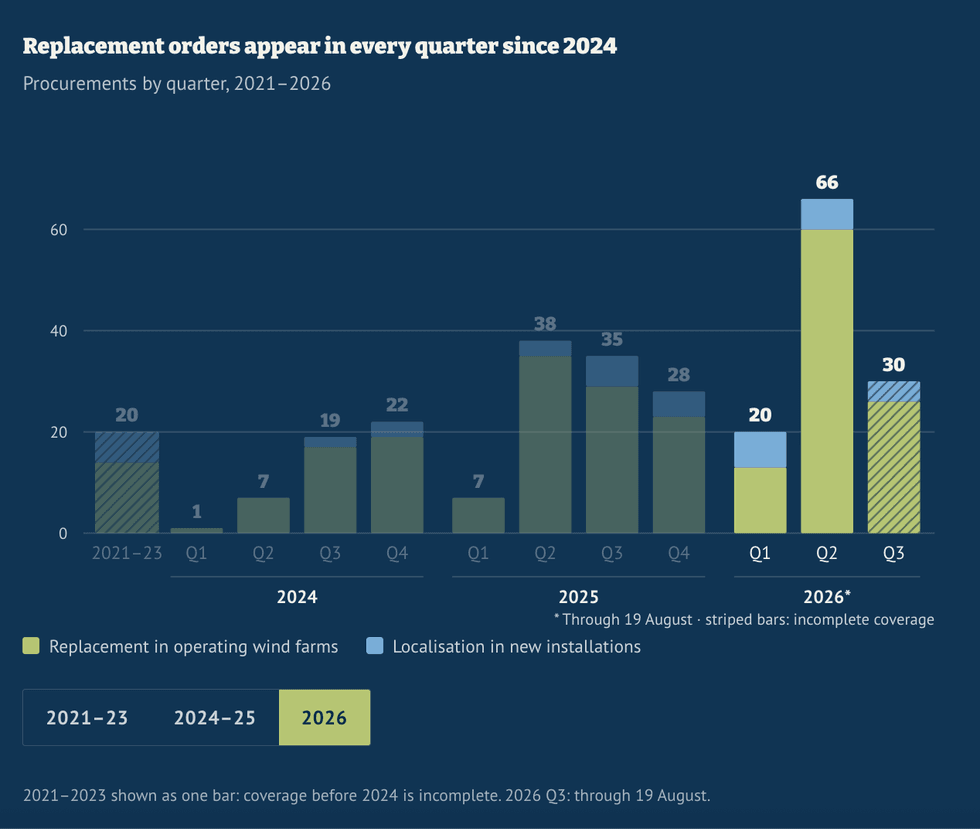 The great localization push of 2026. OSW
 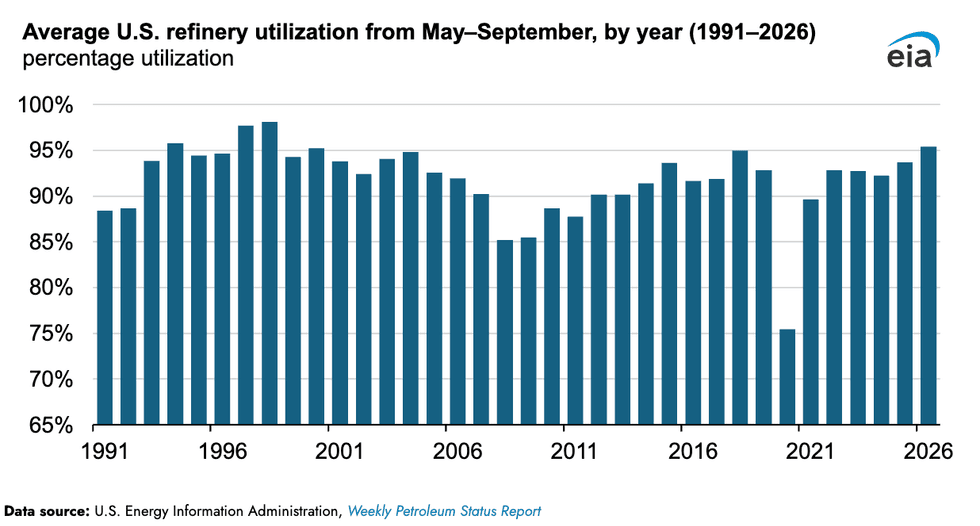 The 1990s are back. EIA