You’re out of free articles.
Log in
To continue reading, log in to your account.
Create a Free Account
To unlock more free articles, please create a free account.
Sign In or Create an Account.
By continuing, you agree to the Terms of Service and acknowledge our Privacy Policy
Welcome to Heatmap
Thank you for registering with Heatmap. Climate change is one of the greatest challenges of our lives, a force reshaping our economy, our politics, and our culture. We hope to be your trusted, friendly, and insightful guide to that transformation. Please enjoy your free articles. You can check your profile here .
subscribe to get Unlimited access
Offer for a Heatmap News Unlimited Access subscription; please note that your subscription will renew automatically unless you cancel prior to renewal. Cancellation takes effect at the end of your current billing period. We will let you know in advance of any price changes. Taxes may apply. Offer terms are subject to change.
Subscribe to get unlimited Access
Hey, you are out of free articles but you are only a few clicks away from full access. Subscribe below and take advantage of our introductory offer.
subscribe to get Unlimited access
Offer for a Heatmap News Unlimited Access subscription; please note that your subscription will renew automatically unless you cancel prior to renewal. Cancellation takes effect at the end of your current billing period. We will let you know in advance of any price changes. Taxes may apply. Offer terms are subject to change.
Create Your Account
Please Enter Your Password
Forgot your password?
Please enter the email address you use for your account so we can send you a link to reset your password:
On offshore wind wins, China’s ‘strong energy nation,’ and Japan’s deep-sea mining

Current conditions: Yet another snow storm is set to powder parts of the Ohio Valley and the Mid-Atlantic • Cyclone Fytia is deluging Madagascar, causing flooding that left at least three dead and 30,000 displaced in a country still reeling from the recent overthrow of its government • Scotland and England are bracing for a gusty 33-hour blizzard, during which temperatures are forecast to drop below freezing.
He’s fashioned the military’s Defense Logistics Agency into a tool to fund mineral refineries. He’s gone on a shopping spree that made Biden administration officials “jealous,” taking strategic equity stakes in more than half a dozen mining companies. Now President Donald Trump is preparing to launch a strategic stockpile for critical minerals in what Bloomberg billed as “a bid to insulate manufacturers from supply shocks as the U.S. works to slash its reliance on Chinese rare earths and other metals.” Dubbed Project Vault, the venture will be seeded with a $10 billion loan from the Export-Import Bank of the U.S. and another $1.67 billion in private capital. More than a dozen companies have committed to work on the stockpile, including General Motors, Stellantis, Boeing, Google, and GE Vernova.
The shale industry, meanwhile, showed it’s matured enough to go through some consolidation. Oklahoma City-based gas giant Devon Energy is merging with Houston-headquartered Coterra Energy in an all-stock deal that CNBC said would create “a large-cap producer with a top position in the Permian Basin. The deal would establish a combined company with an enterprise value of $58 billion, marking the largest merger in the sector since Diamondback bought Endeavor Energy Resources for $26 billion in 2024. The deal comes as low prices from the global oil glut squeeze U.S. shale drillers — and as the possibility of more oil from Venezuela threatens the sector with fresh competition.
Offshore wind is now five-for-five in its legal brawls with Trump. With Orsted’s latest victory in the Sunrise Wind case on Monday, I’ll let Heatmap’s Jael Holzman serve as the ring announcer spelling out the stakes of the legal victory: “If the government were to somehow prevail in one or more of these cases, it would potentially allow agencies to shut down any construction project underway using even the vaguest of national security claims. But as I have previously explained, that behavior is often a textbook violation of federal administrative procedure law.”
Germany is set to quadruple its installed solar capacity to 425 gigawatts by 2045, according to a forecast from a trade group representing utilities and grid operators. The projections, Renewables Now reported, mean the country needs to expand its transmission system. Installed onshore wind capacity should triple to around 175 gigawatts by that same year. Battery storage is on track to rise about 68 gigawatts, from roughly 2 gigawatts today. Demand is also set to grow. Data centers, which make up just 2 gigawatts of demand on the grid today, are forecast to balloon to nearly 37 gigawatts in the next 19 years.
Sign up to receive Heatmap AM in your inbox every morning:

In October, the Chinese Communist Party published the framework of its next Five-Year Plan, the 15th such industrial strategy. The National People’s Congress is set to formally approve the proposal next month. But on Monday, the energy analyst John Kemp called the latest five-word phrase, articulated in the form of “formal input” from the party’s Central Committee, “the most succinct statement of China’s energy policy.” Those words: “Building a strong energy nation.” The suggested edits from the committee described “accelerating the construction of a strong energy nation” as “extremely important and timely” and called its “main shortcomings” the ongoing reliance on imported oil and gas.
Unlike in the U.S., where the Trump administration is working to halt construction of renewables, the officials in Beijing boast that China’s “installed capacity of wind and solar has ranked first in the world for many consecutive years.” Like the U.S., the Central Committee pitched the plan as “an urgent requirement” for “gaining the initiative in great power competition.”
Japan is mounting a new push to implement a decade-old plan to extract rare earths from the ocean floor. A state-owned research vessel just completed a test mission to retrieve an initial sample of mineral-rich mud from a location 20,000 feet below the surface, the South China Morning Post reported. The government of Sanae Takaichi wants to start processing metal-bearing mud from the seabed for tests within a year. “It’s about economic security,” Shoichi Ishii, program director for Japan’s National Platform for Innovative Ocean Developments, told Bloomberg. “The country needs to secure a supply chain of rare earths. However expensive they may be, the industry needs them.”
With global negotiations over a licensing framework for legalizing deep sea mining in international waters has stalled, the U.S. just finalized a rule to speed up American permitting for the nascent sector, clearing the way for Washington to fulfill Trump’s pledge to go it alone if the United Nations’ International Seabed Authority didn’t act first.
A week after signing an historic trade agreement with the European Union, India has inked another deal with the U.S. That means the world’s two largest consumer markets are now wide open to Indian industry, which relies heavily on coal. New Delhi isn’t just going to scrap all those coal-fired factories and forges. But the government’s latest budget earmarks about $2.4 billion over five years to speed up deployment of carbon capture equipment across heavy industry, Carbon Herald reported. The plan focuses on steel, cement, power, refining, and chemicals.

Log in
To continue reading, log in to your account.
Create a Free Account
To unlock more free articles, please create a free account.
Maybe utilities’ “natural monopoly” isn’t so natural after all.
Debates over electricity policy usually have a common starting point: the “natural monopoly” of the transmission system, wherein the poles and wires that connect power plants to homes and businesses have exclusive franchises in a certain territory and charge regulated rates to access them.
The thinking is that without a monopoly franchise, no one would make the necessary capital expenditures to build and maintain the power lines and grid infrastructure necessary to connect the whole system, especially if they thought someone would build a new transmission line nearby. So while a government body oversees investment and prices, the utility itself is not subject to market-based competition.
But what if someone really did want to build their own wires?
“There are at least two of us who do not think that electricity is a natural monopoly,” Glen Lyons, the founder of Advocates for Consumer Regulated Electricity, told me.
The other one is Travis Fisher, an energy scholar at the Cato Institute, who corrected his friend and colleague.
“Between me, and Joseph Schumpeter, and Wayne Cruz, and Glen Lyons, there’s at least four of us. Only three of us are alive,” Fisher said, referencing the Austrian economist Schumpeter, who died in 1950, and the libertarian scholar Cruz, who was a critic of the restructuring of the electricity market in the 1990s.
Fisher and Lyons, however, are the team behind a proposal put out on Tuesday by the libertarian Cato Institute calling for “consumer-regulated electricity.” Instead of a transmission system with a monopoly franchise that independent generators can connect to and sell power to utilities in a process regulated by a combination of a public utility commission and regional transmission organization or independent system operators, CRE systems would be physically islanded electricity systems that customers would privately and voluntarily sign up for.
Crucially, CRE would not be regulated under existing federal law, and would have no connection to the existing grid, allowing for novel price structures and even physical set-ups, like running on different frequencies or even direct current, Fisher said.
They would also, Fisher and Lyons argue, help solve the dilemma haunting electricity policymakers: how to bring new load on the grid quickly without saddling existing ratepayers with the cost of paying for utility upgrades.
“If enabled, CRE utilities would generate, transmit, and sell electricity directly to customers under voluntary contracts, without interconnecting to the existing regulated grid or seeking permission from economic regulators at the state or federal level,” the Cato proposal reads.
This idea has a natural audience among political conservatives, as it’s essentially a bet that more entrepreneurship and less regulation will solve some of our biggest energy system problems. On the other hand, utilities tend to be a powerful force in conservative politics at both the state and federal levels, which is one reason why these kinds of ideas are still marginal.
But less marginal than they have been.
Consumer-regulated electricity is more than just another think tank white paper. It has also won the approval of the influential American Legislative Exchange Council, better known as ALEC, a conservative group that writes model legislation for state legislatures to adopt. Fisher proposed version of the consumer-regulated utilities plan to the network in December of last year, and ALEC approved it in January.
A few days after the group finalized the model policy to allow CRE at the state level, Arkansas Senator Tom Cotton proposed his own version in the form of the DATA Act, which would “amend the Federal Power Act to exempt consumer-regulated electric utilities from Federal regulation.”
While the CRE proposal is a big conceptual departure from about a century of electricity regulation, the actual reform is modest. Fisher and Lyons propose a structure would apply solely to “sophisticated customers … who voluntarily contract for service and can manage their own risks,” i.e. big industrial users like data centers, not your home.
While this sounds like behind the meter generation, whereby large electricity users such as, say, xAI in Memphis, simply set up their own electricity plants, CRE goes further. The idea is to capture the self-regulation benefits of building your own power within a structure that still allows for the economies of scale of a grid. Or in the words of Cato’s proposal, CRE “would enable third-party utilities to serve many customers, resulting in lower costs, higher reliability, and a smaller environmental footprint compared to self-supply options.”
Fisher and Lyons argue that CRE would also have an advantage over so-called co-location, where data centers are built adjacent to generation and share interconnection with the grid, which still requires interacting with public utility commissions and utilities. The pair have also suggested that the Department of Energy and the Federal Energy Regulatory Commission use its existing rulemaking process on data center interconnection to encourage states to pass the necessary laws to allow islanded utility systems.
While allowing totally private utility systems may be a radical — and certainly a libertarian — departure from the utility regulation system as it exists today, proposals are popping up on both the left and the right to try to reduce utility influence over the electricity system.
Tom Steyer, the hedge fund billionaire and climate investor who is running for governor of California, has said that he would “break up the utility monopolies to lower electric bills by 25%.” In a January press conference, Steyer clarified that he “wants to force utility companies to choose cheaper ways of wildfire-proofing their infrastructure and give customers other options for buying power, including making it easier to build neighborhood-level solar projects or allowing more communities to operate their own local grids,” according to CalMatters. California already has some degree of retail choice, although a more expansive version of a retail competition model infamously collapsed during the 2001 rolling blackouts.
To Fisher, while his and Lyons’ proposal is in some ways radical, it is also not a particularly big risk. If there’s truly no demand for private electricity networks, none will be built and nothing will change, even if there’s regulatory reform to allow for it.“I’m not surprised to see it get traction,” Fisher said of the plan, “just because there’s no downside, and the upside could be absolutely nothing — or it could be a breakthrough.”
The offshore wind industry is now five-for-five against Trump’s orders to halt construction.
District Judge Royce Lamberth ruled Monday morning that Orsted could resume construction of the Sunrise Wind project off the coast of New England. This wasn’t a surprise considering Lamberth has previously ruled not once but twice in favor of Orsted continuing work on a separate offshore energy project, Revolution Wind, and the legal arguments were the same. It also comes after the Trump administration lost three other cases over these stop work orders, which were issued without warning shortly before Christmas on questionable national security grounds.
The stakes in this case couldn’t be more clear. If the government were to somehow prevail in one or more of these cases, it would potentially allow agencies to shut down any construction project underway using even the vaguest of national security claims. But as I have previously explained, that behavior is often a textbook violation of federal administrative procedure law.
Whether the Trump administration will appeal any of these rulings is now the most urgent question. There have been no indications that the administration intends to do so, and a review of the federal dockets indicates nothing has been filed yet.
The Department of Justice declined to comment on whether it would seek to appeal any or all of the rulings.
Editor’s note: This story has been updated to reflect that the administration declined to comment.
The Central American country is the now the Americas’ EV leader.
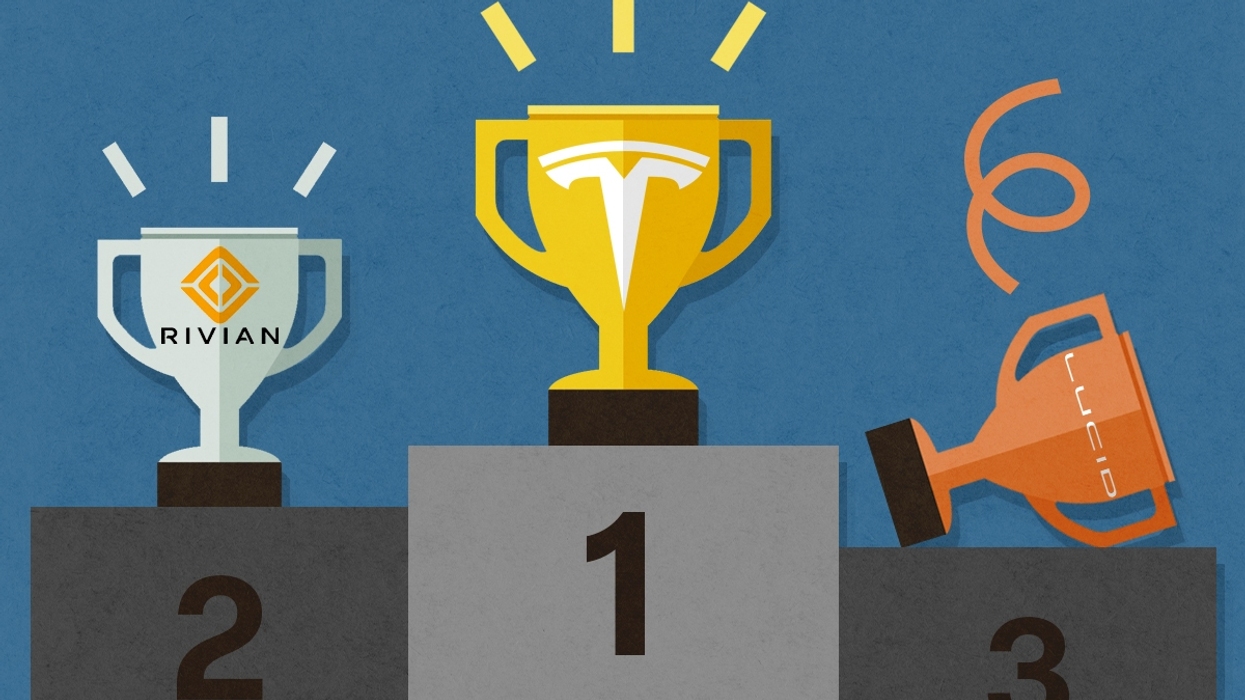
The cars that sit atop the list of best-selling electric vehicles in the world wouldn’t surprise Americans. Through the first three quarters of 2025, Tesla’s Model Y and Model 3 were the number one and two EVs in the world, just as they are in the United States. But after that, the names begin to get a little less familiar.
In America, the top EVs not made by Tesla include battery-powered efforts by legacy car companies like Chevy, Ford, and Hyundai. Global sales figures, however, demonstrate the remarkable reach of upstart Chinese companies selling electric cars not only in China, but also in up and coming car markets around the world. The worldwide top 10 is dominated by EVs by Chinese manufacturers Wuling, Xiaomi, and BYD, with nary a Western carmaker in sight.
With those vehicles still absent from the U.S., the only way to sample how the rest of the world drives is to head abroad and hop in, which I had the chance to do on a recent trip to Costa Rica. To visit here is to see the car market that may be coming soon to many parts of the world. Fully electric vehicles made up around 15% of new sales in Costa Rica in 2024, compared to 8% in the U.S., making it the Americas’ EV adoption leader. Tesla does not operate here, so Chinese brands populate the country’s top 10, as they do in burgeoning EV markets throughout Latin America.
Chinese juggernaut BYD sells plenty of cars in Costa Rica, but doesn’t dominate the market entirely like it does in some parts of the world. Chinese EV-makers Chery, Dongfeng, and Geely sell lots of very affordable cars here. It doesn’t take long in one of these vehicles to see what has Western auto companies so worried. If Americans could buy one of these Chinese-made EVs at the price they sell elsewhere, they absolutely would.
During a November trip, my family stayed with friends who had temporarily relocated to the outskirts of the Costa Rican capital city — and who had traded the two Teslas they drove in the San Francisco Bay Area for a BYD Song Plus, an all-electric crossover with more than 310 miles of range.
On the inside, the Song feels close to the minimalist, touchscreen-driven approach. There are a handful of physical buttons on the steering wheel, but nowhere near the overwhelming array inside one of the electric offerings from the legacy carmakers. The interface in the big center touchscreen isn’t quite as polished as that of a Rivian or Tesla, and you might find yourself preferring to use Waze through Apple CarPlay to find your way around as opposed to the native software. But the setup is functional, clean, and honestly pretty great for a car that could be had for as little as $20,000.
The BYD has plenty of zip when you hit the accelerator, but is sufficiently judicious in its power consumption to get 300-plus miles of range on a relatively small 71.8 kilowatt-hour battery. The ride is cushy enough to endure the endless potholes caused by Costa Rica’s rainy climate. The interior feels plenty luxurious for that price, with cushy materials and a full array of tech features including wireless phone charging and using your phone as the key. In sum, the Song Plus feels modern and fresh like you’d expect from an EV startup, but at a cost that halves what you’d pay for a Tesla in the U.S.
Song Plus charges at just 140 kilowatts, slower than the state of the art in EVs like those from Hyundai or Tesla, which means it takes nearly half an hour to charge from 30% to 80% — but then again, if you’re not relying on public fast chargers to get from here to there, that’s a pretty minor inconvenience.
Costa Rica is known for being among the world’s most nature-friendly nations, having built a thriving eco-tourism industry for travelers who want to see its populations of tropical birds, white-faced capuchin monkeys, and goofy sloths. The whole nation is smaller than the state of West Virginia, meaning that drivers are generally not going on American-style road trips that span hundreds of miles and requiring visits to public fast charging. Instead, most charging is done at home and many trips can be accomplished on a single charge. The tropical warmth means that the performance ding batteries suffer in the cold isn’t an issue.
These favorable factors, plus incentives such as free parking and an exemption from import taxes, led Costa Rica to surge past the U.S. and Canada in recent years to claim the title of top EV country in the Americas.
To putter around in pursuit of crocs and quetzals, then, is to drive amongst an alternate universe of electric cars compared to the one in Los Angeles — small, cheap EV crossovers and even pickup trucks that would upend the American car market if they were allowed to come stateside and undercut our car companies. The simplest way to see them? Book a ticket to San Jose.