The era of the geoengineering startup has seemingly arrived.
Stardust Solutions, a company led by a team of Israeli physicists, announced on Friday that it has raised $60 million in venture capital to develop technological building blocks that it says will make solar geoengineering possible by the beginning of next decade.
It is betting that it can be the first to develop solar geoengineering technology, a hypothetical approach that uses aerosols to reflect sunlight away from Earth’s surface to balance out the effects of greenhouse gases. Yanai Yedvab, Stardust’s CEO, says that the company’s technology will be ready to deploy by the end of the decade.
The funding announcement represents a coming out of sorts for Stardust, which has been one of the biggest open secrets in the small world of solar geoengineering researchers. The company is — depending on how you look at it — either setting out a new way to research solar radiation management, or SRM, or violating a set of informal global norms that have built up to govern climate-intervention research over time.
Chief among these: While universities, nonprofits, and government labs have traditionally led SRM studies, Stardust is a for-profit company. It is seeking a patent for aspects of its geoengineering system, including protections for the reflective particles that it hopes governments will eventually disperse in the atmosphere.
The company has sought the advice of former United Nations diplomats, federal scientists, and Silicon Valley investors in its pursuit of geoengineering technology. Lowercarbon Capital, one of the most respected climate tech venture capital firms, led the funding round. Stardust previously raised a seed round of $15 million from Canadian and Israeli investors. It has not disclosed a valuation.
Yedvab assured me that once Stardust’s geoengineering system is ready to deploy, governments will decide whether and when to do so.
But even if it is successful, Stardust’s technology will not remove climate risk entirely. “There will still be extreme weather events. We’re not preventing them altogether,” Yedvab said. Rather, tinkering with the Earth’s atmosphere on a planetary scale could help preserve something like normal life — “like the life that all of us, you, us, our children have been experiencing over the last few decades.” The new round of funding, he says, will put that dream within reach.
Yedvab, 54, has salt and pepper hair and a weary demeanor. When I met him earlier this month, he and his cofounder, Stardust Chief Product Officer Amyad Spector, had just flown into New York from Tel Aviv, before continuing on to Washington, D.C., that afternoon. Yedvab worked for many years at the center of the Israeli scientific and defense establishment. From 2011 to 2015, he was the deputy chief research scientist at the Israeli Atomic Energy Commission. He was also previously the head of the physics division at the highly classified Israeli nuclear research site in Negev, according to his LinkedIn.
Spector, 42, has also spent much of his career working for the Israeli government. He was a physics researcher at the Negev Nuclear Research Center before working on unspecified R&D projects for the government for nearly a decade, as well as on its Covid response. He left the government in December 2022.
Stardust’s story, in their telling, began in the wake of the pandemic, when they and their third cofounder — Eli Waxman, a particle physics professor at the Weizmann Institute of Science — became curious about climate change. “We started [with a] first principles approach,” Yedvab told me. What were countries’ plans to deal with warming? What did the data say? It was a heady moment in global climate politics: The United States and Europe had recently passed major climate spending laws, and clean energy companies were finally competing on cost with oil and gas companies.
Yet Yedvab was struck by how far away the world seemed to be from meeting any serious climate goal. “I think the thing that became very clear early on is that we’re definitely not winning here, right?” he told me. “These extreme weather events essentially destroy communities, drain ecosystems, and also may have major implications in terms of national security,” he said. “To continue doing what we’re doing over the next few decades and expecting materially different results will not get us where we want to be. And the implications can be quite horrific.”
Then they came across two documents that changed their thinking. The first was a 2021 report from the National Academies of Sciences in the United States, which argued that the federal government should establish “a transdisciplinary, solar geoengineering research program” — although it added that this must only be a “minor part” of the country’s overall climate studies and could not substitute for emissions reductions. Its authors seemed to treat solar geoengineering as a technology that could be developed in the near term, akin to artificial intelligence or self-driving cars.
They also found a much older article by the physicist Edward Teller — the same Teller who had battled with J. Robert Oppenheimer during the Manhattan Project. Teller had warned the oil industry about climate change as early as 1959, but in his final years he sought ways to avoid cutting fossil fuels at all. Writing in The Wall Street Journal weeks before the Kyoto Protocol meetings in 1997, an 89-year-old Teller argued that “contemporary technology offers considerably more realistic options for addressing any global warming effect” than politicians or activists were considering.
“One particularly attractive approach,” he wrote, was solar geoengineering. Blocking just 1% of sunlight could reduce temperatures while costing $100 million to $1 billion a year, he said, a fraction of the estimated societal cost of paring fossil fuels to their 1990 levels. A few years later, he wrote a longer report for the Energy Department arguing for the “active technical management” of the atmosphere rather than “administrative management” of fossil fuel consumption. He died in 2003.
The documents captivated the two scientists. What began to appeal to Yedvab and Spector was the economy of scale unlocked by the stratosphere — the way that just a few million tons of material could change the global climate. “It's very easy to understand why, if this works, the benefit could be enormous,” Yedvab said. “You can actually stop global warming. You can cool the planet and avoid a large part of the suffering. But then again, it was a very theoretical concept.” They incorporated Stardust in early 2023.
Economists had long anticipated the appeal of such an approach to climate management. Nearly two decades ago, the Columbia economist Scott Barrett observed that solar geoengineering’s economics are almost the exact opposite of climate change’s: While global warming is a “free rider” problem, where countries must collaborate to avoid burning cheap fossil fuels, solar geoengineering is a “free driver” problem, where one country could theoretically do it alone. Solar geonengineering’s risks lay in how easy it would be to do — and how hard it would be to govern.
Experts knew how you would do it, too: You would use sulfate aerosols — the tiny airborne chemicals formed when sulfur from volcanoes or fossil fuels reacts with water vapor, oxygen, and other substances in the air. In a now classic natural experiment Teller cited in his Journal op-ed, when Mount Pintabuo erupted in 1991 in the Philippines, it hurled a 20 million ton sulfur-dioxide cloud into the stratosphere, cooling the world by up to 1.3 degrees Fahrenheit before the sulfates rained out.
But to Yedvab, “sulfates look like a poor option,” he told me. Sulfates and sulfur oxides are nasty pollutants in their own right — they can cause asthma attacks, form acid rain, and may damage the ozone layer when in the stratosphere. For this reason, the International Maritime Organization adopted new rules restricting the amount of sulfur in cargo shipping fuels; these rules — in yet another natural experiment — seem to have accidentally accelerated global warming since 2020.
Yedvab and Spector anticipated another problem with sulfates: The atmosphere already contains tens of millions of tons of them. There is already so much sulfate in the sky from natural and industrial processes, they argue, that scientists would struggle to monitor whatever was released by geoengineers; Spector estimates that the smallest potential geoengineering experiment would require emitting 1 million tons of it. The chemical seemed to present an impossible trade-off to policymakers: How could a politician balance asthma attacks and acid rain against a cooler planet? “This is not something that decisionmakers can make a decision about,” Yedvab concluded.
 Yedvab, left, and Spector.Courtesy of Stardust / Roby Yahav
Instead, the three founders tried starting at the end of the process, as they put it. What would an ideal geoengineering system look like? “Let’s say that we are successful in developing a system,” Yedvab said. “What will be the questions that people like you — that policymakers, the general public — will ask us?”
Any completed geoengineering system, they concluded, would need to meet a few constraints. It would need, first, a particle that could reflect a small amount of sunlight away from Earth while allowing infrared radiation from the planet’s surface to bounce back into space. That particle would need to be tested iteratively and manufactured easily in the millions of tons, which means it would also have to be low-cost.
“This needs to be a scalable or realistic particle that we know from the start how to produce at scale in the millions of tons, and at the relevant target price of a few dollars per kilo,” Yedvab said. “So not diamonds or something that we've done at the lab but have no idea how to scale it up,” Yedvab said.
It would need to be completely safe for people and the biosphere. Stardust hopes to run its particle through a safety process like the ones that the U.S. and EU subject food or other materials to, Yedvab said. “This needs to be as safe as, say, flour or some food ingredient,” Yedvab said. The particle would also need to be robust and inert in the stratosphere, and you would need some way to manage and identify it, perhaps even to track it, once it got there.
Second, the system would need some way to “loft” that particle into the stratosphere — some machine that could disperse the particle at altitude. Finally, it would need some way to make the particles observable and controllable, to make sure they are acting as intended. “For visibility, for control, for, I would say, geopolitical implications — you want to make sure you actually know where, how these particles move around, Yedvab said.
Stardust received $15 million in seed funding from the venture firm AWZ and Solar Edge, an Israeli energy company, in early 2024. Soon after, the founders got to work.
The world has come close to solving a global environmental crisis at least once before. In 1987, countries adopted the Montreal Protocol, which set out rules to eliminate and replace the chlorofluorocarbons that were destroying the stratospheric ozone hole. Nearly 40 years later, the ozone hole is showing signs of significant recovery. And more to the point, almost nobody talks about the ozone hole anymore, because someone else is dealing with it.
“I would say it was the biggest triumph of environmental diplomacy ever,” Yedvab said. “In three years, beginning to end, the U.S. government was able to secure the support of essentially all the major powers in solving a global problem.” The story is not quite that simple — the Reagan administration initially resisted addressing the ozone hole until American companies like DuPont stood to benefit by selling non-ozone-depleting chemicals — but it captures the kind of triumphant U.S.-led process that Stardust wouldn’t mind seeing repeated.
In 2024, soon after Stardust raised its seed round, Yedvab approached the Swiss-Hungarian diplomat Janos Pasztor and invited him to join the company to advise on the thicket of issues usually simplified as “governance.” These can include technical-seeming questions about how companies should test their technology and who they should seek input from, but they all, at their heart, get to the fundamentally undemocratic nature of solar geoengineering. Given that the atmosphere is a global public good, who on Earth has the right to decide what happens to it?
Pasztor is the former UN assistant secretary-general for climate change, but he was also the longtime leader of the Carnegie Climate Governance Initiative, a nonprofit effort to hammer out consensus answers to some of those questions.
Pasztor hesitated to accept the request. “It was a quadruple challenge,” he told me, speaking from his study in Switzerland. He and his wife frequently attend pro-Palestine demonstrations, he said, and he was reluctant to work with anyone from Israel as long as the country continued to occupy Gaza and the West Bank. Stardust’s status as a private, for-profit enterprise also gave him pause: Pasztor has long advocated for SRM research to be conducted by governments or academics, so that the science can happen out in the open. Stardust broke with all of that.
Despite his reservations, he concluded that the issue was too important — and the lack of any regulation or governance in the space too glaring — for him to turn the company away. “This is an issue that does require some movement,” he said. “We need some governance for the research and development of stratospheric aerosol injection … We don’t have any.”
He agreed to advise Stardust as a contractor, provided that he could publish his report on the company independently and donate his fee to charity. (He ultimately gave $27,000 to UNRWA, the UN agency for Palestinian refugees.)
That summer, Pasztor completed his recommendations, advising Stardust — which remained in stealth mode — to pursue a strategy of “maximum transparency” and publish a website with a code of conduct and some way to have two-way conversations with stakeholders. He also encouraged the company to support a de facto moratorium on geoengineering deployment, and to eventually consider making its intellectual property available to the public in much the same way that Volvo once opened its design for the three-point seatbelt.
His report gestured at Stardust’s strangeness: Here was a company that said it hoped to abide by global research norms, but was, by its very existence, flouting them. “It has generally been considered that private ownership of the means to manage the global atmosphere is not appropriate,” he wrote. “Yet the world is currently faced with a situation of de facto private finance funding [stratospheric aerosol injection] activities.”
Pasztor had initially hoped to publish his report and Stardust’s code of conduct together, he told me. But the company did not immediately establish a website, and eventually Pasztor simply released his report on LinkedIn. Stardust did not put up a website until earlier this year, during the reporting process for a longer feature about the company by the MIT-affiliated science magazine Undark. That website now features Pasztor’s report and a set of “principles,” though not the code of conduct Pasztor envisioned. They are “dragging their feet on that,” he said.
As news of the company trickled out, Stardust’s leaders grew more confident in their methods. In September 2024, Yedvab presented on Stardust’s approach to stratospheric researchers at the National Oceanic and Atmospheric Administration’s chemical sciences laboratory in Boulder, Colorado. The lab’s director, David Fahey, downplayed the importance of the talk. “There’s a stratospheric community in the world and we know all the long-term members. We’re an open shop,” he said. “We’ll talk to anyone who comes.” Stardust is the only company of its size and seriousness that has shown up, he said.
Stardust is the only company of its size and seriousness working on geoengineering, period, he added. “Stardust really stands out for the investment that they’re trying to make into how you might achieve climate intervention,” he said. “They’re realizing there’s a number of questions the world will need answered if we are going to put the scale of material in the stratosphere that they think we may need to.” (At least one other U.S. company, Make Sunsets, has claimed to release sulfates in the atmosphere and has even sold “cooling credits” to fund its work. But it has raised a fraction of Stardust’s capital, and its unsanctioned outdoor experiments set off such a backlash that Mexico banned all solar geoengineering experiments in response.)
Pasztor continued to work with Stardust throughout this year despite the company’s foot-dragging. He left this summer when he felt like he was becoming a spokesperson for a business that he merely advised. Stardust has more recently worked with Matthew Waxman, a Columbia law professor, on governance issues through the company WestExec Advisors.
Today, Stardust employs a roughly 25-person team that includes physicists, chemists, mechanical engineers, material engineers, and climate experts. Many of them are drawn from Yedvab and Spector’s previous work on Israeli R&D projects.
The company is getting closer to its goals. Yedvab told me that it has developed a proprietary particle that meets its safety and reflectivity requirements. Stardust is now seeking a patent for the material, and it will not disclose the chemical makeup until it receives intellectual property protection. The company claims to be working with a handful of academics around the world on peer-reviewed studies about the particle and broader system, although it declined to provide a list of these researchers on the record.
As Yedvab sees it, the system itself is the true innovation. Stardust has engineered every part of its approach to work in conjunction with every other part — a type of systems thinking that Yedvab and Spector presumably brought from their previous career in government R&D.
Spector described one representative problem: Tiny particles tend to attract each other and clump together when floating in the air, which would decrease the amount of time they spend in the atmosphere, he said. Stardust has built custom machinery to “deagglomerate” the particles, and it has made sure that this dispersion technology is small and light enough to sit on an aircraft flying at or near the stratosphere. (The stratosphere begins at about 26,000 feet over the poles, but 52,000 feet above the equator.)
This integrated approach is part of why Stardust believes it is much further along than any other research effort. “Whatever group that would try to do this, you would need all those types of [people] working together, because otherwise you might have the best chemist, or make the best particle, but it would not fly,” Spector said.
With the new funding, the company believes that its technology could be ready to deploy as soon as the end of this decade. By then, the company hopes to have a particle fabrication facility, a mid-size fleet of aircraft (perhaps a fraction of the size of FedEx’s), and an array of monitoring technology and software ready to deploy.
Even then, its needs would be modest. That infrastructure — and roughly 2 million tons of the unspecified particle — would be all that was required to stop the climate from warming further, Spector said. Each additional million tons a year would reduce Earth’s temperature about half of a degree.
Yet having the technology does not mean that Stardust will deploy it, Yedvab said. The company maintains that it won’t move forward until governments invite it to. “We will only participate in deployment which will be done under adequate governance led by governments,” Yedvab told me. “When you're dealing with such an issue, you should have very clear guiding principles … There are certain ground rules that — I would say in the lack of regulation and governance — we impose upon ourselves.”
He said the company has spoken to American policy makers “on both sides of the aisle” to encourage near-term regulation of the technology. “Policymakers and regulators should get into this game now, because in our view, it's only a matter of time until someone will say, Okay, I'm going and trying to do it,” Yedvab said. “And this could be very dangerous.”
There is a small and active community of academics, scientists, and experts who have been thinking and studying geoengineering for a long time. Stardust is not what almost any of them would have wished a solar geoengineering company to look like.
Researchers had assumed that the first workable SRM system would come from a government, emerging at the end of a long and deliberative public research process. Stardust, meanwhile, is a for-profit company run by Israeli ex-nuclear physicists that spent years in stealth mode, is seeking patent protections for its proprietary particle, and eventually hopes — with the help of the world’s governments — to disperse that particle through the atmosphere indefinitely.
For these reasons, even experts who in other contexts support aggressive research into deploying SRM are quite critical of Stardust.
“The people involved seem like really serious, thoughtful people,” David Keith, a professor and the founding faculty director of the Climate Systems Engineering Initiative at the University of Chicago, told me. “I think their claims about making an inert particle — and their implicit assumption that you can make a particle that is better than sulfates” are “almost certain to be wrong.”
Keith, who is on the scientific advisory board of Reflective, a San Francisco-based nonprofit that aims to accelerate SRM research and technology development, has frank doubts about Stardust’s scientific rationale. Sulfates are almost certainly a better choice than whatever Stardust has cooked up, he said, because we have already spent decades studying how sulfates act. “There’s no such particle that’s inert in the stratosphere,” he told me. “Now maybe they’ve invented something they’ll get a Nobel Prize for that violates that — but I don’t think so.”
He also rejects the premise that for-profit companies should work on SRM. Keith, to be clear, does not hate capitalism: In 2009, he founded the company Carbon Engineering, which developed carbon capture technology before the oil giant Occidental Petroleum bought it for $1.1 billion in 2023. But he has argued since 2018 that while carbon capture is properly the domain of for-profit firms, solar engineering research should never be commercialized.
“Companies always, by definition, have to sell their product,” he told me. “It’s just axiomatic that people tend to overstate the benefits and undersell the risk.” Capitalistic firms excel at driving down the cost of new technologies and producing them at scale, he said. But “for stratospheric aerosol injection, we don’t need it to be cheaper — it’s already cheap,” he continued. “We need better confidence and trust and better bounding of the unknown unknowns.”
Shuchi Talati, who founded and leads the Alliance for Just Deliberation on Solar Geoengineering, is also skeptical. She still believes that countries could find a way to do solar geoengineering for the public good, she told me, but it will almost certainly not look like Stardust. The company is in violation of virtually every norm that has driven the field so far: It is not open about its research or its particle, it is a for-profit company, and it is pursuing intellectual property protections for its technology.
“I think transparency is in every single set of SRM principles” developed since the technology was first conceived, she said. “They obviously have flouted that in their entirety.”
She doubted, too, that Stardust could actually develop a new and totally biosafe chemical, given the amount of mass that would have to be released in the stratosphere to counteract climate change. “Nothing is biosafe” when you disperse it at sufficient scale, she said. “Water in certain quantities is not biosafe.”
The context in which the company operates suggests some other concerns. Although SRM would likely make a poor weapon, at least on short time scales, it is a powerful and world-shaping technology nonetheless. In that way, it’s not so far from nuclear weapons. And while the world has found at least one way to govern that technology — the nonproliferation regime — Israel has bucked it. It is one of only four countries in the world to have never signed the Nuclear Nonproliferation Treaty. (The others are India, Pakistan, and South Sudan.) Three years ago, the UN voted 152 to 5 that Israel must give up its weapons and sign the treaty.
These concerns are not immaterial to Stardust, given Yedvab and Spector’s careers working as physicists for the government. In our interview, Yedvab stressed the company’s American connections. “We are a company registered in the U.S., working on a global problem,” he told me. “We come from Israel, we cannot hide it, and we do not want to hide it.” But the firm itself has “no ties with the Israeli government — not with respect to funding, not with respect to any other aspect of our work,” he said. “It’s the second chapter in our life,” Spector said.
Stardust may not be connected to the Israeli government, but some of its funders are. The venture capital firm AWZ, which participated in its $15 million seed round, touts its partnership with the Israeli Ministry of Defense’s directorate of defense R&D, and the fund’s strategic advisors include Tamir Pardo, the former director of the Israeli intelligence agency Mossad. “We have no connection to the Israeli government or defense establishment beyond standard regulatory or financial obligations applicable to any company operating in Israel,” a spokesperson for Stardust reiterated in a statement when I asked about the connection. “We are proud that AWZ, along with all of our investors, agrees with our mission and believes deeply in the need to address this crisis.”
One of Stardust’s stated principles is that deployment should be done under “established governance, guided by governments and authorized bodies.” But its documentation provides no detail about who those governments might be or how many governments amount to a quorum.
“The optimal case, in my view, is some kind of a multilateral coalition,” Yedvab said. “We definitely believe that the U.S. has a role there, and we expect and hope also the other governments will take part in building this governance structure.”
Speaking with Pasztor, I observed that the United States and Israel’s actions often deviate sharply from what the rest of the world might want or inscribe in law. What if they decided to conduct geoengineering themselves? “This gets into a pretty hairy geopolitical discussion, but it has to be had,” Pasztor told me. He had discussed similar issues with the company, he said, adding that “at just about every meeting he had” with the team, Stardust’s leaders hoped to “disassociate and distance themselves” from the current Israeli government. “Even when there were suggestions in my recommendations that the first step is to work through ‘your government’ — their thinking was, Okay, we will do it with the Americans,” he said.
He also discussed with the team the risks of the United States going it alone and pursuing stratospheric aerosol injection by itself. That would produce an enormous backlash, Pasztor warned, especially when the Trump administration “is doing everything contrary to what one should do” to fight climate change. “And then doing the U.S. and Israel together — given the current double geopolitical context — that would be even worse,” he said. (“Of course, they could get away with it,” he added. “Who can stop the U.S. from doing it?”)
And that hints at perhaps the greatest risk of Stardust’s existence: that it prevents progress on climate change simply because it will discourage countries from cutting their fossil fuel use. Solar geoengineering’s biggest risk has long seemed to be this moral hazard — that as soon as you can dampen the atmospheric effects of climate change, countries will stop caring about greenhouse gas emissions. It’s certainly something you can imagine the Trump administration doing, I posed to Yedvab.
Yedvab acknowledged that it is a “valid argument.” But the world is so off-track in meeting its goals, he said, that it needs to prepare a Plan B. He asked me to imagine two different scenarios, one where the world diligently develops the technology and governance needed to deploy solar geoengineering over the next 10 years, and another where it wakes up in a decade and decides to crash toward solar geoengineering. “Now think which scenario you prefer,” he said.
Perhaps Stardust will not achieve its goals. Its proprietary particle may not work, or it could prove less effective than sulfates. The company claims that it will disclose its particle once it receives its patent — which could happen as soon as next year, Yedvab and Spector said — and perhaps that process will reveal some defect or other factor that means it is not truly biosafe. The UN may also try to place a blanket ban on geoengineering research, as some groups hope.
Yet Stardust’s mere existence — and the “free driver” problem articulated by Barrett nearly two decades ago — suggests that it will not be the last to try to develop geoengineering technology. There is a great deal of interest in SRM in San Francisco’s technology circles; Pastzor told me that he saw Reflective as “not really different” from Stardust outside of its nonprofit status. “They’re getting all the money from similar types of funders,” he said. “There is stuff happening and we need to deal with it.” (A Reflective representative disputed this characterization, saying that the nonprofit publishes its funders and has no financial incentive to support geoengineering deployment.)
For those who have fretted about climate change, the continued development of SRM technology poses something of a “put up or shut up” moment. One of the ideas embedded in the concept of “climate change” is that humanity has touched everywhere on Earth, that nowhere is safe from human influence. But subsequent environmental science has clarified that, in fact, the Earth has not been free of human influence for millennia. Definitely not since 1492, when the flora and fauna of the Americas encountered those of Afro-Eurasia for the first time — and probably not since human hunters wiped out the Ice Age’s great mammal species roughly 10,000 years ago. The world has over and over again been remade by human hands.
Stardust may not play the Prometheus here and bring this particular capability into humanity’s hands. But I have never been so certain that someone will try in our lifetimes. We find ourselves, once again, in the middle of things.
Editor’s note: This story has been updated to include a response from the Reflective team.


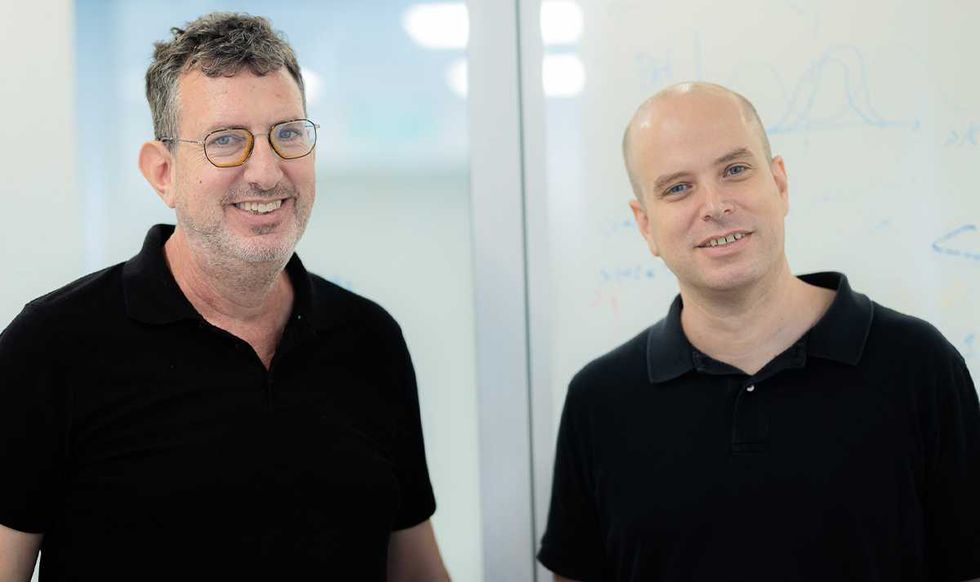 Yedvab, left, and Spector.Courtesy of Stardust / Roby Yahav





 Oh, Canada!EIA