Current conditions: The snow squalls and cold air headed from the Ohio Valley to the Northeast are coming with winds of up to 55 miles per hour • A “western disturbance,” an extratropical storm that originates in the Mediterranean and travels eastward, is set to arrive in India and bring heavy snow to the Himalayas • Tropical Storm Basyang made landfall over the Philippines this morning, forcing Cebu City to cancel all in-person classes for public school students.
THE TOP FIVE
1. White House kicks off critical minerals summit
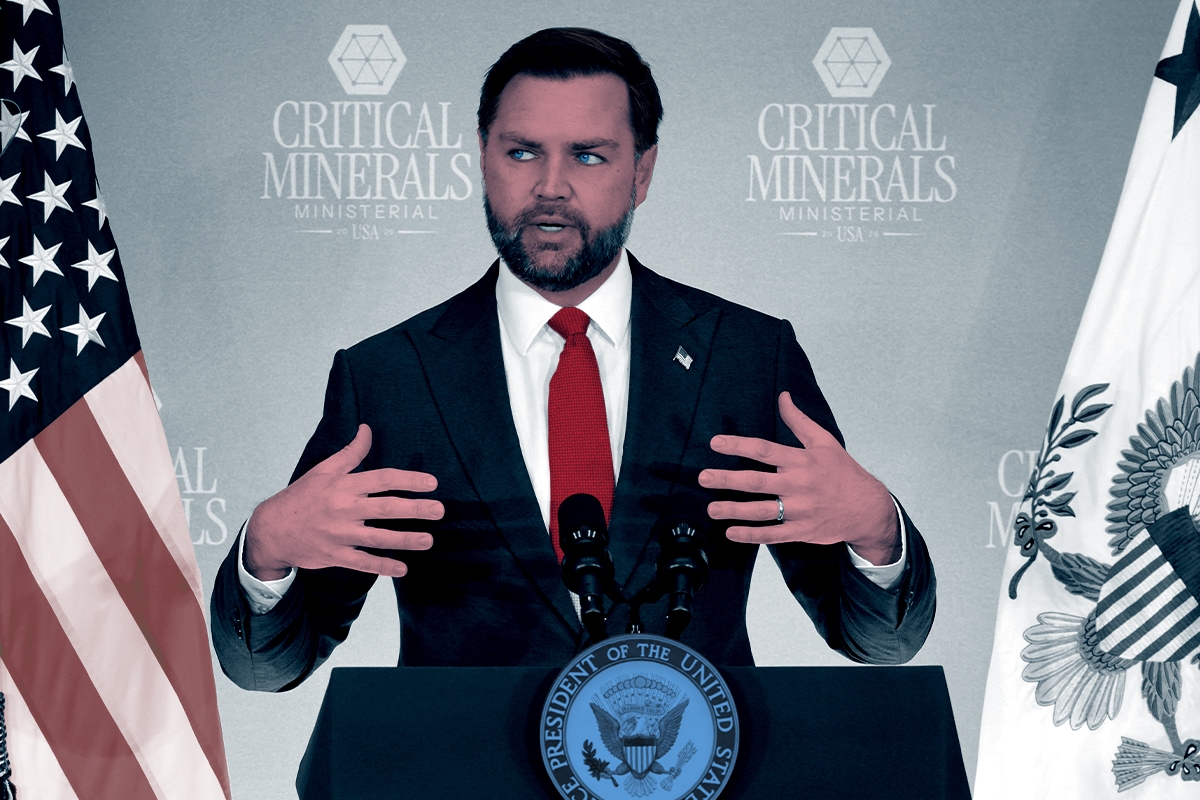
Vice President JD Vance delivered a 40-minute speech Wednesday appealing to 54 countries and the European Union to join a trading alliance led by the United States to establish a supply of critical minerals that could meaningfully rival China. The agreement would create a “preferential trade zone” meant to be “protected from disruptions through enforceable price floors.” The effort comes in response to years of export controls from Beijing that have sent the prices of key minerals over which China has near monopolies skyrocketing. “This morning, the Trump administration is proposing a concrete mechanism to return the global critical minerals market to a healthier, more competitive state,” Vance said at the State Department’s inaugural Critical Minerals Ministerial in Washington.
Under the Biden administration, the U.S. attempted to coordinate a network of trading partners, to make up for the minerals American mines no longer produced. The Treasury Department allowed automakers that sourced battery minerals to countries with which the U.S. had a free trade agreement to benefit from the most valuable version of the landmark electric vehicle tax credit reserved for power packs made with domestically-sourced metals. The White House worked with Republicans in Congress to eliminate the tax credit last year, demonstrating what Heatmap’s Matthew Zeitlin referred to as the “paradox” of Trump’s push for more domestic mining: A push to increase supply while eliminating one of the biggest sources of demand. The on-again, off-again tariff wars with allies haven’t done much to rally the spirit of camaraderie among America’s traditional trade partners either. Since then, as I have covered repeatedly in this newsletter, Trump has gone on a shopping spree for equity stakes in mining companies, shelled out grants through the military to mineral startups, and, most recently, created a $12 billion federal stockpile. Yet it’s come with plenty of missteps, as a former Department of Energy official told our colleague Robinson Meyer in his latest Shift Key podcast. Still, Congress is backing up the mining push. The House voted 224-195 Wednesday to approve legislation meant to speed up mining on federal lands.
2. Federal energy assistance programs survive GOP cuts
Despite President Donald Trump’s threats to eliminate its funding, Congress has spared the long-running federal program that helps low-income Americans pay for heating and electric bills. The budget deal the president signed Tuesday to fund most federal agencies through September added $20 million to the Low Income Energy Assistance Program, bringing the total funding to just over $4 billion. It’s a full reversal of Trump’s position in May, when the administration asked Congress to completely eliminate the funding, Utility Dive reported. A second appropriations package Trump signed last month also included a small increase in funding for a separate program that subsidizes weatherization projects and other energy efficiency renovations for low- and moderate-income households.
3. Copper’s surging price is a boon to Chile’s new far-right president
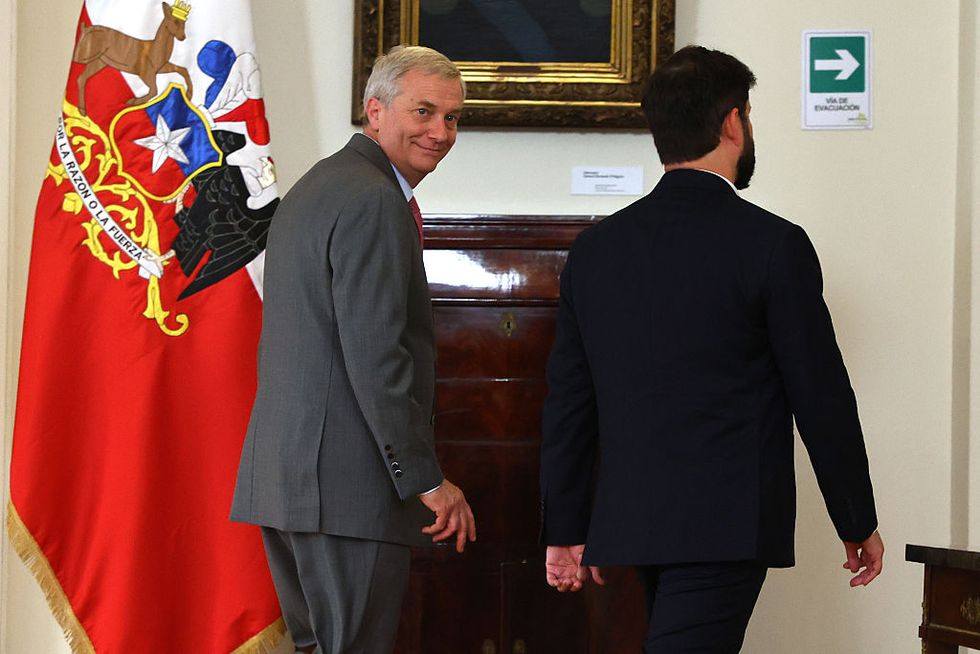
 President-elect José Antonio Kast, Chile's most right-wing leader since Augusto Pincohet's dictatorship, smiles alongside President Gabriel Boric, the most left-wing president since Salvador Allende. Marcelo Hernandez/Getty Images
Last week, I told you about copper prices soaring to a record — and seemingly unsustainable — high. While Goldman Sachs analysts expected the price for the metal needed for virtually anything electric to fall, it was still forecast to level off well above the average for the past few years. Well, that’s good news José Antonio Kast, the far-right leader scheduled to be inaugurated president of Chile next month. His incoming finance minister told the Financial Times the government plans to deliver economic growth rates of 4% and balance the country’s budget by 2029. If that proves possible, it’s only because Chile is the world’s largest producer of the red metal.
The U.S., meanwhile, is seeing early fruits of its global mineral diplomacy. The federal government’s International Development Finance Corporation said Wednesday that a U.S.-backed venture will begin shipping 50,000 tons of copper from the Democratic Republic of the Congo to Saudi Arabia and the United Arab Emirates. The export package comes a month after the same Congolese project pledged to send 100,000 tons to the U.S. The lending agency’s chief executive, Ben Black, said the partnership between Washington and Kinshasa “ensures valuable critical minerals are directed to the U.S. and our allies.”
Sign up to receive Heatmap AM in your inbox every morning:
4. Europe’s leading next-generation nuclear startup just raised $85 million
Newcleo, the best-known European nuclear startup promising to build fourth-generation small modular reactors, just netted $85 million in its latest financing round, bringing its total fundraising for the past 12 months to more than $125 million. The financing round includes venture funds Kairos and Indaco Ventures, asset manager Azimut Investments, the CERN pension fund, and industrial giants such as steelmaker Danieli, concrete manufacturer Cementir Holding, and components producers such as Walter Tosto and Orion Valves. The money will “accelerate our expansion into the U.S.,” a nascent effort that has included brokering a partnership with fellow next-generation reactor startup Oklo. Unlike the California company, whose microreactor design uses liquid sodium instead of water as a coolant, Paris-based Newcleo has proposed building a lead-cooled unit. The design has already gained approval in the United Kingdom. “Our ability to deliver impactful low-carbon energy solutions for energy-intensive firms is proving an attractive investment rationale for both industrial and financial investors,” said Newcleo CEO Stefano Buono.
5. Drax threatens hundreds of layoffs in ‘shameful betrayal’
Last week, I told you about the trouble brewing for the controversial wood-pellet giant Drax, which built its business on government subsidies predicated on the idea that burning felled trees for electricity could somehow provide a low-carbon alternative to fossil fuels. Facing overdue scrutiny of its green credentials, the British company had hoped Japan, the world’s No. 2 importer of wood pellets, would provide a growth market. But Tokyo indicated it’s cutting off the subsidy spigot. Then, two days ago, I told you that a former Drax employee admitted the company misled the public when claiming it wasn’t felling old-growth trees to make its wood pellets. Now the union that represents its British workers, Unite, has blasted Drax for the “shameful betrayal” of threatening to cut as many as 350 jobs. That could total up to 10% of the workforce. “It is shameful that a firm making billions such as Drax is choosing to target its staff,” Sharon Graham, Unite’s general secretary, said, according to Energy Voice. “It is morally wrong that workers, their families, and local communities pay the price for corporate greed.”
Over at The Washington Post, billionaire owner Jeff Bezos’ management team just gutted the newspaper's Pulitzer Prize-winning climate desk. The paper sent layoff notices to at least 14 climate journalists, newsroom sources told veteran beat reporter Sammy Roth for his Climate-Colored Goggles newsletter. The pink slips included eight writers and reporters, an editor, and several video, data, and graphics journalists. I’ll echo Sammy’s sentiment with the highest compliment I can give: I was routinely jealous of the top-notch reporting the climate team published at the Post. Losing that nuanced, complex reporting, at this particular juncture in the history of our nation and our atmosphere, is devastating. It’s also infuriating when you read the back-of-the-napkin math New York Times reporter Peter Baker posted on X yesterday: “Last reported annual losses of Post: $100 million,” he wrote. “Number of years Bezos could absorb those losses with what he makes in a single week: 5.”
THE KICKER
Take a guess who wrote this on X yesterday morning: “Solar energy is the energy of the future. Giant fusion reactor up there in the sky — we must rapidly expand solar to compete with China.” Go ahead, I’ll wait. Whomever you were going to name, you’re probably wrong. The answer, astonishingly, is Katie Miller, the right-wing influencer wife of top Trump adviser Stephen Miller. A regular feature of White House social media content, Katie Miller posted her praise for an industry her husband’s boss has done much to stymie in response to an Axios article on a poll that found strong support for solar among GOP voters. The survey, commissioned by the panel manufacturer First Solar, comes as the solar industry says that the administration is throttling its permitting. While Trump seems unlikely to let up on wind, it could be a sign of a brighter future for America’s fastest-growing source of electricity.


 President-elect José Antonio Kast, Chile's most right-wing leader since Augusto Pincohet's dictatorship, smiles alongside President Gabriel Boric, the most left-wing president since Salvador Allende. Marcelo Hernandez/Getty Images