In an era of extreme weather, infrastructure repair and hardening charges are piling up for utilities — and for ratepayers. Utilities in at least 18 U.S. states are now passing on disaster-related charges in electricity bills, according to data from Heatmap and MIT’s new Electricity Price Hub. And as extreme weather continues apace with climate change, those costs will only get higher.
Though California and Florida remain the expected outliers, the disaster recovery pattern is decidedly national, spanning the Pacific Northwest, Midwest, Southeast, and Appalachia, with 36 utilities having introduced at least one specific disaster-related charge since 2020. Often, such charges are tacked on years after the disaster they’re intended to address, and they sometimes begin at such a low cost as to be almost invisible to customers before ratcheting up.
Compared with generation, transmission, and distribution costs, disaster recovery charges are frequently a small line item on bills. For DTE customers in Detroit — where powerful windstorms can knock out power for days — a base securitization charge associated with tree trimming (and the retirement of the River Rouge coal plant) has increased by just over a tenth of a cent per kilowatt-hour since 2022. That’s compared to about three pennies per kilowatt-hour for all the other DTE rate increases over the same period, combined.
Starting last year, customers of Kentucky Power Co. have likewise been paid three securitized surcharge riders, totaling about $0.01 per kilowatt-hour, to help cover $78.8 million in “deferred storm costs” related to major storms that hit the state every year between 2020 and 2023. That’s about $12 added to the average Kentucky Power Co customer’s bill, or an increase of roughly 6%.
Securitization is one method utilities use to deal with debt incurred due to extreme weather. Such plans allow utilities to issue long-term low-interest bonds to cover disaster-related costs upfront, avoiding shorter-term loans and the sticker shock of a large rate jump for ratepayers. In the case of Kentucky Power, securitization allowed the utility to avoid what would have been a 13.1% rate increase, per the Kentucky Public Service Commission.
Because securitization charges are tied to bond payments and are periodically adjusted, our data shows the associated disaster recovery charge for Kentucky Power has dropped slightly since it was introduced in 2025. The downside to securitization, though, is that — as, again, in the case of Kentucky Power — ratepayers will be footing the costs of the 2020-23 storm seasons for a long time: more than two decades. And while the cost per bill might be small now, by the time the 20-year recovery period is up, there will almost certainly have been further damaging storms in the state. Those costs accumulate.
The process of securitization also requires legislative approval from the state and the blessing of the local regulator. For lower and more routine damage, weatherization, and emergency operating costs, utilities can use a faster-acting rider instead.
Riders, however, can ramp up once storm costs are tallied. Oklahoma Gas & Electric’s storm cost recovery rider, for example, started at just $0.000739 per kilowatt-hour in 2020, our first year of data, and has since ballooned by 460%.
While that amounts to only about $4 to $5 a month on the average customer’s $136 electricity bill, in states like California and Florida, cost recovery can be much higher. Tampa Electric customers are in the midst of an 18-month payment plan to cover $464 million in restoration costs from Hurricanes Helene and Milton in 2024, or about a $22 increase in the average customer’s monthly bill. That’s in addition to the utility’s Storm Protection Plan, which began in 2020 and funds grid-hardening measures such as undergrounding power lines, and runs about $8 per month for the average customer — or a combined $360 per year.
FPL Northwest Florida — formerly Gulf Power, serving northwestern Florida — has a $385 million storm protection plan to harden its grid. That cost is reflected in a 2,589% increase in the utility’s “Storm Protection Plan Cost Recovery” charge since 2021, due to the cascading costs of hurricanes. Duke Energy Florida’s storm protection plan charge is up almost 3,000% since it was introduced in 2021, also related to infrastructure hardening.
But hurricanes are also a problem in Louisiana, where smaller rural co-ops don’t have the same access to financing as large investor-owned utilities. Six Louisiana electric cooperatives in our database have added disaster-related riders since 2021: Jefferson Davis Elec Coop, Inc, as a reactive measure to address the costs of the 2020 hurricane season; South Louisiana Electric Coop and Southwest Louisiana EMC with riders in 2022 to help with recovery from Hurricane Ida and others in 2021; and Pointe Coupee Elec Member Corp, Claiborne Electric Coop Inc, and Concordia Electric Coop, Inc, all with emergency reserve fund riders added in 2025.
“Tornadoes, straight-line winds, tropical storms, ice storms, and even the occasional hurricane can cause millions of dollars in damage in a single day,” Claiborne wrote to its customers to justify the increase last year. “As much as we wish we could control the weather and keep storms at bay, we know future harmful storms are inevitable.” (All six co-ops have also seen their total rates increase between 2021 and the latest available data, with Claiborne rising by almost 38%.)
Many West Coast utilities are also bracing for a future full of extreme weather-related disasters. Washington State’s Puget Sound Energy has added a surcharge of about $14 per year to electricity customers to recover the costs from its forward-looking Wildfire Mitigation and Response Plan. PacifiCorp and Portland General Electric Co., both in Oregon, are likewise passing fire-related mitigation costs, such as vegetation management, onto their customers. For California’s PG&E, wildfire-related charges accounted for roughly 18% of system costs in the five years preceding 2023, though those charges are also rolled into distribution costs and aren’t always clearly itemized.
Due in part to regulatory lag, the impacts of major storms such as the 2024 hurricanes that affected Tampa often aren’t felt by ratepayers for years. As the Electricity Price Hub data shows, increases in disaster recovery-related rate charges don’t neatly map to major disaster years, or even necessarily to the years immediately following them. Due in part to legal mechanics, customers in Kansas only started to see the passed-on costs of elevated natural gas prices from the 2021 Winter Storm Uri on their 2023 bills.
It is also not uncommon for costs to start so low they’re almost unnoticeable to customers before growing in scale. Alabama Power’s Natural Disaster Reserve started at a mere $0.000645 per kilowatt-hour in 2020, but has risen 155% to $0.001642 per kilowatt-hour. While that still represents only a handful of dollars per month on the average customer’s $261 monthly bill, it shows that disaster charges that slip onto bills might not stay “invisible” forever.
One major limitation of our data: Utilities don’t always neatly identify riders and surcharges related to storms and extreme weather, and costs might also be rolled into distribution and transmission base rates. After a hurricane, for example, a utility might include grid-hardening costs as capital expenditures, passing them on to customers as increased distribution costs related to infrastructure, rather than flagging them as specific “disaster” charges. This means that disaster surcharges visible in the data, including those cited in this article, should be taken as bare minima.
Temporary riders can also be replaced — as in the case of Entergy Mississippi’s SD-9 rider, which dated back to Hurricane Katrina and addressed “extraordinary incremental storm damage costs,” which appears to zero out in our data. In fact, it was followed up by a 2024 storm damage mitigation and restoration rider aimed at creating a fund to absorb the shocks of “windstorms, ice storms, thunderstorms, tornadoes, hurricanes, floods, wildfires, or other such events.” The 2024 rider is nearly three times as high as the one it replaced.
In other words, while we’ve been able to single out 58 specific charges that utilities have identified as either addressing or anticipating extreme weather-related disasters since 2020, that is almost certainly an undercount. While still being illustrative, the data also points to an even bigger takeaway: This is just the tip of the iceberg. The true cost to ratepayers — and the extent of weather-related impacts on electricity bills around the country — will be much larger.







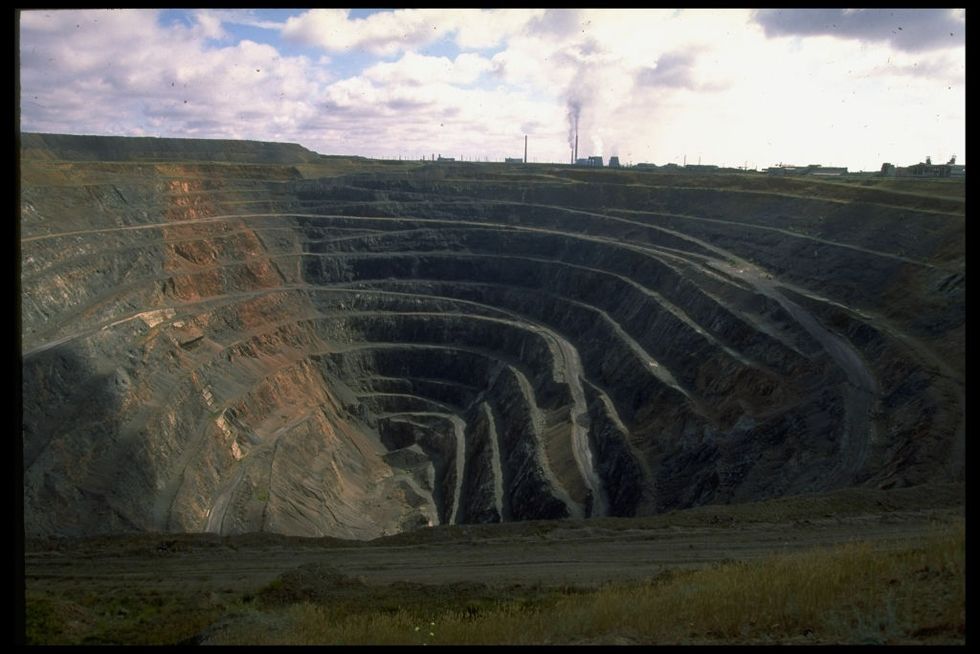 An old uranium mine in Stepnogorsk, Kazakhstan. Robert Nickelsberg/Getty Images
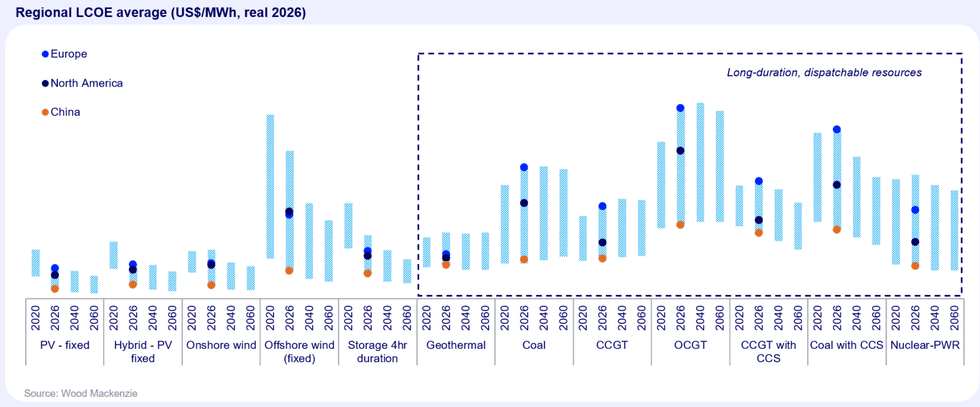 Four-hour stage compares very well to open-cycle gas turbines, labeled OCGT. Wood Mackenzie