Before we begin, a crucial theme I picked up reviewing the data: The AI infrastructure backlash will almost assuredly be most painful for sitting House Republicans crucial to deciding the future of the lower chamber of Congress.
Very few House Democrats are defending seats in challenging contests. As I’ll explain, at least one of the elected Democrats that would otherwise be most vulnerable in this year’s election cycle — Rep. Marcy Kaptur in Ohio — has already positioned themselves way out ahead on this issue. This means what we’re left with is simply a long list of incumbent GOP lawmakers with votes supporting data centers that newcomer challengers can call out. My best anecdotal comparison in recent history is anger over Covid-19 school closures helping oust incumbent Democrats in Virginia way back in 2021, but expanded to a national scale.
House races strike a balance between nationalized issues (gas prices, federal AI support) and local fights over land use and nearby resource draws like water or power, so this shouldn’t be a surprise. But it is a pivotal trend to remember as we approach Election Day.
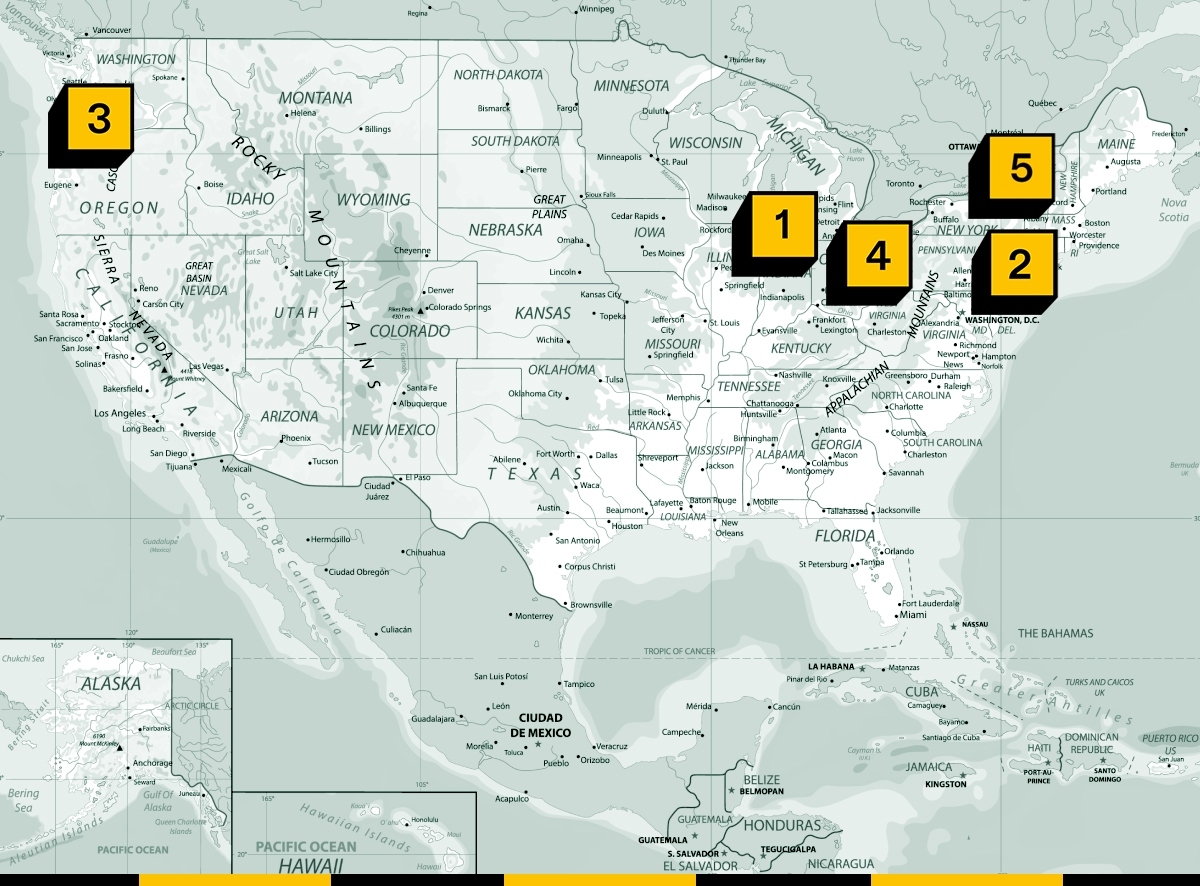
1. Will Lawrence vs. Rep. Tom Barrett – Michigan 7th
The most important data center-centric race for Congress is a rare case where it’s also the one receiving the most media attention: Will Lawrence, a Democrat, versus Republican CongressmanTom Barrett.
To quickly set the scene, this race is happening in Michigan’s 7th District — an agriculture-heavy area of central Michigan I personally know quite well because of its proximity to the college town of Lansing. The district includes what Heatmap Pro clearly shows are multiple challenging areas for any sort of large-scale AI or energy infrastructure, including both Ingham and Clinton County.
Enter Will Lawrence, a cofounder of the Sunrise Movement, who made data center opposition core to his campaign by backing a federal moratorium in early 2026. It was the first issue he highlighted in primary campaign ads and many credit the stance for his surprise upset victory over establishment favorite and former Navy SEAL Matt Maasdam. This week, Democratic gubernatorial candidate Jocelyn Benson backed a statewide moratorium on new projects if she won. It’s hard to think that would ever happen without Lawrence’s victory.
Lawrence’s incumbent opponent is Rep. Tom Barrett, who over this summer introduced two bills signaling a more aggressive stance on the issue — one that would block federal agencies from overriding local zoning decisions and another banning members of Congress from signing NDAs related to data centers. I do not think these bills will do much on the campaign trail to help him; neither one would actually stop any data centers in Michigan or elsewhere, as both policies address hypothetical cases we’ve not seen before.
Cook Political Report scores this race as a Toss-Up.
2. Paige Cognetti vs. Rep. Rob Bresnahan Jr – Pennsylvania 8th
In Pennsylvania, you’ll find a race pivotal for control of Congress — and future Republican responses to the data center backlash writ large.
When it comes to the GOP members responding earnestly to the backlash against data centers, you can’t find a better example than Rep. Rob Bresnahan Jr., who represents the Keystone State’s 8th congressional district. This area in Pennsylvania’s northeast corner is filled with traditionally moderate suburbs as well as current and former fossil fuel industry communities. Bresnahan won his seat in the last election cycle, defeating former Democratic Rep. Matt Cartwright, an elected official I best knew as one of the biggest champions in Congress for cleaning up former gas and mine developments areas.
Bresnahan Jr. is running against Paige Cognetti, the Democratic mayor of Scranton, who is running ads comparing data centers to the legacy of unremediated fossil fuel projects. It’s a clear ploy to use data centers as a signal to voters this newly elected Republican could be straying away from what used to be the norm for the area’s representative in the U.S. House.
“Big companies have come before, taken what they wanted, and left us with their mess to clean up. Now its data centers,” states one Cognetti ad released last month.
Unlike other Republicans in Congress facing data center scrutiny, this GOP freshman acted quickly to introduce legislation supporting communities fighting data centers. In June, Bresnahan put forward a bill that would block federal agencies from permitting new data centers if they were rejected by their host local governments and enjoin federal legal action against towns or counties that deny data centers if they met certain standards for the rejection. It’s a far more aggressive stance than Trump’s Ratepayer Protection Pledge and marks one of the most significant anti-data center bills ever introduced into Congress.
Cook Political Report scores this race as a Toss-Up.
3. Rep. Marcy Kaptur vs. Derrick Merrin – Ohio 9th
Can an incumbent Democrat protect herself in one of the reddest congressional districts in the country by railing against data centers?
Rep. Marcy Kaptur is someone whose profile I know quite well because she was the first member of Congress I ever interviewed back in 2017. For many years, she’s represented a district on the rim of Lake Erie, and she’s long been the top Democrat on the House Energy-Water Appropriations Subcommittee. In her district, she’s best known for portraying herself as a tooth-and-nail fighter for union labor in a blue collar Ohio congressional district often redrawn by the state’s GOP leadership to be harder each and every cycle. Thanks to her policy chops and moderate positions on other issues, she keeps beating the odds every election, kind of like a Democratic answer to Susan Collins.
This year, Kaptur’s seat is one of the most important for Democrats to defend in the midterms to regain control of the lower chamber. She clearly believes her opponent, State Rep. Derrick Merrin, has a potential political liability in a 2017 vote for data center tax breaks in Ohio. So she’s been making great hay of this issue for a while.
“Will our building trades be true partners in economic growth or temporary labor while facing higher utility bills at home?” Kaptur said on the House floor last December, long before the backlash to AI hyperscalers was a national conversation.
Should Kaptur win with this strategy, and if Democrats retake the House, I expect she will suddenly become one of the most important members in Congress on data center policy thanks to her subcommittee slot.
Cook Political Report scores this race as a Toss-Up.
4. Shannon Taylor vs. Rep. Rob Wittman – Virginia 1st
On Election Night this November, I’ll be watching this race most closely to know if it’ll be an early night — and whether the entire data center sector’s in for a world of hurt.
This Richmond-area congressional brawl is between a historically overperforming incumbent in Rob Wittman, a five term Republican elected in the Bush era, and Henrico County prosecutor Shannon Taylor, a Democrat who won her primary earlier this year over a candidate that supported a federal data center moratorium. Taylor is still critical of the data center sector though, focusing on fighting any increased water and energy cost from facility operations.
Wittman has said voters have “legitimate concerns” about data centers and cosponsored the House version of the Ratepayer Protection Act, which would codify Trump’s pledge into law. Asked this week whether he’d support a data center moratorium, Wittman pivoted to the bill he backed instead. “I support putting guardrails on these data centers. Ultimately, these are local decisions and decisions of states,” he told a local ABC affiliate, adding he also wants to see facilities reduce water use. Wittman concluded, “Ultimately, it’ll be a local decision, but yes there is a federal role for that.”
Between their shared skepticism of a national data center moratorium and wanting companies to pay for what they build, there doesn’t seem to be much difference between the two candidates’ positions.. So where’s the contrast?
The difference is in the attack ads. The Democratic Congressional Campaign Committee is making data centers a key part of this contest among many others, calling on allied political action committees to specifically make negative ads in Richmond and Norfolk media markets calling out past support for data center tax breaks. Unlike Wittman, Taylor has no tangible record of past support for these projects like explicit statutory support. So on Election Night, because Virginia closes voting early, this race will be my must-watch contest to know how dire not only Republicans’ chances are but more importantly, the data center sector.
Cook Political Report rates it Lean R, noting Wittman has a history of “overperforming politically.” Abigail Spanberger won the district last year.
5. James Talarico vs. Ken Paxton – Texas, U.S. Senate
I only picked one Senate race for this list, because like Virginia’s 1st, the fortunes of the data center sector in this election cycle clearly ride on the Texas Senate race.
Sure, the Lone Star gubernatorial is just as important. Yes, other Senate races are positioned around data centers, like Sherrod Brown vs. Sen. Jon Husted in Ohio and Abdul El-Sayed vs. Mike Rogers in Michigan. But no other contest is as clear of a bellwether for the entire midterm election because Texas is the data center destination in the nation.
On policy, Talarico is running on the mean average anti-data center stance: requiring companies to pay for what they need. It’s fairly boilerplate. Meanwhile, Paxton’s plan is a hodgepodge: it leans heavily on support for Gov. Greg Abbott’s clampdown-in-progress on the industry. He also calls for banning Chinese technology from being used in American data centers or to power them and says he’d support legislation speeding up permits for power to AI hyperscalers.
At the Republican Party convention in Texas this week, Paxton voiced support in an interview with Bloomberg TV for Abbott slowing down development in the state. He also said the country needed data centers because “if we don’t have data centers, we’re going to have trouble with China.” Asked whether he’d support legislation in the Senate that would put “restrictions” on data center development, Paxton offered a confusing answer that refused to say yes or no.
“There’s no bill, obviously, so it’s a hypothe– that’s so — I don’t know what the bill’s going to look like. You could have a data center [bill] drafted one thousand different ways. I would have to look at the bill and then I’d go back to my constituents and say hey, does this address what you’re worried about?” he said.
There’s a good reason reporters are asking. Earlier this year, a Washington Star report highlighted that Hood County requested Ken Paxton as attorney general intervene against a data center development and he did not respond. The issue became a serious campaign spat this past week, too, with Talarico telling CBS News he “just ghosted” the county.
Unlike Virginia, we haven’t seen the data center attack ads pop up… yet. If what’s happening elsewhere in the country is a prologue, I expect them to. Cook Political Report rates this race a Toss-Up and recently polling from their outfit found collapsing GOP support amongst Hispanic voters in the state.