This article is exclusively
for Heatmap Plus subscribers.
Log in
To continue reading, log in to your account.
Create a Free Account
To unlock more free articles, please create a free account.

Sign In or Create an Account.
By continuing, you agree to the Terms of Service and acknowledge our Privacy Policy
Welcome to Heatmap
Thank you for registering with Heatmap. Climate change is one of the greatest challenges of our lives, a force reshaping our economy, our politics, and our culture. We hope to be your trusted, friendly, and insightful guide to that transformation. Please enjoy your free articles. You can check your profile here .
subscribe to get Unlimited access
Offer for a Heatmap News Unlimited Access subscription; please note that your subscription will renew automatically unless you cancel prior to renewal. Cancellation takes effect at the end of your current billing period. We will let you know in advance of any price changes. Taxes may apply. Offer terms are subject to change.
Subscribe to get unlimited Access
Hey, you are out of free articles but you are only a few clicks away from full access. Subscribe below and take advantage of our introductory offer.
subscribe to get Unlimited access
Offer for a Heatmap News Unlimited Access subscription; please note that your subscription will renew automatically unless you cancel prior to renewal. Cancellation takes effect at the end of your current billing period. We will let you know in advance of any price changes. Taxes may apply. Offer terms are subject to change.
Create Your Account
Please Enter Your Password
Forgot your password?
Please enter the email address you use for your account so we can send you a link to reset your password:
Plus a resolution for Vineyard Wind and more of the week’s big renewables fights.
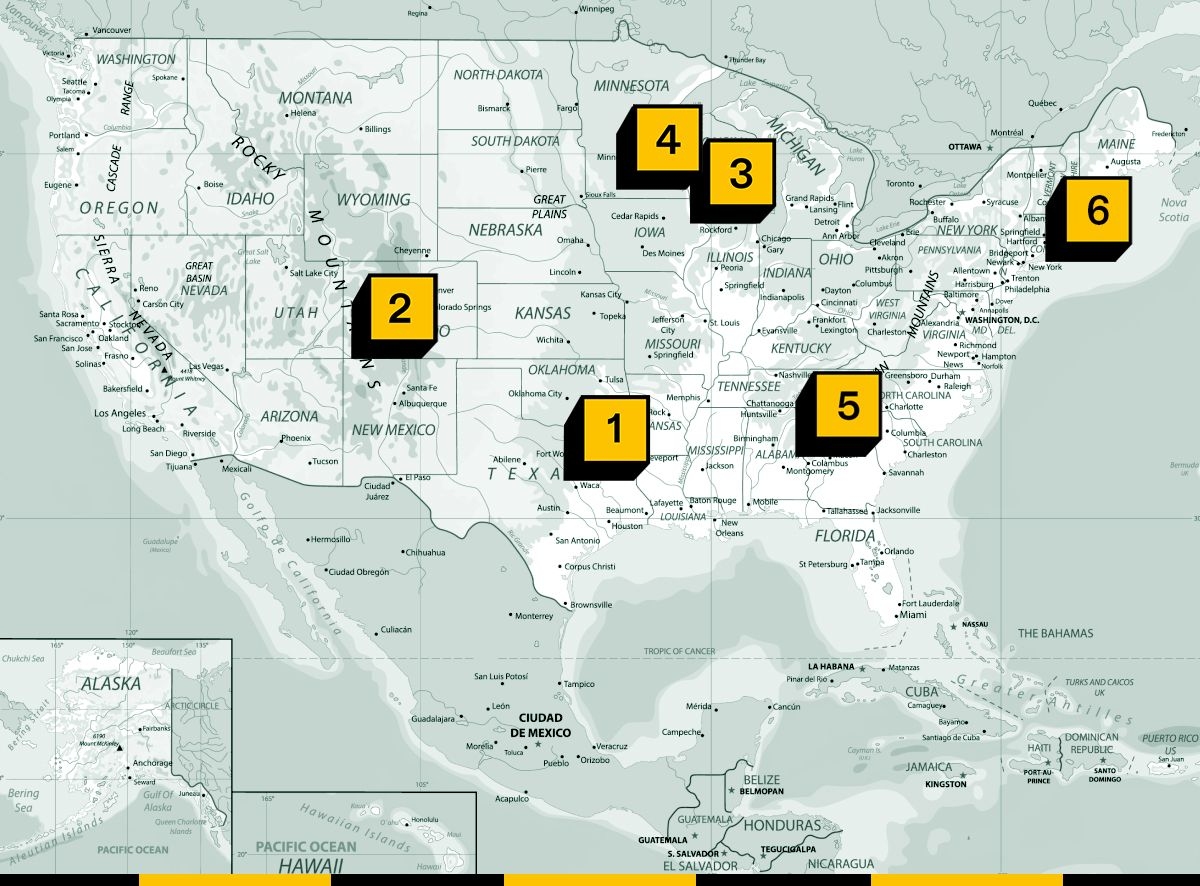
1. Hopkins County, Texas – A Dallas-area data center fight pitting developer Vistra against Texas attorney general Ken Paxton has exploded into a full-blown political controversy as the power company now argues the project’s developer had an improper romance with a city official for the host community.
2. La Plata County, Colorado – This county has just voted to extend its moratorium on battery energy storage facilities over fire fears.
3. Dane County, Wisconsin – The city of Madison appears poised to ban data centers for at least a year.
4. Goodhue County, Minnesota – The Minnesota Center for Environmental Advocacy, a large environmentalist organization in the state, is suing to block a data center project in the small city of Pine Island.
5. Hall County, Georgia – A data center has been stopped down South, at least for now.
6. Dukes County, Massachusetts – The fight between Vineyard Wind and the town of Nantucket seems to be over.
Log in
To continue reading, log in to your account.
Create a Free Account
To unlock more free articles, please create a free account.
It’s now clear that 2026 will be big for American energy, but it’s going to be incredibly tense.
Over the past 365 days, we at The Fight have closely monitored numerous conflicts over siting and permitting for renewable energy and battery storage projects. As we’ve done so, the data center boom has come into full view, igniting a tinderbox of resentment over land use, local governance and, well, lots more. The future of the U.S. economy and the energy grid may well ride on the outcomes of the very same city council and board of commissioners meetings I’ve been reporting on every day. It’s a scary yet exciting prospect.
To bring us into the new year, I wanted to try something a little different. Readers ask me all the time for advice with questions like, What should I be thinking about right now? And, How do I get this community to support my project? Or my favorite: When will people finally just shut up and let us build things? To try and answer these questions and more, I wanted to give you the top five trends in energy development (and data centers) I’ll be watching next year.
The best thing going for American renewable energy right now is the AI data center boom. But the backlash against developing these projects is spreading incredibly fast.
Do you remember last week when I told you about a national environmental group calling for data center moratoria across the country? On Wednesday, Senator Bernie Sanders called for a nationwide halt to data center construction until regulations are put in place. The next day, the Working Families Party – a progressive third party that fields candidates all over the country for all levels of government – called for its candidates to run in opposition to new data center construction.
On the other end of the political spectrum, major figures in the American right wing have become AI skeptics critical of the nascent data center buildout, including Florida Governor Ron DeSantis, Missouri Senator Josh Hawley, and former Trump adviser Steve Bannon. These figures are clearly following the signals amidst the noise; I have watched in recent months as anti-data center fervor has spread across Facebook, with local community pages and groups once focused on solar and wind projects pivoting instead to focus on data centers in development near them.
In other words, I predicted just one month ago, an anti-data center political movement is forming across the country and quickly gaining steam (ironically aided by the internet and algorithms powered by server farms).
I often hear from the clean energy sector that the data center boom will be a boon for new projects. Renewable energy is the fastest to scale and construct, the thinking goes, and therefore will be the quickest, easiest, and most cost effective way to meet the projected spike in energy demand.
I’m not convinced yet that this line of thinking is correct. But I’m definitely sure that no matter the fuel type, we can expect a lot more transmission development, and nothing sparks a land use fight more easily than new wires.
Past is prologue here. One must look no further than the years-long fight over the Piedmont Reliability Project, a proposed line that would connect a nuclear power plant in Pennsylvania to data centers in Virginia by crossing a large swathe of Maryland agricultural land. I’ve been covering it closely since we put the project in our inaugural list of the most at-risk projects, and the conflict is now a clear blueprint.
In Wisconsin, a billion-dollar transmission project is proving this thesis true. I highly recommend readers pay close attention to Port Washington, where the release of fresh transmission line routes for a massive new data center this week has aided an effort to recall the city’s mayor for supporting the project. And this isn’t even an interstate project like Piedmont.
While I may not be sure of the renewable energy sector’s longer-term benefits from data center development, I’m far more confident that this Big Tech land use backlash is hitting projects right now.
The short-term issue for renewables developers is that opponents of data centers use arguments and tactics similar to those deployed by anti-solar and anti-wind advocates. Everyone fighting data centers is talking about ending development on farmland, avoiding changes to property values, stopping excess noise and water use, and halting irreparable changes to their ways of life.
Only one factor distinguishes data center fights from renewable energy fights: building the former potentially raises energy bills, while the latter will lower energy costs.
I do fear that as data center fights intensify nationwide, communities will not ban or hyper-regulate the server farms in particular, but rather will pass general bans that also block the energy projects that could potentially power them. Rural counties are already enacting moratoria on solar and wind in tandem with data centers – this is not new. But the problem will worsen as conflicts spread, and it will be incumbent upon the myriad environmentalists boosting data center opponents to not accidentally aid those fighting zero-carbon energy.
This week, the Bureau of Land Management approved its first solar project in months: the Libra facility in Nevada. When this happened, I received a flood of enthusiastic and optimistic emails and texts from sources.
We do not yet know whether the Libra approval is a signal of a thaw inside the Trump administration. The Interior Department’s freeze on renewables permitting decisions continues mostly unabated, and I have seen nothing to indicate that more decisions like this are coming down the pike. What we do know is that ahead of a difficult midterm election, the Trump administration faces outsized pressure to do more to address “affordability,” Democrats plan to go after Republicans for effectively repealing the Inflation Reduction Act and halting permits for solar and wind projects, and there’s a grand bargain to be made in Congress over permitting reform that rides on an end to the permitting freeze.
I anticipate that ahead of the election and further permitting talks in Congress, the Trump administration will mildly ease its chokehold on solar and wind permits because that is the most logical option in front of them. I do not think this will change the circumstances for more than a small handful of projects sited on federal lands that were already deep in the permitting process when Trump took power.
It’s impossible to conclude a conversation about next year’s project fights without ending on the theme that defined 2025: battery fire fears are ablaze, and they’ll only intensify as data centers demand excess energy storage capacity.
The January Moss Landing fire incident was a defining moment for an energy sector struggling to grapple with the effects of the Internet age. Despite bearing little resemblance to the litany of BESS proposals across the country, that one hunk of burning battery wreckage in California inspired countless communities nationwide to ban new battery storage outright.
There is no sign this trend will end any time soon. I expect data centers to only accelerate these concerns, as these facilities can also catch fire in ways that are challenging to address.
A catch-up with kWh Analytics’ Jason Kaminsky.
This week’s conversation is a catch-up chat with Jason Kaminsky of kWh Analytics, an insurance firm that works with renewable energy developers. I reached out to Kaminsky ahead of the new year because as someone with an arms-length distance from development, I find he is able to speak more candidly about market dynamics and macro-level trends – as well as the fears many have in rural communities about energy project failures, like battery fires. Seeing as the theme this week felt like “data centers forever,” I also thought it would be good to get up to speed on what he’s most focused on in that space, too.
The following conversation has been lightly edited for clarity.
Okay so, Jason – is renewable energy actually benefiting from the data center boom?
Renewables are supporting our load growth boom. Data centers are about a third of the projected load growth. So it is certainly a key component of what is driving demand broadly, but not the only component. The other pieces worth considering are the electrification of transportation, the reindustrialization of America, and the electrification of residential homes. But data centers are getting enthusiasm because of how quickly people are trying to deploy them.
The unique benefit renewables have is that they’re able to deploy quickly, and you need the benefits that storage has to handle these load centers.
How rapidly is the data center buildout and its associated infrastructure buildout actually happening, and how rapidly is this demand curve actually rising?
Remember, we’re not a developer on the front line, and a developer on the front line might have a better answer to this. But I’d say most of the activity today in the data center space is still quite a ways out. It’s either linked to a new facility or the planning of a new facility. Now, granted, we’re seeing it quite late in the process because we’re the insurance company, and so from an operational perspective, we’re not seeing it in the numbers yet. But it is in the forecasts, which is what you’re seeing, as well.
When it comes to concerns about renewable energy development at the local level, the last time we spoke was about project risk and the extent to which projects face weather risks, fire risks. Do data centers face these same kinds of risks?
The data center development ecosystem parallels very closely with the project development ecosystem with renewables.
What I mean by that is you have a few mega-developers, like the NextEras of the world, but instead it’s Meta and Google building these massive centers, these 800-pound gorillas. Then you have these companies that are equivalent to [independent power producers], a lot of people building mid-size to small-size data centers, and either building them on spec or with long-term contracts. Within that you have very different community engagements and quality, different power generation strategies and siting strategies, but there’s no universal data center approach. It’s a very stratified data center ecosystem.
It probably compounds the problem because you have more land being used. There are stories like the X data centers not getting permits for their generators, and resulting local pollution. There have been concerns in the media about heat effects and the way data centers use so much water.
Before, though, renewables were the focus. Now data centers are the focus and renewables are just kind of along for the ride.
Has the conversation around the renewable energy sector and its project-level business risks evolved in the year since we last spoke? Have data centers changed the conversation?
I would say that from a micro perspective, as you start pairing these facilities with data centers, one of the things you have to think about from a risk management perspective and the insurance perspective is the lost revenue due to a failure.
Generally, that’s electricity sales. There’s something called business income insurance, which, if you have a loss of a facility, you pay for lost revenue. But if you’re paired with a data center and your lost income is now compute income, your business income exposure can be much higher. So the resiliency of an asset or the reliability of an asset becomes that much more valuable and expensive.
I don’t think we’ve seen a lot of that yet in our ecosystem, but I think it’s coming.
What is your biggest prediction in the renewable energy space next year?
I think that the risk of China building more data centers than us and getting ahead of us in the race for AI – and the risk of energy inflation – is going to make some of these problems easier to solve from a risk perspective.
My hope is that the fear of being left behind and the fear of risk associated with energy inflation will lead to legislators allowing for more quick-to-deploy, cheap and clean power going to the grid. Renewables will find a way onto the grid. With just a little bit of legislative guidance and pathway, a lot can happen.
Activists are suing for records on three projects in Wyoming.
Three wind projects in Wyoming are stuck in the middle of a widening legal battle between local wildlife conservation activists and the Trump administration over eagle death records.
The rural Wyoming bird advocacy group Albany County Conservancy filed a federal lawsuit last week against the Trump administration seeking to compel the government to release reams of information about how it records deaths from three facilities owned and operated by the utility PacifiCorp: Dunlap Wind, Ekola Flats, and Seven Mile Hill. The group filed its lawsuit under the Freedom of Information Act, the national public records disclosure law, and accused the Fish and Wildlife Service of unlawfully withholding evidence related to whether the three wind farms were fully compliant with the Bald and Golden Eagle Protection Act.
I’m eyeing this case closely because it suggests these wind farms may fall under future scrutiny from the Fish and Wildlife Service, either for prospective fines or far worse, as the agency continues a sweeping review of wind projects’ compliance with BGEPA, a statute anti-wind advocates have made clear they seek to use as a cudgel against operating facilities. It’s especially noteworthy that a year into Trump’s term, his promises to go after wind projects have not really touched onshore, primarily offshore. (The exception, of course, being Lava Ridge.)
Violating the eagle protection statute has significant penalties. For each eagle death beyond what FWS has permitted, a company is subject to at least $100,000 in fines or a year in prison. These penalties go up if a company is knowingly violating the law repeatedly. In August, the Service sent letters to wind developers and utilities across the country requesting records demonstrating compliance with BGEPA as part of a crackdown on wind energy writ large.
This brings us back to the lawsuit. Crucial to this case is the work of a former Fish and Wildlife Service biologist Mike Lockhart, whom intrepid readers of The Fight may remember for telling me that he’s been submitting evidence of excessive golden eagle deaths to Fish and Wildlife for years. Along with its legal complaint, the Conservancy filed a detailed breakdown of its back-and-forth with Fish and Wildlife over an initial public records request. Per those records, the agency has failed to produce any evidence that it received Lockhart’s proof of bird deaths – ones that he asserts occurred because of these wind farms.
“By refusing to even identify, let alone disclose, obviously responsive but nonexempt records the Conservancy knows to be in the Department’s possession and/or control, the Department leaves open serious questions about the integrity of its administration of BGEPA,” the lawsuit alleges.
The Fish and Wildlife Service did not respond to a request for comment on the case, though it’s worth noting that agencies rarely comment on pending litigation. PacifiCorp did not immediately respond to a request either. I will keep you posted as this progresses.