This week’s conversation is with Peter Gardett, CEO of the AI-powered energy market research firm Noreva. Before helming the price and deal research consultancy, Gardett built a strong repertoire as an energy expert spearheading analysis at S&P Global, IHS Markit, and Argus Media. I reached out to Gardett because I wanted a candid conversation about the fuel choices data center companies are making under the Trump administration and, to my delight, Gardett was open to sitting in my hot seat.
Let’s get into it then. The following conversation was lightly edited for clarity.
How is the Trump 2.0 era affecting the choices data center developers are making when it comes to powering with gas versus alternative sources like renewable energy or nuclear power?
Well I think the question you’re asking is about natural gas, and what I tell people is every private equity firm has a behind-the-meter 1 gigawatt natural gas project they’d like to move forward. They’re familiar with the economics. They like the regulatory fortune for that fuel right now. They look at the futures curve and think the prices will be stable for this fuel in the future, I would argue discounting some of the likely volatility drivers that exist.
There’s clearly a rush to island yourself with your natural gas supply and let the rest of the world do what it might, if you’re a large hyperscaler.
If you look at the Meta facility in Louisiana – Hyperion – that’s a good example, or the X facility Colossus. The first mega data centers become the blueprints everyone would like to follow.
You brought up the regulatory appetite for gas infrastructure. How much of this rush to build gas from the industry side is due to federal policy changes?
Quite a bit. There have been major changes to implementation of the Clean Water Act that provably have been part of what’s enabled large construction of data centers and the accompanying power. It’s the same kind of shifts in oversight, when it comes to the Clean Water Act. We saw a proposal from the EPA to allow states to implement some parts of the Clean Air Act, which would certainly make it easier for them to build large gas generation that accompanies a large load.
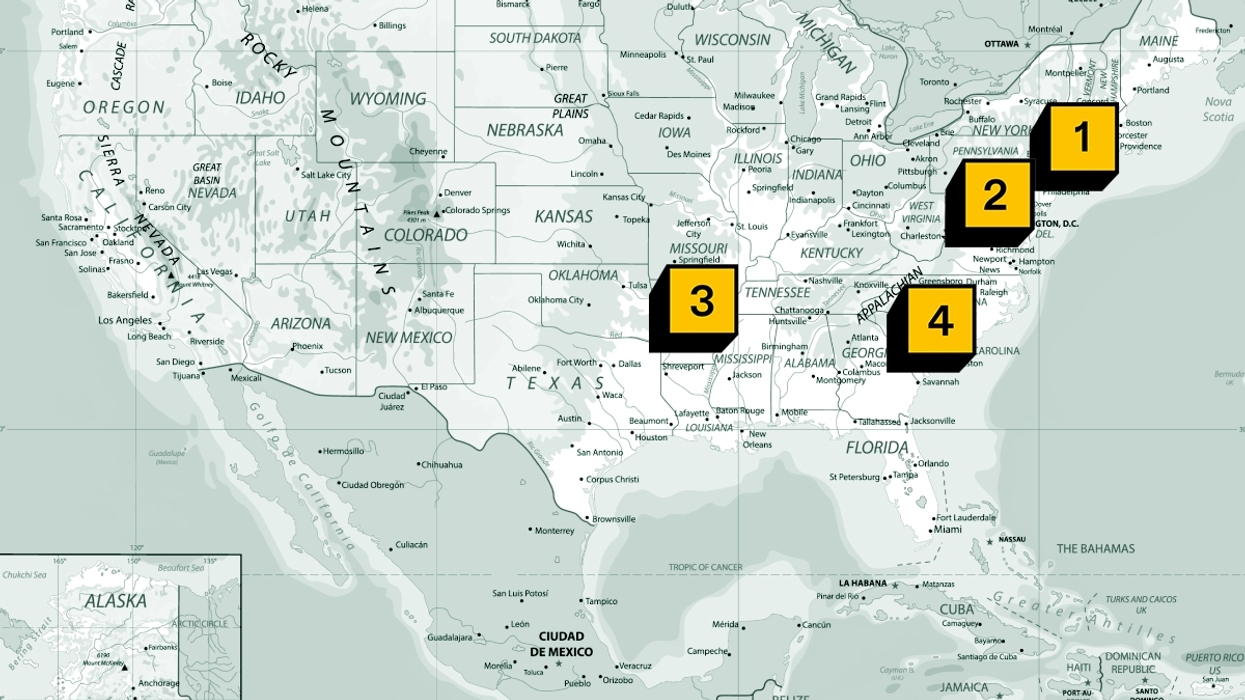
It’s part of an entire emerging trend I theorize as “the great data center migration.” You have everyone moving down to the AI band, to West Texas to Georgia – that strip of states is where large data centers are moving and where the power will follow.
With respect to the renewable side of things, the nuclear side, alternative fuel choices than gas – are they benefiting from this buildout?
Yeah, I mean, we’re in a strange moment for renewables.
There’s been a rush to get things online before the July 4 tax cliff. If you look at additions to the grid, solar and batteries have benefited from this condensing of the pipeline and moving forward of the pipeline to avoid the cliff. We’ve seen a lot of buildouts and a lot of those electrons have gone to data centers. I’m doing a PPA project for a client right now that shows PPA prices having tripled in some regions, and that’s for renewables – solar and wind. You see plenty of demand. If you can get your hands on an electron you’re going to pay for it and go ahead. You don’t mind what kind of electron it is.
That being said, there’s a requirement for a capacity factor to create reliability. Where you’re looking to do behind-the-meter stuff and you feel you’ll be unable to interconnect, or you want to build your own power supply… that does have a unique match to natural gas. All you’re going to need is pipe and available fueling capacity. If you can find the fuel and if you can place yourself over a gas system that’s underutilized, a lot of your other concerns go away. You have access to a power source with a very high capacity factor, is reliable, and matches to your load. The equivalent of solar would require a vast amount of land, changing the economics of a project.
Before the start of this federal regime in the U.S., the trendline was investment going towards green capital – zero-emission generation. Obviously things have changed. From your vantage point in the market, when it comes to where investors are putting their money, has it gone from green power to data centers specifically? Is this boom a redirection, taking their money and putting it into something else?
This is not a trade-off moment. It’s an expansion moment.
We’ve seen a Venn diagram between digital infrastructure and power infrastructure. They move directly over each other, overlapping in capital markets. This is understandable; it’s the one thing you can’t do without if you have a data center. If you want chips, you also need power. And I think people underestimate how much one gigawatt of power is.
There’s a rush to build anything. It’s about more than anything else. I do think the second half of 2026 will be an interesting test of a thesis that a lot of renewables people have been talking about, which is that the low cost of energy – the LCOE factors – is still favorable and even without tax credit support there will be a lot of further additions. We’ve seen models, and we’ve done models, that have renewables as kind of an air pocket because it’s so cheap and the fuel cost. But on the other hand you can make the argument there’ll be a bigger problem.
When it comes to the investor space, how seriously do folks take opposition to data centers as a medium and long term risk – not just the next few weeks but the coming elections?
Very seriously. What you see in PJM with demand destruction is being taken very seriously by a number of the large institutional asset managers, some of the large institutional asset managers. These are people who are my biggest clients. I’m under some confidentiality when it comes to talking about them but nonetheless I can tell you that there are several large projects in PJM that are announced and appear on paper to be fully financed that are actually in cold storage until there is a better understanding of what is going to happen with large load, in PJM and Pennsylvania in particular.
There are large energy projects that are waiting around to see if the demand is going to materialize?
Exactly.
It doesn’t sound like an easy place to be if you’re developing these assets, no?
No.
If you’ve done the work and seen the models, it's very difficult to get this capital running in one direction and have an ISO operator say it's too expensive or puts too much on ratepayers. What you’ve seen folks try to do is create a secondary market, a parallel market, in which price discovery for that kind of power – large load – where it won’t filter through to ratepayers. But that’s much more difficult to pull off. The complexity of operating a grid in that way.
This is why more people are turning to behind the meter and to gas.