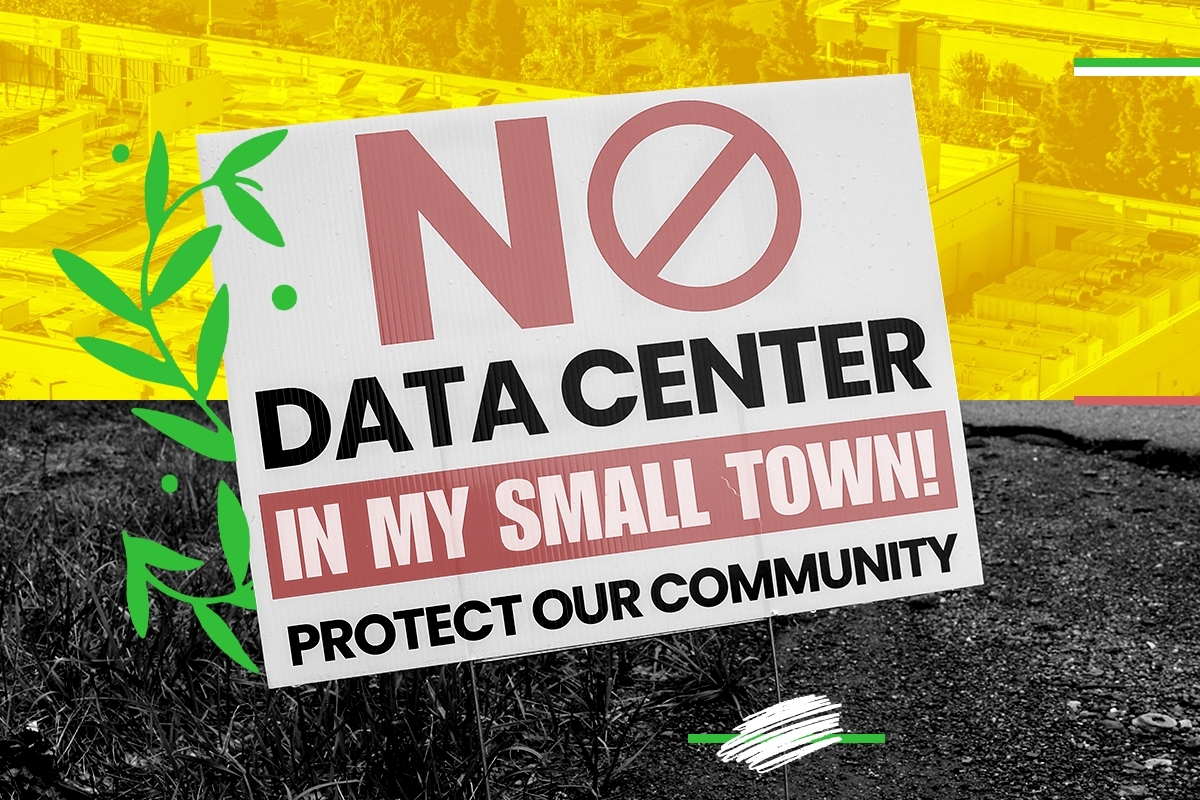
A series of lawsuits filed in federal court asks a big question – are data center moratoria constitutional?
In early August, data center developer DC Blox sued the city of Nashville in federal court to overturn a zoning moratorium stopping them from building a hyperscale facility adjacent to the city zoo. “The Data Center Moratorium, moreover, is a targeted attack against DC BLOX, in violation of federal constitutional protections,” the suit argued, claiming that it defied the corporation’s due process and equal protection rights.
Around the same time, another developer – Wixom Industrial One – filed a federal lawsuit against the city of Wixom, Michigan, to try and “invalidate the city’s illegal police power moratorium” blocking their data center.
These two cases were far from novel or the first of their kind, and they’re now a fresh front in the battle over hyperscale data centers. At least that’s what some who work on these cases say: In April, attorneys with the law firm Vorys published a “client alert” asserting “many moratoria may be vulnerable to statutory, procedural, and constitutional challenges.” The attorneys advised that constitutional arguments against moratoria “may be stronger where a government singles out data centers without a sound factual basis, treats similar land uses differently without a reasonable basis, or adopts a restriction driven more by political pressure than by defensible planning or regulatory objectives.”
Months later, according to court documents, the Vorys attorneys who authored the alert now represent real estate firm Thor Equities in a federal case against the Ohio city of Urbana, arguing the city’s decision to reject their data center project broke “fundamental protections” under the U.S. Constitution. (Vorys and Thor Equities did not respond to requests for comment.)
It’s unclear how many of these kinds of cases have been filed to date. Data on federal court cases is quite opaque. But legal experts and industry attorneys tell me we should expect them to be on the rise as developers seek whatever tools they can find to get projects built.
“Bringing a lawsuit like this is fairly cheap, something they can do at a relatively low cost, and imposes a real cost on local governments to defend themselves,” said Daniel Metzger, director of the Cities Climate Law Initiative at Columbia Law School’s Sabin Center. “The cases out there will be bellwethers. And if successful, there’ll be a lot more of them.”
What developers probably want looks a lot like Hill County, Texas, where an LLC proposing an $80 million data center project was stymied in May by the state’s first countywide moratorium. (It predated Governor Greg Abbott’s temporary freeze of data center development in Texas by three months.) Within a period of only a few weeks, the LLC sued and the county rescinded the pause on approvals. The case was dropped a month later. Local reports state the county had to afterwards pay the corporation $100,000 in legal fees – a drop in the bucket compared to what a drawn-out court battle would have cost the rural county.
Metzger said whether the companies will win these cases is ultimately not the point – their goal is to win a finished data center, not a judicial ruling. By filing expansive litigation in the national court system, a hypothetical developer can exhaust the coffers of a city or county with legal expenses that are chump change compared to would-be billions in private financing for compute infrastructure.
“These lawsuits may deter some local governments from taking steps to oppose data center development, just because of the cost it would impose on them to defend a lawsuit, even if they know they have a strong legal basis for the action they want to take.”
Those I spoke to in private practice about data center developers’ constitutional arguments agreed with Metzger’s assessment that it’s too early to tell whether the companies will win. Generally, they said, a city or county will win this kind of case if it demonstrates a rational basis for its decision-making and courts typically want to defer to governmental autonomy. The onus will be on the developers to prove a moratorium was meritless – that’s the due process challenge – or unfairly targeted their industry in a way other sectors don’t face, which is the basis of the equal protection claim.
“What they’re saying is in essence that these actions the municipality is taking are arbitrary and capricious, which is one of the sort of catch-all standards,” Thomas Allen, a partner at K&L Gates, told me. “They say the laws lack a rational basis. And then they make equal protection claims, saying data centers are being singled out because of political concerns as opposed to actual things relevant to the legislature’s directive. They’re not basing their decisions on the underlying merits of the project but reacting to political pressure.”
“It’s a reliance question and it’s about the treatment of their projects,” added Laura Morton, an attorney with Ashurst Perkins Coie. “It’s always been important to talk about and engage with communities where your infrastructure is planned. Here, I think this is the developers going in, maybe having conversations, and then suddenly they’re getting a reversal after already receiving these approvals and making investments based off of what the conversations and rules were.”
The likelihood of these constitutional challenges reaching higher courts anytime soon is quite low. It’ll be a long time before we see one of these cases reach a verdict, let alone some kind of appeals process come to fruition. Nevertheless, the new legal ambiguity around these local restrictions is an important new facet of the data center wars, including for developers.
“Companies want to act within the law to get [things] done, so whatever tactics they can do to help get the project over the line that are legal and ethical, they may try those,” Allen told me. “And if that includes the pressure of a lawsuit, that’s a judgment they’ll have to make.”