You’re out of free articles.
Log in
To continue reading, log in to your account.
Create a Free Account
To unlock more free articles, please create a free account.
Sign In or Create an Account.
By continuing, you agree to the Terms of Service and acknowledge our Privacy Policy
Welcome to Heatmap
Thank you for registering with Heatmap. Climate change is one of the greatest challenges of our lives, a force reshaping our economy, our politics, and our culture. We hope to be your trusted, friendly, and insightful guide to that transformation. Please enjoy your free articles. You can check your profile here .
subscribe to get Unlimited access
Offer for a Heatmap News Unlimited Access subscription; please note that your subscription will renew automatically unless you cancel prior to renewal. Cancellation takes effect at the end of your current billing period. We will let you know in advance of any price changes. Taxes may apply. Offer terms are subject to change.
Subscribe to get unlimited Access
Hey, you are out of free articles but you are only a few clicks away from full access. Subscribe below and take advantage of our introductory offer.
subscribe to get Unlimited access
Offer for a Heatmap News Unlimited Access subscription; please note that your subscription will renew automatically unless you cancel prior to renewal. Cancellation takes effect at the end of your current billing period. We will let you know in advance of any price changes. Taxes may apply. Offer terms are subject to change.
Create Your Account
Please Enter Your Password
Forgot your password?
Please enter the email address you use for your account so we can send you a link to reset your password:
The deal with developer Invenergy includes a commitment to build geothermal generation in addition to natural gas.

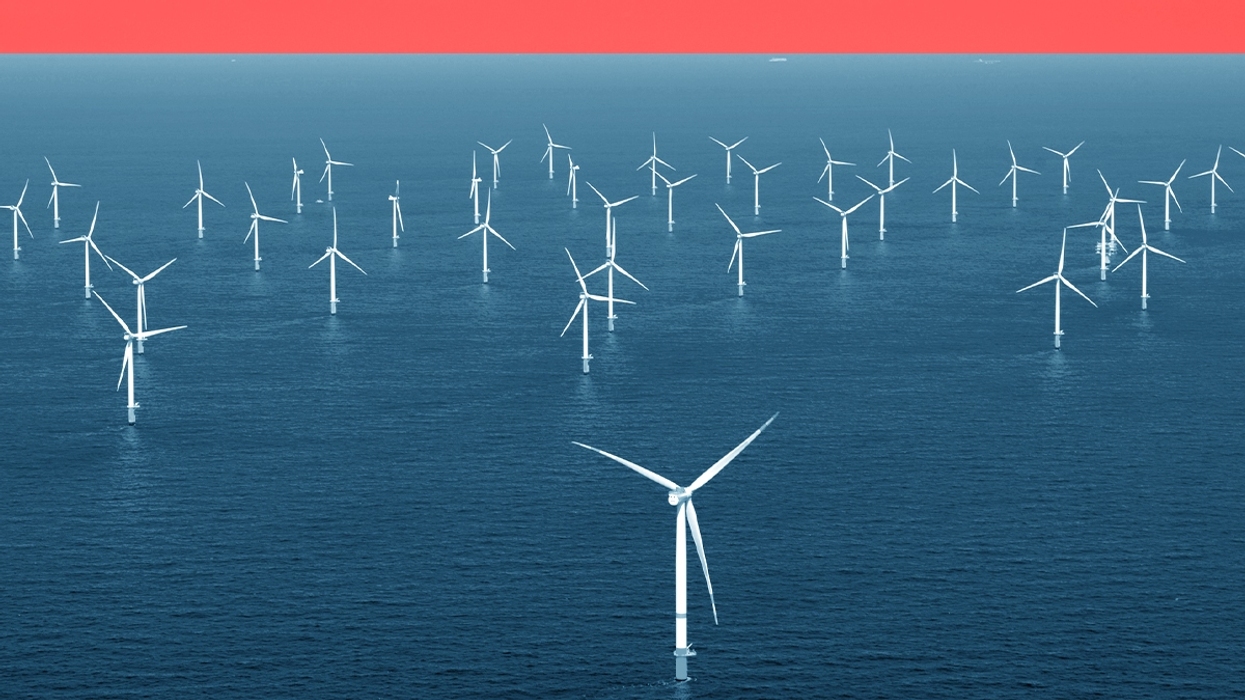
In the third deal of its kind, Trump’s Interior Department has agreed to pay the energy developer Invenergy $765 million to cancel its four offshore wind leases, an amount equal to what Invenergy originally paid the federal government for them.
Like the preceding deals, the administration structured the refund as a legal settlement with Invenergy. That means the government will pay the company out of the Judgment Fund, a reserve of taxpayer dollars overseen by the Department of Justice and the Treasury Department that’s set aside to settle litigation that’s either ongoing or imminent.
The Invenergy agreement follows a similar $928 million arrangement with TotalEnergies announced in March, and an $885 million agreement with several joint ventures in April. That brings the total amount the Trump administration has agreed to pay to cancel offshore wind leases to more than $2.5 billion to date. The agency has not yet posted the settlement publicly, but the previous agreements were predicated on hypothetical lawsuits that the offshore wind developers would have filed if the Trump administration had paused activity on their leases, which it threatened to do based on national security concerns.
The key difference in the Invenergy agreement is in the quid pro quo. The other settlements specified that the companies would only be eligible for payment after investing an equal amount into U.S. oil and gas projects. In exchange for walking away from its offshore wind leases, Invenergy promised not only to develop natural gas-fired power plants, but also geothermal power generation projects — which are emissions-free.
Invenergy is a diversified power developer that builds solar, storage, wind, and natural gas generation. The company currently has more than 30 gigawatts of solar in its development pipeline and 10 gigawatts of natural gas. It has not yet built a geothermal power plant, but it has leased 139,000 acres of federal land to explore geothermal development. It’s also a member of the Mountain West Geothermal Consortium, a group of states, investors, and companies working together to scale the technology.
Invenergy holds one offshore wind lease off the coast of New York and New Jersey that it purchased in 2022 for $645 million, where it was developing its Leading Light project before work stalled last November. It also has a lease off the coast of California that it acquired for $112 million, also in 2022, and two in the Gulf of Maine, for which it paid about $9 million in 2024.
In a blog post published Wednesday, Invenergy said the deal with the Trump administration would “bring more megawatts to the grid and advance projects that can move forward today,” implying that the projects the company will build instead of offshore wind will come online faster.
The problem with Trump’s quid pro quos across all of these deals is that there’s no guarantee the companies wouldn’t have invested the same amount of money into the same projects regardless of whether they were reimbursed for their offshore wind leases. In the case of Total, the settlement is explicit that projects the company had already committed to invest in prior to the deal qualify.
After the administration announced the second round of offshore wind lease buyouts in April, making it clear the strategy was not a one-off settlement with Total but a new strategy to squash the industry, I named Invenergy as one of two developers that could be next. The other one that seems positioned to reach a similar deal is RWE, a German energy company with plans to develop 15 natural gas plants in the U.S. RWE paid $1.1 billion in 2022 to purchase a lease off the coast of New York and New Jersey for a project called Community Offshore — the most any company has paid to date for U.S. offshore wind development rights. It also bought a lease in the Pacific for $121 million, and another in the Gulf of Mexico for about $4 million.
In a press release, the Interior Department signaled its intention to broker more such agreements. “The Department of Justice looks forward to continued cooperation from companies that are reevaluating their energy investments,” it said.
Legal experts I’ve spoken with are skeptical that any of these settlement agreements comply with federal law. The government’s leasing statutes generally do not allow companies to walk away from their agreement and receive a refund.
Earlier this month, a group of seven attorneys general from Northeast states challenged Trump’s deal with TotalEnergies in court. They alleged that there was no actual disagreement between the parties that would legitimize use of the Judgement Fund. They also argued that under the Outer Continental Shelf Lands Act, the statute governing offshore wind, the Interior Department was required to hold a hearing to investigate whether continued activity on the lease would cause serious harm to the environment or national security before cancelling it.
The Trump administration has lost every lawsuit thrown its way so far challenging its actions on offshore wind. Last week, it quietly gave up its own appeal of a federal court’s December decision vacating Trump’s Day One Executive Order to halt wind energy approvals. The Invenergy deal suggests that this was less a sign of surrender in Trump’s wind war than part of a pivot to other strategies.
Editor’s note: This story has been updated to include the press release from the Department of the Interior.
Log in
To continue reading, log in to your account.
Create a Free Account
To unlock more free articles, please create a free account.
That may be not be the case for long, though, as the AI company poaches energy talent from Google, Meta, the DOE, and others.
To the extent that any $965 billion artificial intelligence company built on pirated model training material can be “good-coded,” Anthropic has somehow managed to earn that reputation, at least relative to its peers. It’s somewhat surprising, then, that the company has been silent on climate change.
Until today. Sort of.
Frontier Climate, a corporate initiative to drive advances in carbon removal, announced a $915 million advance market commitment growth fund on Wednesday, naming Anthropic as one of the participating buyers.
Frontier supports projects that are capable of sucking large amounts of carbon out of the atmosphere, a solution scientists say is a critical supplement to reducing emissions in order to curb climate change. With the new fund, Frontier is shifting its focus from supporting early innovation to taking bigger swings on fewer, larger projects. Anthropic, alongside Google, Stripe, Shopify, and others, has committed to co-sign offtake agreements to buy the resulting carbon removal.
The news throws into relief Anthropic’s nearly complete absence from the clean energy development picture. The company’s primary contribution to climate change is its energy consumption, which is driving up coal and natural gas-fired power generation. According to data shared with Heatmap by the market intelligence company Cleanview, the average carbon intensity of Anthropic’s data centers is among the highest of its competitors, second only to xAI. Yet unlike many of peers, the company has not announced a single clean power purchase agreement to date.
Anthropic’s reputation as the ethical AI company traces back to its origin story, which begins with a guy leaving OpenAI to build a company more committed to AI safety. That guy, Anthropic CEO Dario Amodei, speaks and writes openly about the risks to humanity posed by powerful AI. Anthropic has also donated millions to support the development of AI regulations and prohibited the use of its models for mass surveillance or autonomous weapons, putting it at odds with the Trump administration. The company has focused on text-based products, in part to avoid the risk of users creating child sexual abuse material.
To date, however, the company has not publicized any sustainability strategy, nor has it published an annual sustainability report. It has not made any public commitments to use clean energy or reduce emissions. It is not a member of the Corporate Energy Buyers Association, a trade group representing companies that buy emissions-free energy. The only mention of any of the above themes in the company’s “Transparency Hub” is a note that many of its customers use Claude, Anthropic’s AI model, to “increase public health, education, environmental sustainability, and societal benefits.”
To be fair, it’s not that Anthropic has never discussed clean power. In a July 2025 report titled “Building AI in America,” the company made recommendations for ensuring the U.S. can support a competitive AI industry. It advocated for an “all of the above” approach to power generation to meet AI demand in the near term, which would “maximize opportunities for AI to catalyze emerging energy technologies, such as next-generation geothermal and advanced nuclear” down the line. It endorsed permitting reform to speed up transmission development and called for increased domestic production of electrical grid equipment.
In a section on the use of federal lands, the report also made a subtle dig at the Trump administration’s discriminatory policies against wind and solar. It noted that “solar, batteries, and geothermal may prove the most economically efficient choices before advanced nuclear power comes online,” and that “limiting developers’ opportunities to procure some power sources but not others” could make American AI “less competitive in a period of global competition.”
From one perspective, it makes sense that Anthropic hasn’t gone out of its way to procure clean power. To date, the company has mostly leased data center capacity from other providers that do have clean power commitments, including Amazon and Google. That will soon be the case no longer, however, as it is planning to both build its own data centers and rent capacity from xAI’s Colossus data centers, which rely heavily on power from on-site natural gas turbines. Colossus is currently the subject of a lawsuit filed by the NAACP over its air pollution.
Anthropic also doesn’t need to own and operate its own data centers to assume responsibility on climate change. Jane Flegal, a senior fellow at the think tank the Searchlight Institute, argued in a recent paper that companies should forget trying to minimize their individual carbon footprints and just make the most high-leverage investments they can, whether that’s helping to finance a geothermal power plant or a transmission line or a new transformer for the grid.
Anthropic did not respond to my inquiry for this story, but there’s some evidence to suggest that the company may be starting to take on climate and clean energy beyond the Frontier deal.
In March and April, Anthropic made three new hires to lead its energy strategy who all have a background in clean power. Ariel Horowitz is the company’s new data center energy lead. She previously spent five years at the Massachusetts Clean Energy Center before becoming the deputy director of grid modernization at the federal Department of Energy during the Biden administration. Sana Ouiji, who spent six years at Google working on data center clean energy strategy, is one of Anthropic’s new energy leads. Another new energy lead, Andrew Rudersdorf, came from roles sourcing energy for Meta’s data centers, including renewables.
The company is also currently hiring for a director of infrastructure and energy accounting, and looking for someone with “experience accounting for energy contracts — Power Purchase Agreements, Virtual PPAs, Renewable Energy Credits, or similar commodity arrangements,” according to the job listing.
Anthropic also appears to be preparing for mandatory emissions reporting rules that large companies will soon be subject to in California and the European Union. In April, the company hired Chris Power, who previously worked in sustainability reporting for Amazon and Salesforce, as its new head of non-financial reporting and strategy, according to LinkedIn. In a post announcing his new job, Power said part of his role would be building out the company’s sustainability reporting capabilities.
While funding carbon removal through Frontier is a major step forward for Anthropic on climate, the company is sure to face criticism over its order of operations. Scientists largely agree that carbon removal is an important solution for down the line, but only if the world also dramatically reduces the amount of carbon it emits in the first place — not least because doing so is less expensive and less resource-intensive than removing emissions in the future.
My colleague Robinson Meyer had Hannah Bebbington Valori, the head of Frontier, on his podcast Shift Key this morning, and asked her whether Anthropic is an example of the common concern that the potential to remove carbon from the atmosphere in the future could be used to delay cutting emissions today.
Bebbington Valori didn’t comment on Anthropic specifically. But she did say that most of the companies buying carbon removal with Frontier and otherwise do have broader climate programs. She also noted that buying carbon removal from Frontier is not a “get out jail free card,” since it costs hundreds of dollars per carbon credit, and that in general the world is spending a lot more money on decarbonization than carbon removal.
“And then, you know, the other way to answer this question,” she added, “is we should hold folks’ feet to the fire on this. People who buy carbon removal, people who don’t buy carbon removal, should be thinking about decarbonizing their emissions.”
Current conditions: The powerful earthquake that killed at least 61 people in the Philippines last week raised the seabed by as much as 7 feet • Raja Ampat, the archipelago off Indonesia’s Southwest Papua province, is enduring days of intense thunderstorms • The Gulf Coast of Texas is bracing for what could become a tropical cyclone set to dump heavy rain across the region.

On Tuesday, the Financial Times reported that ConocoPhillips was on the brink of announcing a deal to become the first U.S. oil company to reenter Syria since President Ahmed al-Sharaa officially took office last year. The deal, expected to be formalized this week, would be a sign of regrowth after 14 years of brutal civil war that finally ended with the surrender of longtime president and de facto dictator Bashar al-Assad. The Syrian government said last year that a potential deal could increase output of gas by up to 5 million cubic meters per day within a year, a major leap toward restoring an industry that once produced a prewar high of 30 million cubic meters per day in 2011.
When Frontier launched in 2022 as a vehicle for those who want to fund carbon removal from the atmosphere, there were barely a dozen companies working to crack the technology. Now there are hundreds of startups taking nearly two dozen different approaches. And Frontier is pulling in more money to spread among them. The company said Wednesday that its buyers committed $915 million to invest in carbon removal companies. Anthropic, one of the leading developers of artificial intelligence models, is among the new buyers. Neither Anthropic nor OpenAI, Anthropic’s peer and rival, has made any kind of public climate-related commitment, making the AI giant’s entry into the group particularly notable.
It’s a sign, perhaps, that the old way of thinking about corporate climate actions — a single-minded focus on carbon accounting — is giving way to more substantive solutions.
As Heatmap’s Emily Pontecorvo put it this week, a growing chorus of experts says that carbon accounting is “not just inadequate, but actively harmful to bringing about the systems-level change required to decarbonize the economy.”
The Department of Justice has officially weighed in to defend Elon Musk’s artificial intelligence startup against a lawsuit in which the NAACP accused the company of building its Colossus Gas Plant in mostly Black neighborhoods between Tennessee and Mississippi. In court papers filed Monday and covered by E&E News and Wired, the Justice Department said the civil rights group’s litigation threatened the U.S. military’s ability to “meet its national security mission and keep pace with adversaries” using xAI’s Grok chatbot. Grok’s ability to operate “is a matter of paramount national security” because it is one of only four cutting-edge AI models that can support national security applications, and one of just three suitable for “mission-critical operations across Secret and Top-Secret classified networks,” the agency told U.S. District Judge Debra Brown, who is presiding over the lawsuit in federal court in Mississippi.
Sign up to receive Heatmap AM in your inbox every morning:
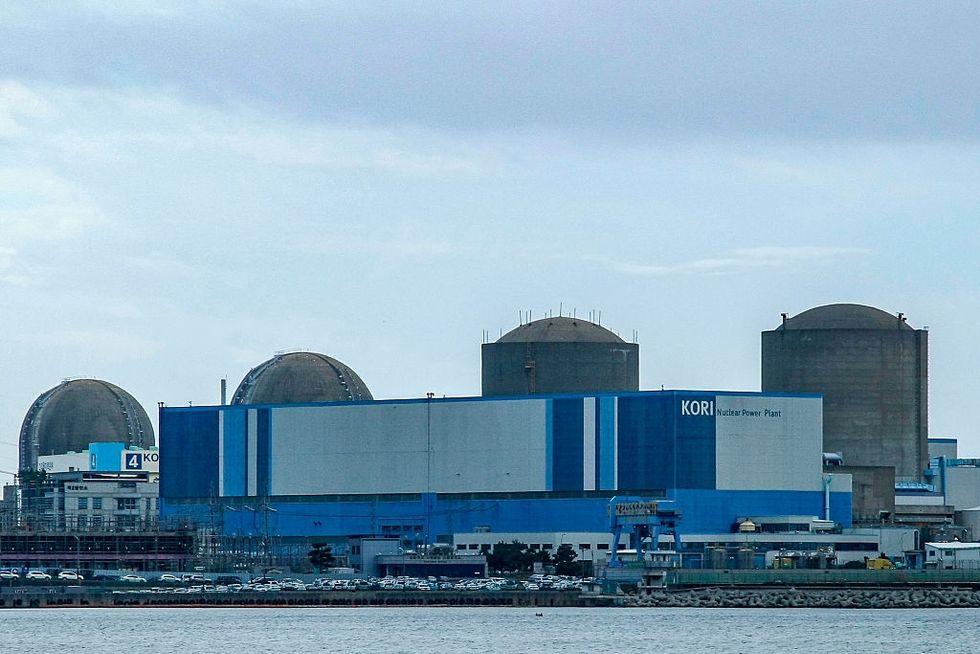
Regular readers of this newsletter know that I like to cover the major steps in any reactor’s construction, but especially those in China. When I think back to previous newsletters and the specific updates in them, I struggle to pinpoint exactly when I wrote what, given how frequently the basic facts of the stories repeat themselves. The effect of this, I hope, is to leave you with the accurate impression that China is building a lot of reactors very quickly and efficiently — and to give you pause about how seldom you hear about similar milestones coming out of any other countries. Well, in that spirit, here’s the latest. On Monday, World Nuclear News reported that China General Nuclear Power, the country’s biggest state-owned reactor firm, just lifted the outer dome into place at its fifth reactor at the Ningde Nuclear Power Plant in Fujian province. The 270-metric-ton dome will cap off the containment vessel for the latest Hualong One, China’s flagship reactor with a domestic design.
Last month, Hawaii passed a law that slashed tax credits for both utility-scale and residential solar projects, limiting the amount available each year until a phase-out in 2030. Those changes were set to apply retroactively to projects built in 2026. But Governor Josh Green, a Democrat, just signed an executive order preserving the solar tax credit throughout the end of the year. “Distributed solar energy has been, and will continue to be, a leading contributor to the state’s sustainability and resiliency goals,” the executive order states, according to KHON-2, a local TV station.
Tesla is expanding its VPP efforts. The company said Tuesday that its Powerwall battery leasing program would now include a built-in participation in a virtual power plant. That’s without any additional enrollment or management by the customer. The pilot is rolling out first in Massachusetts and Connecticut.
Rob talks with Hannah Bebbington Valori, head of Frontier Climate, about the group’s new $915 million fund.
One of the most interesting projects in carbon removal is doubling down on the industry. Frontier — a coalition of tech, finance, and fashion firms that buy carbon removal credits to support the crucial technology — has secured another $915 million to power its next round of buying. The artificial intelligence giant Anthropic has also joined the coalition alongside its existing members, including Stripe, Google, JPMorganChase, and others.
On this episode of Shift Key, Rob is joined by Hannah Bebbington Valori, who leads Frontier. They discuss the health of the carbon removal industry after a tough few years, how Frontier is changing its buying strategy for its newest round, and why Anthropic entered the coalition.
Shift Key is hosted by Robinson Meyer, the founding executive editor of Heatmap News.
Subscribe to “Shift Key” and find this episode on Apple Podcasts, Spotify, Amazon, or wherever you get your podcasts.
You can also add the show’s RSS feed to your podcast app to follow us directly.
Here is an excerpt from their conversation:
Robinson Meyer: I do think there are people who are going to see Anthropic join and say, Anthropic, complicated company. Because on the one hand, I think it’s been the most ... if there’s any company, I think, that’s kind of pledged most among the frontier AI labs to uphold, let’s say, liberal democratic values, I think Anthropic obviously has to be top of the list. At the same time, they’ve partnered with xAI. They seem to be using a lot of compute at this Colossus Data Center, which is particularly carbon intensive in Tennessee. I think there are people who say carbon removal is kind of a delayist technology. It allows companies to keep emitting fossil fuels, to keep burning carbon and kind of promising to clean it up later, but not doing anything to reduce emissions in the near term. And Anthropic would be a great maybe example of this. What would be your response to that?
Hannah Bebbington Valori: Well, I think my response to that would be a couple of things. One is the moral hazard around carbon removal has really not come to fruition. This concept that companies buy carbon removal as kind of a way to get out of corporate climate commitments or other climate activity is like really not borne out in the data for a couple of reasons. One, the people who care about carbon removal are the people who care about the climate, and so those folks are often building broader programs that include carbon removal and other things.
Two, these are all voluntary activities today, and I think — they’re very, very expensive ones at that. Buying carbon removal today costs hundreds of dollars a ton. If you wanted a sort of get out of jail free card, Frontier and carbon removal is not that. There are many other ways to have a climate program or maybe have a broader sort of civic responsibility program that are much cheaper than what we do.
And I think this is borne out sort of generally in the data, like how much money we spend on carbon removal versus how much money we spend on decarbonization efforts, rightly so, is a fraction. And so the world as it stands is not replacing carbon removal with other decarbonization activities. Rather, buying carbon removal today is recognizing that this market will not turn on like a light switch in 2050 when we want it if we don’t invest today. And so folks who buy carbon removal now are really sort of playing that long game thinking into the future about what we want to exist and investing today to make that happen.
And then, you know, the other way to answer this question is like we should hold folks’ feet to the fire on this. So people who buy carbon removal ... Honestly, people who don’t buy carbon removal should be thinking about decarbonizing their emissions.
Meyer: Where is OpenAI? They should be a Frontier …
Bebbington Valori: Totally. You can call them and tell them that. We should be banging on the doors of these companies and many other companies to be asking them, what are you doing to decarbonize? And that is not just Anthropic. That is everyone.
You can find a full transcript of the episode here.
Mentioned:
AI IPOs Could Create a Wave of New Funding for Climate Tech
Rob’s most recent story on carbon removal: Carbon Removal After Microsoft
Rob’s original story about Frontier: We’ve Never Seen a Carbon-Removal Plan Like This Before
This episode of Shift Key is sponsored by ...
Heatmap Pro brings all of our research, reporting, and insights down to the local level. The software platform tracks all local opposition to clean energy and data centers, forecasts community sentiment, and guides data-driven engagement campaigns. Book a demo today to see the premier intelligence platform for project permitting and community engagement.
Music for Shift Key is by Adam Kromelow.