Needless to say, there are comparatively few constituents in NJ-7 for whom paying $40 more on a September electricity bill than two years ago — or about $300 more over the past 12 months — is the difference between whether they can afford groceries or not. But like many other Republican-held competitive seats this election year, the district has seen its electricity rates increase since just before President Donald Trump took office for his second term, according to the latest data available in Heatmap and MIT’s Electricity Price Hub.
In NJ-7, residents paid about 35% more on their electricity bills this September than two years ago; bills are up more than 18% over the past 12 months compared with the year before. Over that same time period, the Cook Political Report with Amy Walter moved Kean’s reelection race from “lean Republican” to “toss-up” to where it stands now: “lean Democrat.” NJ-7 is largely served by Jersey Central Power & Light and Public Service Electric and Gas Co, and, for both, increases in basic generation service charges — that is, what utilities charge for the production and supply of electricity — drove most of the spikes in bills.
“Kean Jr. voted to roll back commonsense energy tax credits and jack up electricity bills for New Jersey families,” the Democratic Congressional Campaign Committee wrote in a June memo, seizing on the opportunity. “Skyrocketing utility bills are a major issue in the Garden State, and Kean Jr. is part of the problem.” The National Republican Congressional Committee has defended Kean by pointing to his vote for the Ratepayer Protection Act (which passed the House last month only to fail in the Senate) and his record of opposing “Green New Deal policies” to “protect families from rising costs.”
The New Jersey race has more to it than electricity prices, of course; the 7th District election has drawn national attention, including involvement from Elon Musk and, at one time, President Trump. But if even a race in one of the country’s wealthiest districts has become a referendum on affordability to some extent, incumbent Republicans elsewhere are certainly feeling constituents’ ire, too. In the 42 closest races listed as “toss-up” or “leans” by the Cook Political Report, September bills in Republican-held districts have risen a median of 21% from 2024 to 2026, compared with just 13% for Democratic-held seats (and compared to 16% across all 435 House districts).
Comparing September bills is useful because it suggests how voters are perceiving utility costs as they prepare to submit their ballots. But September, being a shoulder season, can also vary in temperature in many parts of the country, meaning bills may be higher because of a late summer heat wave — or an early cold snap. Still, looking over the past 12 months, bills in competitive Republican-held districts have risen twice as fast as those in competitive Democrat-held seats (8% vs 4%). Overall, 22 of the 29 Republican-held House seats in active play this November are in places where electricity bills have risen more than 10% since Trump’s election.
Another race where affordability concerns and rising electricity bills seem to be intertwined is Pennsylvania’s 10th Congressional District, held by Republican and former House Freedom Caucus head Scott Perry. The typical September bill in PA-10 rose from about $126 to $202 in just two years, a 61% increase, according to the Electricity Price Hub. (The most recent data for the district are projections, because New York and Pennsylvania release their reports on a delay.) Among the utilities in PA-10, generation contributes the largest amount to average bills, with costs roughly doubling since 2020.
Pennsylvanians are feeling it: 57% of registered voters in PA-10 told a local pollster it is “very” or “somewhat” difficult to afford monthly utility costs, making it a bigger financial struggle than groceries, gas, rent, or health care.
Perry’s opponent, Janelle Stelson, has hammered him on affordability (including gas prices) while groups like the Natural Resources Defense Council have labeled Perry as a “rate raiser,” pointing to his coziness with the fossil fuel industry and his proud opposition to renewable energy development.
Perhaps nowhere are utility rates more central to a House race than in New York’s 17th Congressional District, where Republican incumbent Mike Lawler is in a “toss-up” race against Democrat Cait Conley. His constituents are paying about $50 more on a September electricity bill than they were before he was elected in 2024, while bills have risen more than 17%, or over $330, in the past 12 months compared with the year prior. (Across the utilities servicing NY-17 — as well as NY-19, another district where utility bills are a central talking point— the delivery portion of the bill tends to be the largest, though generation costs have also grown substantially over the past five years.)
While rising electricity bills have given Democrats an easy line of attack on vulnerable Republicans heading into the midterms, Congress admittedly doesn’t set utility rates and there are limited levers for elected officials to pull to keep them down in the short term. Heatmap’s data, rather, indicates the places where voters appear especially sensitive to rate increases and may be taking it out on their elected officials — although there are still caveats.
For example, the trends are also largely regional. Our data shows the steepest electricity increases among a cluster of seats in Pennsylvania, New York, New Jersey, and Ohio — many of them Republican seats in purple areas that Democrats would have targeted with or without the ammo of higher electricity prices. In other parts of the country, competitive races in California and Arizona have actually seen falling electricity bills.
Two can play the rate increase blame game, too. In New York’s 19th Congressional District, incumbent Democrat Josh Riley is running on lowering utility bills — as is his Republican opponent. (That race isn’t considered competitive by Cook, which puts Riley as the “likely” favorite.) In Ohio’s 9th Congressional District, a toss-up race where bills were about $40 higher in September of this year than in 2024, incumbent Democrat Marcy Kaptur and her allies are on the defensive and warn that her challenger, Derek Merrin, could jack them up even more.
Bills are up everywhere on average, and when you pull back, the influence on elections appears relatively small: the median competitive district’s bills rose 11.4% compared to the median bill for a safe seat, 10.3%, in January–September 2026 versus January–September 2024. The per-kilowatt-hour price of electricity (as distinct from household bills) rose slightly less in competitive races (8.2% median) than in safe seats (9.7% median). In some places feeling the squeeze on electricity bills, bigger issues are driving the election: Carol Obando-Derstine, a former utility employee who campaigned in Pennsylvania’s 7th District on lowering power bills, ultimately lost the Democratic primary to a candidate focused more on corruption and greed.
But in other districts, it won’t matter whether representatives have little control over electricity bills or whether rising prices are a national trend. “I’m working hard to keep my lights on,” one constituent says in a House Majority PAC ad that makes the case against the Republican, Lawler, in NY-17. “My bills keep going up.”








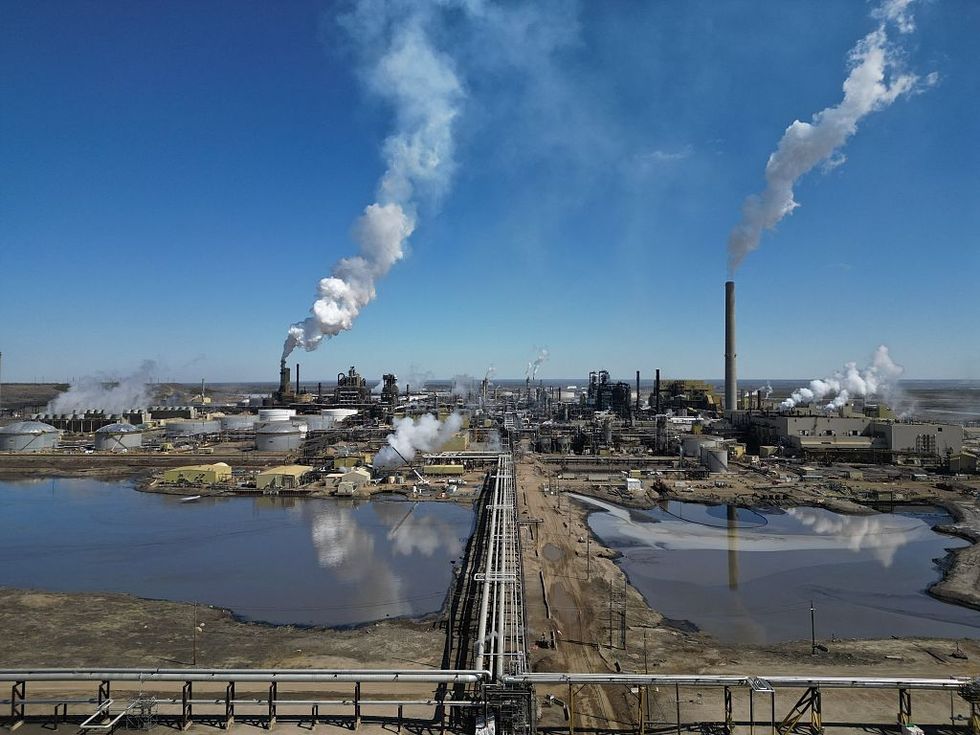 The Syncrude refinery at Mildred Lake in Alberta. Daphné LEMELIN / AFP via Getty Images