You’re out of free articles.
This Halloween, get 20% off using code ADVANCED
Log in
To continue reading, log in to your account.
Create a Free Account
To unlock more free articles, please create a free account.
Sign In or Create an Account.
By continuing, you agree to the Terms of Service and acknowledge our Privacy Policy
Welcome to Heatmap
Thank you for registering with Heatmap. Climate change is one of the greatest challenges of our lives, a force reshaping our economy, our politics, and our culture. We hope to be your trusted, friendly, and insightful guide to that transformation. Please enjoy your free articles. You can check your profile here .
subscribe to get Unlimited access
Offer for a Heatmap News Unlimited Access subscription; please note that your subscription will renew automatically unless you cancel prior to renewal. Cancellation takes effect at the end of your current billing period. We will let you know in advance of any price changes. Taxes may apply. Offer terms are subject to change.
Subscribe to get unlimited Access
Hey, you are out of free articles but you are only a few clicks away from full access. Subscribe below and take advantage of our introductory offer.
subscribe to get Unlimited access
Offer for a Heatmap News Unlimited Access subscription; please note that your subscription will renew automatically unless you cancel prior to renewal. Cancellation takes effect at the end of your current billing period. We will let you know in advance of any price changes. Taxes may apply. Offer terms are subject to change.
Create Your Account
Please Enter Your Password
Forgot your password?
Please enter the email address you use for your account so we can send you a link to reset your password:
On Petrobras’ election hangover, wind’s tailwinds, and Indian solar

Current conditions: Tropical Storm Olana is headed for Hawaii with yet more flooding and powerful winds as the state continues to recover from previous storms • Tropical Cyclone Arnab is strengthening into a “severe” storm as it approaches the northern coast of India’s Andhra Pradesh state near the port city of Visakhapatnam • In-fa has become a typhoon, en route by the end of this week to the Northern Mariana Islands, the U.S. territory that took the brunt of this month’s Super Typhoon Champi.
Call it Anthropic’s magnum Opus 5.5. The Claude maker filed its public paperwork Monday ahead of its planned stock market debut. Aside from the basic details of how the company makes money and what risks its technology may pose to humanity itself, Anthropic mentions the word “energy” at least 14 times in the section of the document outlining the risks to its business. “Climate” and “climate change” are mentioned just four times. The overarching concern, per my colleague Matthew Zeitlin’s rundown of the S-1 filing, is that the company “might not get enough power for data centers running its large language models,” and that “the pace of the energy infrastructure build-out “is generally behind the need.
Brazil’s national oil company, meanwhile, had a brutal day of trading on the stock market following left-wing Brazilian President Luiz Inácio Lula da Silva’s surprise surge to reelection in Sunday’s runoff. Shares of Petrobras plunged 14% on the New York Stock Exchange by the time trading ended Monday evening. While conservative candidate Flávio Bolsonaro had promised more privatization and fewer environmental regulations, Lula has ramped up drilling, particularly offshore, as he seeks to capitalize on South America’s oil boom.

EQT Corporation bills itself as “America’s only large-scale, vertically integrated natural gas producer.” Soon it will also be the largest gas company in the nation. On Monday, the company announced plans to acquire Range Resources Corporation in a deal to create a North American gas giant worth more than $50 billion. The all-stock transaction would also establish the biggest gas producer in the U.S. by output. Combined, EQT and Range pump out 9 billion cubic feet of natural gas equivalent per day. The next largest shale gas producer in the U.S. is Expand Energy, at 7.5 billion cubic feet per day. The merged company would also command a network of pipelines and other midstream infrastructure that tops 3,700 miles. “This transaction brings together two of the highest-quality, longest-duration asset bases in North America and creates a company uniquely positioned for the next era of natural gas,” EQT CEO Toby Z. Rice said in a statement. “We believe this combination creates a must-own energy company capable of generating durable, through-cycle free cash flow while compounding value for shareholders for decades to come.”
The deal is a sign “U.S. gas consolidation is accelerating,” Salih Yilmaz, a senior oil analyst at the consultancy Bloomberg Intelligence, wrote in a post on X. “The bigger theme is consolidation: scale, concentration, and infrastructure control are becoming increasingly important in US gas, especially as LNG exports and power demand grow.”
U.S. orders for wind turbines vaulted to 2.8 gigawatts in the second quarter of this year — the highest since the end of 2023 — as developers scrambled to meet the deadlines to qualify for expiring tax credits, according to a new market analysis by the consultancy Wood Mackenzie. New Mexico saw the biggest surge as the SunZia megaproject, the largest wind farm ever built in the U.S., came online, raising the state to the top of the list of capacity additions. Despite the Trump administration’s efforts to kill or slow walk permits for wind projects, the industry is on track to add 39 gigawatts of new onshore wind farms by 2030. More than half the projects set to come online over the next two years are already under construction, meaning there’s little risk of disruption. Offshore wind, by contrast, tops out at 5 gigawatts, all of which is on course to be delivered in the next two years. “Policy is the variable with the greatest impact on wind installations,” Wood Mackenzie analyst Tyler Gifford said in a statement. “With tax credit expirations on the horizon, developers are prioritizing projects that can be operational by 2030, so the five-year onshore wind installation outlook remains stable.”
On the other side of the Atlantic, exports of wind turbines are booming. While Europe is still debating how to deal with the sudden rise of China’s wind companies, as I told you last week, the European Union's exports of wind turbines spiked by nearly 11% to $3.4 billion last year, Renewables Now reported.
Sign up to receive Heatmap AM in your inbox every morning:
The climate movement, as virtually anyone involved will tell you, is broken. Even those who are part of it want to stop talking about “climate change,” according to the results of this year’s Heatmap Insiders Survey. Clean Air Task Force, one of the more pragmatic groups in the policy arena fighting for clean energy, is out with a new memo detailing the strategy it plans to use through the end of the decade. Dubbed CATF Forward, the plan is “designed to drive the global adoption of climate solutions, orienting around three clear impact priorities and rooted in the attributes that have made” the group “uniquely effective” since its launch 30 years ago. “The world’s increasingly complex climate and energy challenges require sober thinking and sharper focus,” Armond Cohen, CATF’s founder and executive director, said in a statement. “How do we protect climate in a world turned upside down?”
His answer:
All of that seems fairly straightforward. But the document is defined as much by what it omits as what it includes. Amid a growing debate over whether climate activists should keep targeting fossil fuel infrastructure, which my colleague Robinson Meyer aired out nicely on a recent episode of our podcast Shift Key, CATF isn’t pushing for boycotts of fossil fuels or, you know, committing crimes in the name of saving the planet.
India’s solar factories have boomed in recent years as the world’s most populous country turns to photovoltaics to meet surging domestic electricity demand and supply overseas buyers looking for alternatives to China. But the subcontinent has struggled to take on China’s dominance of the solar supply chain’s upstream elements. On Monday, Noida-based Jakson Solar announced plans to invest over $525 million into manufacturing solar cells, ingots, and wafers. The company plans to commission a 3-gigawatt cell factory by the end of next year, managing director Ivan Saha told Reuters on the sideline of a conference. The company then plans to stand up a 3-gigawatt ingot and wafer plant by the third quarter of 2028. That will all feed into Jakson’s existing 1.2-gigawatt module-making factory.
Indonesia and Malaysia have launched more than 100 cloud-seeding missions this year in an attempt to engineer rain to quench parched lands as El Niño worsens droughts. The worst wildfire season in decades has shrouded the region in devastating toxic smog. But the high cost of the effort, including using dry ice to break up warm air that traps smog on the ground, “have so far brought little in the way of lasting results,” Bloomberg reported. “Sometimes, there’s a lot of political pressure to do things that may not be really well-founded scientifically,” Steven Siems, a professor at Monash University in Melbourne and the co-chair of an expert team on weather modification at the World Meteorological Organization, told the newswire.

This Halloween, get 20% off using code ADVANCED
Log in
To continue reading, log in to your account.
Create a Free Account
To unlock more free articles, please create a free account.
Current conditions: The Pacific’s highly active hurricane season just came to an end with a record 25 named storms and 11 major hurricanes • Following a wet, wintry weekend, the U.S. Northeast is poised for a dry, sunny rest of the week • Hong Kong is under a severe fire warning.

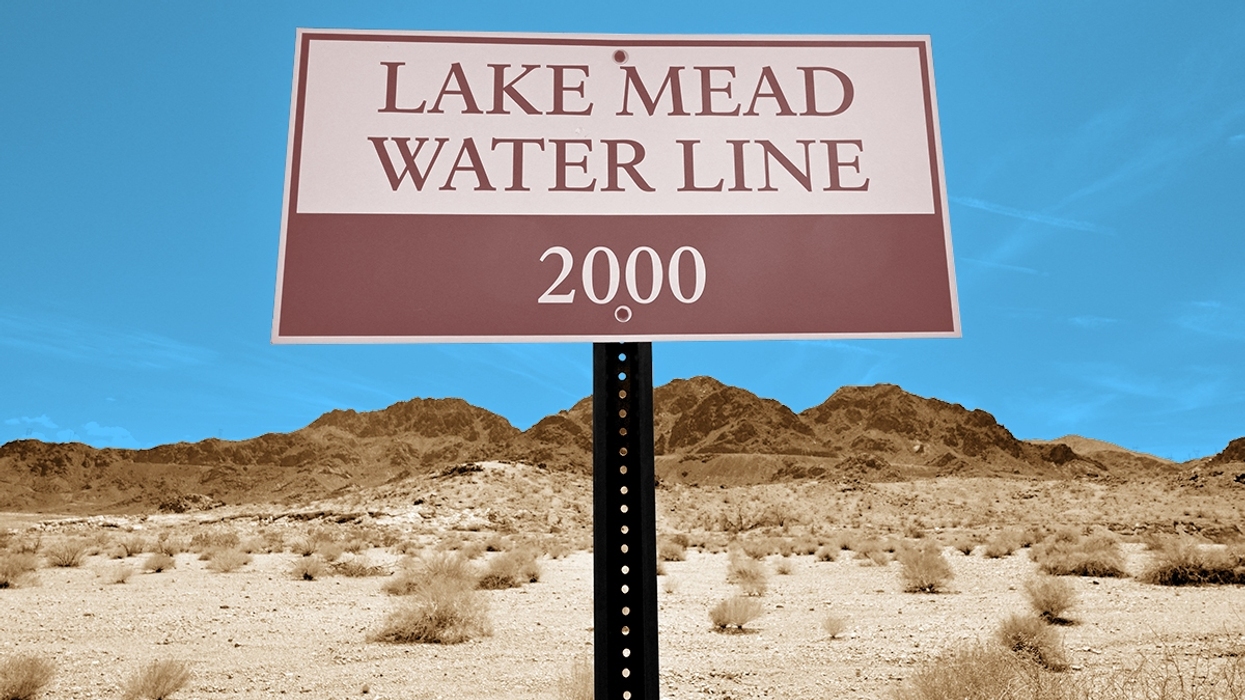
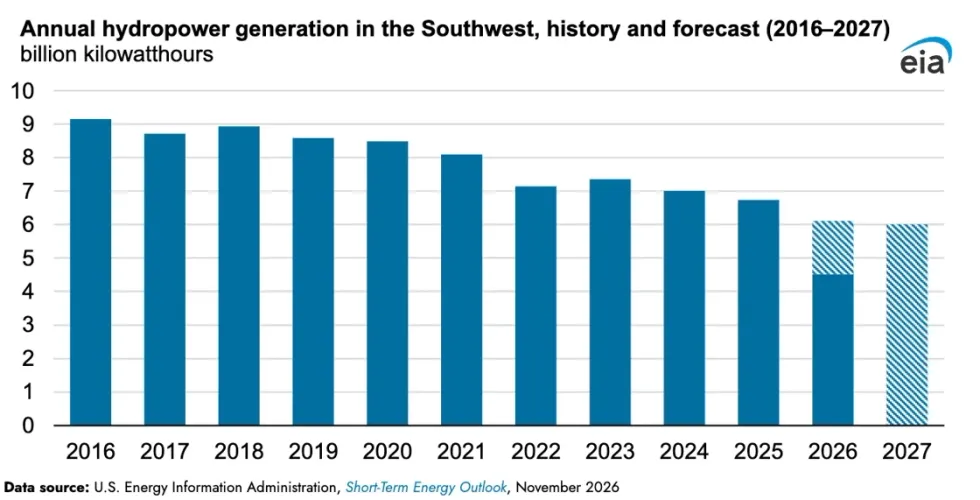
Hydropower generation in the American Southwest fell to a record low this summer as prolonged drought conditions in the Colorado River Basin sent water levels throughout the reservoir system plunging. Electricity output from the hydropower dams fell 19% below the same period last year and 28% beneath the 10-year average, according to a new analysis by the U.S. Energy Information Administration. At the end of September, water levels at Lake Powell and Lake Mead were within a single-digit percentage above the minimum needed for power production at the Glen Canyon and Hoover dams. In total, the agency’s researchers expected hydropower generation to end the year 9% lower than last year and 24% below the 10-year average. Next year is forecast to be slightly worse.
Amazon is the secret buyer of 600 megawatts of computing capacity from Fermi America, the troubled startup promising to build a Texas data center complex powered by a series of large nuclear reactors. Fresh chaos engulfed the company’s board of directors earlier this month, throwing founder and former Texas Governor Rick Perry’s role into question. Then last Thursday, the company announced that it had struck a 600-megawatt deal with an unnamed hyperscaler. The Financial Times reported that Amazon was the mystery counterparty behind the arrangement seen to salvage the megaproject.
American oil majors hit big when they gambled on drilling off the coast of what was previously one of the western hemisphere’s poorest nations. I have written frequently about the patches oil companies are betting on next, including Trinidad and Tobago, Mozambique, and Newfoundland. But the most obvious place to expand is where the crude is already flowing. Exxon Mobil last week made the final investment decision for its Longtail offshore development in Guyana, with plans to start producing in 2030. The project marks Exxon Mobil’s eighth in Guyana, according to Offshore Energy.
“Guyana is home to one of the world’s most prolific energy developments, and Longtail represents the next phase in realizing the full potential of its resources,” Dan Ammann, the president of the Exxon Mobil Upstream Company, told the trade publication.
Sign up to receive Heatmap AM in your inbox every morning:
Canada is looking to get its nuclear mojo back. Its flagship reactor project in Canada is behind schedule and over budget, as I told you last week, all to prove out an American-Japanese small modular reactor that might not work. Meanwhile, the company behind the country’s homegrown reactor, the CANDU, is competing against the U.S. and China to help Singapore expand its nuclear industry, and has inked its first deal to come to the U.S. Now the developer with exclusive rights to the publicly-owned technology has brokered a deal to potentially sell a CANDU to Turkey, which is hosting the United Nations climate summit and seeking a vendor to build its second nuclear power station after the Russians complete work on its first. NucNet reported that Turkey is now officially in talks with Ottawa about studying the CANDU’s feasibility.
Ireland infamously lacked paved roads in many places when the tech industry first arrived on its shores. Today the country’s tax haven status has transformed it into a hub for an industry that has, in recent years, sought to take advantage of the European nation’s temperate weather and sparse population to build out data centers. Irish regulators responded to the boom by requiring data centers to build their own on-site power generation or battery systems and run on 80% renewable energy after six years. But green groups accused the officials in court of violating European law by trapping Ireland in decades of greenhouse gas emissions in allowing data center construction to move forward, Bloomberg reported. The case will get its first hearing this week.
It looks just like a squat version of a private jet. But rather than two roaring jet engines on either side of the fuselage, the red aircraft features five spinning engines. China’s COMAC CE-25A, a 19-seat battery-electric commuter plane, flew with a crew for the first time on Saturday in Binzhou, Shandong, Electrek reported, marking a landmark in autonomous flight. The plane had already completed 19 autonomous flights, but this was its first with a two-member crew.
The startup’s technology drills deeper, cheaper wells for ground source geothermal temperature control.
Geothermal energy has been one of the clearest bipartisan winners of the second Trump administration’s energy policy. But the attention has largely centered on companies like Fervo Energy and Sage Geosystems, which aim to generate electricity from hot rocks often miles beneath the surface. Now, a less-heralded corner of the geothermal industry is attracting notice: ground source heat pumps, which use the stable underground temperature of the Earth to heat and cool buildings.
Texas-based startup Bedrock Energy is trying to modernize geothermal HVAC, a technology that dates back to the 1940s but still only serves about 1% of single-family homes and roughly 0.3% to 0.5% of large commercial buildings. High upfront drilling costs and space constraints have hampered adoption, as conventional systems typically require dozens or even hundreds of shallow wells spread across a sizable footprint. Bedrock just raised $24 million to scale a different approach, using AI and an array of sensors to drill fewer, deeper, and cheaper wells more quickly than ever before.
The basic idea behind geothermal heating and cooling is that once you get just a few hundred feet below the surface, the Earth stays at a relatively steady temperature year-round, typically between 50 and 70 degrees Fahrenheit. Geothermal heat pumps circulate fluid through a network of underground pipes, drawing heat from the ground to warm buildings in winter and depositing excess indoor heat underground in summer. Rather than generate heat themselves, these systems simply move it from one place to another, requiring considerably less electricity than either conventional air-source heat pumps or fossil-fuel heating systems.
As Bedrock CEO Joselyn Lai explains, the company’s drilling system captures 36 individual data points per second, helping the team gauge subsurface conditions such as the hardness and composition of the rock and how much groundwater pressure is present. When drillers encounter a new rock layer, they can see the change in real time and adjust their technique accordingly. “Kind of like a Waymo is seeing while driving, for us it’s seeing while drilling,” Lai told me. This technology enables “scientifically grounded, data-driven decisions about how to drill, so that you can overcome different challenges in the subsurface, drill faster, and drill increasingly automated.”
With conventional drilling methods, adapting to a change in subsurface conditions might take hours of troubleshooting. But Bedrock’s ability to facilitate adjustments on the fly makes it economical to drill much deeper — sometimes more than 1,000 feet — than traditional ground-source wells, which often bottom out around 500 feet. Because fewer deep wells can provide a building with the same degree of temperature control as a much larger number of shallow ones, this approach can also dramatically shrink the amount of land needed for a project.
Bedrock is also aiming to cut costs before the drilling even begins. Earlier this year, the startup introduced what it calls a “digital thermal response test,” which builds a digital twin of an entire bore field using public and private datasets alongside the company’s own drilling data from nearby sites. The model estimates the range of underground conditions developers might encounter and how effectively the ground will transfer heat. That spares developers the tens of thousands of dollars it costs to drill a test well, which can’t accurately illustrate the full range of potential conditions across a site, anyway.
“Later on, when drilling actually commences, we keep updating that digital twin with more accurate data,” Lai told me. This also allows developers to refine their project design rather than drilling extra wells to help account for uncertainty. “So this can potentially save a customer 20% to 30% on the bores that they design.”
The oil and gas industry already uses technologies like digital twins and downhole sensors, but they’re not exactly optimized for cost, Lai explained. “For decades, folks have said, Oh yeah, there’s steering and there’s downhole sensing in oil and gas. Could you use it for geo? And the answer has always been no because it’s too expensive — sometimes even 20 times too expensive for practical use.” Bedrock custom designed many of these same technologies for smaller geothermal wells, which don’t have to withstand the extreme pressures and corrosive fracking fluids that oil and gas wells do.
The tech is particularly valuable in denser urban areas where land is scarce and expensive. Larger buildings in places with more extreme climates are also promising customers, as the savings on their substantial heating and cooling needs can more quickly offset the upfront cost of geothermal drilling. That’s why Bedrock is targeting commercial buildings, from apartment complexes and office parks to data centers and schools. The company already has projects at an office campus in Austin, a resort in Utah, and a business park in Colorado, among others.
Bedrock focuses primarily on the underground portion of the geothermal system, partnering with engineering firms and HVAC contractors to install conventional ground-source heat pumps and other equipment inside buildings. And while geothermal heating and cooling typically costs more upfront than standard air source heat pumps, Lai argues this tech lasts longer and requires less maintenance. Plus, because it draws on stable underground temperatures, a ground-source heat pump typically operates more efficiently during extreme heat or cold, reducing electricity consumption and utility bills over time.
This latest funding round, co-led by new investors Clean Energy Ventures and Clearvision Ventures, comes ahead of Bedrock’s planned Series B and after its $12 million Series A early last year. The capital will help the company expand its project portfolio in Texas and the Mountain West while extending into the Northeast and Midwest. Ultimately, Lai’s goal is for geothermal heating and cooling to become as attractive an option for property owners as rooftop solar often is today.
“Every rooftop is now a contender for solar. Every parking lot, every building setback, every building footprint should be a contender for geothermal because it is really financially attractive."
A conversation with the Guardrails Alliance’s Shaunna Thomas.
This week’s Q&A is with Shaunna Thomas of the Democrat-allied super PAC Guardrails Alliance, which describes itself as “not anti-technology” but supportive of AI “rules, accountability, and a government that actually represents the public.” Part of that AI accountability they’re calling for is on data centers.
After the midterms, Guardrails Alliance sent a memorandum to all House and Senate Democratic offices arguing for AI and data center accountability to be a key part of their message and plans heading into the new Congress. Described as a “playbook for how to understand and channel anxieties about AI and data centers,” the document laid out “key narratives” that they said voters who care about these issues want to see reflected and echoed by their politics. They said the push against data centers could help Democrats build more lasting political power.
I reached out and asked if Thomas could explain further what all of this means to my readers. She kindly obliged.
The following conversation was lightly edited for clarity.
Let’s start with the elections. What were your takeaways when it came to what voters want to see on data centers?
I think the elections were a rebuke of the status quo on a number of fronts. We saw across the board that people are frustrated with what amounts to legalized corruption and the forcing without consent of new technology, and new infrastructure to support a technology that they didn’t ask for in ways that are harmful to their lives and the country.
What we saw in polling is that the data center backlash is one of the most bipartisan political issues of our time, driven by everything from noise pollution to rate hikes to Big Tech trying to steamroll state and local governments. Americans are sick and tired of the AI industry trying to control our lives by building data centers in our communities, which goes along with trying to control our data and who represents us in government. The AI industry was also trying to spend a lot on elections trying to control the outcome.
When we dig deeper on all that, it’s not just about elections. They’re seeing this unholy alliance between Big Tech and the Trump administration.
In the post-election analysis laid out in that memo, you explain these key narratives that you think Democrats should pick up against the tech sector. Can you explain how you developed these?
What we dug into during the primaries and the lead-up to the general election was questions in focus groups and polling with Republicans and Democrats about what was behind the frustration. Is this just about buildings they don’t want in their backyard or is this connected to AI and bigger picture concerns over who makes choices? About control? The data centers people were most opposed to were data centers specifically for AI, which was a really important indicator it was both/and.
We then started to talk to voters in Ohio and Iowa and Michigan about what they’d want to see in terms of changes, in terms of new leadership, how they would want to see this framed. What was appealing? We tested a number of frames and these key narratives are a compilation of that data. So for example, a key narrative says, The AI oligarchs and their political allies are wildly out of step with a supermajority of the public. There’s also sample messaging under it in the memo. And it’s a reflection of the sentiment and the tone and the language a lot of people used when they got into robust conversations about what they’re really concerned about or what they want to see their leaders doing differently.
Can you say more about these focus groups? And can you say more about what you saw in terms of bipartisan shared concern around not just data centers but these messages you’re bringing up?
I can tell you about some of the key findings of the focus groups we did in Michigan and Ohio and Iowa in August and September. People are generally open to the idea AI can have some benefit to their lives, and they’re open to using it personally. But everyone we talked to expressed some concern about the pace it was being developed. You can see technology having value but also see there’s no regulation in place or guardrails around the technology itself.
Most people we spoke to expressed concerns about how the technology has been affecting society and the environment — that came up a lot in data center conversations. People are also concerned about the role chatbots could have in their children’s lives, and that AI could replace teachers.
It’s also a lot of concern about and a lack of confidence in either government regulators or AI companies to properly regulate the technology. You saw more support for regulators at the state level and people deeply opposed to federal pre-emption, because they see more evidence of democracy working at the state level as opposed to the federal level.
People express mixed reviews about the specific policy solutions. What we’re seeing is people see AI as a vehicle for a small handful to amass more wealth and power. I don’t think we have had enough of a robust debate about how you deal with that problem.
So, on that point in particular, I want to drill down. What do we know about what voters want to see? What does accountability or guardrails look like to them?
First of all, there’s blanket support for federal regulations in general to deal with the way the technology is developed and deployed. We see a lot of clarity from voters about the fact they may not have a lot of confidence the federal government will step in. They want to see it.
When it comes to the economy, where there’s still broad public support is taxing billionaires and CEOs of these companies and raising the minimum wage and raising the social safety net. People’s interest in seeing that move forward has been growing in intensity.
On AI specifically, people don’t want to have a conversation about distribution of wealth without a conversation about distribution of power. They don’t want to be bribed to accept the acceleration of AI in their lives. They want to know that the power of those companies to do what they’re doing is going to be significantly limited and safety guardrails are put in place to keep us all safe from what the new technology is capable of.
I think once the safety conversation is step one. Step two is the conversation about how you distribute wealth from a technology built on other people’s labor and intellectual property.
On the concern about bribes, we’ve been reporting on Trump’s call for cash payments to communities to accept data centers. Are you telling me proposals like that might not be a good political strategy?
It was precisely because Trump was talking about it that we heard it brought up in focus groups, and how it was described was that voters may get some short term incentive to accept a technology they don’t trust is designed to help them fundamentally. They believe it is being deployed to more deeply consolidate power and wealth. And they don’t want that. When the president or a big AI company says they agree with it, it’ll have an impact on how the idea is perceived.
It has to also be coupled with a set of policies that are putting democratic governance over the technology itself before its deployment. People want to see technology isn’t going to continue to advance without guardrails.
Distinct from Trump’s data center dividend, some policymakers have suggested a “data dividend” — a distribution of wealth from the usage of AI products because they’re using people’s data. That’s more of what we’re talking about.
What do we know about what the public wants to see regarding data centers?
It’s important we recognize local leaders have had demands driven by their local communities. But as a structural matter, the public sees slowing down data centers as a mechanism for slowing down the project of AI generally. It remains an open question about how you do that.
There are federal policymakers working on a set of solutions that could create more space for people at the local level to be in the driver’s seat on when, how, or if data centers get built. I think we’ll see more proposals on that front.
So where do you think this conversation goes next?
I would expect the public to continue to make demands from policymakers and I would expect the Big Tech sector to continue down the path they’re going, which is, we were always Democrats and pro-regulation all the time. This will look like policies resembling always being okay with regulation but actually avoid putting checks on their power. And that’ll mean the public has even more at stake and the government has an even bigger obligation to make sure AI is deployed for public benefit as opposed to for the profits of a few companies and CEOs.