Current conditions: Hurricane Lowell came within 40 miles of making landfall over Hawaii, knocking out power in much of Kaua’i • The Atlantic hurricane season, which hit its climatological peak this week, is now trending toward a record low amount of storm activity • After months of heat, an unusual cold front is arriving in Central Europe, threatening flooding from the temperature whiplash.
THE TOP FIVE
1. A third of U.S. reservoirs are filling up with sediment instead of water
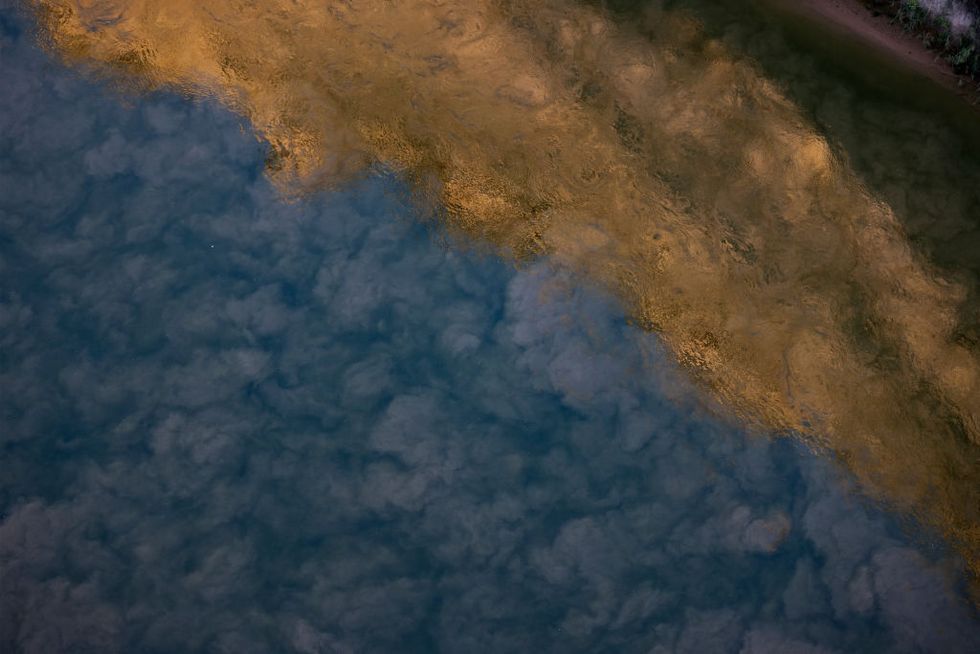
 A sediment-strewn stretch of the Colorado River in Arizona, near Lake Powell.David McNew/Getty Images
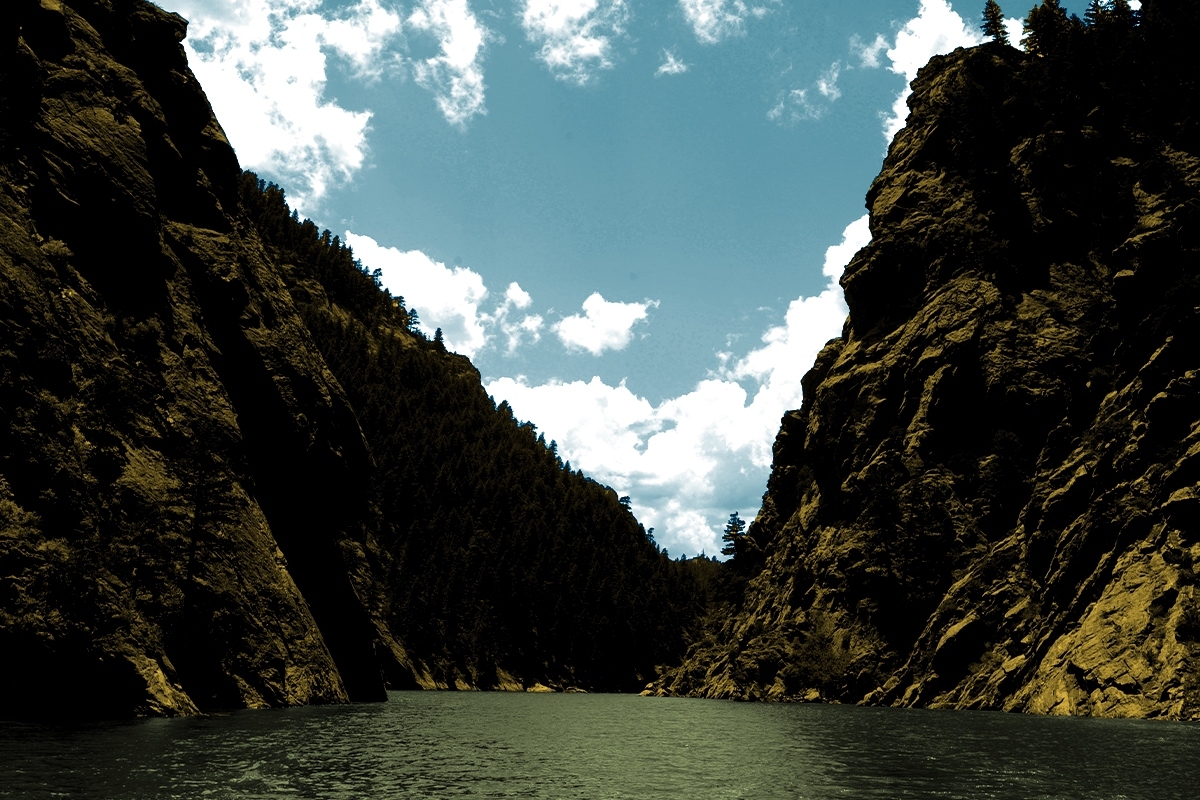
Back in 1986, the writer Marc Reisner painted a bleak picture of the future of the reservoirs that helped fulfill America’s Manifest Destiny, spread Anglo civilization westward, and quench the thirst of farms, people, and their lawns. His classic Cadillac Desert: The American West and Its Disappearing Water predicted that the hydrological system would be thrown into disarray as sediment filled in reservoirs, leaving croplands parched and water scarce. A startling new Bloomberg analysis of scant federal reservoir data suggests that future is fast approaching. Compiling 140 sediment surveys from the Bureau of Reclamation of 105 unique dams, the newswire found that nearly one in three are more than 10% full of sediment. That’s only an average. Montana’s Fresno Reservoir is roughly 29% full of sediment, “displacing enough water to last nearly one-third of the state’s residents for a year.” Wyoming’s Buffalo Bill Dam, meanwhile, “has lost most of its hydroelectric generating capacity due to sediment.” An engineer who oversaw sediment work at the Bureau of Reclamation estimated that the U.S. has already lost up to 44% of its per capita water storage since a peak in the 1970s. “People back in the ’60s and ’70s figured, ‘Well, the next generation can figure that out,’” Randle told the publication. “But now, fast-forward to the present, there aren’t any great solutions.”
The finding comes just months after the Western U.S. suffered what my colleague Jeva Lange called “a once-in-a-4,433-year heat wave” with consequences that “will linger well past the high temperatures.”
2. Federal court overturns New Jersey’s water permits for a new gas pipeline
In 2020, when activists sought to block individual gas or oil pipelines as a way to spur decarbonization, then-New York Governor Andrew Cuomo bowed to months of protests by blocking the state’s approval of water permits for a major gas pipeline under New York Bay. The project, known as the Northeast Supply Enhancement pipeline, would have carried gas from the fracking fields of Pennsylvania to the nation’s most densely populated and increasingly energy-starved region. In the meantime, demand for gas has soared, particularly as New York and Massachusetts shut down major nuclear stations and the offshore wind buildout began stalling even before President Donald Trump launched what my colleagues have repeatedly described as a “war” on turbines. When Trump returned to office, now-New York Governor Kathy Hochul compromised with the new administration by agreeing to work together to move forward with the mothballed pipeline plans. Last November, New Jersey followed suit by approving the water permits for the project on the same day New York did. Williams broke ground in April.
But bipartisan consensus is no guarantee against this nation’s process rules for environmental permitting. On Tuesday, the Third Circuit Court of Appeals rejected the New Jersey Department of Environmental Protection’s water certifications. Prior to the decision last year, New Jersey’s state agency held only one public hearing, prompting a lawsuit from a coalition of green groups. NJ Sierra Club, one of the leading litigants, hailed Tuesday’s ruling as “a massive victory over the fossil fuel industry.” The decision “tells us what we already knew, the DEP couldn’t prove that NESE will not harm our water quality and waterways,” Anjuli Ramos-Busot, NJ Sierra Club’s director, said in a statement. When I emailed Williams to ask about the ruling last night, spokesperson Cherice Corley told me the company was “reviewing the court’s decision.”
3. Two major CCS facilities open in Europe
It’s a big week for carbon capture and sequestration in Europe. On Monday, the continent’s largest CCS facility officially opened at the fertilizer company Yara International’s Sluiskil plant in the Netherlands. At full capacity, the facility will capture and liquify up to 800,000 tons of carbon dioxide annual from an ammonia production plant. Yara said the facility “proves that large-scale industrial decarbonization is possible today.” The European Union’s climate commissioner, Wopke Hoekstra, said “this is exactly the kind of project Europe needs to combine climate ambition with a strong and resilient industrial base.”
That same day, the British startup Cool Planet Technologies christened its 10,000-ton-per-year CCS plant at building material maker Holcim’s cement plant in Lower Saxony, Germany. “We are relying on leading European technology and drawing on the engineering expertise of our technology partners,” Holcim Germany CEO Stephan Hinrichs told the Carbon Herald. “Together in Lower Saxony, we are proving that climate protection and industrial competitiveness can go hand in hand.” Someone may want to tell the incoming far-right rulers of neighboring Saxony-Anhalt.
Sign up to receive Heatmap AM in your inbox every morning:
4. Bipartisan bill aims to speed up transmission permitting
If bipartisan consensus on gas infrastructure bows to environmental lawfare in blue states, bipartisan consensus on transmission lines seems equally vulnerable to not-in-my-backyard-ism in states of any color. But there’s at least some bipartisan consensus on doing something about that. On Tuesday, Representatives Scott Peters, a California Democrat, and Gabe Evans, a Colorado Republican, introduced the Certainty in Litigation for Electric Asset Reliability, or CLEAR Act, to “resolve ambiguity in current law so that Department of Energy-coordinated transmission projects follow clear standards.”
“Our grid is too old and too slow to meet our skyrocketing energy demand,” Peters said in a press release. “We can’t wait years for badly needed infrastructure to be built. The CLEAR Act would accelerate the review process for large energy infrastructure projects and establish clear rules for stalled transmission projects.” While permitting reform may bring down the cost of transmission lines, and bring more renewables and other new generation onto the grid, it won’t do much to deal with oil prices, now soaring again as the Iran War drags on. Brent crude — the main European and global metric for oil prices — surpassed $100 per barrel again yesterday. West Texas Intermediate, the benchmark for the U.S. supply, hovered just below $96.
5. Trump is overhauling the National Park Service
The Department of the Interior is planning to “significantly reorganize” the National Park Service and other bureaus in the agency as part of what The Washington Sun called “the second major shake-up of the nation’s public lands infrastructure” since Trump’s return to office. While the leaked document the publication obtained suggested the agency would avoid layoffs “in the short term,” talking points told officials to “avoid categorical promises; explain notification process” if asked about job cuts.
“We want to reorganize. We want to make things more efficient. You know what? We can do all those things, but how is that actually helping us be a leader and setting an example of how we protect our nation’s natural and cultural resources?” Russell Galipeau, who served as superintendent of Channel Islands National Park for 15 years, told the publication.
THE KICKER
The summer of 2023 marked Quebec’s worst wildfire season on record, burning some 4.5 million hectares of boreal forests and darkening the skies of cities such as New York with toxic smoke. A new study by Concordia University researchers is among the first to quantify how the smoke affected wildlife. The research looked at lepidoptera — moths and butterflies — and concluded that the smoke exposure during the larval stage caused significantly higher rates of wing deformities in spruce budworm and forest tent caterpillar moths. “These insects are important because they are considered pests, meaning they have outbreak seasons, where the population density becomes very high,” Rosa Alicia Castillo Salazar, the study’s co-author, said in a statement. “We do not yet know how forest fires and climate change will affect them in the long term. However, there was no significant change in their population the following year.”


 A sediment-strewn stretch of the Colorado River in Arizona, near Lake Powell.David McNew/Getty Images