You’re out of free articles.
Log in
To continue reading, log in to your account.
Create a Free Account
To unlock more free articles, please create a free account.
Sign In or Create an Account.
By continuing, you agree to the Terms of Service and acknowledge our Privacy Policy
Welcome to Heatmap
Thank you for registering with Heatmap. Climate change is one of the greatest challenges of our lives, a force reshaping our economy, our politics, and our culture. We hope to be your trusted, friendly, and insightful guide to that transformation. Please enjoy your free articles. You can check your profile here .
subscribe to get Unlimited access
Offer for a Heatmap News Unlimited Access subscription; please note that your subscription will renew automatically unless you cancel prior to renewal. Cancellation takes effect at the end of your current billing period. We will let you know in advance of any price changes. Taxes may apply. Offer terms are subject to change.
Subscribe to get unlimited Access
Hey, you are out of free articles but you are only a few clicks away from full access. Subscribe below and take advantage of our introductory offer.
subscribe to get Unlimited access
Offer for a Heatmap News Unlimited Access subscription; please note that your subscription will renew automatically unless you cancel prior to renewal. Cancellation takes effect at the end of your current billing period. We will let you know in advance of any price changes. Taxes may apply. Offer terms are subject to change.
Create Your Account
Please Enter Your Password
Forgot your password?
Please enter the email address you use for your account so we can send you a link to reset your password:
The consequences will linger well past the high temperatures.

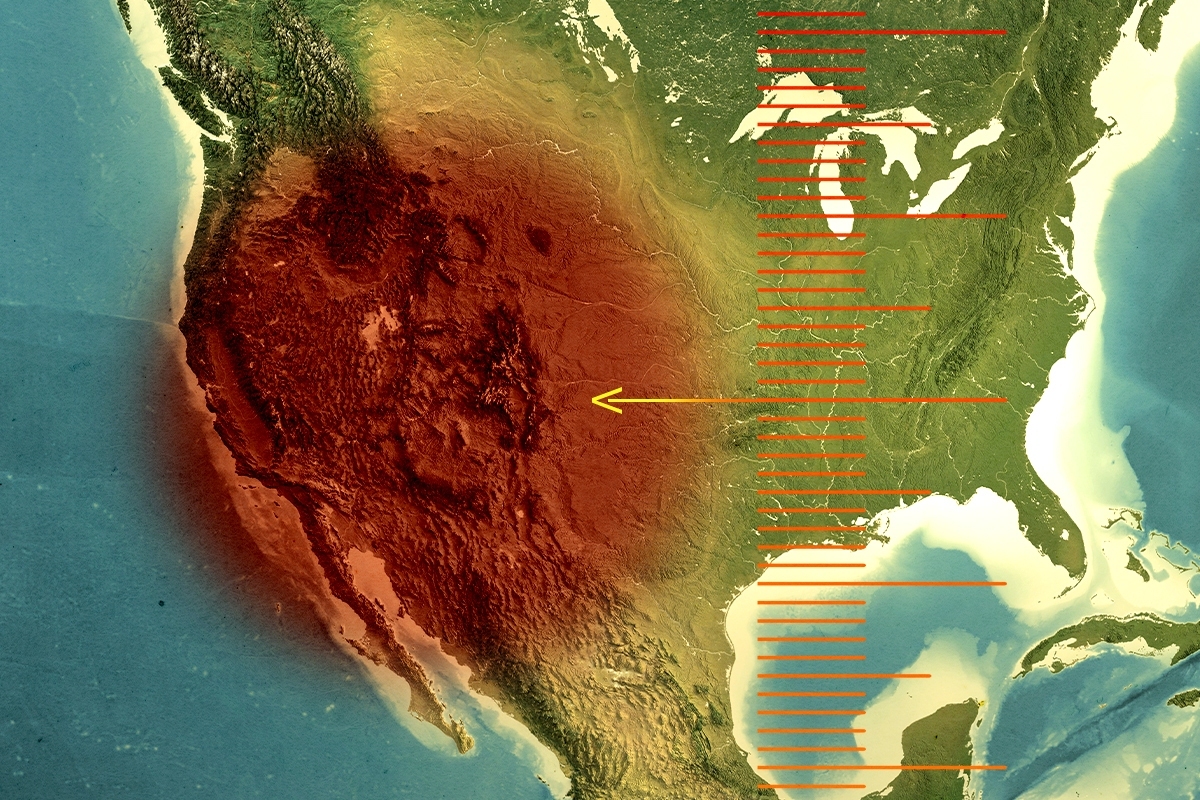
It is difficult to describe how bonkers this week’s heat wave is in the southwestern United States. Alan Gerard, a typically even-keeled meteorologist with 35 years of forecasting experience under his belt, attempted to do so in a recent edition of his newsletter, Balanced Weather. He settled on: “jaw-dropping,” “insane,” “truly historic,” “literally flabbergasting,” “incredible,” and “anomalous [even for] the middle of summer.”
Jeff Berardelli, the chief meteorologist at WFLA, the NBC affiliate in Tampa, tried to contextualize it on social media, noting that based on historical patterns, Phoenix could expect a March day as hot as it was on Thursday — 105 degrees Fahrenheit — only once every 4,433 years.
Phoenix is just one part of the story. The heat wave — which began ramping up on Tuesday, peaks Friday, and won’t subside until early next week — has set or tied March record highs in at least 480 locations so far, stretching from New Mexico to Southern Oregon. California has already broken the record for the hottest winter day ever recorded anywhere in the U.S.: 109 degrees on Thursday at a station in the eastern Coachella Valley. “The extent and magnitude of this particular heat wave is without comparison to anything that we’ve seen in March,” John Abatzoglou, a professor of Climatology at the University of California, Merced, who specializes in climate impacts in the West, told me.
That’s partially because this heat wave would be “virtually impossible for the time of year in a world without human-induced climate change,” per a report released Friday by scientists from World Weather Attribution. Heat waves have one of the clearest climate signals of any extreme weather event because a hotter planet means a hotter baseline. “Across almost the entire western U.S., temperatures [this week] were made at least five times more likely due to climate change,” Zachary Labe, a climate scientist at Climate Central, which maps the effects on daily temperatures, told me.
The March 2026 heat wave is likely to become a reference point in the same vein as the 2021 heat dome in the Pacific Northwest, subject to study, research, and scrutiny by climatologists, public health experts, hydrologists, and emergency managers in the months and years to come. The consequences of the current heat wave will also outlast the record temperatures. When it is this hot — and, more importantly, when it is this hot this soon — the effects compound, touching everything from hydropower capacity to the coming wildfire season.
To make matters worse, “this week is exacerbating conditions that were already bad,” Labe said.
Let’s take a look.
About half of the total utility-scale hydroelectricity in the U.S. is generated in the three West Coast states, but it is part of the energy mix in almost every state experiencing the heat wave this week, including also Arizona, Colorado, Idaho, Montana, Nevada, New Mexico, Oregon, Utah, and Wyoming. In these states, high-elevation snowpack acts as a kind of battery; the slow release of melting winter snow from the mountains over the spring and summer helps keep generation reliable. In the case of a major heat wave, however, the water can run off too fast or evaporate, limiting supply in the summer-peaking months.
Though reservoirs in California are mostly in good shape at this point, with the rivers flowing high this early, there will be less water available when the squeeze comes in July and August. “This year, at least for precipitation, it’s been really quite good [in California],” Abatzoglou, the UC Merced professor, told me. The issue is, it’s also “just been way too damn warm.”
Every major river basin in the western U.S. experienced its first- or second-warmest winter this year, setting a grim stage for the high temperatures that have settled over the region this week. What little snowpack there already was — 97% of the snowpack-monitoring weather stations in Colorado are in snow drought — is now being hammered by the kind of heat the region doesn’t often experience before late spring or early summer. Daniel Swain, a climate scientist with the University of California Agriculture and Natural Resources, has warned that, as a result, we might see “June snowpack levels by April 1” in some parts of the West.
Of particular concern is what this will mean for Lake Powell, the reservoir created by the Glen Canyon Dam on the Colorado River, which supplies electricity to more than 5 million customers across seven states. The reservoir is a mere 40 feet away from the minimum volume required to turn the turbines in the dam, Bloomberg reports.
The early-season heat-driven runoff will further diminish the river’s already reduced flow in the coming months. Snow accumulation in the basin above Lake Powell was only at 67% of the 30-year median for March. Earlier this week, the U.S. Colorado Basin River Forecast Center downgraded its two-week-old forecast for inflows to Lake Powell during the critical April through July period from 2.3 million acre-feet of water to less than 1.8 million acre-feet. That would represent just 27% of the river’s 30-year historical average inflow; to understand how much the unseasonable heat has affected that, projections were more than 3.6 million acre-feet of water at the start of the year.
Though it is the bottom left corner of the country that has drawn the most attention for its triple-digit temperatures this week, records are also toppling in southeastern Oregon and southwestern Idaho, where highs are 20 to 25 degrees Fahrenheit above normal. Kurt Miller, the executive director of the Northwest Public Power Association, a nonprofit that represents public utilities in the region, told me his modeling shows that two consecutive 80-degree days in Boise are enough to trigger runoff starting “in earnest” in the Pacific Northwest, where dams meet about 60% of the region’s electricity demand.
The good news is that the high temperatures in Idaho are forecast to be “peaky” rather than prolonged, as they will be in the southwest, meaning the Pacific Northwest isn’t likely to string together the series of hot days necessary to trigger a catastrophic melt-off scenario. Additionally, while snowpack in the Northwest has been dismal this year, hydropower in the region is largely determined by upstream conditions in British Columbia and Montana, which have been closer to seasonal norms and, more importantly, are out of range of this week’s heat event.
There is another obvious downside to the early snowmelt in the West: Fire season will likely start sooner. “This is basically hitting fast-forward,” Abatzoglou, the University of California, Merced professor, told me. “It’s pushing us much faster toward the crispy season.”
Especially given the already historically low snowpack (in the northern Sierras, snow is at just 38% of its normal levels), the heat current wave could move up the start of fire season by weeks as high elevations melt out and soil and vegetation begin to dry. Usually, such conditions aren’t seen before the late spring or early summer.
While major wildfires have mostly spared high-elevation landscapes in recent years, “I expect that will not be the case this year,” Swain, the scientist at UC ANR, said in a video posted earlier this week. He further predicted that “we’ll see an especially severe and early start to fire season in the four corners — Arizona, New Mexico, Utah, and Colorado,” as well as a potential “severe peak” later in the forests of Northern California, Oregon, and the Rockies. (If there’s a saving grace, though, it’s that the lack of precipitation in the West has also curbed the fuel loads by keeping vegetation growth to a minimum.)
Adding to the alarm is the fact that “this year’s snow accumulation pattern most closely resembles 2015, followed by 2005,” as the National Interagency Fire Center wrote at the start of the month. Both were historically bad fire seasons: In 2005, a then-record 8.7 million acres burned, and in 2015, the U.S. broke more than 10 million acres burned for the first time.
Some research also indicates that longer fire seasons can lead to more severe wildfires, which, in addition to posing greater risks to people and property, take a deeper toll on state and federal firefighting resources and personnel. If the season starts sooner, wildland firefighters are more likely to be exhausted by the time the severe fire days of “dirty August” and “Snaptember” finally come around.
Still, any estimates of the direct impact of this week’s heat wave on the upcoming fire season should come with a hefty margin for error. Wildfires are influenced by a number of factors, both climate-related and not, ranging from historic forest management practices to the timing of the “green up” of local fuel loads to, yes, when and where the snow melts off. But an early dry fuel bed also means prescribed burning efforts can begin sooner, the NIFC notes in its March forecast (although that said, the dry fuel bed may also eventually “curtail burning late spring into early summer if timely moisture intrusions do not materialize”).
It could still take months for the immediate-term impacts of this week’s heat wave to come into focus. Excess mortality takes weeks to calculate and sometimes years to pin down precisely; researchers didn’t conclude their formal study of the 159 deaths resulting from the 2021 heat wave in Washington state until 2023.
What we do know is that early-season severe heat is especially dangerous for human health because people aren’t yet acclimatized to it. In fact, between 50% and 70% of outdoor heat-related fatalities occur in the first few days of a heat wave, according to the Occupational Safety and Health Administration. That’s because it can take between four days and two weeks to adapt physiologically to handling heat stress, including the slow process of building up adequate blood plasma to cope with the increased cardiovascular and cooling demands on the body.
And lest we forget, this heat has arrived staggeringly early, in some places breaking the daily temperature record by as much as 11 degrees. It took until August last year for Los Angeles to experience a similarly “strong” heat wave, senior AccuWeather meteorologist Heather Zehr said in a press release.
Drownings increase during heat waves as people seek out water to cool off, but there is a reason to be especially concerned about water this week. That’s because many people will head to rivers, and that water will likely be cold and high due to rapid snowmelt in the mountains, Abatzoglou told me. In addition to its extreme heat warnings this week, the National Weather Service has also been posting PSAs reminding Americans that “cold water can kill.”
There could be impacts on agriculture, too. It is fruit- and nut-blossom season in California’s Central Valley, which produces about three-quarters of those products consumed in the United States. It’s the Valley’s Mediterranean-esque climate, in part, that makes the region so productive; this time of year, daily highs are more typically in the mid-60s, perfect for the trees. Now, however, they’re cresting 90 degrees, threatening the Valley’s $21 billion in annual exports and more than 200,000 agricultural jobs. Further south near San Diego, there are also mounting concerns for the avocado industry, as the plants have particularly heat-sensitive blooms.
Though the heat wave is expected to begin breaking next week, a definitive end to the dry, unseasonably warm troubles in the West is nowhere in sight. April is the crucial transition month in the West, when states can sometimes stabilize after winters with poor snowpack or low precipitation through late-season storms. But “unfortunately, taking a look at some of the longer-range outlooks, it’s more likely than not there will be warmer than normal temperatures continuing across the West into April,” Labe said. “So just all around bad news.”

Log in
To continue reading, log in to your account.
Create a Free Account
To unlock more free articles, please create a free account.
Current conditions: More than 200 damaging wind reports from Missouri to Indiana came in so far this week as a series of storms wraps up over the Central United States • South Sudan’s capital of Juba is roasting in temperatures nearing 100 degrees Fahrenheit as heavy storms threaten to add to existing floods • Gale warnings are in effect in the Philippine Sea and the South China Sea as a northeasterly monsoon churns up winds of up to 40 knots.
And then there were three. Last month, Dominion Energy’s Coastal Virginia Offshore Wind started generating electricity for the mid-Atlantic grid just days after Orsted’s Revolution Wind entered into service off the coast of Rhode Island. Now a third U.S. offshore wind project is fully up and running. On Monday, Massachusetts Governor Maura Healey announced that Vineyard Wind had activated its electricity contracts with utilities, setting fixed prices for the 800-megawatt project 15 miles south of Martha’s Vineyard and Nantucket over the next 20 years. In a press release, Healey said the power purchase agreements will save Massachusetts ratepayers roughly $1.4 billion in electricity costs throughout these next two decades. “Throughout one of the coldest winters in recent history, Vineyard Wind turbines powered our homes and businesses at a low price and now that price goes even lower with the activation of these contracts,” Healey said in a statement. “Especially as President Trump is taking energy sources off the table and increasing prices with his war in Iran, we should be leaning into more American-made wind power.” Vineyard Wind first began selling power to the market in 2024, but at what The New Bedford Light called “fluctuating and at times higher prices.” As of this week and for the next year, the price will be set at $69.50 per megawatt-hour.
That hasn’t stopped the Trump administration from finding new ways to terminate other offshore wind projects. As I wrote yesterday, the Department of the Interior announced that two more projects — Bluepoint Wind off the coast of New Jersey and Golden State Wind off California — had taken the administration up on its offer to pay back the leasing costs up to a combined nearly $900 million in exchange for the developers abandoning the bids and agreeing not to pursue other offshore wind deals in the U.S. “We did not take this decision lightly,” Michael Brown, the CEO of Ocean Winds North America, told Heatmap’s Emily Pontecorvo in an emailed statement. “But when the underlying conditions in a market change, we must adapt. In this case, receiving a refund for the lease payments we had invested and exiting on agreed terms was the right outcome for our shareholders and partners.”
The United Arab Emirates said Tuesday it would withdraw from the Organization of the Petroleum Exporting Countries, shrinking the world’s biggest oil-producing cartel to just 11 nations. The decision takes effect on May 1. The announcement came ahead of Wednesday’s latest OPEC meeting in Vienna. Abu Dhabi said it will also quit the broader OPEC+ supergroup that includes non-members led by Russia. In a post on X, Sultan Al Jaber — who serves as the UAE’s minister of industry and advanced technology, the chief executive of the Abu Dhabi National Oil Company, and the chairman the country’s leading clean energy firm Masdar — said his nation had “taken a sovereign decision in line with its long-term energy strategy, its true production capability, and its national interest.” The National, Abu Dhabi’s state-owned English-language newspaper, wrote that “independence from OPEC will give the UAE, which accounts for roughly 4% of global oil production, more flexibility and responsiveness in managing the oil market.”
Get Heatmap AM directly in your inbox every morning:
The Interior Department’s Bureau of Land Management has issued a new categorical exclusion for geothermal, freeing developers from the requirement to carry out environmental reviews at yet another key step in the drilling process. The regulatory change marks the third new categorical exclusion for geothermal issued in the past two years. That comes after what Joel Edwards, the co-founder of the geothermal startup Zanskar, said in a post on X was a period of about 20 years “without any new” exclusions. In April 2024, pre-leasing and surveying got a categorical exclusion. In January 2025, a new categorical exclusion covered postleasing, drilling, and flow-testing on areas of up to 20 acres. Now this latest step will allow for an exemption on pre-leasing activities such as drilling up to 10 acres. “Very nice to see the agency continuing to streamline permitting,” Edwards wrote. “Still more bottlenecks to work out, but we’re moving in the right direction.”
On Tuesday, meanwhile, Senators Catherine Cortez Masto, a Democrat from Nevada, and Lisa Murkowski, a Republican from Alaska, introduced legislation to boost federal funding for next-generation geothermal research, development, and commercialization. “The U.S. is at the forefront of geothermal energy innovation, and this bill has the potential to strengthen global leadership, boost competitiveness, and accelerate the next generation of clean firm technologies,” Terra Rogers, director for superhot rock energy at Clean Air Task Force, said in a statement. “This nation has vast, underutilized next-generation geothermal and superhot rock potential.”
Sign up to receive Heatmap AM in your inbox every morning:
CATL, the world’s largest battery market, has signed the world’s largest-ever order for sodium-ion batteries, the technology widely discussed as a potentially cheaper and more abundant alternative to the lithium power packs that propel electric vehicles and increasingly back up the grid. The Chinese giant inked a deal for 60 gigawatt-hours of batteries with the energy storage integrator HyperStrong. The deal marks what CATL calls proof that it has “overcome the challenges of the entire sodium-ion battery mass production chains,” prompting some experts to describe the agreement to Electrek as a potential “DeepSeek moment,” a reference to the Chinese artificial intelligence model that shook up the global industry with its affordability and nimbleness.
Sodium-ion batteries have seemed like the “next big thing” for years now, but as Heatmap’s Katie Brigham has reported, the industry has faced something of a curse when it comes to manufacturing, though new startups are attempting to overcome that problem.

Fuel loading has begun at Bangladesh’s first nuclear power station. The uranium rods could be in place in the Rooppur Nuclear Power Plant, made up of two VVER-1200 reactors designed and built by Russia’s state-owned Rosatom, in as little as 45 days. The plant will vault Bangladesh into the group of 31 nations that harness the power of splitting atoms for electricity production. “Today, Bangladesh joined the club of countries using peaceful nuclear energy as a reliable source of sustainable development,” Rosatom Director General Alexei Likhachev said in a statement to World Nuclear News. “The Rooppur Nuclear Power Plant will undoubtedly become a vital element of the country's energy system. For Rosatom, this project is another important step in the development of global nuclear energy and in strengthening friendly relations with our international partners.” When the plant generates its first power for the grid later this year, it will complete a project first planned when the country was known as East Pakistan.
When my high school girlfriend made my first Facebook account, I never imagined that, about 20 years later, the social network’s parent company would be trying to harvest electricity for its servers from outer space. But this week, Meta announced a deal with the startup Overview Energy, which aims to beam light from thousands of satellites to solar farms that power data centers at night, effectively making solar a 24-hour power source. Overview CEO Marc Berte said the goal is to launch the satellites by 2030, with what TechCrunch called “a goal of flying 1,000 spacecraft in geosynchronous orbit, a high orbit in which each satellite remains fixed above the same point on Earth.”
There are at least two more developers in a position to trade offshore leases for fossil fuel investment.
The Trump administration inked two more agreements to cancel offshore wind leases and reimburse the former leaseholders nearly $1 billion on Monday, demonstrating that its previous deals with TotalEnergies was not a one-off legal settlement but rather a new, repeatable strategy to throttle the industry.
Just like the deal with Total, the Interior Department is painting the agreement as a quid pro quo, where the companies will be reimbursed only after they invest an equivalent amount of money into U.S. oil and gas projects. There are a handful of remaining companies sitting on undeveloped offshore wind leases that could conceivably make similar deals. If they do, the cost to taxpayers could exceed $4 billion.
This latest deal will cancel leases for two projects, known as Bluepoint Wind and Golden State Wind. Bluepoint, a project off the coast of New York and New Jersey, was a joint venture between Global Infrastructure Partners, an investment firm owned by asset manager BlackRock, and Ocean Winds, which itself is a joint venture between the French energy company Engie and the developer EDP Renewables. The companies initially paid $765 million to acquire the lease.
The Interior Department announcement states that Global Infrastructure Partners has committed to investing that amount into an unspecified U.S. liquified natural gas facility. The firm is already a major investor in several U.S. LNG projects; alongside TotalEnergies, it reached a final investment decision last September for the expansion of the Rio Grande export terminal. If the lease cancellation agreement resembles the one struck with Total, as the Interior Department’s announcement suggests, Global Infrastructure Partners will be able to count this existing investment toward its total.
Golden State, one of the first leases sold off the Pacific coast, was a joint venture between Ocean Winds and the Canada Pension Plan Investment Board, an investment firm. The companies purchased it for $120 million. The government’s announcement is less specific about who will invest that money into what, noting only that it will be paid back after “an investment has been made of an equal amount in the development of U.S. oil and gas assets, energy infrastructure, and/or LNG projects along the Gulf Coast.” The Canada Pension Plan Investment Board has multiple investments in oil and natural gas pipelines and productions throughout the U.S. While Engie buys LNG from the U.S., the company has generally not been involved in U.S. oil and gas projects. EDP Renewables focuses solely on renewable energy and its parent company, EDP Group, is a Portuguese utility.
The government’s leasing laws generally do not allow companies to walk away from their lease and receive a refund. The government can cancel leases if it determines development would harm the environment or threaten national security — two claims the Trump administration has made — but only after holding a hearing on the matter.
The Trump administration has engineered a different route. In the same vein as the TotalEnergies deal, it has reached legal settlements with the companies and intends to pay them out of the Judgment Fund, a reserve overseen by the Department of Justice that agencies can draw from to pay for settlements arising from litigation or imminent litigation.
“We did not take this decision lightly,” Michael Brown, the CEO of Ocean Winds North America, told me in an emailed statement. “But when the underlying conditions in a market change, we must adapt. In this case, receiving a refund for the lease payments we had invested and exiting on agreed terms was the right outcome for our shareholders and partners.”
As I’ve reported previously, some legal experts are dubious that the circumstances constitute a legitimate use of the Judgment Fund. The agreement with Total was predicated on a series of “what if” scenarios — the Trump administration says it would have paused the company’s projects, which would have led Total to sue for breach of contract. Neither party actually did those things, instead negotiating these tit-for-tat trades with Trump.
Legal experts told me the only parties with the legal standing and the financial means to challenge the agreements are the states. I contacted the attorneys general offices in New York and New Jersey, which declined to comment, and California, which did not reply to my inquiry.
There are at least two remaining offshore wind developers who would be in a position to angle for a similar payout. RWE, a German energy company, paid $1.1 billion in 2022 to purchase a lease off the coast of New York and New Jersey for a project called Community Offshore — the most any company has paid to date for U.S. offshore wind development rights.
RWE, which previously focused its U.S. business on renewable energy, announced in March that it was developing 15 natural gas peaker plants in the U.S. In addition to Community Offshore, the company also bought rights to a lease in the Pacific for $121 million, and another in the Gulf of Mexico for about $4 million. The company did not respond to a request for comment, but its CEO has publicly suggested that it would be interested in getting its money back.
Another potential seller is Invenergy, which purchased a lease off the coast of New York and New Jersey in 2022 for $645 million for its Leading Light project. It also holds the rights to a Pacific lease bought for $112 million, and two in the Gulf of Maine, for which it paid about $9 million. The company is actively expanding its natural gas power plant fleet in the U.S. Invenergy declined to comment for this story.
The remaining companies that might be eligible for such deals paid much less for their offshore wind leases — BP, for example, paid just $135 million to obtain the lease for its Beacon Wind project in the Northeast. Duke Energy paid $130 million for a lease near North Carolina. BP’s offshore wind arm, JERA Nex bp, declined to comment on whether it would be amenable to a deal. Duke did not respond to my inquiry.
A company called EDF, a U.S. subsidiary of the French state-owned utility EDF Group, is sitting on a hefty $780 million lease, but the company is a renewables developer. There are no indications that its parent company is interested in expanding its natural gas pipeline in the U.S.
While Equinor and Dominion both have fossil fuel projects in the U.S., it seems unlikely they would reach similar deals for their remaining leases, given that they have already sued the Trump administration for halting work on offshore wind projects that were already under construction — Equinor’s Empire Wind and Dominion’s Coastal Virginia Offshore project.
Notably, Ocean Winds still has one remaining lease after this week’s deal, which it purchased on its own — not as a joint venture — in 2018, under the first Trump administration. Its SouthCoast Wind project off the coast of Massachusetts has nearly all of its approvals, though Trump’s Day One moratorium on offshore wind permits delayed construction. A subsequent lawsuit in March of last year from the city and county of Nantucket challenged the project’s Construction and Operations permit, typically the final federal approval for offshore wind farms. A federal judge ordered the permit to be sent back to the Bureau of Ocean Energy Management for reconsideration last fall; according to court filings, that process is ongoing.
If RWE, Invenergy, Duke, and BP each reached similar deals with the Trump administration, that would mean a total of just over $4 billion paid out of the Judgment Fund to cancel offshore wind leases, including the four existing deals. For context, the total amount the government paid to parties out of the Judgment Fund across all federal agencies in 2025 was about $4.4 billion, according to Treasury data. Annual totals over the last decade range between $1.7 billion in 2017 and $8.4 billion in 2020.
Party orthodoxy is no longer serving the energy transition, the Breakthrough Institute’s Seaver Wang and Peter Cook write.
President Trump has announced a dizzying array of executive branch led critical mineral policies since taking office again last year. While bombastically branded as new achievements, many elements from critical mineral tariffs to strategic stockpiling to Defense Production Act financing trace back to bipartisan recommendations and programs spanning the past several administrations.
Many Democrats in Congress, however, are stuck on the defensive. During a recent House Natural Resources hearing, for instance, Washington Representative Yassamin Ansari singled out the SECURE Minerals Act, a bipartisan proposal for a strategic minerals reserve, as “a framework ripe for fraud, corruption, and abuse.” Yet the draft bill actually contains strong safeguards: Senate confirmation of board members, annual independent audits, public tracking and annual reporting to Congress, conflict-of-interest prohibitions, and more.
In another House oversight hearing considering the reauthorization of the Export-Import Bank, California’s Maxine Waters expressed concern over President Trump’s mere contact with mineral producing countries in Africa, asking simply, “What is he doing?” The President of EXIM responded by reminding Waters of the bank’s charter to engage in sub-Saharan Africa.
In both cases, distrust of the administration and Republican lawmakers seems to have blinded Democrats to a larger strategic goal: building a secure critical mineral supply chain. Democrats who want to strengthen U.S. economic competitiveness and cultivate domestic clean technology sectors cannot afford to engage in partisan posturing at the expense of real policymaking. Nor can they afford to waste time — America’s vulnerabilities loom too large to wait until Trump leaves the White House.
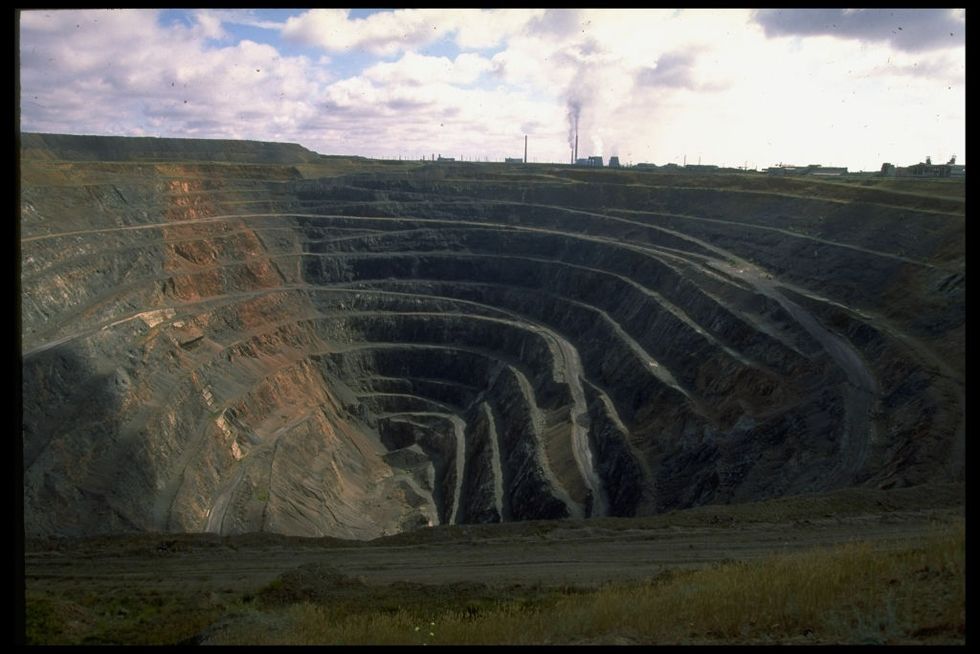
Doing so will require Democrats to embrace certain positions that are at odds with recent party orthodoxy. First, they must accept the basic math that both the U.S. and the world will need new mine production and support incentives and regulatory reform for new critical minerals projects, not just recycling, re-mining, and substitution. And second, they must admit that mining projects in the U.S. and in democratically-governed partner countries offer a far better foundation for achieving high environmental and social standards than the currently dominant production routes for many raw materials today.
A recent hearing question from Texas Representative Christian Menefee hints at the risks of overly narrow minerals policy: “Should byproduct recovery be the first priority before we open up a single new mine?" While advocacy organizations and academic researchers have lately argued that operating mines dig up enough minerals to meet U.S. needs yet are currently neglecting to recover them, such analyses only consider the theoretical potential of extracting every element present in mined rock, not technical feasibility. Feasible recovery will be the exception, not the rule. Efforts to produce lithium as a byproduct from a copper-gold deposit might confront concentrations of under 20 parts per million, relative to concentrations at U.S. lithium mines currently under development that range from around 850 to 2,000 parts per million. Compared to cobalt concentrations of 2,400 parts per million at the Jervois Idaho Cobalt mine, Alaska’s large Red Dog zinc mine might boast 39 to 149 parts per million. For many elements, recovery would require new, first-of-a-kind extraction equipment consuming added water, energy, and chemical reagents — akin to burning a barn to fry an egg.
Recycling, too, is a meaningful category of solutions but ultimately limited. For instance, improved batteries and solar panels with longer service lives delay the point at which significant flows of materials become available for recycling. An increasing number of batteries and solar modules may also be redirected towards second-life use markets — electric vehicle batteries repurposed as electric grid storage assets, for example — diverting even more materials from recycling facilities.
To put such constraints into numbers, growing grid storage battery cell manufacturing capacity in the U.S. may surpass 96 gigawatt-hours by the end of this year, requiring over 17,000 tons of lithium content — alone equivalent to half of all worldwide lithium consumption in 2015. China’s tightening of rare earth export restrictions last year forced one of Ford’s auto plants to pause operations, and the shift to electric vehicles will only drive U.S. rare earths demand higher. The U.S. alone produced around 1 million EVs last year, relative to total auto manufacturing of 12 million to 14 million vehicles per year.
Even modest domestic manufacturing goals of 10 gigawatts of wind turbines and 2 million electric vehicles per year would require at least 100 tons of dysprosium and praseodymium, heavy rare earth elements that the U.S. is only just beginning to produce from recycling efforts and its sole operating mine. Globally, the International Energy Agency estimates that successful recycling expansion could avert around 5% to 30% of new mining activity, depending on the commodity.
The math is unforgiving. We need more minerals, and we need them soon.
For years, progressives have critiqued current U.S. mining regulations as antiquated and inadequate, insisting that standards governing existing mines expose marginalized communities to unacceptable impacts. While understandably reflecting past harms inflicted by mining prior to the enactment of stronger laws and regulations in the 1970s and 1980s, such a position exposes lawmakers to an uncomfortable contradiction: If modern mining and refining are structurally problematic industries, then not only must U.S. lawmakers advocate for improved industry standards domestically, logic dictates that they also use trade policies and international frameworks to penalize the unjust economic advantages benefiting irresponsible producers globally. The sum total of such actions might well slow the country’s transition to clean energy as opposed to speeding it.
Activist narratives that U.S. mining regulations offer the mining industry a smash-and-grab free-for-all obviously conflict with the reality that domestic mining has long been viewed as borderline uninvestible, with the U.S. seeing a 70% decrease in the number of active metal mines over the last 40 years. Insisting that more public engagement, extracting higher royalties to fund community projects, and quartering off certain areas with mineral potential for conservation will speed U.S. mining projects by neutralizing community opposition must consider how such high-cost projects can survive in a global market. China produces 10 times more graphite, rare earths, and polysilicon than the next largest producing country — and not by excelling at public engagement and community benefits-sharing. Continuing to indulge such domestic-only remonstrations will solve none of the nation’s supply challenges.
Meanwhile, efforts by both the Trump and Biden administrations are already driving progress towards improved recycling and utilization of unconventional wastes and resources. Biden’s Infrastructure Investment and Jobs Act funded numerous programs to produce new critical minerals without new mining, including Department of Energy grants to equip operating facilities with byproduct recovery systems, new mapping programs from the United States Geological Survey to locate historic mines with viable levels of critical minerals in abandoned wastes, and a Rare Earth Elements Demonstration Facility program at the Department of Energy to prioritize the use of waste as a feedstock. The Trump administration has continued to issue notices for IIJA-funded, waste resource, and recycling-focused opportunities into 2026. In short, maximization of byproduct potential, recycling, and remining is already established bipartisan policy.
Above all, Democrats must capitalize on the chance to start alleviating national critical mineral constraints now, in the middle of a Trump presidency, to position the U.S. industrial base to produce impressive economic and technological results in 2028 and beyond. Trump will depart the Oval Office in less than three years, whereas U.S. critical minerals strategy must play out over the next five to 10. Passing up promising opportunities today in the name of scoring short-term political points serves neither the nation’s best interests nor those of the Democratic Party.
Over the next two years, critical minerals policy offers rare bipartisan opportunities to supercharge innovation and build projects that will not only produce strategic materials but also solutions for cleaner industrial processes. In most cases, new U.S. production will already be less carbon-intensive than the global average. Meanwhile, federal policy support will foster U.S. process engineering know-how that might ultimately drive long-term breakthroughs in transformative cleaner solutions.
All of that said, policymakers must also balance environmental and innovation ambitions against realistic expectations and resist the temptation to chase only fully clean projects. For now, truly zero-carbon metals produced using green hydrogen or other novel techniques remain dramatically more expensive than metals produced with the most cost-efficient mix of energy inputs and feedstocks. Depending on the sector, domestic industries that have first achieved scale and rebuilt domestic expertise may position America better for catalyzing such shifts.
Cost competitive industries, after all, are also key for advancing Democratic priorities. More favorable costs for U.S.-produced critical materials and increasingly secure upstream secure supply chains will help make U.S.-manufactured technologies such as electric vehicles, solar modules, and electrolyzers more competitive. Responsible production capacity that is operating at scale will increase bargaining power for pressuring irresponsible producers overseas to reform, while creating new markets for American raw materials among principled partners and corporate offtakers.
Miners and metallurgists deserve an equal place of honor in the energy transition economy alongside rooftop solar installers and electricians, and such heavy industry workers can help rebuild a stronger U.S. labor movement.
But the risk of squandering such long-term opportunities is real. During the Biden administration, progressives reflexively fielded proposals that would add regulatory burdens and make mining more difficult — proposals which largely went nowhere. Meanwhile, the bipartisan Mining Regulatory Clarity Act — one of the few specific regulatory reforms proposed for the mining sector to date — still has not passed since its introduction in 2023. The current version is stalled over the inclusion of provisions that would redirect mining administrative fees to cleaning up abandoned mines. Remediating legacy sites is an important federal government obligation, but the quid pro quo calculus of extracting concessions for simple regulatory reforms both complicates their passage while also procrastinating standalone measures to address abandoned mines.
Certainly, the current political moment could not be more charged. Another recent House Natural Resources hearing on oversight ended abruptly after Oregon Representative Maxine Dexter moved to subpoena Donald Trump, Jr. over concerns that administration financial support favored mineral companies in which he was invested. This episode highlights the challenge for Democrats — holding the federal government accountable to the U.S. public while simultaneously working to address the country’s critical mineral priorities.
This is less complicated than it sounds. Lawmakers on both sides of the aisle can agree on strong oversight provisions to ensure that programs prioritize the nation’s interests and achieve political longevity. Democrats should therefore lean in to their desired guardrails, be they mandatory public transparency, reviews of company history and project feasibility, or conflict-of-interest restrictions. Stronger congressional oversight and robust environmental and human rights safeguards are worthy Democratic goals, but advancing them requires that Congress do its job and legislate.