Life is a constant process of dying — even for lakes. For Lake Kanasatka, a 350-acre body of water born when the glaciers raked their retreat into the bedrock of what is now New Hampshire, everything nearly came to an end in 2023.
The first sign that something was wrong appeared in 2009. That November, the state’s Department of Environmental Services noticed a “green scum” in the water near Camp Quinebarge Beach. Over the next few years, the DES continued to dutifully report the emergence of “greenish slime” along the shoreline until, in August 2020, the concentration reached a level that prompted the lake’s first warning of a toxic algae bloom.
In recent years, many lake-loving Americans have added that term — “toxic algae bloom” — to their summer lexicon. It’s also a bit of a misnomer: the culprit, cyanobacteria, are not technically algae but ubiquitous single-celled microorganisms, their photosynthetic chlorophyll and an additional pigment giving them the blue-green appearance suggested by their name. “They’ve been around forever,” Amanda McQuaid, a water quality ecotoxicologist at the University of New Hampshire and director of the school’s citizen-science lake monitoring program, told me. “I personally think they’re probably on Mars. I think they’re everywhere. They’re indestructible.”
Cyanobacteria are present across habitats, from the Sahara dust in Africa to the shelves of our grocery stores to the Lincoln Memorial Reflecting Pool in Washington, D.C. (The Trump Administration can attest firsthand to their indestructibility.) What transforms a healthy concentration of cyanobacteria in a lake into a bloom is access to nutrients — specifically phosphorus, which enters lakes via runoff from fertilized lawns or farms, leaky septic tanks, pet waste, and eroding shorelines. As lakeside living has increased in desirability and housing development has encroached on natural bodies of water, blooms have consequently followed.
Though the Centers for Disease Control and Prevention does not keep an official count of cyanobacterial blooms, a conservative estimate puts the number of advisories issued nationally in the hundreds, and more likely in the thousands, every year. Cyanobacteria are a class of organisms with thousands of species, like plants, but many produce toxins as part of their metabolic processes. These toxins are numerous and include microcystin, which affects the liver and can cause skin irritation and gastrointestinal problems upon contact with swimmers and waders, as well as anatoxin, a neurotoxin that can kill a dog within minutes of it lapping up contaminated lake water on a hot summer day.
Most alarming, though, is that many cyanobacteria also produce the neurotoxin BMAA, which can become airborne and which researchers have connected to neurodegenerative diseases in humans. According to another study by Dartmouth-Hitchcock Medical Center neurologist Elijah Stommel, people living within a half-mile radius of cyanobacterially contaminated lakes had a 2.3-times greater risk of developing the devastating and terminal nervous system disease ALS compared to the rest of the population. In the case of one contaminated lake near Enfield, New Hampshire, the incidence of sporadic ALS was 10 to 25 times above what was to be expected. And in a state like New Hampshire, which was gouged by the glacial retreat at the end of the last ice age, nearly 80% of residents live within half a mile of some body of water.
Scuzzy green water occurs in every state in the country. Nationally, the Environmental Protection Agency detected the telltale microcystin toxin in 39% of U.S. lakes in a 2012 survey; by the EPA’s most recent survey, in 2022, that number had risen to 50%. Still, in places like New Hampshire, cyanobacterial blooms are a relatively new phenomenon, having recently intensified due to increased development and climate change. “People are not used to going to a lake in New Hampshire and not being able to see through the water,” McQuaid said. “So if things are green or scummy or turbid, they’re like, ‘What is happening?’”
Between 2001 and 2008, Andrea LaMoreaux worked for the state’s Department of Environmental Services, running a water-quality testing program. She told me that during that time, she saw only one lake with a cyanobacterial bloom. But by 2015, blooms had become a topic of conversation in the state, and by 2023, just three years after its first toxic algae advisory, Lake Kanasatka was in a full-blown crisis.
“This is a lake that had a reputation for always being pristine — a very quiet lake,” state Representative Rosemarie Rung, who represents nearby Merrimack and owns a seasonal cottage on Kanasatka, told me. But 2023 was markedly different: the bloom was bad enough to dissuade recreation for weeks on end — in the “Live Free or Die” state, the DES doesn’t close beaches, even due to blooms. One woman described the feeling of her lips going numb while kayaking.
Kanasatka had crossed a tipping point. As part of a lake’s natural aging process, organic debris settles on its floor and decomposes, eventually consuming all the oxygen in the water. When that happens, phosphorus normally bound to iron in the sediment is released into the water — where it in turn provides extra nutrients for cyanobacteria. While human-caused inputs like runoff might previously have limited the cyanobacteria, lake anoxia offers them a firehose of nutrients to feast upon.
The tipping point is around 10 parts per billion of phosphorus in the water; in Kanasatka in 2023, there was around 200 parts per billion. “All of a sudden, [Kanasatka residents] woke up one morning and literally almost overnight, it looked like someone had dumped Mountain Dew into the lake,” LaMoreaux, the former DES employee who now serves as the president of NH Lakes, a statewide nonprofit lake conservation and advocacy group, told me.
Left untreated, Kanasatka would have slowly suffocated, with dead cyanobacteria adding to the decomposing organic matter at the bottom of the lake and blocking light to lake plants, making the anoxia worse. But there is one reliable way to treat a cyanobacteria bloom: with alum.
Phosphorus breaks apart from iron in the absence of oxygen, but it binds permanently with aluminum. An alum treatment, then, involves coating the lake bottom with an aluminum-heavy chemical concoction and is one of the only ways out of the slimy green cyanobacterial feedback loop. But so-called “biomanipulation” also has unknown downsides — including potentially spurring cyanobacteria to release more toxins as they rupture — and it isn’t cheap, either, running about $500,000 in the case of Lake Kanasatka. Rung, who helped create a $2 million cyanobacteria mitigation fund to support alum treatments across the state, told me it helped with Kanasatka’s treatment and “another alum treatment for a lake in Littleton, New Hampshire, which also had suffered very severe chronic blooms. But then the money ran out.”
But while Kanasatka today is the state’s poster child for algae blooms — it appears healthy two years out from its treatment, although alum only lasts about two or three decades — it wasn’t a one-off, either. During the COVID-19 pandemic, many people moved to New Hampshire’s lakes to work remotely, fertilizing new lawns and cutting down shoreline brush to better enjoy their views in the process. That’s sped up the encroachment of cyanobacteria across one of the country’s healthiest lake systems.
There is another powerful factor driving the blooms, and it is out of New Hampshirites’ hands alone. Climate change supercharges cyanobacteria blooms, with a strong correlation between hotter, sunnier summers and high concentrations of the warm-water-loving, photosynthetic microorganisms. Even more crucially in a state like New Hampshire, milder winters mean fewer weeks of ice cover on its lakes — cover that essentially acts as a “reset” by depriving cyanobacteria of sunlight. And heavier rains and flooding in New Hampshire, phenomena that greater water retention in a warmer atmosphere makes possible, mean greater runoff into the lakes and a firehose of food for the waiting microorganisms.
Unchecked, cyanobacteria pose a threat not just to human and animal life, but to the lives of recreation-based towns and economies. “I know anecdotally that people who have rented a lake house for a week or so, and there’s been a bloom, have been very, very angry,” Rung, the state representative, said. “They’ve tried to get out of that rental and get their money back, and there has not been guidance on what to do. Pretty much, they’re out of luck.”
But political will and funding challenges are real — Rung tried and failed to create a lake-lovers vanity plate to help pay for future mitigation treatments, and a recent deadline to create a task force to identify other funding sources expired with no progress.
“People don’t even want to say the word climate change in New Hampshire,” Rung told me in frustration. “Even the terminology triggers people, but it can’t be ignored. We’re just a small state. We don’t have a big population. We can’t do anything about it. But yet, we’re suffering the consequences.”









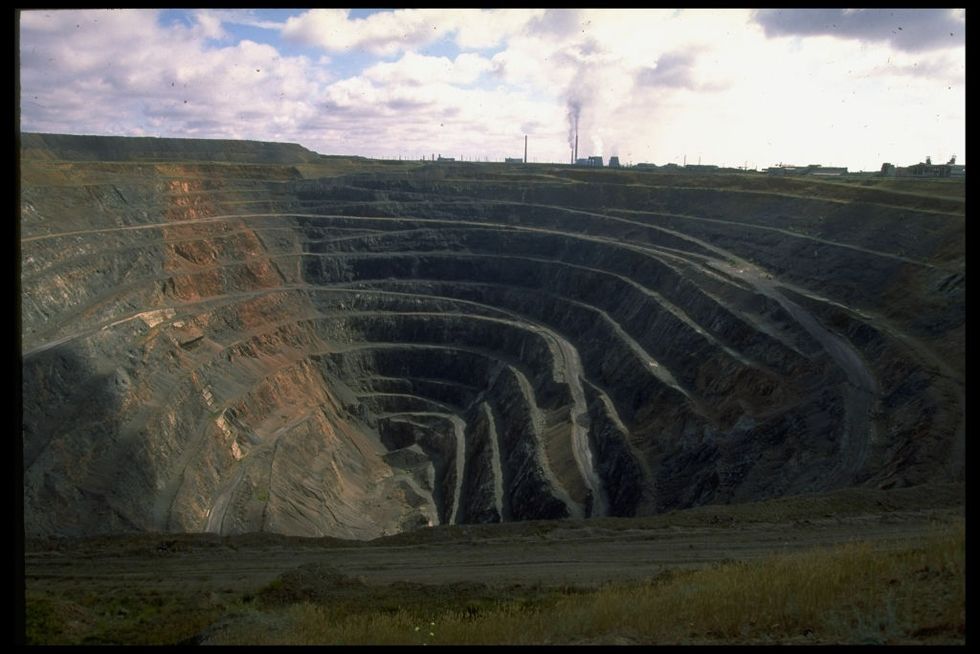 An old uranium mine in Stepnogorsk, Kazakhstan. Robert Nickelsberg/Getty Images
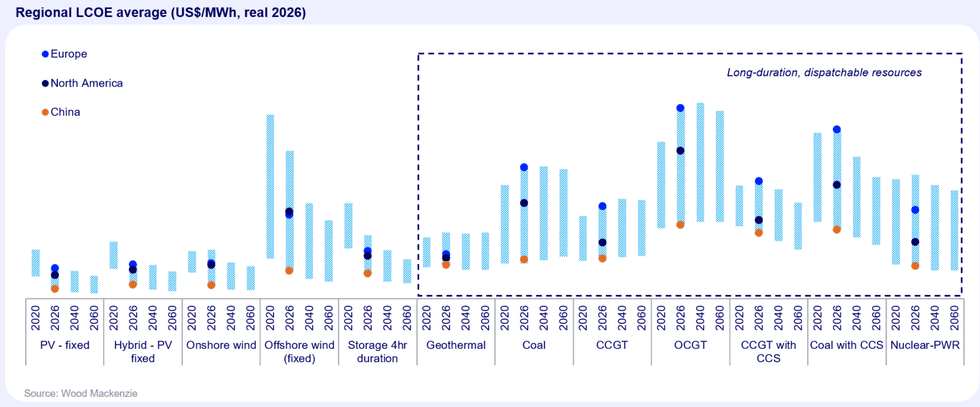 Four-hour stage compares very well to open-cycle gas turbines, labeled OCGT. Wood Mackenzie