Let’s start with the data center dividend proposal. Walk my readers through it.
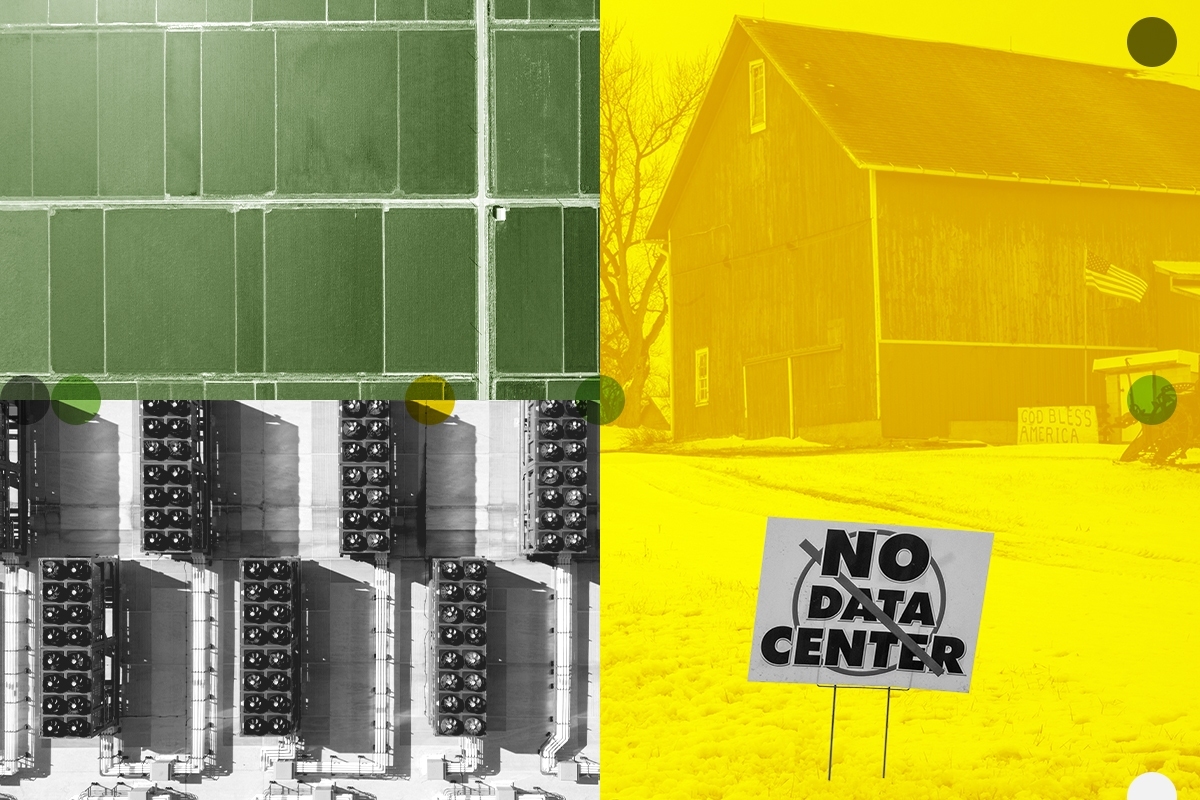
Data center dividends came from the idea that, ideally in the AI revolution, we want all Americans to benefit. Especially rural Americans. You look at the landscape today, the majority of AI data centers are being built in rural America. It’s critical they’ll benefit from the massive wealth AI will unlock.
There’s lots of ways to make that happen. People point to the jobs AI data centers will build out, for example. But with data center dividends, we take the logic of the Alaska Permanent Fund and we apply it to America’s rural counties, which are sitting on a proverbial gold mine right now but lack any kind of public mechanism allowing them to benefit from that in a maximal way.
If you look at the tax revenue these data centers create, which is astronomical, how do we distribute this tax revenue in a way where it has the most tangible impact on the families living there? We believe data center dividends are the best way to do that – after allocating money for schools, public safety, and infrastructure, it allows these counties with tens of millions of dollars left over to distribute them as they see fit. They should distribute that money to the men and women who make those data centers happen in the first place.
The most effective form of a dividend would take a direct payment: a cash payment, a physical check, a direct deposit. Or the form of credits paying back property taxes, utility bills, an endowment for scholarships. There’s a number of different forms this can take.
Hopefully this gets the conversation going about how we can make these work for everybody.
Who do you want to see set up this dividend mechanism? How’s your approach to implementation?
The report is addressed to county commissioners. I’m thinking of commissioners who represent both sides of the political spectrum facing this huge backlash. Many of them want to do good by their communities and their voters, even if it means doing a data center, in places where it’s difficult to explain right now. Dividends make this indisputably clear.
I tried to put myself in the shoes of an enterprising county commissioner who sees the merits in the data center buildout and wants to break out of the political storm. It’s important to note data centers can be a huge economic boon for communities, in ways that can impact lives positively.
Have any communities – counties, as you noted – taken this idea up yet? Are there any models for this proposal?
The best analogue is West Feliciana, Louisiana, which is the case study we feature. West Feliciana made an agreement with a data center developer where in lieu of taxes, they make direct payments of about $90 million a year to the parish. That triples the community’s tax budget every year. It leaves ample room not only for essential services but dividends afterwards. Louisiana then passed a law – Act 434 – that allowed West Feliciana to remit some of those payments to residents as a tax credit. This bill first provided the opportunity for the parish to even remit those payments as cash, but it was changed in the legislature to make it a credit. That’s the closest we’ve gotten so far.
As far as reaching out to individual counties, we’re a think tank. We put ideas into the universe. We haven’t had anyone reach out to us since the publication of the report so far but we’re hoping they will.
Your report does lay out how there’s a bottleneck in development and this could help with easing it. Do you see an impetus to put ideas like the dividend out there right now, in light of the increased data center scrutiny in this year’s midterms?
Our publication is irrespective of the midterms. But it is tied to the fact that a bottleneck facing the data center buildout includes it becoming a politicized issue. We’re of the belief these projects shouldn't be political at all. One way to break through the noise is by showing how they can benefit those involved in construction and residents who live there. Data centers are critical infrastructure; other forms of critical infrastructure aren’t being politicized. Our efforts are to demonstrate how these shouldn’t be political.
When it comes to the future of AI data center regulation, this proposal is obviously geared towards incentivizing a resolution to the bottleneck through using resources produced from data centers – namely, new investment.
Where does your organization stand on the increased push for environmental or siting regulation on AI data centers?
I’m not familiar with what you might be referring to there.
I mean, there’s all kinds of proposals at the federal level and in states for everything from being required to pay for infrastructure upgrades to being required to use closed-loop cooling to siting restrictions, like temporary moratoria.
What I’m asking is, what else do you as an organization believe when it comes to regulating AI data center development at the federal level? State level?
We believe data centers should work for the communities where they’re being built. That’s important. So the concept of BYOP – Bring Your Own Power – we very much support that idea. We think the Ratepayer Protection Pledge is a great proposal because ultimately we want data centers, with them being critical infrastructure, to not only strengthen our national security but strengthen the communities where they’re being built.
Some states are rejecting data centers. We think that’s a mistake because it's something that’ll ultimately short-change the people who live there. For the states that do decide to build data centers, it's up to them what regulations make data centers more sustainable over time.
There’s increased public discussion for policy on AI development – as an organization, do you see any role in the federal government making policy here with a national data center law?
We think AI will be key to America’s prosperity over the long-term. We have concerns about the regulation of open-source artificial intelligence; bitcoin is a form of open-source software and open-source money. We believe intelligence should be something available to all Americans. That’s our concern with talk about regulating AI right now, it feels like a ploy for regulatory capture.
But what about national policy on AI data centers? Does your think tank support the national legislature doing a federal data center bill or is that something best for localities or states?
It depends on the bill. Are you talking about Sen. Bernie Sanders’ national moratorium?