Often the biggest impediment to building renewable energy projects or data center infrastructure isn’t getting government approvals, it’s overcoming local opposition. When it comes to the transmission that connects energy to the grid, however, companies and politicians of all stripes are used to being most concerned about those at the top – the politicians and regulators at every level who can’t seem to get their acts together.
What will happen when the fiery fights on each end of the wire meet the broken, unplanned spaghetti monster of grid development our country struggles with today? Nothing great.
The transmission fights of the data center boom have only just begun. Utilities will have to spend lots of money on getting energy from Point A to Point B – at least $500 billion over the next five years, to be precise. That’s according to a survey of earnings information published by think tank Power Lines on Tuesday, which found roughly half of all utility infrastructure spending will go toward the grid.
But big wires aren’t very popular. When Heatmap polled various types of energy projects last September, we found that self-identified Democrats and Republicans were mostly neutral on large-scale power lines. Independent voters, though? Transmission was their second least preferred technology, ranking below only coal power.
Making matters far more complex, grid planning is spread out across decision-makers. At the regional level, governance is split into 10 areas overseen by regional transmission organizations, known as RTOs, or independent system operators, known as ISOs. RTOs and ISOs plan transmission projects, often proposing infrastructure to keep the grid resilient and functional. These bodies are also tasked with planning the future of their own grids, or at least they are supposed to – many observers have decried RTOs and ISOs as outmoded and slow to respond. Utilities and electricity co-ops also do this planning at various scales. And each of these bodies must navigate federal regulators and permitting processes, utility commissions for each state they touch, on top of the usual raft of local authorities.
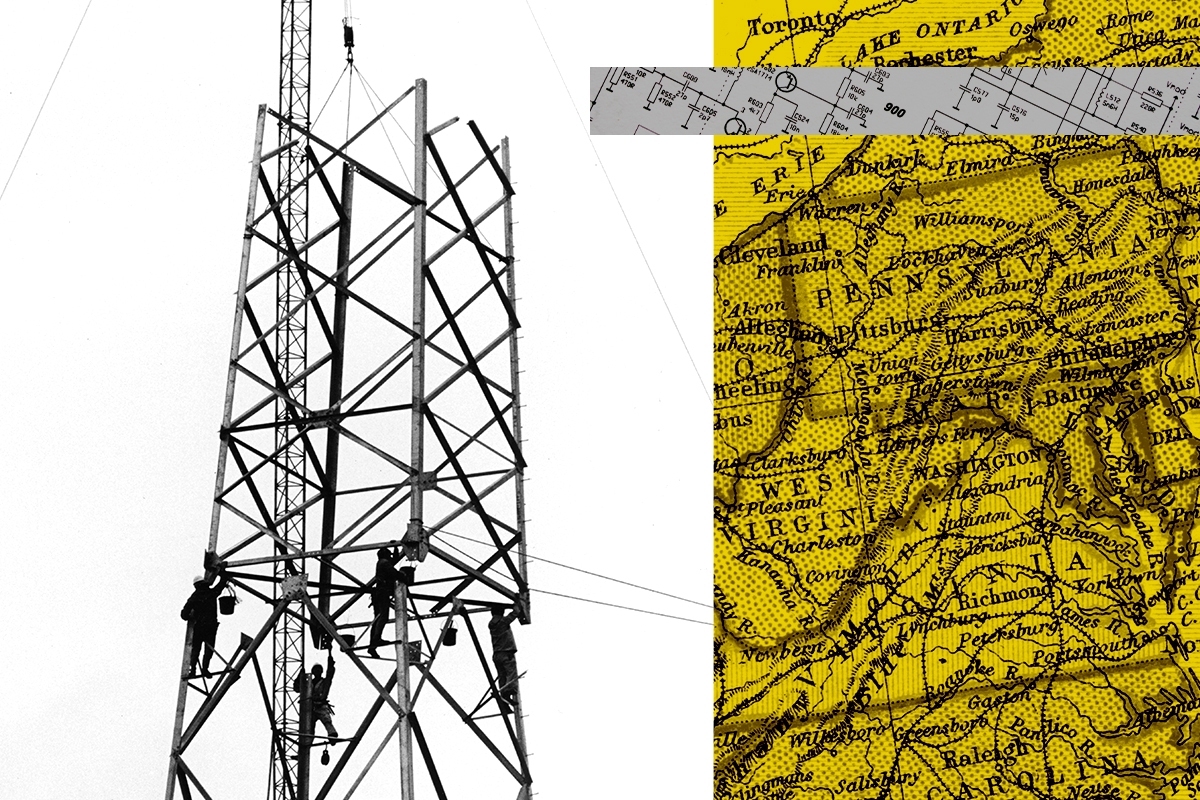
The mid-Atlantic region is overseen by PJM Interconnection, a body now under pressure from state governors in the territory to ensure the data center boom doesn’t unnecessarily drive up costs for consumers. The irony, though, is that these governors are going to be under incredible pressure to have their states act against individual transmission projects in ways that will eventually undercut affordability.
Virginia, for instance – known now as Data Center Alley – is flanked by states that are politically diverse. West Virginia is now a Republican stronghold, but was long a Democratic bastion. Maryland had a Republican governor only a few years ago. Virginia and Pennsylvania regularly change party control. These dynamics are among the many drivers behind the opposition against the Piedmont Reliability Project, which would run from a nuclear plant in Pennsylvania to northern Virginia, cutting across spans of Maryland farmland ripe for land use conflict. The timeline for this project is currently unclear due to administrative delays.
Another major fight is brewing with NextEra’s Mid-Atlantic Resiliency Link, or MARL project. Spanning four states – and therefore four utility commissions – the MARL was approved by PJM Interconnection to meet rising electricity demand across West Virginia, Virginia, Maryland and Pennsylvania. It still requires approval from each state utility commission, however. Potentially affected residents in West Virginia are hopping mad about the project, and state Democratic lawmakers are urging the utility commission to reject it.
In West Virginia, as well as Virginia and Maryland, NextEra has applied for a certificate of public convenience and necessity to build the MARL project, a permit that opponents have claimed would grant it the authority to exercise eminent domain. (NextEra has said it will do what it can to work well with landowners. The company did not respond to a request for comment.)
“The biggest problem facing transmission is that there’s so many problems facing transmission,” said Liza Reed, director of climate and energy at the Niskanen Center, a policy think tank. “You have multiple layers of approval you have to go through for a line that is going to provide broader benefits in reliability and resilience across the system.”
Hyperlocal fracases certainly do matter. Reed explained to me that “often folks who are approving the line at the state or local level are looking at the benefits they’re receiving – and that’s one of the barriers transmission can have.” That is, when one state utility commission looks at a power line project, they’re essentially forced to evaluate the costs and benefits from just a portion of it.
She pointed to the example of a Transource line proposed by PJM almost 10 years ago to send excess capacity from Pennsylvania to Maryland. It wasn’t delayed by protests over the line itself – the Pennsylvania Public Utilities Commission opposed the project because it thought the result would be net higher electricity bills for folks in the Keystone State. That’s despite whatever benefits would come from selling the electricity to Maryland and consumer benefits for their southern neighbors. The lesson: Whoever feels they’re getting the raw end of the line will likely try to stop it, and there’s little to nothing anyone else can do to stop them.
These hyperlocal fears about projects with broader regional benefits can be easy targets for conservation-focused environmental advocates. Not only could they take your land, the argument goes, they’re also branching out to states with dirtier forms of energy that could pollute your air.
“We do need more energy infrastructure to move renewable energy,” said Julie Bolthouse, director of land use for the Virginia conservation group Piedmont Environmental Council, after I asked her why she’s opposing lots of the transmission in Virginia. “This is pulling away from that investment. This is eating up all of our utility funding. All of our money is going to these massive transmission lines to give this incredible amount of power to data centers in Virginia when it could be used to invest in solar, to invest in transmission for renewables we can use. Instead it’s delivering gas and coal from West Virginia and the Ohio River Valley.”
Daniel Palken of Arnold Ventures, who previously worked on major pieces of transmission reform legislation in the U.S. Senate, said when asked if local opposition was a bigger problem than macro permitting issues: “I do not think local opposition is the main thing holding up transmission.”
But then he texted me to clarify. “What’s unique about transmission is that in order for local opposition to even matter, there has to be a functional planning process that gets transmission lines to the starting line. And right now, only about half the country has functional regional planning, and none of the country has functional interregional planning.”
It’s challenging to fathom a solution to such a fragmented, nauseating puzzle. One solution could be in Congress, where climate hawks and transmission reform champions want to empower the Federal Energy Regulatory Commission to have primacy over transmission line approvals, as it has over gas pipelines. This would at the very least contain any conflicts over transmission lines to one deciding body.
“It’s an old saw: Depending on the issue, I’ll tell you that I’m supportive of states’ rights,” Representative Sean Casten told me last December. “[I]t makes no sense that if you want to build a gas pipeline across multiple states in the U.S., you go to FERC and they are the sole permitting authority and they decide whether or not you get a permit. If you go to the same corridor and build an electric transmission that has less to worry about because there’s no chance of leaks, you have a different permitting body every time you cross a state line.”
Another solution could come from the tech sector thinking fast on its feet. Google for example is investing in “advanced” transmission projects like reconductoring, which the company says will allow it to increase the capacity of existing power lines. Microsoft is also experimenting with smaller superconductor lines they claim deliver the same amount of power than traditional wires.
But this space is evolving and in its infancy. “Getting into the business of transmission development is very complicated and takes a lot of time. That’s why we’ve seen data centers trying a lot of different tactics,” Reed said. “I think there’s a lot of interest, but turning that into specific projects and solutions is still to come. I think it’s also made harder by how highly local these decisions are.”