You’re out of free articles.
This Halloween, get 20% off using code ADVANCED
Log in
To continue reading, log in to your account.
Create a Free Account
To unlock more free articles, please create a free account.
Sign In or Create an Account.
By continuing, you agree to the Terms of Service and acknowledge our Privacy Policy
Welcome to Heatmap
Thank you for registering with Heatmap. Climate change is one of the greatest challenges of our lives, a force reshaping our economy, our politics, and our culture. We hope to be your trusted, friendly, and insightful guide to that transformation. Please enjoy your free articles. You can check your profile here .
subscribe to get Unlimited access
Offer for a Heatmap News Unlimited Access subscription; please note that your subscription will renew automatically unless you cancel prior to renewal. Cancellation takes effect at the end of your current billing period. We will let you know in advance of any price changes. Taxes may apply. Offer terms are subject to change.
Subscribe to get unlimited Access
Hey, you are out of free articles but you are only a few clicks away from full access. Subscribe below and take advantage of our introductory offer.
subscribe to get Unlimited access
Offer for a Heatmap News Unlimited Access subscription; please note that your subscription will renew automatically unless you cancel prior to renewal. Cancellation takes effect at the end of your current billing period. We will let you know in advance of any price changes. Taxes may apply. Offer terms are subject to change.
Create Your Account
Please Enter Your Password
Forgot your password?
Please enter the email address you use for your account so we can send you a link to reset your password:
That almost certainly means another rate hike in December.

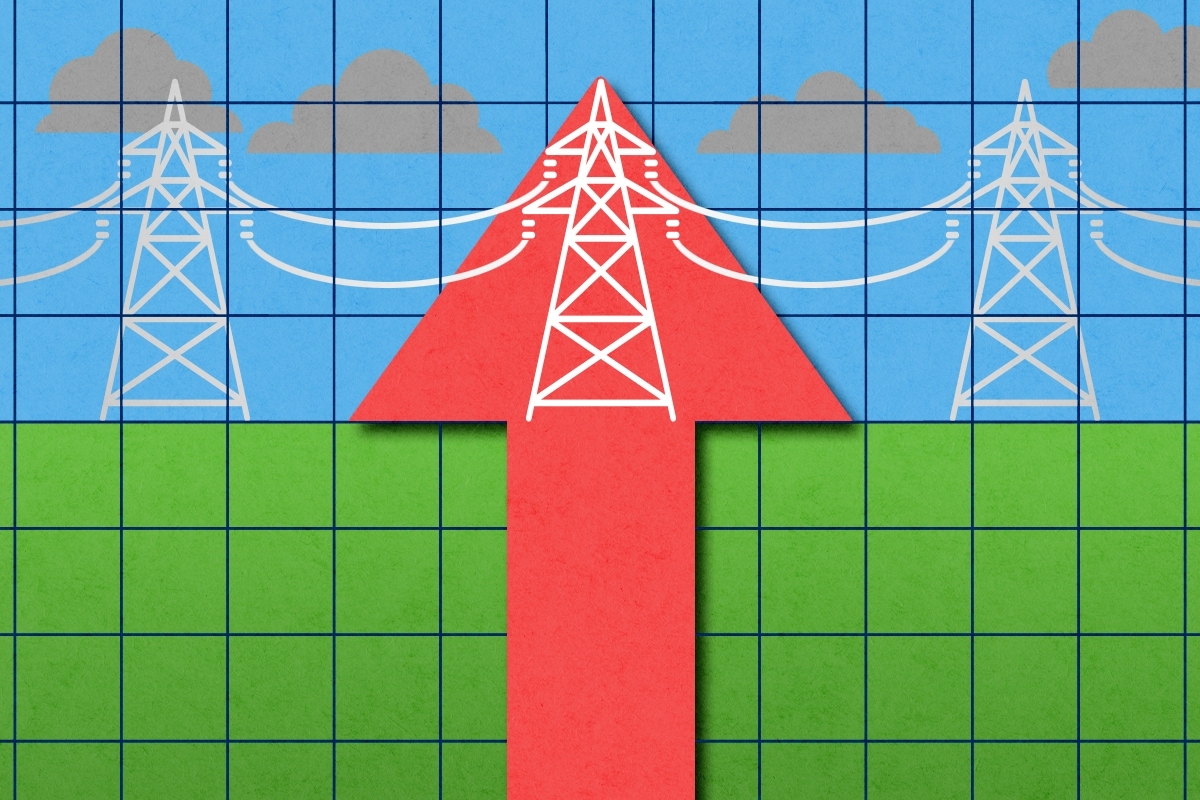
Just about everything is getting more expensive — and it’s doing so faster than expected.
Overall prices rose 0.4% in October from September, according to the Bureau of Labor Statistics, compared to the 0.3% analysts were expecting. Helping lead the way was energy, which got 0.7% more expensive overall in October, thanks largely to gasoline (a 1% hike), electricity (a 0.9% hike), and fuel oil (2%).
Because of the government shutdown, the BLS did not have full year-over-year price change data other than for gasoline, which was 37% more expensive now in October of this year compared to last year. Meanwhile, in Maine specifically, heating oil prices rose a shocking 80% from last October to this one.
Electricity prices went up from 18.5 cents per kilowatt-hour in October of last year to 19.9 cents this year, according to preliminary data from Heatmap and MIT’s Electricity Price Hub. That’s a jump of over 7.5%, though one largely due to a change in the timing of a bill credit in California. Stripping out that change, the year over year price hike was around 3.8%.
Economy-wide prices are up just over 4% compared to this time last year, according to estimates from Bloomberg. The October price jump surpassed expectations even after stripping out changes to the price of food and energy, leading investors to conclude that the Federal Reserve will likely raise interest rates in December. That would follow a hike in September — the first since 2023 — and a decision in October to leave rates unchanged.
While newly installed Fed Chair Kevin Warsh has been averse to previewing his own expectations for future rate hikes, other members of the Federal Open Market Committee have been less reticent.
Speaking before the release of the inflation numbers Tuesday, Chris Waller, a member of the Federal Reserve board of governors, said that if core inflation had risen more than 0.2% from September to October, he was open to a half-point increase instead of the quarter-point many analysts expected.
Lorie Logan, the president of the Federal Reserve Bank of Dallas and a member of the Fed’s rate-setting committee, said in a speech Tuesday that interest rates were “adding to inflationary pressures,” and that rate hikes would likely be necessary.
The yield on the 10-year Treasury bond, a common benchmark for borrowing costs throughout the economy, rose to right around 5% Tuesday.
“We remain confident that they will raise rates again” by at least a quarter point, “and unless there is significant progress in negotiations with Iran and a consequential decline in energy prices, they will position themselves to raise rates again as soon as the next meeting or in March 2027,” Jefferies analyst Thomas Simons wrote in a note to clients Tuesday.
The economic and monetary policy situation has put the renewables energy industry into something of a pickle. High electricity prices are generally a boon to anyone selling power, including wind and solar developers, while higher interest rates are a burden to anyone who has to finish a big construction project funded with borrowed money before generating any revenue, like wind and solar developers.
Higher inflation also affects developers as input costs rise for projects that can take months or years to complete. And when interest rates rise, the value of future payments from electricity sales falls.
That’s what happened to the Danish wind developer Orsted, who reported a $500 million impairment on its U.S. wind operations “as a result of the 75 basis points increase of the long-dated U.S. interest rates during the third quarter,” its chief financial officer Trond Westlie said on the company’s November 5 earnings call.
The residential solar company Sunrun, which also reported earnings last week, illustrated the peril and opportunities of higher rates and higher prices.
“To the extent interest rates are sustained at current levels, our capital costs would increase from levels realized throughout 2026,” Danny Abajian, chief financial officer of Sunrun, said on the company’s earnings call. “We expect to increase prices further in 2027 as utility rates continue to rise.”

This Halloween, get 20% off using code ADVANCED
Log in
To continue reading, log in to your account.
Create a Free Account
To unlock more free articles, please create a free account.
Members wanted to seize the moment at a post-midterms Heatmap event in Washington, D.C.
Key House Democrats batted back against waiting until the next Congress to do a major permitting reform bill.
Speaking at a Heatmap event in downtown D.C. on Tuesday morning, multiple House Democrats — Representatives Nikki Budzinski of Illinois and George Whitesides and Scott Peters, both of California — all threw cold water on the idea that Democrats should wait until next year, when they will have full control over both houses of Congress, to advance a permitting bill like the Bipartisan American Affordability and Jobs Act, a.k.a. BAAJA.
“I disagree with that,” Budzinski, who is also vice-chair for policy for the New Democratic Coalition, a large bloc of Democrats, told me. Under the incoming Democratic majority, she said, it may be more challenging to convince Republicans to jump the fence to get to the 60 votes needed in the Senate.
“On these big issues, the question is, do we want to legislate for legislation to become law? Or legislate to talk about issues?” she asked. “I’m done after the last two years of doing messaging bills on the floor. I think this is a very unique opportunity.”
This push for a pause has come most forcefully from the likely incoming chair of the House Natural Resources Committee, Jared Huffman, who outlined his reasoning in an exclusive interview with me in October. Likely incoming Senate Environment and Public Works Chair Jeff Merkley echoed Huffman’s view ahead of the Senate vote to proceed on the permitting bill Monday night, saying this should be taken up by the next Congress, instead. The Senate motion succeeded on a vote of 73 to 25.
Both I and Heatmap founding editor Robinson Meyer asked lawmakers at the Heatmap event what they thought of Huffman and Merkley’s argument. All of them were quite bearish on the idea of a future deal between a Democratic Congress and Trump White House.
Peters went the furthest, summing up his view on the argument with two words: “That’s hokum.”
“That’s just not true,” he told me. “There’s no reason to expect that Jeff Merkley and Jared Huffman are going to do a better deal. I think the more likely thing is that they’re just not going to do a deal.” Instead, he advocated for using “the leverage we’ve just got” to advance the deal already on the table.
“Trump is a two-year problem,” he added. “We’re trying to solve a 30-year problem.”
Whitesides called Huffman, a fellow Californian, “a good friend and a very smart guy.” Of Huffman’s position on permitting, however, “I’m not totally sure that’s true,” he said
“The concern that people have is primarily around, can we trust this administration with anything, and how much of [the] decisions do you make [about] the next two years versus the next 20 years?” Whitesides told Rob. “And I think Senators [Sheldon] Whitehouse and [Martin] Heinrich are people that I trust on a fundamental level on issues of climate, of environment, of smart permitting reform.”
Heinrich, who spoke with Rob at Tuesday’s event, also attacked the notion of waiting, saying that he’s seen this suggestion fail “over and over again.” “When is that a real thing? Give me a break. We should do a lot more in the next Congress. Let’s get this as the floor and then let’s raise the floor everywhere we possibly can,” he said.
Heinrich noted a bizarre event the previous night, just as the Senate was preparing to vote on the motion to proceed. After previously endorsing BAAJA and reportedly striking a deal to advance wind farms in exchange for permitting reform legislation, Trump suddenly told reporters at a White House press briefing that the bill wasn’t finished being negotiated.
“I will not approve wind turbines because wind turbines are a major loser,” Trump said.
To Heinrich, this served to underscore why he will “take a win” with Trump “wherever I can get one, because it is fleeting and he is what he is.”
“My phone blew up” in the aftermath of Trump’s comments, Heinrich added. “The White House was like, sorry, he just says stuff. We all know that, right?”
Ray Long, CEO of renewable energy advocacy nonprofit ACORE, said onstage at the Heatmap event that Trump’s comments were actually “a nothingburger on our end.” He argued that while the wind approval blockade is a “real issue,” the legislation “will help to address this” by giving wind developers new statutory language to their benefit in court. (ACORE was a sponsor of the event.)
“That real check and balance on the system through the courts is working and this bill will only help to underpin unfortunately the future litigation that may have to come out as a result of this,” Long said.
Current conditions: The City of London has issued a pollution warning after fireworks launched in celebration of Guy Fawkes Day and Diwali created a dangerous haze over the British capital • The first snow of the season is coming to the northern parts of the Great Lakes and Northeast • The Southeast, too, is bracing for frost and chilly temperatures by the end of the week.
The Senate has permitted permitting reform to progress — or, as my colleague Jael Holzman put it, the bill “survived its first test.” On Monday evening, the chamber voted 73 to 25 to advance the Bipartisan American Affordability and Jobs Act, or BAAJA. The cloture vote — an initial procedural step to end debate on a bill and move to a final vote — split the Democrats who won new terms in last week’s election. Senators Jon Ossoff and Raphael Warnock of Georgia, Elissa Slotkin of Michigan, and Ruben Gallego of Arizona all voted yes; Senators Mark Kelly of Arizona, Chris Van Hollen of Maryland, and Cory Booker of New Jersey voted no.
The vote drew swift condemnation from the conservation groups that overwhelmingly opposed the legislation from the start. “Sadly, the Senate has failed to learn a striking lesson from last week’s midterm elections — that Americans are fed up with unchecked aggression from Big Tech and the out-of-control construction of AI data centers,” Jim Walsh, the policy director at Food & Water Watch, said in a statement. The solar industry’s main lobby, on the other hand, praised the vote. “Americans urgently need lower energy costs, a better electric grid, and more energy made in the U.S.A. This bipartisan legislation delivers all three,” Tim Pawlenty, the chief executive at the Solar Energy Industries Association, said in a statement. Despite lending his support to the vote in a Sunday night statement, President Donald Trump threw a wrench into negotiations, stating from the podium of the White House briefing room Monday afternoon that he would not approve any new wind farms — a major stipulation for Democratic support of the bill. Senator Sheldon Whitehouse, the Rhode Island Democrat who helped broker the deal, brushed it off, telling reporter Nico Portuondo, “He’s 80” and “didn’t get the memo.” The initial cloture vote is no guarantee of passage. Senator Lisa Murkowski, the Alaska Republican, raised concerns over Native American groups’ opposition to the bill and said she was not certain she would vote yes, despite casting a ballot to advance the legislation Monday.
After Southern Company completed work on the nation’s first two new reactors in a generation back in 2023 and 2024, the U.S. went through what I called a nuclear dry spell. Then in March, the Nuclear Regulatory Commission gave Bill Gates’ reactor developer TerraPower a construction permit for its debut plant in Wyoming. In September, the agency greenlit the Tennessee Valley Authority’s project to build what could end up being the country’s first small modular reactor, a water-cooled GE Vernova Hitachi Nuclear Energy BWRX-300, at the federally owned utility’s Clinch River site. Now the NRC has given Amazon-backed X-energy the agency’s first construction permit for a high-temperature gas-cooled reactor in nearly six decades. On Monday, the NRC greenlit the Long Mott Generating Station, designed to support chemical giant Dow’s Seadrift Operations plant on the Texas Gulf coast. The thumbs up for X-energy’s Xe-100, an 80-megawatt reactor that’s cooled with helium instead of water, marks what the NRC called “several regulatory firsts” for the agency. It’s the first approval of a facility meant to provide both electricity and heat; the first for a reactor that’s designed to be refueled while it’s still operating; and the first review of a reactor of its kind to use the agency’s new 18-month licensing pathway. NRC Chairman Ho Nieh said in a press release that this demonstrates the agency is capable of completing “rigorous safety reviews on predictable timelines that move advanced nuclear technology from design to construction.”
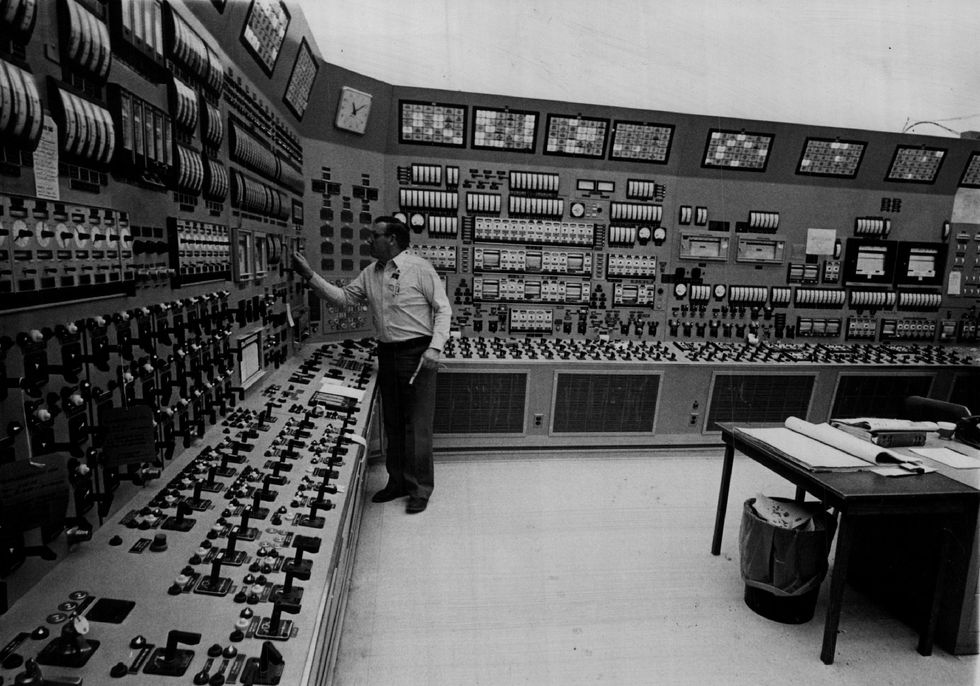
X-energy’s won’t be the nation’s first commercial high-temperature gas-cooled reactor, however. That was the Fort St. Vrain plant, Colorado’s only nuclear station, which shut down in the early 1990s after only a few years due to operating challenges. X-energy has told me it’s taken a lot of lessons from that plant’s failure into account in its design. The NRC permit offers “further validation” of the company’s plans, X-energy CEO J. Clay Sell said in a statement. “This is an important day,” he added. “Getting the construction permit earlier than expected is reflective of the thorough and efficient work of the NRC.”

A coalition of landowners is suing the Louisiana Public Service Commission for fast-tracking Meta’s vast data center complex in the state. In a lawsuit filed Monday, the trio of groups argued that regulators violated the state constitution by adopting a “lightning directive” pathway that allowed utility giant Entergy to skip steps designed to protect ratepayers as it sought approval for seven gas plants and transmission lines to serve the Facebook owner’s largest-ever data center, known as Hyperion. “We want our elected officials to be accountable to the people who elected them,” Dustin McAnn, a cattle farmer whose land is affected by the directive, told New Orleans Public Radio — “not to corporations, not to NDAs, not to secrecy, but to the people who elected them to the office they serve.”
Sign up to receive Heatmap AM in your inbox every morning:
Until this summer, Seth Cohen served as the Trump administration’s bulldog in the Department of Energy, pushing to overhaul what the White House’s Department of Government Efficiency saw as unnecessary hurdles to building new nuclear power infrastructure. He left in June to return to the private sector. Now he’s looking to bring that same streamlining to data center construction. On Monday, he announced the launch of Mavria, a startup to design and deploy modular data centers in weeks rather than years. The company told The Wall Street Journal that it had raised a $130 million Series A at a nearly $1 billion valuation. Mavria’s first product line is called Terrain, a modular data center that can be hauled in by truck.
“The fundamental design philosophy for Terrain was, instead of asking the supply chain to bend to our designs, why not bend to the supply chain?” Cohen told me by phone yesterday. “With our projects, we’re going in and trying to match with communities that actually want us there in the first place — or, if they’re skeptical of data centers, where we can earn their trust and figure out how we can come in as a productive and beneficial member of the community.” Working on nuclear power, he said, taught him how to select good locations for infrastructure that carries political baggage. “The closer you go to a nuclear plant, the more popular nuclear becomes,” Cohen said. “We believe in a world where data centers will be more popular the closer you are to a Terrain deployment.”
The market for liquified natural gas — the version of the fuel that’s superchilled to liquid form for easy transport in tankers — is booming as prices skyrocket in response to the U.S. war in Iran, the Russian war in Ukraine, and cold weather in Europe. But could a bust be looming? A new analysis by the investigative site Gas Outlook found that a “tidal wave of new LNG capacity is coming and the war may ultimately lead to a deep market downturn in the years ahead.”
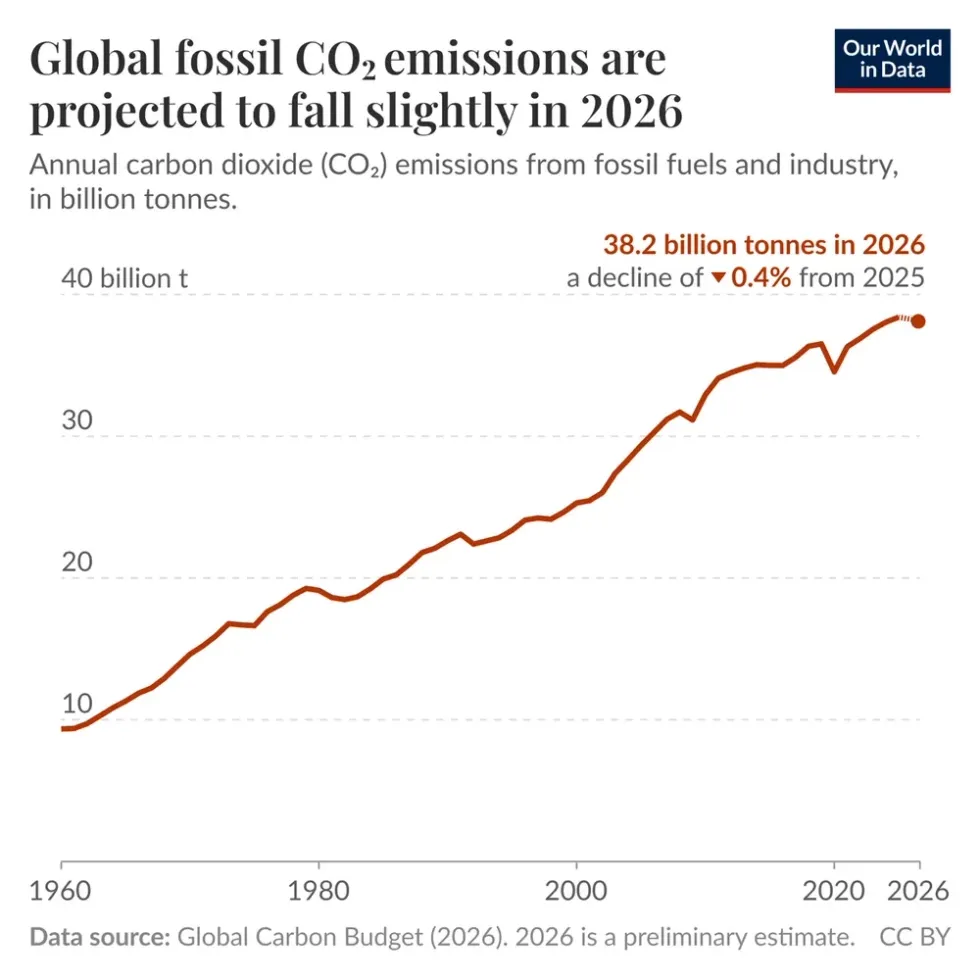
“While some LNG exporters are raking in record profits from war-time pricing, the boom could quickly turn to bust,” the outlet wrote, citing analysts. “Indeed, the LNG market was headed for a colossal glut prior to the war. That supply overhang has been delayed, but not wiped out.” Gas consumption actually declined a small amount this year, according to the latest estimates from the Global Carbon Project, contributing to a slight, 0.4% projected decline in global emissions from fossil fuels in 2026. Other factors in that decrease include the proliferation of clean energy and electric vehicles and the oil supply shock from the war in Iran.

Greta Thunberg rose to prominence in 2019 as a teenage protester who inspired students to boycott school over global inaction on climate change. In recent years, however, the Swedish activist has diversified her political portfolio to include virtually any left-wing movement in the Western world. She has become a high-profile figure in global protests against Israel, twice attempting to sail a flotilla to Gaza. She’s also appeared in support of the riots that tore through France in recent weeks. But after five years without attending a United Nations climate summit, Bloomberg found the now 23-year-old Thunberg standing in a long security line at COP31 late Monday afternoon at the start of the conference in Antalya, Turkey. “We’ve had 31 COPs now, and we’re still speeding in the wrong direction,” she told the newswire.
If Democrats plan to restore the solar and wind tax credits, then passing BAAJA now suddenly looks like the savvy move.
This is Heatmap Daily, a weekday digest written by our executive editor. Subscribe here.
So here we are. The bipartisan permitting reform bill has cleared its first and most important procedural hurdle in the Senate. On Monday evening, 73 senators voted to end debate on the Bipartisan American Affordability and Jobs Act, or BAAJA, which would broadly make it faster and easier to build federal infrastructure projects of all sorts, especially power lines.
The bill will still undergo what its backers call a “healthy amendment process,” and it will face procedural and substantive votes for the next week or two. But its path to passage, at least in the Senate, is getting clearer.
That’s more than a little surprising. Going into the midterm elections, the conventional wisdom in Washington was that the bigger the Democratic wave, the harder it would be to pass BAAJA. Supporters feared that Democrats, newly flush with confidence, would drop the compromise and choose to restart negotiations anew in the next Congress. That’s certainly what Representative Jared Huffman, the likely incoming chair of the House Natural Resources Committee, has pushed for on X over the past week. And soon after the scale of the electoral deluge for Republicans became clear, Heatmap reported that the bill’s odds of passage had gotten a little steeper.
And yet the bill has actually gotten closer to becoming law, not further, since last Tuesday. And as I pondered the situation over the weekend, I realized the original conventional wisdom was misguided. The midterm elections have strengthened the politics of permitting reform. Tuesday’s results can help explain why the Democratic Senate caucus is now speeding toward passage.
The first dynamic is obvious: This is an affordability bill — it’s right there in the name — and Democrats just won an affordability election. The bill’s projected energy affordability benefits are small but real, and proponents argue (plausibly) that the bill’s most important changes are impossible to quantify in an energy model. The bill will make federally funded public transit much faster to build, for instance, which will have big affordability and emissions implications but is essentially impossible to model.
What’s more, much of the incoming Democratic Senate class ran on a policy platform that looks a lot like BAAJA. James Talarico of Texas, Adam Hamilton of Kansas, Annie Andrews of South Carolina, and — if they win — Scott Colom of Mississippi and Mary Peltola of Alaska all promised an all-of-the-above energy policy that would expand the supply of fossil fuels and clean energy. That is what BAAJA does, according to its supporters and detractors.
South Carolina’s Andrews even went one step further and explicitly committed to finding a permitting reform compromise with Republicans. “Nobody has the political will to get to work and pass this bipartisan plan. It’s embarrassing,” she wrote. “In the Senate, I'll work to bring members of both parties together to finally get this done.” Now Democrats can get it done before she even gets to the Hill.
BAAJA mirrors Democratic policy commitments in more specific ways, too. Seven of the incoming 11 Democratic senators campaigned on forcing data centers to pay the full cost of their electricity use; it was even one of Abdul El-Sayed’s mandatory “terms of engagement” for the facilities. The rest of the winning Senate class made more vague pledges that data centers should not make Americans’ power bills go up.
The permitting bill would accomplish this goal, too. BAAJA would force data centers and crypto miners to pay the full costs of their connection to the grid, and it would let states go even further in transferring additional system costs from other ratepayers onto data centers.
Last week’s elections could help ease specific data center worries around the bill, as well. As it stands today, federal law is a poor weapon for fighting data centers on private land. Yet in a world where data centers are growing fastest in Republican-governed states, activists have been loath to surrender any federal tool — no matter how feckless — that could be used to fight them. But after last week's elections, many of the states where data centers and behind-the-meter gas plants are growing most quickly — such as Texas, Ohio, New Mexico, and Pennsylvania — will now have new Democratic governors or outright Democratic trifectas next year. The most effective tool for slowing the data center buildout remains state, county, and municipal land use laws. State-level Democrats will now be able to wield these tools against computing facilities, and BAAJA would not touch those ordinances at all. Meanwhile, its data center electricity provisions would actually expand the ways that incoming Democratic governors and regulators could make data centers pay for the rest of the grid or even build new infrastructure.
Likewise, BAAJA’s new utility oversight tools look far more powerful in a world where state politicians have promised to fight utilities. Democrats likely also find it easier to write those powers into law in a world where public utility commissions are trending Democratic.
And there is one more reason Democrats might feel more comfortable passing this bill now: Tuesday has made their odds of gaining even more power in the future look better, and this bill will improve as Democrats pass other clean energy or climate policies to augment it.
If Congress soon restores the wind and solar tax credits, for instance — as most every incoming congressional Democrats have vowed to do — then BAAJA’s transmission provisions will go from being merely somewhat good for the climate to being very good. When the Inflation Reduction Act fell short, it was because the United States could not build new power lines fast enough to hook new solar and wind farms to electricity demand. But marrying the IRA’s clean energy tax credits to BAAJA’s transmission mandates would supercharge them both. And if a future Democratic Congress chooses to fund and build a national macrogrid, then passing BAAJA now would make it much easier, because some of the hardest political aspects of such a task — such as creating a federal backstop siting mechanism for new power lines — will already be done. There’s a reasonable political argument that Democrats should eagerly welcome Republican co-ownership of BAAJA’s transmission provisions, so that the party does not have to own the political consequences of such a buildout alone in the future.
Likewise, BAAJA will disproportionately benefit the party that wins the next presidential election, because the bill’s greatest affordability benefits will start accruing to the president who follows Donald Trump. Like all big energy bills, BAAJA will take time to work its way through the energy system. Americans won’t immediately experience cheaper bills or faster projects; after BAAJA’s passage, independent agencies such as the Federal Energy Regulatory Commission will need to write rules governing the law’s new programs and communicate them to states, utilities, and grid managers.
Many of those effects will start to be felt right around the time the next president takes office in January 2029 — or even in the early 2030s. If Democrats feel better about their chances of taking the White House today than they did a week ago, then they may very well feel better about passing this bill now, too.