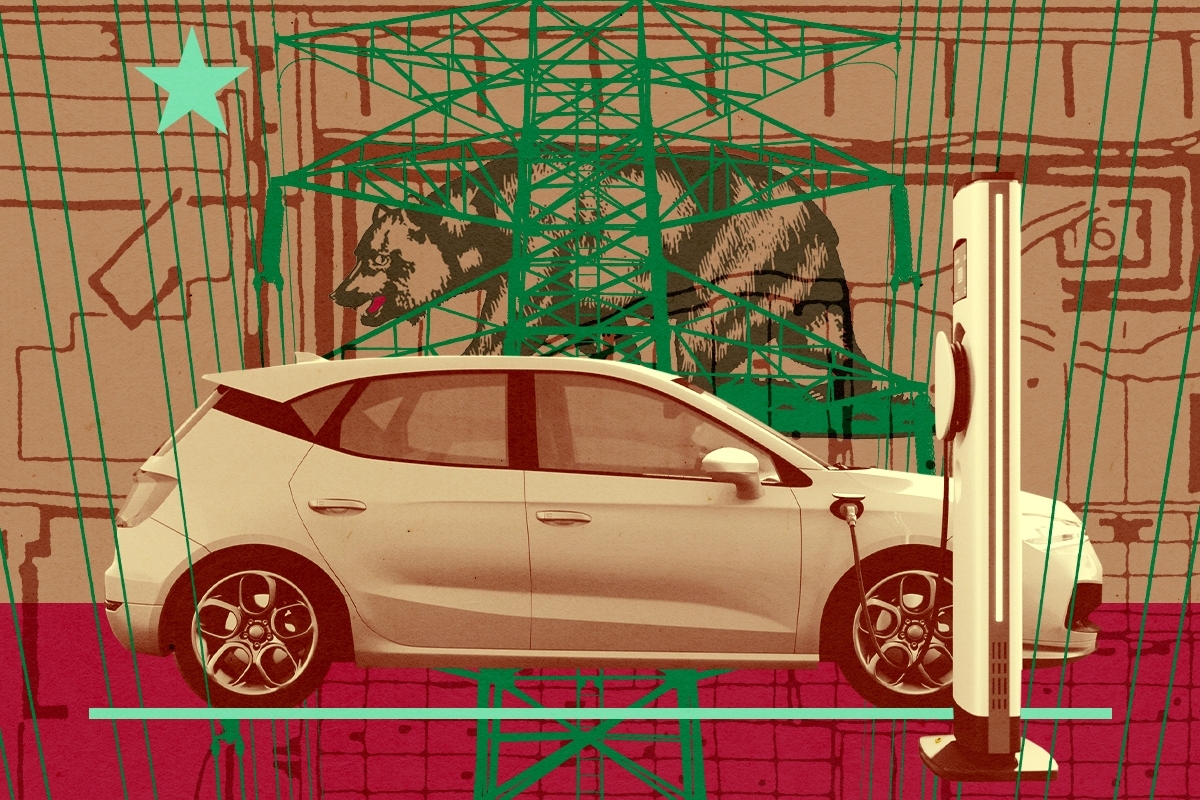
By many measures, California is the most advanced U.S. demand response market. Its aggressive clean energy targets, widespread home electrification, and near-universal smart meter deployment make it a natural testbed for programs that call upon distributed energy resources — from home batteries and electric vehicle chargers to smart thermostats — to ease grid strain and pay customers for helping out.
The state has been running these initiatives in one form or another for decades, starting with agreements that paid commercial and industrial customers to cut their power during periods of grid stress. Over time, those programs expanded to households, allowing ratepayers to let utilities cycle their air conditioners on and off and, eventually, control their smart thermostats too. But the theoretical potential of California’s demand response strategy has far outpaced the realized grid benefits.
“Load flexibility has underdelivered for a long time,” Ric O’Connell, executive director at the grid policy nonprofit GridLab, told me.
A new joint report from GridLab, data analytics firm Kevala, and the energy consulting firm Energy and Environmental Economics released on Tuesday argues that California’s early-mover advantage has, in many ways, become a liability. While the technology to run more effective, streamlined demand response programs has finally arrived, decades of legacy initiatives have left the state and its confused consumers tangled among dozens of fragmented offerings, outdated compensation structures that don’t reward active participation, and rules that make it unnecessarily difficult for small, household devices to participate in wholesale electricity markets.
“The communications, the control, the metering — none of that stuff was really available 10 years ago, and you just sort of paid people to sign up,” O’Connell told me. “And then we didn’t really switch it as the technology became available for better measurement.”
But now that the technology is better, the report points out that the opportunity is bigger than ever: California has an unprecedented base of smart, connected devices — including millions of EVs, electrified buildings, and home batteries — that, if properly harnessed, could help smooth out the state's electricity demand and avoid the kind of costly new infrastructure buildouts that drives up everyone's rates.
One of the primary recommendations in the report, titled “Unlocking California’s Flexible Load,” is to pay customers for the actual value they provide to the grid — such as how often and for how long they reduce or shift their electricity use during demand response events. While that may seem obvious, historically, utility and state programs have paid customers simply for signing up and remaining "available" to cut power use — regardless of whether they actually deliver when called upon. That model made some sense before smart meters and other tools could verify performance, but today it often just wastes money while failing to deliver meaningful load reductions.
Changes like this could help California capture far more of the value demand response has long promised. A 2024 GridLab study with The Brattle Group found that virtual power plants — networks of distributed resources that collectively act like large, traditional power plants — could save California utilities and consumers $550 million per year while meeting more than 15% of the state’s peak electricity demand.
The potential is especially striking with EVs. Their charging patterns can already help shift overall electricity demand to less grid-constrained hours, while bidirectional charging may one day turn them into giant grid batteries capable of sending power back to the grid — an increasingly common capability known as vehicle-to-grid, or V2G. The report reveals that if just 10% of California’s projected 9.7 million EVs participated in V2G programs, they could supply nearly a third of the state’s 2036 long-duration battery storage target, according to a press release about the report.
As the report also makes clear, though, getting there will require more than simply changing how the program pays customers. Another major recommendation is consolidating the programs and streamlining how they’re administered. O’Connell said the utilities running their own programs — long held back by institutional inertia — are beginning to recognize the inefficiency problem, waking up to the fact that “the person doing the smart thermostat program is in a different department than the person who’s doing the behind the meter battery program,” he told me, explaining that he’s already working with Con Ed in New York to consolidate its offerings. Based on his conversations with California’s utilities, he said he expects them to announce consolidation plans soon, as well.
It can be a hard sell to get the investor-owned utilities to put real muscle behind these programs, however, as they make money by building new infrastructure like large power plants, not by avoiding the need for it through demand flexibility.
“I think in many ways the IOUs have been indifferent to load flexibility. It’s not core to their business,” O’Connell told me. But with political tension over affordability mounting, customers increasingly worried about electricity rate hikes, and huge new large loads like data centers seeking to connect to the grid as quickly as possible, utilities are facing more pressure than ever to make better use of the infrastructure they already have.
Another core recommendation is designed to ensure that demand flexibility programs actually benefit all customers by capping customer compensation below the total cost that the utility avoided in new infrastructure buildout. For example, if a customer’s individual participation in such a program saves a utility $100 in spending, they should receive less than $100 for providing that flexibility. This is designed to ensure that all California customers end up saving on their utility bills, regardless of whether they’re able to flex their loads or not.
This particular recommendation comes in response to a problem the state encountered with its legacy rooftop solar compensation system, Net Energy metering, which ran from 1996 to 2022. The program pays existing solar customers, who have been grandfathered into the program, well above the actual value of the power they export to the grid, thereby shifting billions of dollars in costs onto customers without solar.
Lastly, the report recommends creating a simpler path into wholesale electricity markets. While sophisticated players —- think large businesses or major demand response aggregators such as Voltus or Sunrun — can sell load reductions directly into those markets, the process remains too complicated and paperwork-heavy for smaller aggregators bundling together resources such as household EVs and batteries. For now, the report argues, those smaller players should keep enrolling customers through simpler, utility-run programs while regulators work to make wholesale market participation more accessible.
Ultimately, O’Connell hopes the report can help California move past the institutional battles that have historically held demand flexibility back. “One of the problems with California is there’s no kind of neutral,” he told me. “We were trying to be that neutral party that’s like, here’s the roadmap to get everyone to actually unlock this potential.”
The goal, he said, was to “name all the problems of the past” — and, in doing so, give California’s utilities, regulators, aggregators, and customers a clearer path forward.





 The Syncrude refinery at Mildred Lake in Alberta. Daphné LEMELIN / AFP via Getty Images