After many months of will-they-won’t-they, it seems that the dream (or nightmare, to some) of getting a permitting reform bill through Congress is squarely back on the table.
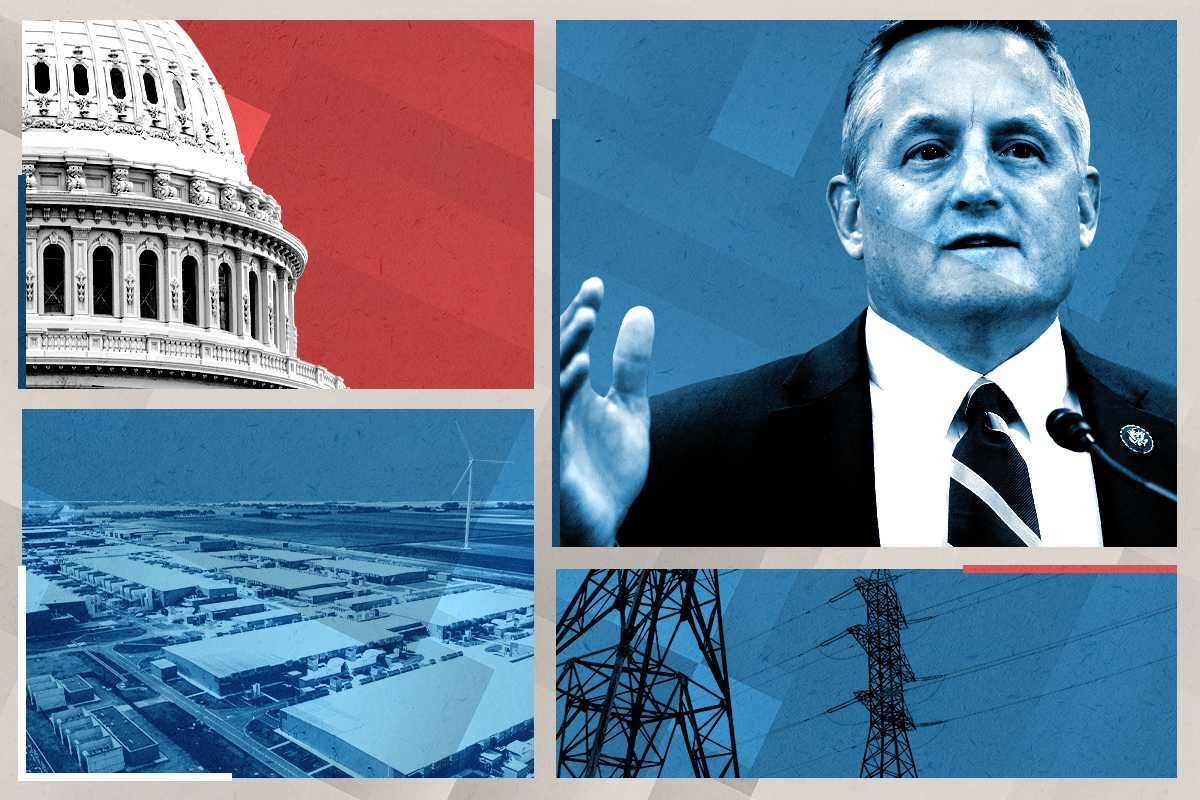
“Permitting reform” has become a catch-all term for various ways of taking a machete to the thicket of bureaucracy bogging down infrastructure projects. Comprehensive permitting reform has been tried before but never quite succeeded. Now, a bipartisan group of lawmakers in the House are taking another stab at it with the SPEED Act, which passed the House Natural Resources Committee the week before Thanksgiving. The bill attempts to untangle just one portion of the permitting process — the National Environmental Policy Act, or NEPA.
There are a lot of other ways regulation and bureaucracy get in the way of innovation and clean energy development that are not related to NEPA. Some aren’t even related to permitting. The biggest barrier to building transmission lines to carry new carbon-free energy, for example, is the lack of a standard process to determine who should pay for them when they cross through multiple utility or state jurisdictions. Lawmakers on both sides of the aisle are working on additional bills to address other kinds of bottlenecks, and the SPEED Act could end up being just one piece of the pie by the time it’s brought to the floor.
But while the bill is narrow in scope, it would be sweeping in effect — and it’s highly unclear at this point whether it could garner the bipartisan support necessary to get 60 votes in the Senate. Just two of the 20 Democrats on the Natural Resources Committee voted in favor of the bill.
Still, the context for the debate has evolved significantly from a year ago, as artificial intelligence has come to dominate America’s economic prospects, raising at least some proponents’ hopes that Congress can reach a deal this time.
“We’ve got this bipartisan interest in America winning the AI race, and an understanding that to win the AI race, we’ve got to expand our power resources and our transmission network,” Jeff Dennis, the executive director of the Electricity Customer Alliance and a former official at the Department of Energy’s Grid Deployment Office, told me. “That creates, I think, a new and a different kind of energy around this conversation than we’ve had in years past.”
One thing that hasn’t changed is that the permitting reform conversation is almost impenetrably difficult to follow. Here’s a guide to the SPEED Act to help you navigate the debate as it moves through Congress.
What is NEPA again?
NEPA says that before federal agencies make decisions, whether promulgating rules or approving permits, they must assess the environmental impacts of those decisions and disclose them to the public. Crucially, it does not mandate any particular action based on the outcome of these assessments — that is, agencies still have full discretion over whether to approve a permit, regardless of how risky the project is shown to be.
What’s the problem lawmakers are trying to solve?
The perceived problem is that NEPA slows down infrastructure projects of all kinds — clean energy, dirty energy, housing, transit — beyond what should reasonably be expected, and thereby raises costs. The environmental assessments themselves take a long time, and yet third parties still often sue the federal government for not doing a thorough enough job, which can delay project development for many more years.
There’s a fair amount of disagreement over whether and how NEPA is slowing down clean energy, specifically. Some environmental and clean energy researchers have analyzed NEPA timelines for wind, solar, and transmission projects and concluded that while environmental reviews and litigation do run up the clock, that has been more the exception than the rule. Other groups have looked at the same data and seen a dire need for reform.
Part of the disconnect is about what the data doesn’t show. “What you don’t see is how little activity there is in transmission development because of the fear of not getting permits,” Michael Skelly, the CEO of Grid United, told me. “It’s so difficult to go through NEPA, it’s so costly on the front end and it’s so risky on the back end, that most people don’t even try.”
Underlying the dispute is also the fact that available data on NEPA processes and outcomes are scattered and incomplete. The Natural Resources Committee advanced two smaller complementary bills to the SPEED Act that would shine more light on NEPA’s flaws. One, called the ePermit Act, would create a centralized portal for NEPA-related documentation and data. The other directs the federal government to put out an annual report on how NEPA affects project timelines, costs, and outcomes.
Wasn’t NEPA reformed already?
During Biden’s presidency, Congress and the administration took a number of steps to reform NEPA — some more enduring than others. The biggest swing was the Fiscal Responsibility Act of 2023, which raised the debt ceiling. In an effort to prevent redundant analyses when a project requires approvals or input from multiple agencies, it established new rules by which one lead agency would oversee the NEPA process for a given project, set the environmental review schedule, and coordinate with other relevant agencies. It also codified new deadlines for environmental review — one year to complete environmental assessments, and two years for meatier "environmental impact statements” — and set page limits for these documents.
The 2021 bipartisan infrastructure law also established a new permitting council to streamline reviews for the largest projects.
The Inflation Reduction Act allocated more than $750 million for NEPA implementation across the federal government so that agencies would have more resources to conduct reviews. Biden’s Council of Environmental Quality also issued new regulations outlining how agencies should comply with NEPA, but those were vacated by a court decision that held that CEQ does not have authority to issue NEPA regulations.
Trump’s One Big Beautiful Bill Act, which he signed in early July, created a new process under NEPA by which developers could pay a fee to the government to guarantee a faster environmental review process.
None of these laws directly affected NEPA litigation, which many proponents of reform say is the biggest cause of delay and uncertainty in the process.
The SPEED Act’s Three Biggest Moves:
- Creating shortcuts for environmental review. The bill allows agencies to skip the environmental review process when a project has already been reviewed by a state or Tribal government. It makes it easier for agencies to adopt “categorial exclusions,” which enable certain types of projects that are deemed relatively benign to skip environmental review altogether. It allows agencies to ignore scientific or technical information that becomes publicly available after the project has submitted its permit application. It prohibits agencies from delaying a decision to wait for new scientific research to be completed. It also says agencies cannot consider environmental or other kinds of effects that are “separate in time or place from the project or action” — potentially barring consideration of global climate change in permitting decisions.
- Limiting judicial review. Under current law, anyone can sue the government over the NEPA process for up to six years after a project was approved. The bill would shorten that period to 150 days and limit litigation to individuals that submitted public comments during the environmental review process. It enacts new timelines for how long any lawsuit can take — about 210 days to get to a court decision, and another 240 for any appeal process to play out. It instructs courts to defer to an agency’s judgment when it comes to the environmental effects of a project. It also neuters the courts’ potential remedies if it finds that an agency violated NEPA, prohibiting courts from vacating permits or issuing injunctions on projects.
- Trump-proofing permit withdrawals. The bill seeks to prevent Trump, future presidents, or their administrations from pulling fully approved permits willy-nilly. It says “a Federal agency may not revoke, rescind, withdraw, terminate, suspend, amend, alter, or take any other action to interfere with an authorization.” It goes on to list a number of caveats — unless the agency is required to revoke the permit by a court; unless the project developer has violated the terms of the permit; unless there is evidence of fraud; unless termination is necessary to prevent immediate and substantial harm to life, property, or national security. In any such case, the decision must be “supported by clear and convincing evidence,” it says.
What do people like about these changes?
The most positive comments I heard about the SPEED Act from clean energy proponents were that it was a promising, though flawed, opening salvo for permitting reform.
Dennis told me it was “incredibly important” that the bill had bipartisan support and that it clarified the boundaries for what agencies should consider in environmental reviews. Marc Levitt, the director of regulatory reform at the Breakthrough Institute and a former Environmental Protection Agency staffer, said it addresses many of the right problems — especially the issue of litigation — although the provisions as written are “a bit too extreme.” (More on that in a minute.)
Skelly liked the 150-day statute of limitations on challenging agency decisions in court. In general, speeding up the NEPA process is crucial, he said, not just because time is money. When it takes five years to get a project permitted, “by the time you come out the other side, the world has changed and you might want to change your project,” but going through it all over again is too arduous to be worth it.
Industry associations for both oil and gas and clean energy have applauded the bill, with the American Clean Power Association joining the American Petroleum Institute and other groups in signing a letter urging lawmakers to pass it. The American Council on Renewable Energy also applauded the bill’s passage, but advised that funding and staffing permitting agencies was also crucial.
What do people not like about these changes?
Many environmental groups fundamentally oppose the bill — both the provisions in it, and the overall premise that NEPA requires reform. “If you look at what’s causing delay at large,” Stephen Schima, senior legislative council for Earthjustice Action, told me, “it’s things like changes in project design, local and state regulations, failures of applicants to provide necessary information, lack of funding, lack of staff and resources at the agencies. It’s not the law itself.”
Schima and Levitt both told me that the language in the bill that’s supposed to prevent Trump from revoking previously approved permits is toothless — all of the exceptions listed “mirror almost precisely the conditions under which Trump and his administration are currently taking away permits,” Levitt said. The Solar Energy Industry Association criticized the bill for not addressing the “core problem” of the Trump administration’s “ongoing permitting moratorium” on clean energy projects.
Perhaps the biggest problem people have with the bill, which came up in my interviews and during a separate roundtable hosted by the Bipartisan Policy Center, is the way it prevents courts from stopping projects. An agency could do a slapdash environmental review, miss significant risks to the public, and there would be no remedy other than that the agency has to update its review — the project could move forward as-is.
Those are far from the only red flags. During a Heatmap event on Thursday, Ted Kelly, the director and lead counsel for U.S. energy at the Environmental Defense Fund, told me one of his biggest concerns was the part about ignoring new scientific research. “That just really is insisting the government shut its eyes to new information,” he said. Schima pointed to the injustice of limiting lawsuits to individuals who submitted public comments, when under the Trump administration, agencies have stopped taking public comments on environmental reviews. The language around considering effects that are “separate in time or place from the project or action” is also dangerous, Levitt said. It limits an agency’s discretion over what effects are relevant to consider, including cumulative effects like pollution and noise from neighboring projects.
What’s next?
The SPEED Act is expected to come to a vote on the House floor in the next few weeks. Then the Senate will likely put forward its own version.
As my colleague Jael Holzman wrote last month, Trump himself remains the biggest wildcard in permitting reform. Democrats have said they won’t agree to a deal that doesn’t bar the president from pulling previously-approved permits or otherwise level the playing field for renewable energy. Whether Trump would ever sign a bill with that kind of language is not a question we have much insight into yet.





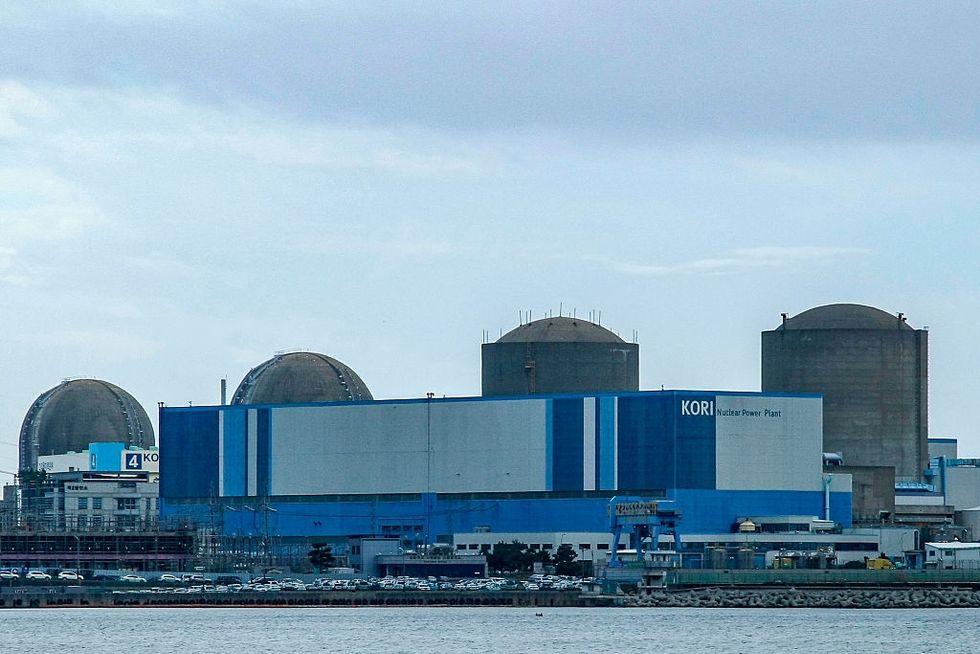 A South Korean nuclear plant in Busan. Seung-il Ryu/NurPhoto via Getty Images