You’re out of free articles.
Log in
To continue reading, log in to your account.
Create a Free Account
To unlock more free articles, please create a free account.
Sign In or Create an Account.
By continuing, you agree to the Terms of Service and acknowledge our Privacy Policy
Welcome to Heatmap
Thank you for registering with Heatmap. Climate change is one of the greatest challenges of our lives, a force reshaping our economy, our politics, and our culture. We hope to be your trusted, friendly, and insightful guide to that transformation. Please enjoy your free articles. You can check your profile here .
subscribe to get Unlimited access
Offer for a Heatmap News Unlimited Access subscription; please note that your subscription will renew automatically unless you cancel prior to renewal. Cancellation takes effect at the end of your current billing period. We will let you know in advance of any price changes. Taxes may apply. Offer terms are subject to change.
Subscribe to get unlimited Access
Hey, you are out of free articles but you are only a few clicks away from full access. Subscribe below and take advantage of our introductory offer.
subscribe to get Unlimited access
Offer for a Heatmap News Unlimited Access subscription; please note that your subscription will renew automatically unless you cancel prior to renewal. Cancellation takes effect at the end of your current billing period. We will let you know in advance of any price changes. Taxes may apply. Offer terms are subject to change.
Create Your Account
Please Enter Your Password
Forgot your password?
Please enter the email address you use for your account so we can send you a link to reset your password:

It’s 2022 all over again. A war has broken out involving (at least) one large oil-producing country, raising both prices and oil company profits.
Chevron reported Friday a quarterly profit of $12.1 billion, its highest quarterly profit ever. ExxonMobil also announced a blowout quarter on Friday. Its $14.5 billion profit was its highest since the Russian invasion of Ukraine in 2022 (when it posted an almost $20 billion profit in the third quarter). These announcements followed Shell’s Thursday earnings report, which revealed a profit of almost $10 billion, close to double its previous quarter earnings and in range of its 2022-vintage quarters.
What does this mean for decarbonization?
1. It’s refining, stupid.
The story across the oil majors was largely one of getting more profit out of its existing assets, particularly in their refining business.
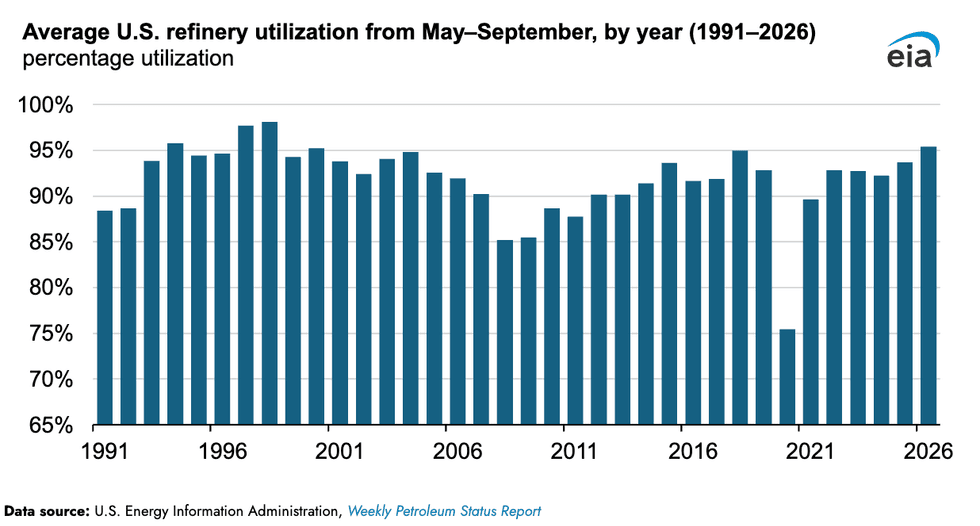
Shell, for example, said that they were running their refineries at over 100% capacity and that it had shifted production to jet fuel, which had been in especially short supply following the American and Israeli attack on Iran and subsequent closure of the Strait of Hormuz.
The company said it had “significantly higher” trading profits, likely from the volatility of commodity prices due to the start and stop nature of the war. Exxon said that it had “a second-quarter record for diesel production,” and that its chemicals business saw its margins jump by around 180% as its North American facilities were able to count on a steady stream of hydrocarbon feedstocks, unlike rivals in Asia.
“The unprecedented reduction in refining capacity – with nearly 9% of global capacity offline across Russia, China, and the Middle East – limited the supply of gasoline, diesel, and other products,” Exxon said. “As a result, refining margins reached record levels in the quarter.”
Meanwhile Chevron said it was refining over one million barrels of oil per day with “more than 97 percent” utilization.
While this constrained global refining capacity is largely due to military conflict in the Middle East and Russia, refinery capacity has been basically flat in many developed economy markets for decades. In the United States, the newest large refinery was built in 1977, an indication that while the U.S. transportation and energy system is still dominated by fossil fuels, there isn’t much appetite for the billions of capital investment needed to expand capacity for refining gasoline. So, while profits can surge in the short term, it doesn’t necessarily mean blue skies for oil companies.
2. Oil demand is actually falling — for now
Chevron noted that sales of refined products had actually fallen by 4% in the United States and 13% internationally. While in the short run this is likely due to higher prices, it is consistent with falling forecasts for oil demand.
While the International Energy Agency’s “current policies scenario,” which forecasts demand based on a snapshot of existing policies, sees a slow and steady rise through 2050, its “stated policies scenario” based on the trajectory of policy and commitments around energy and climate, sees oil demand peaking at levels slightly about the status quo by around 2030. In the medium run, the IEA said that “Forecast growth of [two million barrels per day] in 2027 results in a two-year pace of expansion well below historical trends.”
BP even announced layoffs of hundreds of employees, according to an internal message seen by Reuters.
This can help explain why, despite the strong profits, investors do not seem particularly jazzed about the oil giants — ExxonMobil and Chevron shares are only up slightly since the beginning of the war in Iran.
3. The high profits are already stoking public outrage
Everyone knew oil prices had risen since the war in Iran began — they could see it at the pump. But the confirmation that the war has spurred record or near-record profits has been fresh meat for environmental groups that want a faster energy transition.
“The mugging at Mar-a-Lago just keeps getting worse. The president said he would sell out Americans to oil and gas CEOs for a billion dollars in campaign donations. Now we know he owns millions of dollars worth of their stock. Those same companies are profiting from Trump’s war of choice, which has killed and injured U.S. service members, and left consumers struggling to stay afloat,” former Washington Governor Jay Inslee said in a statement blasted out by the communications group Climate Power.
The profits also spurred advocates to redouble calls for windfall profit taxes. “It’s fair to put a windfall profits tax on inordinate windfall profits rather than cut off children’s food programs,” Rhode Island Senator Sheldon Whitehouse told the Associated Press. Whitehouse introduced a bill in March that would impose taxes on oil companies in the event of price surges.
And even President Trump, whose presidential campaign was buoyed by donations from the oil and gas industry, called for an investigation into retail gasoline prices last month.
Since 2022, fossil fuels have moved back to the center of the world economy as concerns about shortages, price spikes, and availability have helped push concerns about climate change to the margins of policymaking. However, when oil companies are making more money than ever, it means an uptick in public concern or scrutiny. In the long run, oil companies have to worry about decarbonization; in the short run, they’ll have to worry about their customers.

Log in
To continue reading, log in to your account.
Create a Free Account
To unlock more free articles, please create a free account.
What’s the deal with all those “America Connects” videos?
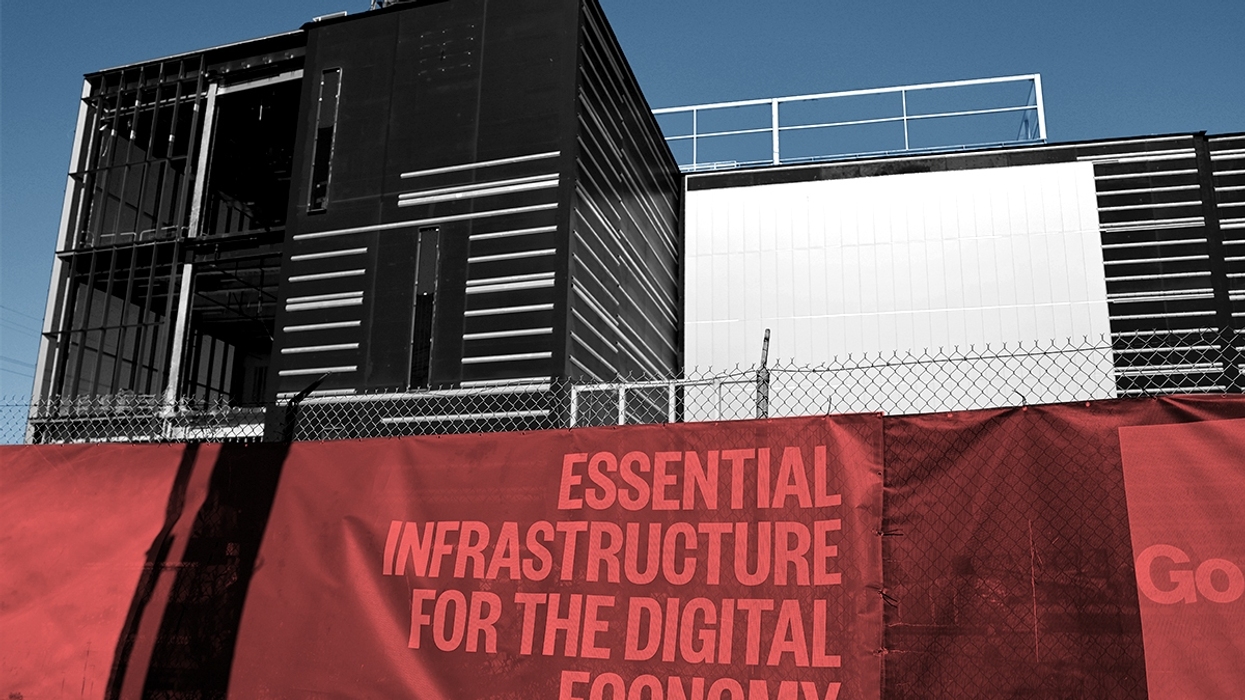
The data center lobby is launching a big PR blitz on television and social media, racking up millions of views on evidently AI-generated content boasting economic impacts from new projects and hitting against criticism around energy and water use.
In an interview with me Wednesday, Data Center Coalition CEO Josh Levi explained how and why his organization – the largest and most prominent data center trade group – stood up an “evolving” national advertising campaign called America Connects.
Like me, up until now, you might’ve interacted with the campaign’s materials without knowing it. For weeks I’ve been getting texts from people in my life who know I write about data centers asking if I’d seen these ads on TV streaming platforms and social media sites boasting benefits from data centers, or pushing back on complaints about energy and water use. Most of the videos were quite similar, appeared to be generated using AI (with no AI labeling), and were racking up millions in views and impressions.
“Our paychecks, our hospitals, our national security – all run through data centers,” states one voiceover in a YouTube ad targeted at the Longhorn State with more than 12 million views as of today.
“In Texas, they’re doing more than keeping us connected. Data centers support high-paying jobs and pay billions in taxes. Money that can lower your bills, make schools and roads better and communities safer. And new technology means data centers consume minimal water while funding new power generation for everyone. Data centers: built in Texas. For Texas.”
These videos each are hosted on channels named for specific campaigns in individual states. In Georgia, it’s called Connected Georgia. There’s a Texas Connects, an Indiana Connects, and a Pennsylvania Connects. At least eight state campaigns are happening right now and I’m told more should be expected in the near future. Each state campaign has a near-identical website with links to their promoted videos, statistics about state-level tax contributions, and employment from data centers, and a somewhat modern-looking red, white, and blue design with moving graphics on the landing page.
But finding out who was behind these videos and websites took a lot of digging. None of the state campaign websites have contact information and they were all registered by a proxy firm that gets web addresses for entities that want to remain anonymous. Most of the advertising itself was opaque; it’s not easy to research TV commercial spends and Google doesn’t disclose how much a company or person pays to promote individual ads. But there were signs of significant spending, as Meta’s Facebook and Instagram advertising disclosures revealed to me there was five-figure spending on static images, resulting in millions of potential impressions.
Eventually I was able to figure out what was going on. Each of the state campaigns also described themselves online as nonprofits but in fact, there is one nonprofit. It initially formed for the first state campaign, Virginia Connects. Its public 2024 tax disclosures show the campaign was formed by Levi and others working with the Data Center Coalition. On the DCC’s website, the trade group does have a landing page for what it calls “America Connects” and directs people to each state campaign but, as of today, the organization describes them as “regional coalitions” they “partner” with on “helping educate and engage citizens, policymakers, and other stakeholders on the data center industry, its benefits, and key issues including energy, water, economic development, and community engagement.”
In our interview, Levi explained these state campaigns aren’t just partners – they’re creations of a single nonprofit he said was “stood up” by the trade group named America Connects, and it began in 2024 through the Virginia Connects campaign. America Connects is now “a vehicle by which the broader community can engage and participate” in what Levi described as “broader industry messaging” that isn’t “just project by project.” It’s a direct response, Levi said, to the lack of any industrywide PR offensive challenging the mountain of public opposition to data centers shown in poll after poll. (With the exception of that one Meta ad campaign.)
“What we have heard very clearly is that a lot of the partners we work with, but also a lot of the voices from the public at large, is that the industry broadly needs to do a better job communicating. A better job talking about what we do, how we do it, and about the positive benefits of what localities can expect from data center development,” Levi said.
Levi told me the core of the group is at least three people: himself; Allison Gilmore, the chief operating officer of the DCC; and Kevin Hughes, the group’s treasurer and the chief external affairs officer at the data center developer STACK Infrastructure. He said I should expect “an expansion on the board” but declined to say who or what companies. Part of the team also includes LINK Public Affairs, a communications firm based in Virginia that helped on the initial campaign in the state.
I asked how an industry-backed campaign like this would help with the backlash. “Silence breeds mistrust, fundamentally. It is critically important as we see continuing conversations around the data center industry – what it does, what it doesn’t do, how it does – is part of informing those conversations,” Levi replied. “It is important the industry not be silent and be an active contributor in terms of the public dialogue around data centers. This is that.”
The DCC wouldn’t tell me how much is being spent on the America Connects campaign and it’s impossible to know from what’s publicly available.
Here’s what Levi would say about the money: that America Connects is funded by the data center “ecosystem generally,” including developers, companies within the supply chain, and “workforce voices.” But Levi wouldn’t even confirm if they were spending more than they had in just the Virginia campaign, which sort of logically has to be the case if they’ve expanded this effort.
“White it’s maybe not a satisfying answer, we will spend what we have to when it comes to ensuring we reach people where they are. But I’m not able to provide any kind of concrete number for you.”
And more of the week’s top news around project fights.
1. Richland Township, Louisiana - The Meta Hyperion project is suddenly now a central focus of activists and media coverage, just as it is seeking environmental permits for a key gas pipeline.
2. Memphis, Tennessee – Hyperion won’t be the first data centers that House Democrats go after if they retake the lower chamber in Congress though – that looks like it’ll be xAI’s Colossus projects. Congrats, Elon!
3. Clark and Nye Counties, Nevada – The federal government’s decision to use an environmental review for a solar farm on a data center instead, which I scooped earlier this week, quickly became a national story. Now the fight against the move is coming into focus.
4. Suffolk County, New York – Last but not least, we have to talk about the battery fire mess on Long Island because it’s a disaster in the making.
5. Montgomery County, Maryland – Bonus for you: my home county just instituted an 18-month moratorium on new data centers. I don’t really have much to add except, if the backlash has come to my neighborhood it’ll probably hit yours sooner rather than later.
This week’s conversation is with Peter Gardett, CEO of the AI-powered energy market research firm Noreva. Before helming the price and deal research consultancy, Gardett built a strong repertoire as an energy expert spearheading analysis at S&P Global, IHS Markit, and Argus Media. I reached out to Gardett because I wanted a candid conversation about the fuel choices data center companies are making under the Trump administration and, to my delight, Gardett was open to sitting in my hot seat.
Let’s get into it then. The following conversation was lightly edited for clarity.
How is the Trump 2.0 era affecting the choices data center developers are making when it comes to powering with gas versus alternative sources like renewable energy or nuclear power?
Well I think the question you’re asking is about natural gas, and what I tell people is every private equity firm has a behind-the-meter 1 gigawatt natural gas project they’d like to move forward. They’re familiar with the economics. They like the regulatory fortune for that fuel right now. They look at the futures curve and think the prices will be stable for this fuel in the future, I would argue discounting some of the likely volatility drivers that exist.
There’s clearly a rush to island yourself with your natural gas supply and let the rest of the world do what it might, if you’re a large hyperscaler.
If you look at the Meta facility in Louisiana – Hyperion – that’s a good example, or the X facility Colossus. The first mega data centers become the blueprints everyone would like to follow.
You brought up the regulatory appetite for gas infrastructure. How much of this rush to build gas from the industry side is due to federal policy changes?
Quite a bit. There have been major changes to implementation of the Clean Water Act that provably have been part of what’s enabled large construction of data centers and the accompanying power. It’s the same kind of shifts in oversight, when it comes to the Clean Water Act. We saw a proposal from the EPA to allow states to implement some parts of the Clean Air Act, which would certainly make it easier for them to build large gas generation that accompanies a large load.
It’s part of an entire emerging trend I theorize as “the great data center migration.” You have everyone moving down to the AI band, to West Texas to Georgia – that strip of states is where large data centers are moving and where the power will follow.
With respect to the renewable side of things, the nuclear side, alternative fuel choices than gas – are they benefiting from this buildout?
Yeah, I mean, we’re in a strange moment for renewables.
There’s been a rush to get things online before the July 4 tax cliff. If you look at additions to the grid, solar and batteries have benefited from this condensing of the pipeline and moving forward of the pipeline to avoid the cliff. We’ve seen a lot of buildouts and a lot of those electrons have gone to data centers. I’m doing a PPA project for a client right now that shows PPA prices having tripled in some regions, and that’s for renewables – solar and wind. You see plenty of demand. If you can get your hands on an electron you’re going to pay for it and go ahead. You don’t mind what kind of electron it is.
That being said, there’s a requirement for a capacity factor to create reliability. Where you’re looking to do behind-the-meter stuff and you feel you’ll be unable to interconnect, or you want to build your own power supply… that does have a unique match to natural gas. All you’re going to need is pipe and available fueling capacity. If you can find the fuel and if you can place yourself over a gas system that’s underutilized, a lot of your other concerns go away. You have access to a power source with a very high capacity factor, is reliable, and matches to your load. The equivalent of solar would require a vast amount of land, changing the economics of a project.
Before the start of this federal regime in the U.S., the trendline was investment going towards green capital – zero-emission generation. Obviously things have changed. From your vantage point in the market, when it comes to where investors are putting their money, has it gone from green power to data centers specifically? Is this boom a redirection, taking their money and putting it into something else?
This is not a trade-off moment. It’s an expansion moment.
We’ve seen a Venn diagram between digital infrastructure and power infrastructure. They move directly over each other, overlapping in capital markets. This is understandable; it’s the one thing you can’t do without if you have a data center. If you want chips, you also need power. And I think people underestimate how much one gigawatt of power is.
There’s a rush to build anything. It’s about more than anything else. I do think the second half of 2026 will be an interesting test of a thesis that a lot of renewables people have been talking about, which is that the low cost of energy – the LCOE factors – is still favorable and even without tax credit support there will be a lot of further additions. We’ve seen models, and we’ve done models, that have renewables as kind of an air pocket because it’s so cheap and the fuel cost. But on the other hand you can make the argument there’ll be a bigger problem.
When it comes to the investor space, how seriously do folks take opposition to data centers as a medium and long term risk – not just the next few weeks but the coming elections?
Very seriously. What you see in PJM with demand destruction is being taken very seriously by a number of the large institutional asset managers, some of the large institutional asset managers. These are people who are my biggest clients. I’m under some confidentiality when it comes to talking about them but nonetheless I can tell you that there are several large projects in PJM that are announced and appear on paper to be fully financed that are actually in cold storage until there is a better understanding of what is going to happen with large load, in PJM and Pennsylvania in particular.
There are large energy projects that are waiting around to see if the demand is going to materialize?
Exactly.
It doesn’t sound like an easy place to be if you’re developing these assets, no?
No.
If you’ve done the work and seen the models, it's very difficult to get this capital running in one direction and have an ISO operator say it's too expensive or puts too much on ratepayers. What you’ve seen folks try to do is create a secondary market, a parallel market, in which price discovery for that kind of power – large load – where it won’t filter through to ratepayers. But that’s much more difficult to pull off. The complexity of operating a grid in that way.
This is why more people are turning to behind the meter and to gas.