You’re out of free articles.
Log in
To continue reading, log in to your account.
Create a Free Account
To unlock more free articles, please create a free account.
Sign In or Create an Account.
By continuing, you agree to the Terms of Service and acknowledge our Privacy Policy
Welcome to Heatmap
Thank you for registering with Heatmap. Climate change is one of the greatest challenges of our lives, a force reshaping our economy, our politics, and our culture. We hope to be your trusted, friendly, and insightful guide to that transformation. Please enjoy your free articles. You can check your profile here .
subscribe to get Unlimited access
Offer for a Heatmap News Unlimited Access subscription; please note that your subscription will renew automatically unless you cancel prior to renewal. Cancellation takes effect at the end of your current billing period. We will let you know in advance of any price changes. Taxes may apply. Offer terms are subject to change.
Subscribe to get unlimited Access
Hey, you are out of free articles but you are only a few clicks away from full access. Subscribe below and take advantage of our introductory offer.
subscribe to get Unlimited access
Offer for a Heatmap News Unlimited Access subscription; please note that your subscription will renew automatically unless you cancel prior to renewal. Cancellation takes effect at the end of your current billing period. We will let you know in advance of any price changes. Taxes may apply. Offer terms are subject to change.
Create Your Account
Please Enter Your Password
Forgot your password?
Please enter the email address you use for your account so we can send you a link to reset your password:
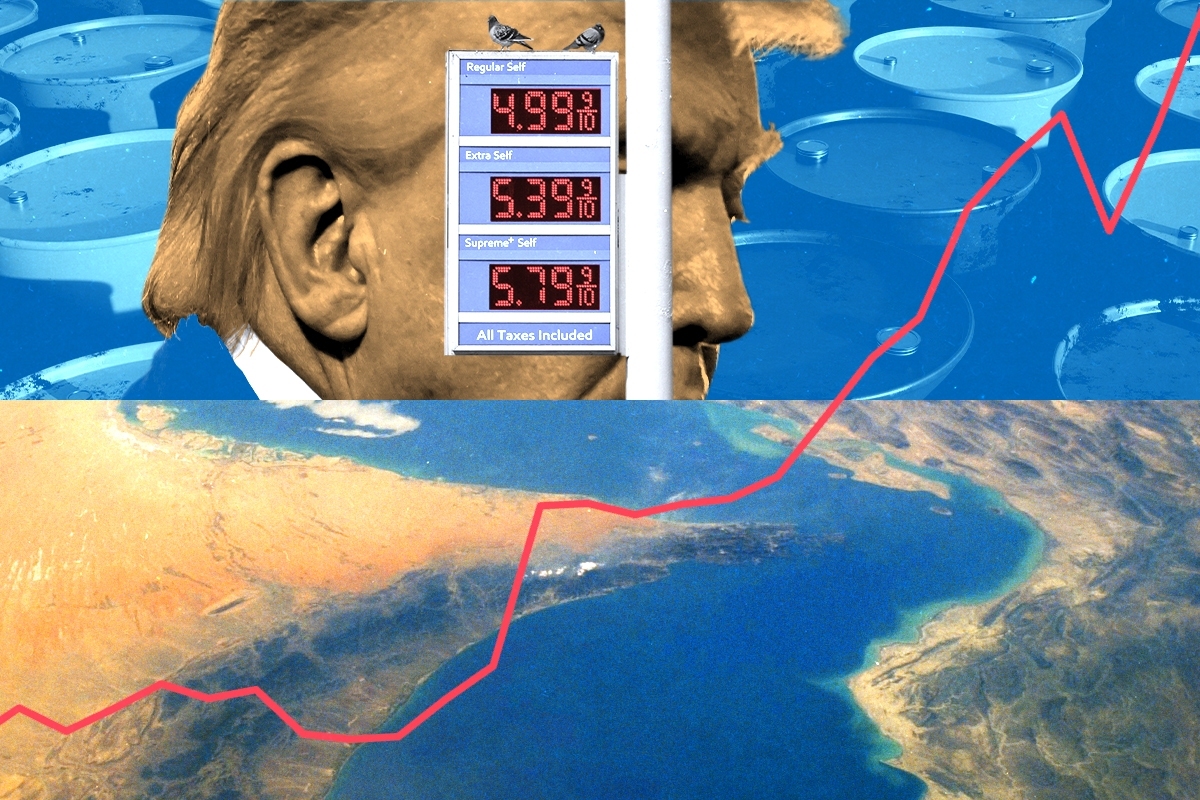
The effective closure of the Strait of Hormuz and destruction of Gulf fossil fuel assets is already having effects we’ll be dealing with in months and years to come.

No matter how much longer the United States and Israel’s war with Iran lasts, the world’s energy system will be grappling with its consequences at least through the end of the year, if not for far longer.
The biggest short-run effects of the Iran energy crisis will be felt in Asia, where economies that run on Persian Gulf oil and gas face shortages and higher prices. The supply shock has — and will — drive up prices, leading oil and gas producers who aren’t stuck behind the Strait of Hormuz to seek higher returns. Much of the continent is already in the midst of an energy crisis, complete with fuel rationing and top-down policies to reduce oil and gas consumption.
In Australia, gas stations are running out of diesel. The government of the Philippines adopted a four-day workweek to reduce commuting. Pakistan announced a two-week school closure. Nepal is rationing cooking fuel. Thailand’s prime minister told civil servants to take the stairs, and the government set air conditioning to a minimum 79 degrees Fahrenheit.
Around the world, coal use is rising. Gasoline prices are on the way up, even in the United States, which is a net exporter of crude oil and petroleum products. Even if the war were to end tomorrow, oil and gas markets are likely to remain tight for many months to come.
Just as the oil shocks of the 1970s transformed the economies of the then-rich world — spurring the takeoff of nuclear power to in Japan and France; pushing the U.S. to direct R&D funding and subsidies to solar and shale gas; motivating carmakers around the world to developer smaller, more fuel-efficient vehicles — so too will this crisis likely transform how the entire world structures its dependence on oil and gas. It maybe already has.
Let’s take an industry-by-industry look:
The year began with a global oil glut. That has long since vanished. No matter what happens in Iran over the near to medium term, expect the oil market to remain tight.
Before hostilities with Iran ramped up, the consensus was that the market was “oversupplied,” Greg Brew, an analyst at the Eurasia Group, told me. “Demand growth was expected to be fairly sluggish. Production from OPEC states and the U.S. was expected to be fairly high, and prices were going to be in the $60s and potentially $50s [per barrel]. Obviously that is now completely out the door.”
Both Goldman Sachs and Morgan Stanley analysts speculated that the Brent crude benchmark could hit or even exceed its 2022 high of around $122 a barrel. It might even break through its all-time high of around $150, reached in 2008, should the closure persist.
Even if the strait were to reopen tomorrow, it would leave a large “air pocket” in the oil market, Morgan Stanley oil analyst Martijn Rats wrote in a note to clients last week, referring to oil that will never come to market because of shut-in production. That would keep prices high through the second and third quarters of the year as supply catches up to demand.
Oil analyst and author of the Commodity Context newsletter Rory Johnston estimated that the size of this “air pocket” is in the hundreds of millions of barrels. “Inventory will start dropping like a rock” over the coming weeks, he told me, “even if we could snap fingers and just go back to where we were two, three weeks ago.”
That squares with what Brew told me, as well. “Even when Hormuz reopens, the price band through the rest of the year is unlikely to fall below $75 a barrel, given the size of the physical disruption that we’re experiencing,” he said. A barrel of oil cost around $60 at the end of last year, before the price began to creep up as the U.S. gathered forces around Iran.
There will likely still be a “sustained risk premium” for any tanker leaving the strait as long as the current Iranian regime remains in power, Brew said. “The most likely outcome from this war is one where Iran is weakened but has not collapsed — where it retains the capabilities to threaten traffic through the strait and to threaten [Gulf Cooperation Council] states.”
A supply squeeze that could have resolved quickly once the Strait of Hormuz reopened and Qatar’s Ras Laffan facility got up and running again turned into a years-long interruption when Iran knocked out 17% of Qatar’s liquified natural gas export capacity, taking out almost 13 million tons per year of gas production, according to Morgan Stanley. As recently as a month ago, Qatar supplied about a fifth of global LNG capacity. The damage will likely take several years to fix, the chief executive of QatarEnergy told Reuters.
“What started as a transitory (but significant) capacity outage has escalated to a multi-year loss of supply,” Morgan Stanley analysts wrote in a note to clients Thursday. “Even with near-term resolution, the global gas market will need to contend with refilling inventories amid a large supply loss, creating upside price risks.”
European and East Asian LNG importers will likely choose to pay the higher prices. Poorer countries in South and Southeast Asia, however, may have to go without.
“There is now no longer going to be an LNG glut in 2026. There’s going to be a tight gas market,” Brew told me. “That’s going to keep regional prices high. That’s going to keep European prices high. That’s going to keep Asian prices high. That’s going to mean emerging markets in South Asia and Southeast Asia that would otherwise be able to buy LNG cargoes are going to have a tougher time.”
Much of the rationing of electricity or the shutdown of fertilizer plants in South and Southeast Asia was already happening before this week’s catastrophic attacks, the result of Qatar cutting off production due to earlier strikes.
No matter how long the war lasts, European and Asian gas buyers will have to refill their gas reserves before winter sets in again, which will further strain an already tight market. The Morgan Stanley analysts said prices are more likely to go up than down through the rest of the year even if there’s deescalation soon.
Jefferies analyst Julien Dumoulin-Smith wrote in a note to clients Wednesday that “even if the disruption proves temporary, LNG’s perceived risk profile has likely shifted structurally.”
“The conflict has underscored how concentrated global LNG supply remains around a narrow choke-point. That realization alone may embed a higher risk premium in LNG pricing,” he wrote. “Over time, higher prices could slow demand growth among some price-sensitive buyers and alter how buyers assess long-term LNG investment decisions.”
Just like in 2022, countries that suddenly find themselves short on natural gas will almost certainly turn to coal. “My sense is that this is going to be great for coal as 2022 was,” Brew said, referring to the uptick in coal usage following the Russian invasion of Ukraine, which cut off a major source of natural gas supply for Europe.
In both Europe and Asia, the “coal equivalent” price of gas has shot up, meaning that natural gas is now much more expensive on a dollars-per-unit-of-energy basis. This will incentivize switching to dual use gas and coal plants, or else bringing under-utilized coal-burning power plants into service, especially in Asia.
South Korea said earlier this week that its nuclear and coal power plants could raise their output in light of reduced LNG availability. South Korea is heavily dependent on both fossil fuels and imported energy — 84% of its energy supply is imported on net; almost 80% of its energy supplies are fossil fuels, and about 15% of its LNG imports come from Qatar.
The energy consulting firm Wood Mackenzie estimated that coal-fired power plants in Japan and South Korea could offset 70% and more than 100% of their gas-fired generation, respectively. But, Wood Mackeznie noted, that’s only in the current “shoulder season,” when mild weather means less electricity demand. “If disruptions persist into peak summer demand, the effectiveness of coal as a buffer will diminish, increasing exposure to tighter supply conditions.”
In Europe, which invested heavily in renewables and gas imports (largely from Norway and the United States) following the Russian invasion of Ukraine, coal’s cost favorability to natural gas is improving, but overall demand has been falling as days get longer and warmer. In Germany, coal’s share of electricity generation rose 2% in March compared to February.
There are already anecdotal reports of enthusiasm for renewables picking up in light of the fossil fuel supply shock. Bloomberg reported that electric vehicle showrooms are filing up across Asia with interested buyers looking to avoid expensive and sometimes rationed fuel.
Oil demand, particularly in Asia, “will be lower than it was before the war in terms of the expectation,” Johnston said. “There is no possibility, in my mind, that we do not see an enhanced drive toward energy efficiency, electrification, and other forms of diversification. It’s just the obvious outcome of this.” He said the amount of vulnerability Asia has to oil and natural gas is “existential” and “not tolerable.”
“Energy security and affordability is a much more compelling political argument” for a transition to clean energy than moral arguments about preventing future climate change, he added.
The same could be true for natural gas, especially LNG. The “next leg” for LNG growth globally, Dumoulin-Smith wrote, was supposed to be “price-sensitive demand in South/Southeast Asia.” That growth could be put at risk by “sustained higher prices” that induce “demand destruction, fuel switching (notably coal), delayed downstream infrastructure investment, or possibly ‘skipping’ LNG as a transition fuel in favor of renewables.”
In a note sent to clients Friday, Dumoulin-Smith wrote, “We see a constructive demand tailwind for U.S. clean energy peers beyond 2026,” due to “the multi‑year energy challenges implied by the escalation” of attacks on energy infrastructure in the Persian Gulf.
Even in the United States, which is more insulated from some of the worst shocks (we’re not going to run out of natural gas anytime soon), now may be a good time to “be stepping back and thinking a little bit more holistically about how we’re structuring our energy policy and our energy systems,” Francis O’Sullivan, managing director at S2G Investments, told me.
“We need to take a more all-of-the-above type approach to our energy system and our energy policymaking than is currently the case.”
There are ever-so-slight signs of a thaw toward renewables and in favor of an all-of-the-above strategy in the U.S. The federal government late last week declined to appeal a federal court ruling in favor of offshore wind developers who sued the Department of the Interior over its stop work orders. Senate Democrats have said they’re once again open to a deal with Congressional Republicans and the White House to ease permitting for all types of energy projects.

Log in
To continue reading, log in to your account.
Create a Free Account
To unlock more free articles, please create a free account.
The latest update to the Electricity Price Hub shows a price increase in line with what regulators predicted.
Hawaii already had the most expensive electricity in the country. Then the war in Iran happened.
America’s 50th state has no domestic fossil fuel industry and no access to the continental United States’ natural gas pipeline network, and is therefore uniquely dependent on imported oil to generate electricity. (The state’s last coal plant shut down in 2022.)
While Hawaii’s electricity prices and household bills have spiked along with oil prices since the United States and Israel attacked Iran in late February, the average electricity bill in Hawaii shot up to $248 in May, compared to an already-high $203 in April, according to the latest data in Heatmap and MIT’s Electricity Price Hub, released Monday. The average price of electricity rose by 6 cents per kilowatt-hour, from 46 cents in April to 52 cents in May. Nationally, average prices stand at around 17.5 cents and are up 3.6% (or just over half a cent) from May of last year, with national average bills of $140 per month up about $6 from a year ago.
Hawaii’s eye-watering prices far outmeasure even the state’s peers in expensive electricity. May bills for California were $137, for instance, while prices were 25 cents per kilowatt-hour. In Massachusetts, where prices have also spiked this spring, they only got to 38 cents per kilowatt-hour. Maine, which has been struggling with high prices thanks to high costs linked to storm recovery, prices in May were 28 cents per kilowatt-hour, up about 10% from a year ago, but down substantially from the 35 cents per kilowatt-hour in February.
The situation in Hawaii was pretty much a foregone conclusion way back in April. Hawaii’s Department of Commerce and Consumer Affairs warned customers that bills from Hawaiian Electric, which serves almost the entire state, would almost certainly go up between 20% and 30% from then through June.
“We told our customers to prepare for potential increases in energy costs in the coming months, driven by rising global oil prices linked to escalating geopolitical tension,” Scott Seu, Hawaiian Electric’s chief executive, said in an April earnings call. “Affordability is a core focus of ours, and affordability pressures have intensified given the recent increase in fuel prices across the globe.”
Some Hawaii ratepayers will have the opportunity to claim a one-time credit on their bills this month as part of an annual rate relief drive by the Hawaii Home Energy Assistance Program. The state program is administered through local nonprofits and provides bill credits for households that claim some form of social assistance, like food stamps or Social Security or disability payments administered through Social Security
The benchmark global oil price was sitting at around $70 per barrel in the weeks leading up to the opening of the U.S.-Israel-Iran war, and is now around $95, down from a high of $118. While Hawaii ratepayers probably won’t feel comforted this is far from the worst-case scenario for runaway oil prices as public and private inventories of oil have largely filled the gaps. If the story of the energy effects of the Iran War in the United States is that some combination of trapped natural gas, inventory releases, and healthy domestic production have made the oil price hike manageable, it may only be in the non-insular United States.
According to analysis of price hub data from our partners at CleanEcon, customers in the Lanai division of Hawaiian Electric’s Maui service area faced an 18 cents per kilowatt-hour rise just from “recovery” for high energy supply prices, a nearly 60% hike, which on its own added $76 to average bills compared to the beginning of this year.
The good news is that due to its famously agreeable climate, Hawaiian households consume little electricity compared to the rest of the country. But with those electricity rates, who can blame them.
All that cash has to go somewhere. Why not philanthropic funding for decarbonization?
Artificial intelligence models — and the infrastructure to support them — have kept the U.S. economy afloat amidst a turbulent year of tariffs, war, and energy price volatility. Nvidia, the dominant supplier of high-end AI chips, is now the world’s most valuable company. Leading AI firm Anthropic has filed to go public, while reporting indicates that OpenAI will soon follow suit. SpaceX, which is betting heavily on orbital data centers, is also going public this month, in what analysts expect will be the largest IPO in history.
All of which is to say that a lot of people have already become very, very rich from the AI boom, with many more poised to do so very soon. That will almost certainly lead to a wave of philanthropic capital in search of worthy causes. AI safety will obviously be a priority. But given growing concerns over AI’s power needs, reliance on fossil fuel infrastructure, water consumption, and effect on electricity prices, it seems likely that climate and clean energy will become top priorities for newly minted AI billionaires, as well.
“It is not lost on the people who are working on AI that there are big environmental impacts associated with data centers,” Lara Pierpoint, managing director of Trellis Climate, told me. Her organization helps philanthropists and foundations invest in first-of-a-kind climate infrastructure projects that wouldn’t move forward without their support. She expects that the “strong outdoor and environmentally-focused culture” of the Bay Area will also hold sway over these emerging philanthropists.
Nan Ransohoff, Stripe’s head of climate, laid out the scale of this coming capital influx in a recent Substack post: “The OpenAI Foundation holds 26% of OpenAI, worth about $220 billion at today’s valuation. Anthropic’s seven co-founders have pledged to give away 80% of their wealth and have instituted the most aggressive donor matching program for employees in tech history,” she writes.
By Ransohoff’s back-of-the-envelope math, accounting for just the OpenAI Foundation and Anthropic’s co-founders and employees with charitable savings accounts translates to about $37 billion to $100 billion per year in additional philanthropic spending, assuming everyone allocates about 10% of their pledged wealth annually. That could add as much as 17% more philanthropic spending per year compared to what all U.S. donors allocate today. Much of that will likely go toward AI-related risk mitigation. But certainly not all of it.
Though Ransohoff never mentions climate change explicitly in the piece, it can’t have been far from her mind. Ransohoff is the head of Frontier, the Stripe-led coalition of carbon removal buyers using advance purchase agreements to catalyze the nascent market. This is exactly the type of technology — critical to the fight against climate change but expensive and largely lacking a natural market to drive scale-up — that could benefit from philanthropic dollars. A range of other climate mitigation and adaptation efforts fall in this same bucket, including satellite-based methane monitoring, wetlands and mangrove restoration, resilience infrastructure in low-income communities, and even controversial geoengineering efforts such as solar radiation management.
The network of players allocating climate-focused philanthropic spending are well aware of these opportunities, apparently, as Ransohoff’s piece drummed up lots of excitement among my sources. “I think we’ve all been circling around the notion that there will be some additional philanthropy that comes into the picture,” Pierpoint told me. Ransohoff, she said, is just the first to put numbers to the potential scale. “It wasn’t clear even a year ago that all these companies were going to be looking to IPO so soon,” Pierpoint explained. (Ransohoff herself didn’t respond to my request for an interview.)
Now that we’re here, Pierpoint and others certainly have thoughts about where they can put this capital to work. Many see substantial room for improvement in the current philanthropic landscape. “The problem is how it’s structured. It’s more around donor appeasement and gatekeeping and less around results,” climate tech investor Susan Su of Toba Capital told me.
Elemental Impact CEO Dawn Lippert has been working to create a better model for the sector since she founded the philanthropically-funded nonprofit investor in 2009. She describes Elemental’s structure as combining “the mission of a nonprofit with the discipline of an investor and operating posture and talent density of a high-growth startup.” Much like Trellis, Elemental seeks to fill climate tech’s “missing middle” funding gap for first-of-a-kind climate infrastructure projects, which are too costly for venture firms but too risky for traditional institutional investors. That involves leveraging philanthropy to build things like a critical minerals recovery facility and a low-emissions fertilizer production plant that wouldn’t otherwise see the light of day.
“Philanthropy alone won’t close the gap, but philanthropy will be the fuel for the experiments,” Lippert told me. “It’s an art, because it’s not about using philanthropy to subsidize investors, it’s about leveraging philanthropy to build things that otherwise would not happen in the world.
Lippert wants to capitalize on this AI moment not only by harnessing billionaires’ money, but also by treating the data center buildout as a climate tech market opportunity — an approach that appears to resonate with its philanthropic backers. Late last month, Elemental launched the Data Center Innovation Initiative alongside funders such as Breakthrough Energy Discovery, Builders Vision Philanthropy, and Salesforce, aiming to test and commercialize clean tech for data centers that also has broader energy and industrial applications. For example, chip-cooling technologies would be out of scope because they’re too data center-specific, Lippert told me. But developing a new industrial coolant would be right on the money.
Elemental will provide between $500,000 and $5 million to 10 startups through 2027, while the initiative’s tech partners — Amazon, Google, Meta, and Microsoft — will support the companies with strategic guidance and real-world trials in their data centers. Although Elemental has not yet selected the initiative’s cohort, it’s looking to back everything from energy storage to novel cooling solutions and low-carbon building materials.
The highly detailed “funding opportunity guide” that Elemental released for prospective applications outlines the initiative’s priority technology areas and technical targets, offering the kind of clarity and specificity that many in climate philanthropy say is needed to help innovators focus on the sector’s most pressing challenges.
Some noteworthy efforts do already exist on this front. One example is climate philanthropist John Doerr’s Speed & Scale tracker which provides entrepreneurs, business leaders, and policymakers with a detailed assessment of global progress toward ten key climate objectives. Then there’s the more granular Climate Tech Map, an associated resource designed by a coalition of leading climate groups to help innovators identify and design for the technical bottlenecks most critical to the energy transition.
Defining the opportunity space so precisely, including explicit metrics for success, is likely to resonate with those from technical backgrounds. Many of these new donors will likely bring a philanthropic ethos shaped at least in part by the effective altruist movement, which has strong ties to the Bay Area tech community, and has long prioritized the potential existential risks posed by advanced AI systems.
But Aliya Haq, president of the policy-focused nonprofit Clean Economy Project (one of Heatmap’s partners on the Electricity Price Hub), noted that this mental model is “hard to square” with the realities of politics and thus policy advocacy overall. “Politics doesn’t follow a technocratic or data-driven reality, it’s far more about human psychology,” she told me. So while she sees room for a more technocratic approach to climate outcomes and the policies that get us there, “there’s a time where you have to be able to read the room and understand cultural shifts, political shifts, communication shifts, to be able to make those policies happen.”
CleanEcon was born from the ashes of Breakthrough Energy’s climate policy arm, which Bill Gates — the organizations’ founder primary backer — disbanded last year. Today, CleanEcon focuses on advancing policies that accelerate clean energy projects, derisk private investment, and drive down the costs of novel tech. Haq views these efforts as the most effective use of philanthropic dollars, even if all the data in the world can never precisely capture the political winds or what approaches will resonate with legislators and the electorate.
But the climate doesn’t get to choose its philanthropists or their ethos. “Whether or not we think a tech-oriented approach to giving is the right path forward, that will be one of the core elements of what this next wave of philanthropy will look like,” Pierpoint told me. Sectoral experts can help mold and shape the ideologies and whims of philanthropists, however, and there will always likely be a portion of funders deeply invested in exerting political influence, precise efficacy metrics be damned.
Many argue the real work now lies in connecting new donors with climate experts, and in turn, working to embed those experts more deeply within philanthropic foundations and grantmaking or investment institutions. Because while some newly minted rich folks will inevitably start by going it alone, pursuing wild bets or pet projects, Su explained that alongside new funders and builders, the sector really needs “very talented translators to be able to channel that desire to make an impact towards organizations that are in need and that are already making an impact.”
What everyone also seems to agree on is that the new philanthropists must be less risk-averse than the old philanthropists. As Pierpoint puts it, risk-taking “should be the role of philanthropy within this ecosystem — to try things that are hard to do under the existing ecosystem that we have.” Lippert similarly sees philanthropy as “fuel for the experiments” in the climate sector. Let’s hope that it proves to be that fuel, because as this new AI wealth begins to flow through the economy, the opportunity space for philanthropic experimentation might be larger than ever in the coming years.
“The magnitude of dollars is huge, it’s so much bigger than it ever was before,” Su told me. “So you can only think, because these people are so new and fresh to this — and they spent their entire lives thinking in a more innovative way — that maybe that’ll be the difference.”
Current conditions: Des Moines, Iowa, is bracing for thunderstorms through Thursday night • Temperatures in Touggourt, in northern Algeria, are soaring north of 103 degrees Fahrenheit • European forecasters expect the brewing El Niño conditions forming now could become the strongest ever recorded.
Last August, the Internal Revenue Service issued strict new rules for solar and wind developers hoping to tap the federal tax credits known as 45Y, for the production of carbon-free electricity, and 48E, for investment in green generating assets. For years, the U.S. government had required companies to invest 5% of the total cost of the project by a certain deadline to qualify for the rebates. But last summer, the Trump administration eliminated the 5% threshold and instead mandated that projects over 1.5 megawatts in capacity show evidence that physical construction has begun to be eligible for the writeoffs. In all, the new rules “could have been so much worse,” Heatmap’s Emily Pontecorvo wrote at the time. But requiring construction to start narrowed the scope of how many turbines and panels could be built before the two tax credits are phased out this July 4. With less than a month to go before the credits go away, a federal court has intervened to restore the original 5% rules. On Saturday, the U.S. District Court for the District of Columbia overturned the Internal Revenue Service’s strict new rules. The decision found that the Trump administration had repeatedly failed to back up its justifications for eliminating the 5% provision, consider reasonable alternatives, or demonstrate that the policy change wasn’t motivated by discriminatory views of the wind and solar sectors. “Evidence in the record leaves substantial doubt that the proffered explanation sincerely accounts for the agency’s decision,” the ruling reads. “A thorough review of the record undercuts the conclusion that the defendants made a reasoned decision to eliminate the 5% safe harbor for wind and large-scale solar projects based on concerns about stockpiling.”
While significant, the decision — which was effective immediately — doesn’t change the Trump administration’s restrictions on using tax credits for projects made with Chinese imports. And Crux Climate, the tax credit marketplace, cautioned that few developers may be able to spring into action to seize on the ruling in the next 26 days before the rebates officially end.
New York State lawmakers passed a one-year moratorium on new data center construction that would pause permits on the facilities and require the state to create new rules on energy use, community investment, and labor standards for server farms. But News10, Albany’s ABC affiliate, warned that Governor Kathy Hochul, a Democrat, had not yet indicated whether she would sign the bill.
The move came as NBC News reported that Illinois Governor JB Pritzker, another Democrat, outlined plans to temporarily halt tax breaks to data centers ahead of a call to state lawmakers to come up with a new framework for how the facilities should be developed. The data center backlash, as Heatmap’s Robinson Meyer wrote, is becoming impossible to miss, with roughly 70% of Americans now opposing server farms built near their homes. More than 60% of Americans now support placing a moratorium on data center construction.

Desalination, as my colleague Katie Brigham put it in March, is “having a moment.” It’s not hard to see why. The San Diego County Water Authority is generating so much water from a desalination plant the utility opened a decade ago that it has not only ended its own shortfalls, it has produced a surplus. Now, as a result, the California city is poised to sell some of its rights to Colorado River water to Arizona and Nevada under the first large-scale deal to trade water between the states entitled a share of what flows through the nation’s fifth-longest river. The agreement highlights how desalination could “help parched inland states fill a widening gap between water supply and demand,” The New York Times reported.
It’s a welcome development. Just last week, experts told the Utah News Dispatch that the Colorado River’s largest reservoirs are approaching a “system crash.”
Sign up to receive Heatmap AM in your inbox every morning:
New York’s Legislature might have backed its Democratic governor’s bid to weaken the state’s climate law, but Rhode Island is taking a different approach. Lawmakers in New England’s smallest state rejected Democratic Governor Dan McKee’s proposal to slash Rhode Island’s climate programs in the name of affordability. On Friday, E&E News reported that the state budget lawmakers advanced last week nixed the changes to clean energy policies.
In January, the United Kingdom, Norway, and several major European Union nations including Germany and Denmark agreed to a pact to build out a sweeping array of wind turbines in the North Sea, turning the waterway into “the world’s largest clean energy reservoir.” If the pledge holds, roughly 11% of the 222,000-square-mile sea could be covered in turbines. That’s the finding of a new study from Heriot-Watt University in Scotland. Under the current target, the North Sea would host a total of about 19,400 turbines by the middle of this century. By 2030, the U.K. alone is on track to have roughly 4,200 turbines, followed by Germany with about 2,700, and the Netherlands with 1,700, according to Renewables Now. The Dutch would claim the highest offshore wind density, with wind farms covering around 19% of its North Sea waters by 2050, followed by Belgium at 18%.

There’s been much ado about Chinese electric vehicles being built in Mexico. But on Sunday, Mexican President Claudia Sheinbaum unveiled the Olinia — a 100% domestically designed electric van that looks a bit like Toyota’s Kayoibako EV minivan. In a post on X, she proudly called it “the electric car created by young Mexican women and men.” The name harkens to the Nahuatl word for “movement.”