You’re out of free articles.
Log in
To continue reading, log in to your account.
Create a Free Account
To unlock more free articles, please create a free account.
Sign In or Create an Account.
By continuing, you agree to the Terms of Service and acknowledge our Privacy Policy
Welcome to Heatmap
Thank you for registering with Heatmap. Climate change is one of the greatest challenges of our lives, a force reshaping our economy, our politics, and our culture. We hope to be your trusted, friendly, and insightful guide to that transformation. Please enjoy your free articles. You can check your profile here .
subscribe to get Unlimited access
Offer for a Heatmap News Unlimited Access subscription; please note that your subscription will renew automatically unless you cancel prior to renewal. Cancellation takes effect at the end of your current billing period. We will let you know in advance of any price changes. Taxes may apply. Offer terms are subject to change.
Subscribe to get unlimited Access
Hey, you are out of free articles but you are only a few clicks away from full access. Subscribe below and take advantage of our introductory offer.
subscribe to get Unlimited access
Offer for a Heatmap News Unlimited Access subscription; please note that your subscription will renew automatically unless you cancel prior to renewal. Cancellation takes effect at the end of your current billing period. We will let you know in advance of any price changes. Taxes may apply. Offer terms are subject to change.
Create Your Account
Please Enter Your Password
Forgot your password?
Please enter the email address you use for your account so we can send you a link to reset your password:
The entire global energy economy has shifted — and yet somehow the administration’s agenda remains exactly the same, just more urgent.

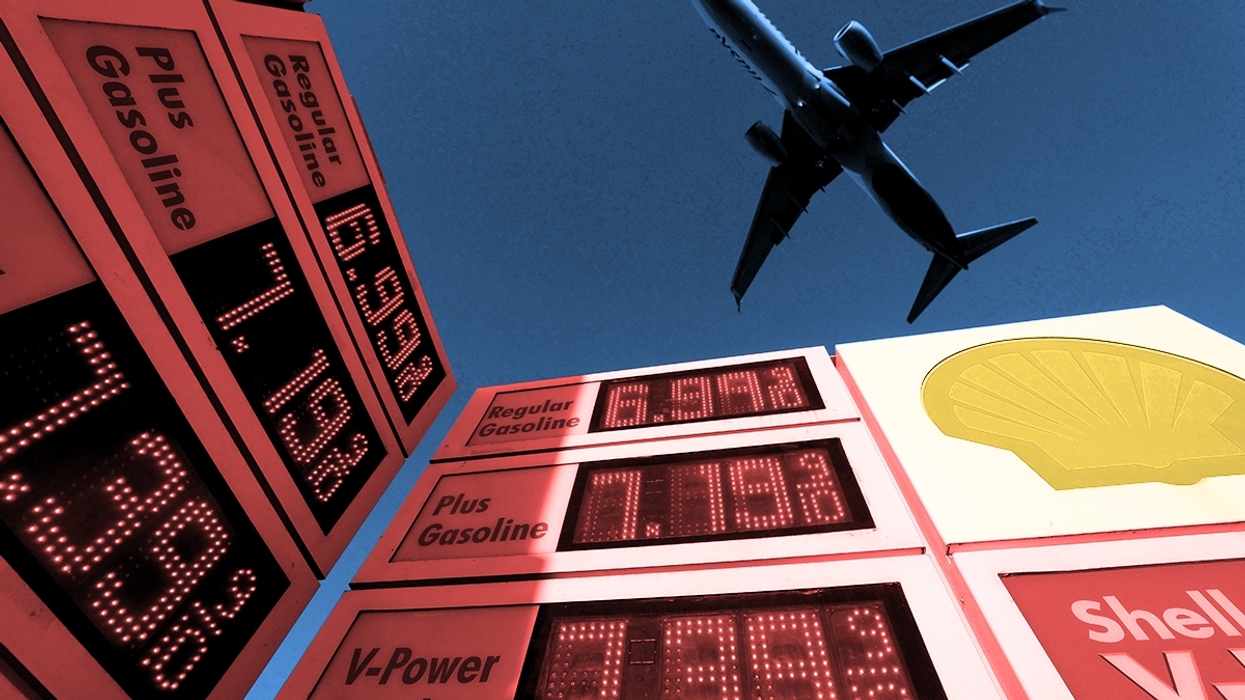
The energy crisis brought about by the Iran War has not changed the Trump administration’s priorities. Officials are still pushing the same litany of pro-fossil fuel policies now as they have since as far back as the 2024 campaign — but it has given them a new sense of verve. With 20% of the world’s oil production and 20% of the liquified natural gas market affected in some way or another by the effective closure of the Strait of Hormuz, one might think a change of course might be called for. But no — now more than ever, U.S. officials are saying, it’s time for the Trump energy agenda.
Here are a few examples from recent days of U.S. officials using the energy shock to advance Trump-favored policies:
Secretary of the Interior Doug Burgum has been acting as an energy project pitchman, promoting a long-discussed LNG project in Alaska that would bring gas from the state’s North Slope some 800 miles to a terminal on its Pacific Coast at Cook Inlet.
The project has been talked about for decades, but its high price (last estimated at around $44 billion — though that was in 2015) and uncertainty about LNG demand have prevented it from getting underway. While the project’s developer, Glenfarne Group, has won preliminary commitments from Asian buyers, it has yet to get final commitments or make a final investment decision.
Burgum has been a cheerleader for Alaska LNG since before the current war with Iran, saying in December that the project “strengthens U.S. energy security, creates jobs for Alaskans, and reinforces our commitment to a permitting system.” When he made a brief stop in Anchorage earlier this month on his way to an energy conference in Tokyo, he used the opportunity to sell Alaska LNG alongside the state’s governor, Mike Dunleavy.
“We have enough energy to be able to sell to our friends and allies so they don’t have to buy from our adversaries or be threatened by our adversaries in terms of their supply chains,” Burgum told reporters, according to the Anchorage Daily News. “So that policy is more important than ever.”
The conference itself had been planned before the war in Iran began. Upon landing there, Burgum told Bloomberg that the “urgency” around investing in and buying U.S. energy “had gone up,” due to the war.
Adam Prestidge, president of Glenfarne’s Alaska LNG project, echoed Burgum at a state legislative hearing on Monday, according to the Daily News.
“The direct impacts of the events in Iran have been a real acceleration and intensification,” Prestidge told legislators. Late last week, Dunleavy called for legislation creating a property tax exemption for the project to ease its path to completion, a sign that it’s gathering steam and may actually, finally come to fruition.
For months, American officials have badgered Europe to revise rules on methane emissions set to go into effect next year, which will require energy importers to demonstrate that the “monitoring, reporting, and verification requirements” for preventing methane emissions in export countries are “equivalent to those applied domestically in the E.U.,” or else face penalties. Late last year, American diplomats told European Union officials that the U.S. should be exempt from the rules and from any penalties for noncompliance, The New York Times reported. Secretary of Energy Chris Wright has argued that the rules would be ineffective and would constitute “regulatory overreach.”
Earlier this week, the American ambassador to the European Union, Andrew Puzder, told Bloomberg that Europe is “going to need to reduce the regulatory requirements and restrictions that it has in place,” adding that “It could be a very severe energy crisis if Europe doesn’t act,” given the conflict in the Gulf.
The Trump administration has also leveraged the energy crisis to keep the E.U. in line on trade, with Puzder telling the Financial Times that the bloc should approve the trade deal negotiated by Trump and European Commission President Ursula von der Leyen last July lest the E.U. risk losing “favorable” access to liquified natural gas. A key component of the deal was a minimum tariff on European Union goods — part of the set of tariffs that was thrown out by the Supreme Court last month. Trump quickly implemented a temporary global tariff on all imports, however, and the European Parliament voted on Thursday to advance their side of the deal, eliminating many tariffs on U.S. goods.
Wright has also been calling on American oil producers to drill more, a more or less constant mantra from throughout Trump’s political life.
“Prices went up to send signals to everyone that can produce more: ‘Please, produce more,’” Wright said during a speech Monday at the CERAWeek energy conference in Houston. At the same time, he said that “prices have not risen high enough yet to drive meaningful demand destruction,” and pointed to Trump administration efforts to keep prices contained, such as releasing 172 million barrels of oil from the Strategic Petroleum Reserve.
Burgum was similarly optimistic about oil prices, telling Politico earlier this week that high prices would last “weeks not months.”
So far, there’s little evidence that American oil drillers are substantially overhauling their investment plans. Oil investors still prefer to see “capital discipline,” meaning that the impetus for substantially increased drilling may have to be permanently higher prices — exactly what the Trump administration doesn’t want.
“Capital discipline in key U.S. operators — both oil and gas-focused — is still in place, despite recent uptick in oil prices,” Mizuho analyst Nitin Kumar wrote in a note to clients Wednesday. One executive told the Mizuho analysts that “resource depth, service costs, and cost of capital” are “key barriers to a short-term supply response” from shale drillers. Kumar wrote that “this, in our view, is positive for commodity prices over the longer term, even assuming a deescalation of hostilities in the Middle East.”
On March 10, the U.S. Energy Information Administration bumped up its forecast for American oil production in 2026 by 500,000 barrels per day, to 13.8 million barrels. That same forecast assumed that Brent crude prices would remain above $95 per barrel “over the next two months.”
By far the most effective price intervention since the war began has been Trump’s various indications that it will be over soon. Oil benchmarks fell substantially after Trump announced a five-day moratorium on hitting Iranian energy infrastructure on Monday and as reports of negotiations to possibly end the war emerged, with West Texas Intermediate Crude falling from almost $100 a barrel to around $87 before rising back up to $93. Trump extended his deadline to Iran Thursday for another ten days to April 6.
Trump’s hostility toward renewables is also largely unchanged — just days after the Department of Justice declined to appeal a ruling in favor of an offshore wind project, the administration struck a deal with French energy company TotalEnergies that, in effect, trades an offshore wind lease for investment in natural gas.
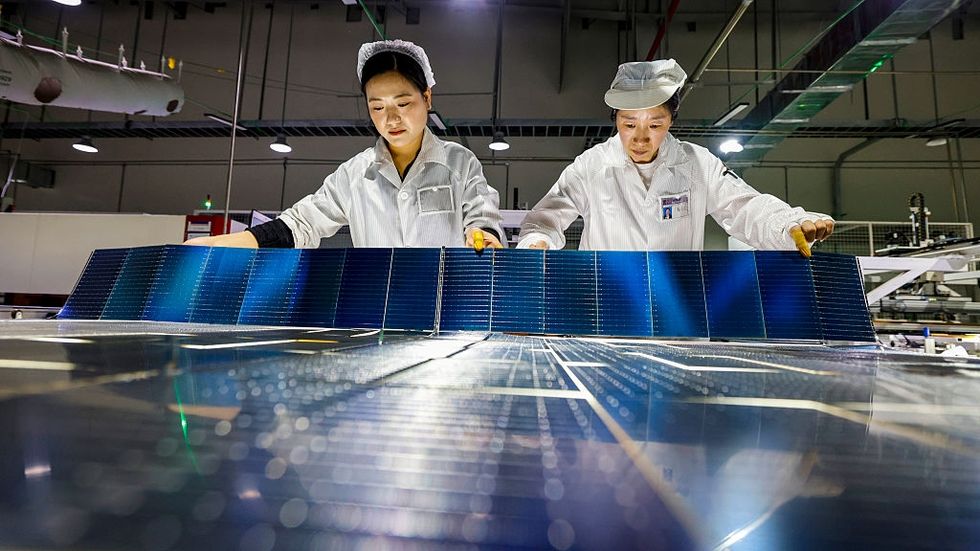
“The irony in all of this is it’s driving many, many more countries to look to China for all the different electricity technologies,” Josh Freed, senior vice president for the climate and energy program at Third Way, a center-left think tank, told me. “This is a real own goal by the United States by abandoning domestic development of electricity technology.”
Nor, in a more unstable and uncertain energy world, is the U.S. seeking to become a major exporter of green technology to countries that are looking to reduce their reliance on fossil fuels. The administration has yanked funding from dozens of green industrial projects and overseen a dramatic fall in electric vehicle sales, while battery capacity is being converted for use by data centers.

Log in
To continue reading, log in to your account.
Create a Free Account
To unlock more free articles, please create a free account.
A longtime energy analyst argues that there are no solutions to the hyperscale problem, only tradeoffs.
Sam Altman, Dario Amodei, and Elon Musk need sign-off from fewer than a dozen board members to commit their companies to multibillion-dollar moves. The power plants that supply their data centers need sign-off from 13 states (plus D.C.), thousands of generators, millions of customers, and a federal regulator whose ratemaking standard predates the personal computer in order to build anything new.
Everyone in tech knows about the CEOs of the foundational artificial intelligence labs. Only energy nerds know the names of the people running our grid operators. That anonymity is a feature, not a bug. Grid operators generally think in decades, not years. But right now, they’re telling the U.S. that it has years, not decades, to figure out its own new path forward.
For decades, this process sufficed for energy generators (and regulators) grown accustomed to gradual, predictable load growth. But over the past several years, the scale and speed of increasing energy demand has overwhelmed the supply -side’s ability to respond. The resulting strain on the grid has reverberated through every rung of the supply chain, delaying development timelines, increasing costs, and elevating energy from political conversations to dinner table discussions.
The loudest creaks and groans are coming from PJM Interconnection, North America’s largest grid operator. Residential bills in the PJM service area are climbing at a dizzying pace. Recent capacity auctions have ended with record prices, which PJM’s own market monitor blames on the explosive growth in data center power demand. Pennsylvania Governor Josh Shapiro has attempted to pressure PJM to lower its capacity price cap. Even Secretary of Energy Chris Wright has called on the Federal Energy Regulatory Commission to develop new procedures to help get data centers online faster.
David Mills, PJM’s CEO, published a 70-page report in May acknowledging that current market rules cannot keep pace with AI-driven load growth. And yet he also refused to recommend a path forward, leaving the decision to “state regulators and legislatures, to FERC, to consumers.”
The most essential grid infrastructure, he explained, “is not a price curve or a performance obligation — it is legitimacy.” In other words, what’s broken isn’t a parameter inside the capacity market, but rather the capacity market itself, along with the political conditions under which it operates. PJM calls this the “credibility trap”: high prices accurately signal that new investment is needed, but when those prices become politically untenable, government intervenes and investment stalls.
The fix, Mills writes, “requires structural choices, not just parameter adjustments.”
Mills is speaking to a deeper issue with the grid than its ability to respond to shifting market dynamics, which is that hyperscalers and grid operators are built to solve two different kinds of problems. Hyperscalers solve engineering problems with specifiable objectives, known constraints, verifiable outcomes. Engineering problems reward concentrated authority and unilateral decision-making.
Grid operators, on the other hand, solve coordination problems. The information they rely on to do so is dispersed across millions of stakeholders, continuously revised and often contradictory, and operators’ preferences are not so much known as they are revealed through deliberation. FERC’s standard for wholesale rates is not whether those rates are objectively “correct,” but rather whether the market settled on those rates through fair competition. The process does not just determine the answer, it essentially is the answer.
This construction is the category error driving the current AI-grid collision. The electricity grid is not an engineering problem with coordination problems attached. It is a coordination problem with engineering problems embedded in it. Treat it as the former and you lose all the information that gets generated in the process of market-based price discovery. You also lose all the buy-in that occurs when real people are faced with real trade-offs and have to make hard, binding choices.
Mills did lay out three possible structural paths in his May letter:
These pathways are not equivalent — unlike with an engineering problem, there are no cut-and-dried solutions here. There are only trade-offs and questions about who bears their consequences. Path C is likely the better answer, while Path A is more expedient. The gap between them is the work PJM’s constituents have to manage over the coming years. PJM may choose the wrong path, or arrive at the right one too late.
The alternative is not hypothetical. If hyperscalers aren’t willing to wait for PJM customers to decide which path they want to take (and recent history suggests they are not) they will build behind-the-meter generation, sign bespoke deals with regulated utilities, and restart dormant nuclear plants. America would be left with two grids, one for compute, one for everything else. The first will be reliable and expensive. The second will be cheaper, fragile, and stranded with the costs of the system the first walked away from. The market would lose the dispatch signal, the error-correcting price mechanism, and the legitimacy of the system that has reliably powered the Mid-Atlantic for two decades.
Economist Friedrich Hayek described the limits of humans’ planning capabilities better than anyone in his 1974 Nobel Prize lecture, using the metaphor of the craftsman shaping his handiwork versus the gardener cultivating growth. The craftsman thinks they can make a perfect tool but repeatedly runs up against the boundaries of their own knowledge, whereas the gardener learns to manage new information as it arises, tending not to the product itself but rather to the conditions that produce it.
Hyperscalers are not bad actors. They have legitimate interests and the political capital to help shape the grid’s future. But we should resist the Newtonian urge to meet unexpected, swiftly moving demand with equally swift supply. Markets and physical systems both tend toward equilibrium, but the former finds it through deliberation, not collision. Instead of trying to unilaterally craft a better grid, hyperscalers might find a better path if they work with the practitioners who already know how to garden.
On Greenland’s rare earths, Baker Hughes’ geothermal bet, China’s green H2
Current conditions: A sprawling heat dome stretching from the Midwest to the East Coast is raising temperatures for more than 200 million Americans upward of 100 degrees Fahrenheit this week • Three firefighters died battling wildfires along the Colorado-Utah border on Saturday, while winds fanned the flames of the Cottonwood Fire in southwest Utah into the largest blaze in the U.S. right now • Back-to-back tropical storms Mekkhala and Higos battered Japan’s coast over the weekend, leaving at least one dead in a landslide.
For much of the past decade, Japan looked primed for offshore wind development for the same reasons the American industry first took root in the Northeast: It’s coastal, densely populated, and — with its nuclear power stations either shut down or idled — it’s more reliant on fossil fuels that it doesn’t locally produce than ever before. But building turbines off Japan’s shores has proven tricky as project costs ballooned. On Friday, Norway’s Equinor announced its decision to close its offshore wind division in Japan, after failing to win any leases at repeated auctions over the past eight years. “This decision reflects a reassessment of Equinor’s strategic direction, with a strengthened focus on integrated power markets,” the company said in a statement on its Japanese website.
The move comes two years after Denmark’s Orsted exited Japan. Last August, a consortium led by the industrial giant Mitsubishi pulled out of Japan’s first three offshore wind projects citing what Reuters described as concerns of surging costs. Last October, as I told you at the time, the newly elected government of Prime Minister Sanae Takaichi postponed a key procedural step for setting government funding levels for offshore wind projects. Instead, as you may recall, Takaichi has put a heavy focus on restarting the nuclear reactors mothballed after the 2011 Fukushima disaster and even expanding the fleet.

For much of the 20th century, the geopolitical relevance of the world’s largest island stemmed from its central location as a kind of poker table situated right where Washington, Brussels, and Moscow meet. More recently, it’s been about Greenland’s untapped mineral riches. As polar ice recedes, the autonomous Danish territory has opened previously inaccessible deposits of rare earths and copper to prospecting. For Greenland, whose population of fewer than 60,000 is roughly 85% Indigenous, mining has offered an opportunity to diversify its economy beyond just fishing, augmenting an expanding tourism sector with some heavy industry. In 2017, when I visited local political officials in Nuuk, the capital, sustainability-minded liberals pined for an alternative development approach that took advantage of Greenland’s unique and pristine wilderness to, for example, build out a biomedical industry that draws upon research into the survival traits that allow life to thrive in harsh polar environments. At the time, the populists pitching industrialism as a fast track to independence seemed, to me at least, destined to win the argument. But the green techno-optimists may yet get the chance to prove their approach.
Last week, regulators in Nuuk formally rejected an Australian mining company’s bid to renew its exploration license for one of the most advanced rare earths projects in Greenland. The Western Australia-based Energy Transition Minerals had been locked in litigation with the Greenlandic government over whether its project could safely extract rare earths such as neodymium, praseodymium, and terbium for magnets and batteries without producing uranium as a byproduct. A previous government in Greenland had banned uranium mining in 2021, effectively halting ETM’s Kvanefjeld project. But the company had told investors in February that it “remains confident in the merits” of its position in negotiations with Greenland and “resolute in our intention to develop Kvanefjeld responsibly and in accordance with international best practice.” Just last week, the company published data showing that it had identified 10 new rare earth deposits “with uranium levels recorded below regulatory thresholds.” If it factored into negotiations at all, it wasn’t enough to change the outcome. Following the rejection on Friday, the company told Reuters: “Greenland has positioned itself as open for business. This decision creates a different impression.” In a sign of how the political winds may be shifting, the headline on Sunday’s front-page story in Sermitsiaq, one of Greenland’s only national newspapers, warned of the “environmental bombs” coming just from future American military bases on the island.
Of all the ways to build up, shore up, and clean up America’s grid, geothermal energy is easily among the most elegant, narratively speaking. We already quietly operate the world’s largest geothermal power plant. The new generation of companies racing to build new power stations require the very same battle-hardened drilling equipment, technologies, and workers that sustained the fracking boom and turned the U.S. into a top global producer of oil and gas. Many of the best-mapped hot rocks are located out west, where the federal government owns vast tracts of land, meaning the strong bipartisan consensus in support of geothermal energy development can, in fact, translate into faster approvals for projects. It’s a bet that one of the nation’s largest oilfield services providers is now making. Last week, Baker Hughes inked a deal with the geothermal developer Mantle Reach Power to support construction of as much as 500 megawatts of new generating capacity. As part of the deal, Baker Hughes will provide its drilling technologies, in a move the company said would “de-risk and deliver” on the promises of geothermal power. “Geothermal is a clean power solution that is proving to be a vital contributor to advancing sustainable energy development, with incredible potential to enhance U.S. energy security, support digital infrastructure, and ensure energy remains accessible and affordable,” Baker Hughes CEO Lorenzo Simonelli said in a statement.
Meanwhile, federal regulators just approved the environmental review of a new conventional geothermal project. Once complete, Ormat Technologies’ Pearl geothermal project in Nevada’s Esmeralda County will generate up to 60 megawatts of power. It’s just the latest approval of what Think Geo Energy called a series of approvals for Ormat’s proposed expansion in Nevada.
Sign up to receive Heatmap AM in your inbox every morning:
Even before the Iran War, momentum was gathering in China for a green hydrogen buildout. The “most important low-carbon policy for 2025,” according to the analyst Jian Wu, was China’s decision to start subsidizing green hydrogen-related applications from central government coffers for the first time as Beijing sought to wean off fossil fuel imports and make use of solar and wind farms that had grown so abundant that the country’s grid operators recently phased out key incentives for renewables. Since the war, Beijing has turned its attention to shoring up its domestic fuel supplies, whether by increasing its domestic drilling, chemically-processing coal, or zapping water with enough renewable electricity to cleanly separate out the hydrogen molecules. Now it’s placing a big bet on the latter. China just put out a new five-year plan for the energy sector with a goal to install more than 2 million metric tons of annual capacity to produce green hydrogen by the end of the decade, Hydrogen Insight reported. That would more than double the existing capacity.
Overall, the document raises the target for China to generate half its electricity from non-fossil sources by 2030. But its goals for the wind and solar sectors represent a significant slowdown from the recent pace of development, indicating the government’s interest in diversifying its carbon-free electricity sector.
At present, I see three guarantees in my life: Death, taxes, and the likelihood that another Chinese nuclear plant will make significant enough progress to merit telling you about it. Readers hoping to understand the stakes of America’s incipient nuclear renaissance are wise to keep track of how successfully China’s state-owned reactor developers have been building their own domestically-sourced version of the flagship U.S. reactor design. I can’t keep track of how many times we have covered Chinese reactor milestones. But add this to the list: Last week, World Nuclear News reported, the second of six Hualong One reactors at the Taipingling nuclear power plant in Guangdong province started up, sustaining a chain reaction for the first time. The speed with which China General Nuclear completed the domestically-supplied reactor — the design for which is largely cribbed from the Westinghouse AP1000 — highlights the strategy American atomic energy advocates are increasingly promoting. A nonprofit called the Nuclear Scaling Initiative launched in 2024 to propound the idea of focusing on reactors that can be built identically over and over.
Investors debate the right way to bet on the nuclear revival, and the growing list of startups debuting on the stock market through reverse merger deals that require less scrutiny than traditional initial public offerings provides ample grist for disagreement. But here’s a surefire wrong way: Selling $1.5 million of call option contracts for your employer’s stock on the day of a major announcement that you are playing a pivotal role in overseeing. Yet that’s exactly what the Department of Justice accuses Casey Muggleston, a former engineering manager in charge of relicensing the shuttered Three Mile Island power plant, of doing on the very day his employer, Constellation, announced a landmark deal with Microsoft to reopen the facility to supply its data centers with electricity. If convicted, Muggleston could face a maximum of 25 years in prison, according to ABC27, a TV news station in Harrisburg, Pennsylvania.
There is a heat wave in Europe, the world’s fastest warming continent. And so, as you may have heard, a perennial topic of online climate discourse has returned: Why don’t more Europeans have air conditioning?
I’m partially convinced this is psy op, or at least a figment of how social media organizes attention. I have a hypothesis that various “For You” page algorithms, especially that of the social network X, began to reward content that performed unusually well across national borders a few years ago. Since then, the amount of America vs. Europe content has surged. (Of course, writers have been comparing American and European lifestyles for much longer than that.)
Suffice it to say, though: It’s a fraught topic. I’ve assumed that as extreme heat gets worse as the climate changes, Europeans will simply get on with it and install AC, much as Americans in the Pacific Northwest have done. Yet there are cultural and regulatory obstacles to AC’s growth in Europe.
I’m sure I’ll write about it in the future, but for now I want to get a grip on the facts themselves. And so as a Friday special, I present to you — the facts about European AC, as I understand it:
Thanks so much for reading, and talk soon.