What are utilities anyway? And what are they supposed to do? Elected officials, regulators, utility executives, and scholars are asking fundamental questions about the so-called “regulatory compact” that has governed electric utilities for — depending on who you ask — decades or a century.
Two events in the past week crystallized the moment of transition electric utilities find themselves in.
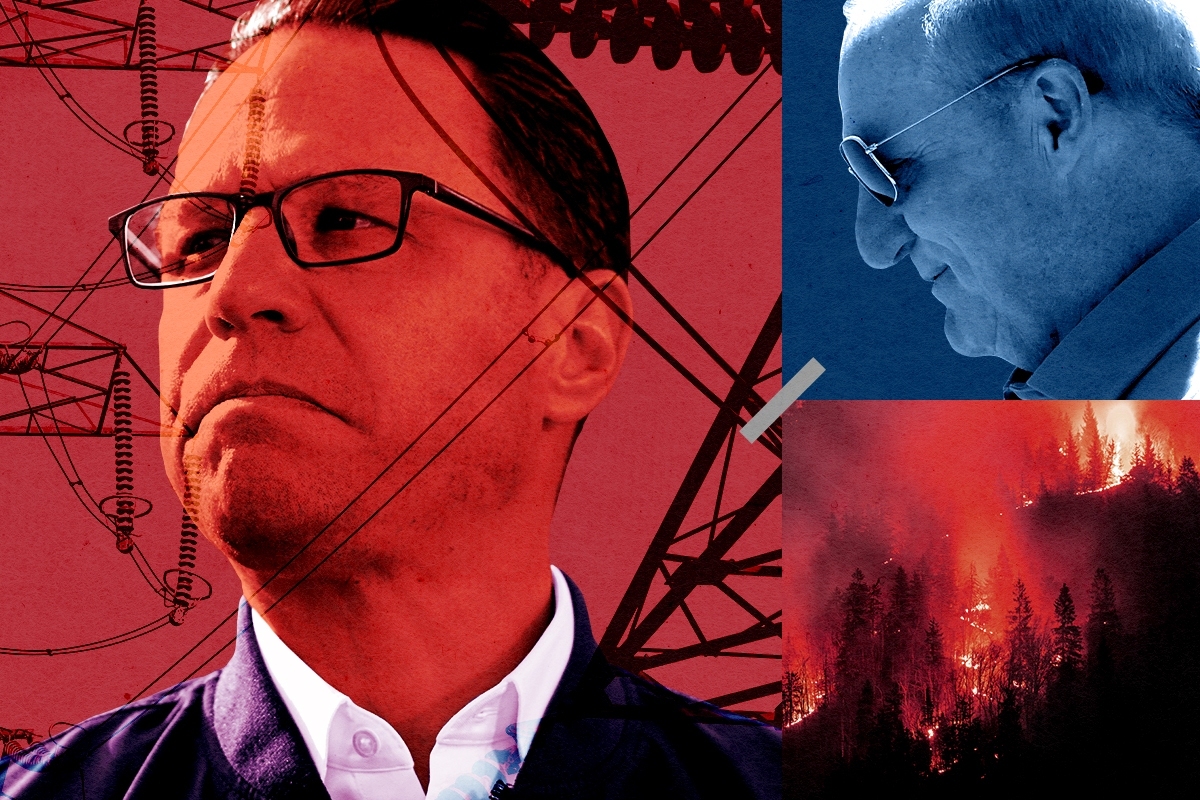
In Pennsylvania, Governor Josh Shapiro, wrote a letter to the state’s utilities (including water and gas), telling them that “the 20th century utility model is broken,” citing “markedly higher utility costs” and “rising utility bills” which he claimed were in part the “result from your policy and fiscal decisions, including the excessive rate requests several utilities have sought in recent years.”
And over the weekend at the Berkshire Hathaway annual meeting, its new chief executive Greg Abel, who came up in the conglomerate through its energy division, was also speculating that utilities may be at a precipice. “What’s the challenge? It’s the regulatory compact,” Abel said at the company’s annual meeting.
The way he explained the utility business, “We leave your capital, our owner's capital, Berkshire’s capital, in these businesses, and often a portion of the earnings that they generate, we may reinvest back into those businesses. And for that, we get a very specific set of returns. And, over the long run, it’s been a very balanced and fair return,” Abel said, referring to the setup where utilities make investments approved by state regulators for which they receive a regulated return on their capital. “That model has worked very good for a number of years,” Abel said.
But, he cautioned, that model is becoming “more stressed.”
The dilemma, Abel said, was that utilities’ have high investment needs, including from replacing existing assets, while state regulators and governors want to keep rates as low as possible. “If we don’t see that balance, we don’t deploy our capital back into those businesses or into those utilities.”
The Berkshire Hathaway-owned utility PacifiCorp, which operates in the Western United States, has been challenged by high legal claims stemming from wildfires, especially in Oregon, and has been seeking to get legislation passed in a number of states to limit wildfire liability.
Earlier this year, it agreed to sell almost $2 billion worth of assets in Washington state, citing “diverging policies among the six states PacifiCorp serves [that] have created extraordinary pressure, affecting the company’s ability to meet demand reliably and at the lowest cost to customers.”
The utility was threatened with credit downgrades following large jury awards stemming from wildfire claims in Oregon. Washington is also a state with an aggressive decarbonization timeline and mechanisms that PacifiCorp has chafed against, claiming they would raise costs for its customers in other states.
Americans everywhere are angry about electricity costs but utilities think too much is being demanded of them to profitably run their businesses.
In the West, those high costs stem from wildfire-related damages that existentially threaten utilities. (PG&E in California even went bankrupt over wildfire liability.)
On the East Coast, electricity costs are rising in part due to data center construction and the structure of PJM, the 13-state electricity market that runs from Washington, D.C., to Chicago. Here, elected officials are angry at utilities for skyrocketing costs while those who manage the electricity market say that the real issue is regulatory barriers to bringing on the new generation they think they need (i.e. gas).
In both cases, the “regulatory compact” — utility investment in exchange for regulated rates that allow future investment — is seen as under threat.
Where Greg Abel sees the model endangered by uncapped liability and decarbonization mandates, Shapiro sees the threat in higher costs to consumers. Over the past five years, electricity prices in Pennsylvania have risen 47% while average bills have grown 49%, from $116 per month to $169, according to the Heatmap-MIT Electricity Price Hub.
“We can no longer simply prioritize corporate profitability to drive infrastructure development,” Shapiro wrote in his letter.
The commonwealth’s government has been doing more than just writing letters. The utility PECO Energy, a subsidiary of Exelon that serves the Philadelphia area, withdrew a recent rate case in April asking for over $500 million worth of electricity and gas rate hikes. The Governor’s office didn’t just claim credit for the pulled rate case, it announced it, with Shapiro saying in a statement, “PECO’s proposed rate case would have increased Pennsylvanians’ utility bills, but I demanded that their CEO put customers first and withdraw their rate hike request.”
Now Shapiro wants more fundamental reforms to how utilities operate in the state, including asking the utilities to fund themselves more by borrowing money, including from the federal government through Department of Energy programs.
“Consumers should not be expected to bolster corporate profits through over reliance on costly equity,” Shapiro said in his letter, and asked that utilities fund themselves with a “clear majority” of borrowed money.
Utilities have high investment needs. They finance these with a mix of debt (borrowed money) and equity (shares it sells to investors). They then gets a regulated return on the equity portion of its total approved capital investments, known as its “rate base.” That return on equity is recovered through ratepayers’ bills.
Berkshire Hathaway’s Abel argues that if the utility business becomes less appealing to investors, there will be less investment. But Shapiro thinks that there’s a lower cost way to finance utility investment, money borrowed from investors, i.e. debt. His approach rhymes with other utility reformer ideas around lowering the return on equity that utilities ask for in their rate cases, often around 10%.
“The average Pennsylvania utility requested a return on equity a staggering 682 basis points above the 10-year U.S. Treasury yield last year. Before raising such expensive equity, you should take advantage of more affordable sources of capital,” Shapiro wrote.
For the equity utilities do fund themselves with, Shapiro writes, those returns must be “transparent” and “justifiable,” and no longer be based on “educated guesses.” He instead proposed a market process to determine a fair return based on “competitive bidding by multiple participants to establish a fair market cost of that equity” or setting one by a combination of returns on government debt and a measure of the returns stocks get over debt on average.
Shapiro’s proposal could take down Pennsylvania utilities’ return on equity down to the “high 8%s” according to Jefferies analyst Julien Dumoulin-Smith. In the now-withdrawn PECO rate case, the requested ROE was almost 11%. (Other utility reform advocates have called for pulling ROEs down to around 6%.)
As a result, Dumoulin-Smith argues, Pennsylvania utilities “could see authorized ROE trends well below peers in prospective rate cases,” which will mean “gradual capital expenditure reductions to align with the new reality,” i.e. less investments by utilities in new transmission and distribution lines, substations, and other grid infrastructure even as demand increases.
This gets to the crux of utility regulation at a time of public anger at ballooning prices: how will utilities be able to revamp an aging grid, prepare for electrification of home heating and transportation, build news transmission for new renewable resources, and build out the grid infrastructure necessary for the data center boom? And what about that wildfire liability? All while making a fair return for investors that passes musters with regulators, elected officials, and voters?
The answer many have come up with is to transform the “regulatory compact.” This can mean, as some scholars have proposed, not offering firm service to all new customers. It can mean getting data center developers and their customers to specifically pay for grid upgrades.
In the case of wildfire liability, the California Public Utility Commission has declared that the set-up of the modern regulatory compact in the Golden State, with utilities required to serve all customers in the state (including in severe fire hazard areas) and then be liable for damages that get passed on to ratepayers, is “unsustainable.”
“Our existing system places outsized and unsustainable burdens on utilities and utility ratepayers to mitigate the risks of wildfires and pay for wildfire damages,” the CPUC wrote in a report mandated by a recent wildfire bill. This translates to higher borrowing and cost of equity for utilities, as well as higher rates.
The CPUC recommended a version of opening up the compact, arguing that the state “should consider funding a portion of utility wildfire mitigation from non-ratepayer sources,” including the state’s general fund (i.e. taxpayers). This echoes Shapiro’s proposal to have the state fund itself with cheaper public equity.
“Public debt is typically cheaper than private credit,” Josh Macey, a professor at Yale Law School, told me.
Another approach is to limit what utilities owe, thus ensuring that they can maintain reasonable returns and stay in business in the states they operate in.
In Utah, Berkshire Hathaway was able to win liability limitations for wildfires, including time limits on claims, the ability to use ratepayer dollars for wildfire mitigation plans, and limiting utility liability from wildfire claims if they comply with wildfire mitigation plans, a model it has tried to export to other states PacifiCorp operates in.
But do all these challenges to utilities represent the end of the “regulatory compact,” as Abel might put it?
For Abel, he claims that changes (or lack thereof) in state law have led to Berkshire’s exiting Washington and potentially other states. In Pennsylvania, analysts claim that changes to the debt-equity mix could mean fewer capital investments. In California, state regulators think utilities are being asked to do too much.
But will these utility reforms mean the death of the utility model itself? Maybe not — after all, PacifiCorp was able to sell its Washington assets to another utility.
The compact is “a kind of political intuition that if we’re asking them to provide low cost, consistent service, we have to give them a real right to kind of recover the costs and earn a steady profit,” Macey said. “It’s hard for me to imagine how that could break down, because if you really see a state not allow a utility to have some chance of doing good business in the state, the utility will not be able to attract capital, and as a political matter, the state will not be able follow through with that.”





 Solar capacity keeps growing. GoodPower