The Fight

Sign In or Create an Account.

By continuing, you agree to the Terms of Service and acknowledge our Privacy Policy

Hotspots

One Wind Farm Dies in Kansas, Another One Rises in Massachusetts

Plus more of the week’s top fights in data centers and clean energy.

The United States.
Heatmap Illustration/Getty Images

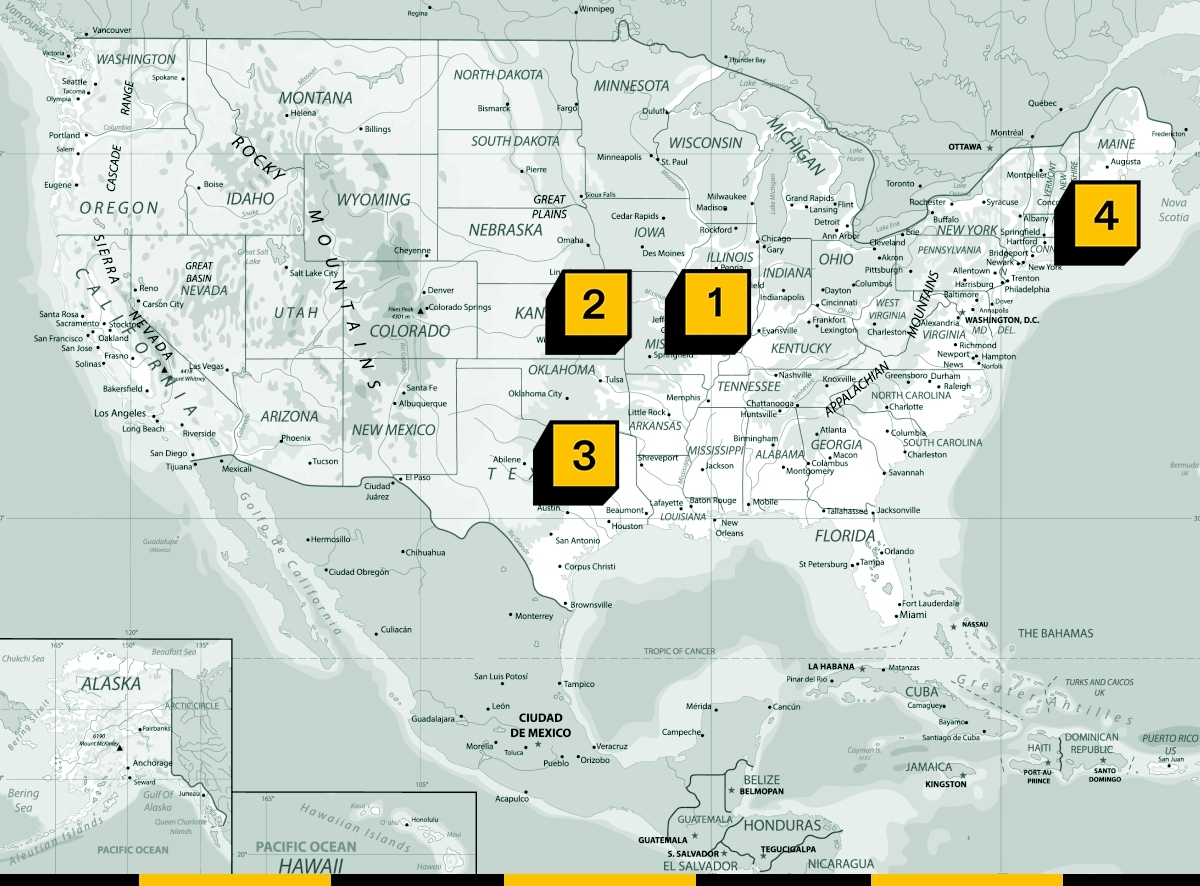
1. Osage County, Kansas – A wind project years in the making is dead — finally.

  • Steelhead Americas, the developer behind the Auburn Harvest Wind Project, announced this month that it would withdraw from its property leases due to an ordinance that outright bans wind and solar projects. The Heatmap Pro dashboard lists 34 counties in Kansas that currently have restrictive ordinances or moratoria on renewables, most of which affect wind.
  • Osage County had already denied the Auburn Harvest project back in 2022, around when it passed the ban on new wind and solar projects. The developer’s withdrawal from its leases, then, is neither surprising nor sudden, but it is an example of how it can take to fully kill a project, even after it’s effectively dead.

2. Franklin County, Missouri – Hundreds of Franklin County residents showed up to a public meeting this week to hear about a $16 billion data center proposed in Pacific, Missouri, only for the city’s planning commission to announce that the issue had been tabled because the developer still hadn’t finalized its funding agreement.

  • A number of residents were already skeptical of the proposal, and the cancellation seemed to leave a bitter taste in their mouths. “You just wasted all these people’s time,” one resident said, according to local media.
  • Opponents to the data center have cited a now-familiar list of concerns: that the project could exacerbate air pollution, erode the agricultural and residential character of the community, and consume disproportionate quantities of water. (It’s worth noting that experts have largely dismissed water concerns around data centers and say that water consumption is comparable to that of other large developments, such as golf courses and farms.)
  • It’s not clear what the next steps are for the project, but whatever they are, the meeting cancellation seems likely to fuel a perceived lack of transparency around the project. The transparency question has become a major point of contention for data centers in recent months, particularly as some local officials have signed non-disclosure agreements with developers.

3. Hood County, Texas – Officials in this Texas County voted for the second time this month to reject a moratorium on data centers, citing the risk of litigation.

  • The 3-2 vote reflects a key characteristic of Texas’s development regime: counties have limited authority to regulate what’s built within their borders, and even a temporary moratorium can incur a lawsuit. The minimal permitting requirements have their roots in Texas’s low-regulation, development-friendly culture, and they’re a reason why the state has become a leader in wind and solar generation. They’ve also made the state an attractive place to build data centers, even more so because electricity prices are relatively cheap and colocated generation can be spun up without too much trouble.
  • Other states that have experienced a surge in data center development have tended to see a corresponding spike in local restrictions, even when the state itself has tried to incentivize the buildout. In Michigan, for instance, which passed tax incentives for data centers last year, at least a dozen counties have passed temporary development bans; Georgia has seen a comparable number, according to Heatmap Pro data. Texas, by contrast, has none.

4. Nantucket County, Massachusetts – On the bright side, one of the nation’s most beleaguered wind projects appears ready to be completed any day now.

  • Sixty of 62 turbines have been installed on Vineyard Wind, developers for the 800-megawatt offshore wind project said. Its future was far from certain throughout the permitting and construction process: Approved by the Biden administration in 2021, the project faced multiple lawsuits from commercial fishing groups and the Texas Public Policy Foundation. In July 2024, the collapse of a turbine blade left debris strewn along the beaches of Nantucket, leading to beach closures, outrage among island residents, and more lawsuits.
  • The Supreme Court dismissed the fishing-related lawsuits in May of last year, and Nantucket settled with GE Vernova, the turbine blade manufacturer, that July. Trump’s pause on offshore wind construction last December represented a final challenge to the project; with a judge’s ruling last month that construction could continue as the developer and federal government hash it out in court, it looks like work on Vineyard Wind may finally be coming to an end.
Yellow

This article is exclusively
for Heatmap Plus subscribers.

Go deeper inside the politics, projects, and personalities
shaping the energy transition.
To continue reading
Create a free account or sign in to unlock more free articles.
or
Please enter an email address
By continuing, you agree to the Terms of Service and acknowledge our Privacy Policy
Q&A

Why Renewables Beat Fossil Fuels for Data Centers

Talking with Climate Power senior advisor Jesse Lee.

Jesse Lee.
Heatmap Illustration

For this week's Q&A I hopped on the phone with Jesse Lee, a senior advisor at the strategic communications organization Climate Power. Last week, his team released new polling showing that while voters oppose the construction of data centers powered by fossil fuels by a 16-point margin, that flips to a 25-point margin of support when the hypothetical data centers are powered by renewable energy sources instead.

I was eager to speak with Lee because of Heatmap’s own polling on this issue, as well as President Trump’s State of the Union this week, in which he pitched Americans on his negotiations with tech companies to provide their own power for data centers. Our conversation has been lightly edited for length and clarity.

Keep reading...Show less
Yellow
Spotlight

Data Center Support Plummets in Latest Heatmap Pro Poll

The proportion of voters who strongly oppose development grew by nearly 50%.

A data center and houses.
Heatmap Illustration/Getty Images

During his State of the Union address Tuesday night, President Donald Trump attempted to stanch the public’s bleeding support for building the data centers his administration says are necessary to beat China in the artificial intelligence race. With “many Americans” now “concerned that energy demand from AI data centers could unfairly drive up their electricity bills,” Trump said, he pledged to make major tech companies pay for new power plants to supply electricity to data centers.

New polling from energy intelligence platform Heatmap Pro shows just how dramatically and swiftly American voters are turning against data centers.

Keep reading...Show less
Yellow
Spotlight

Battery Developers Are Feeling Bullish on Mamdani

NineDot Energy’s nine-fiigure bet on New York City is a huge sign from the marketplace.

Battery installation.
Heatmap Illustration/NineDot Energy, Getty Images

Battery storage is moving full steam ahead in the Big Apple under new Mayor Zohran Mamdani.

NineDot Energy, the city’s largest battery storage developer, just raised more than $430 million in debt financing for 28 projects across the metro area, bringing the company’s overall project pipeline to more than 60 battery storage facilities across every borough except Manhattan. It’s a huge sign from the marketplace that investors remain confident the flashpoints in recent years over individual battery projects in New York City may fail to halt development overall. In an interview with me on Tuesday, NineDot CEO David Arfin said as much. “The last administration, the Adams administration, was very supportive of the transition to clean energy. We expect the Mamdani administration to be similar.”

Keep reading...Show less
Yellow