This article is exclusively
for Heatmap Plus subscribers.
Log in
To continue reading, log in to your account.
Create a Free Account
To unlock more free articles, please create a free account.

Sign In or Create an Account.
By continuing, you agree to the Terms of Service and acknowledge our Privacy Policy
Welcome to Heatmap
Thank you for registering with Heatmap. Climate change is one of the greatest challenges of our lives, a force reshaping our economy, our politics, and our culture. We hope to be your trusted, friendly, and insightful guide to that transformation. Please enjoy your free articles. You can check your profile here .
subscribe to get Unlimited access
Offer for a Heatmap News Unlimited Access subscription; please note that your subscription will renew automatically unless you cancel prior to renewal. Cancellation takes effect at the end of your current billing period. We will let you know in advance of any price changes. Taxes may apply. Offer terms are subject to change.
Subscribe to get unlimited Access
Hey, you are out of free articles but you are only a few clicks away from full access. Subscribe below and take advantage of our introductory offer.
subscribe to get Unlimited access
Offer for a Heatmap News Unlimited Access subscription; please note that your subscription will renew automatically unless you cancel prior to renewal. Cancellation takes effect at the end of your current billing period. We will let you know in advance of any price changes. Taxes may apply. Offer terms are subject to change.
Create Your Account
Please Enter Your Password
Forgot your password?
Please enter the email address you use for your account so we can send you a link to reset your password:
It’s aware of the problem. That doesn’t make it easier to solve.

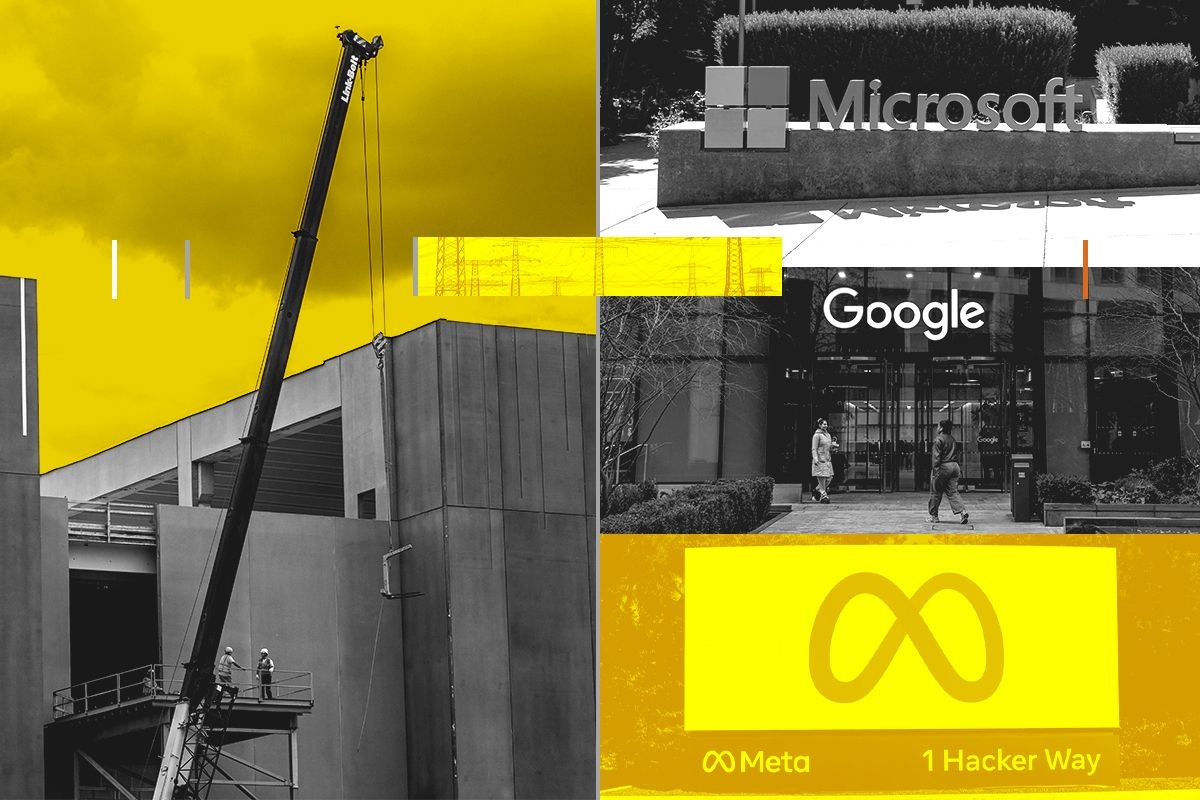
The data center backlash has metastasized into a full-blown PR crisis, one the tech sector is trying to get out in front of. But it is unclear whether companies are responding effectively enough to avoid a cascading series of local bans and restrictions nationwide.
Our numbers don’t lie: At least 25 data center projects were canceled last year, and nearly 100 projects faced at least some form of opposition, according to Heatmap Pro data. We’ve also recorded more than 60 towns, cities and counties that have enacted some form of moratorium or restrictive ordinance against data center development. We expect these numbers to rise throughout the year, and it won’t be long before the data on data center opposition is rivaling the figures on total wind or solar projects fought in the United States.
I spent this week reviewing the primary motivations for conflict in these numerous data center fights and speaking with representatives of the data center sector and relevant connected enterprises, like electrical manufacturing. I am now convinced that the industry knows it has a profound challenge on its hands. Folks are doing a lot to address it, from good-neighbor promises to lobbying efforts at the state and federal level. But much more work will need to be done to avoid repeating mistakes that have bedeviled other industries that face similar land use backlash cycles, such as fossil fuel extraction, mining, and renewable energy infrastructure development.
Two primary issues undergird the data center mega-backlash we’re seeing today: energy use fears and water consumption confusion.
Starting with energy, it’s important to say that data center development currently correlates with higher electricity rates in areas where projects are being built, but the industry challenges the presumption that it is solely responsible for that phenomenon. In the eyes of opponents, utilities are scrambling to construct new power supplies to meet projected increases in energy demand, and this in turn is sending bills higher.
That’s because, as I’ve previously explained, data centers are getting power in two ways: off the existing regional electric grid or from on-site generation, either from larger new facilities (like new gas plants or solar farms) or diesel generators for baseload, backup purposes. But building new power infrastructure on site takes time, and speed is the name of the game right now in the AI race, so many simply attach to the existing grid.
Areas with rising electricity bills are more likely to ban or restrict data center development. Let’s just take one example: Aurora, Illinois, a suburb of Chicago and the second most-populous city in the state. Aurora instituted a 180-day moratorium on data center development last fall after receiving numerous complaints about data centers from residents, including a litany related to electricity bills. More than 1.5 gigawatts of data center capacity already operate in the surrounding Kane County, where residential electricity rates are at a three-year high and expected to increase over the near term – contributing to a high risk of opposition against new projects.
The second trouble spot is water, which data centers need to cool down their servers. Project developers have face a huge hurdle in the form of viral stories of households near data centers who suddenly lack a drop to drink. Prominent examples activists bring up include this tale of a family living next to a Meta facility in Newton County, Georgia, and this narrative of people living around an Amazon Web Services center in St. Joseph County, Indiana. Unsurprisingly, the St. Joseph County Council rejected a new data center in response to, among other things, very vocal water concerns. (It’s worth noting that the actual harm caused to water systems by data centers is at times both over- and under-stated, depending on the facility and location.)
“I think it’s very important for the industry as a whole to be honest that living next to [a data center] is not an ideal situation,” said Caleb Max, CEO of the National Artificial Intelligence Association, a new D.C.-based trade group launched last year that represents Oracle and myriad AI companies.
Polling shows that data centers are less popular than the use of artificial intelligence overall, Max told me, so more needs to be done to communicate the benefits that come from their development – including empowering AI. “The best thing the industry could start to do is, for the people in these zip codes with the data centers, those people need to more tangibly feel the benefits of it.”
Many in the data center development space are responding quickly to these concerns. Companies are clearly trying to get out ahead on energy, with the biggest example arriving this week from Microsoft, which pledged to pay more for the electricity it uses to power its data centers. “It’s about balancing that demand and market with these concerns. That’s why you're seeing the industry lean in on these issues and more proactively communicating with communities,” said Dan Diorio, state policy director for the Data Center Coalition.
There’s also an effort underway to develop national guidance for data centers led by the National Electrical Manufacturers Association, the American Society of Heating, Refrigerating, and Air-Conditioning Engineers, and the Pacific Northwest National Laboratory, expected to surface publicly by this summer. Some of the guidance has already been published, such as this document on energy storage best practices, which is intended to help data centers know how to properly use solutions that can avoid diesel generators, an environmental concern in communities. But the guidance will ultimately include discussions of cooling, too, which can be a water-intensive practice.
“It’s a great example of an instance where industry is coming together and realizing there’s a need for guidance. There’s a very rapidly developing sector here that uses electricity in a fundamentally different way, that’s almost unprecedented,” Patrick Hughes, senior vice president of strategy, technical, and industry affairs for NEMA, told me in an interview Monday.
Personally, I’m unsure whether these voluntary efforts will be enough to assuage the concerns of local officials. It certainly isn’t convincing folks like Jon Green, a member of the Board of Supervisors in Johnson County, Iowa. Johnson County is a populous area, home to the University of Iowa campus, and Green told me that to date it hasn’t really gotten any interest from data center developers. But that didn’t stop the county from instituting a one-year moratorium in 2025 to block projects and give time for them to develop regulations.
I asked Green if there’s a form of responsible data center development. “I don’t know if there is, at least where they’re going to be economically feasible,” he told me. “If we say they’ve got to erect 40 wind turbines and 160 acres of solar in order to power a data center, I don’t know if when they do their cost analysis that it’ll pencil out.”

Log in
To continue reading, log in to your account.
Create a Free Account
To unlock more free articles, please create a free account.
Plus a storage success near Springfield, Massachusetts, and more of the week’s biggest renewables fights.
1. Sacramento County, California – A large solar farm might go belly-up thanks to a fickle utility and fears of damage to old growth trees.
2. Hampden County, Massachusetts – The small Commonwealth city of Agawam, just outside of Springfield, is the latest site of a Massachusetts uproar over battery storage…
3. Washtenaw County, Michigan – The city of Saline southwest of Detroit is now banning data centers for at least a year – and also drafting regulations around renewable energy.
4. Dane County, Wisconsin – Another city with a fresh data center moratorium this week: Madison, home of the Wisconsin Badgers.
5. Hood County, Texas – Last but not least, I bring you one final stop on the apparent data center damnation tour: Hood County, south of the Texas city of Fort Worth.
A conversation with San Jose State University researcher Ivano Aiello, who’s been studying the aftermath of the catastrophe at Moss Landing.
This week’s conversation is with Ivano Aiello, a geoscientist at San Jose State University in California. I interviewed Aiello a year ago, when I began investigating the potential harm caused by the battery fire at Vistra’s Moss Landing facility, perhaps the largest battery storage fire of all time. The now-closed battery plant is located near the university, and Aiello happened to be studying a nearby estuary and wildlife habitat when the fire took place. He was therefore able to closely track metals contamination from the site. When we last spoke, he told me that he was working on a comprehensive, peer-reviewed study of the impacts of the fire.
That research was recently published and has a crucial lesson: We might not be tracking the environmental impacts of battery storage fires properly.
The following conversation was lightly edited for clarity.
Alright let’s start from the top – please tell my readers what your study ultimately found.
The bottom line is that we detected deposition of fine airborne particles, cathode material – nickel, manganese, and cobalt – in the area surrounding the battery storage facility. We found those particles right after the fire, immediately detected them in the field, sampled the soils, and found visible presence of those particles using different techniques. We kept measuring the location in the field over several months after the fire.
The critical thing is, we had baseline data. We had been surveying those areas for much longer before the fire. Those metals were in much higher concentration than they were before, and they were clearly related to the batteries. You can see that. And we were able to see changes in surface concentrations in the soils over time, including from weather – once the rains started, there was a significant decrease in concentrations of the metals, potentially related to runoff. Some of them migrated to the soil.
What we also noticed is that the protocols that have been used to look at soil contamination call for a surface sample of 3 inches. If your sample thickness is that and the layer of metal deposit is 1 millimeter or 5 millimeter, you’re not going to see anything. If you use standard protocols, you’re not going to find anything.
What does that mean for testing areas around big battery storage fires?
That’s exactly what I hope this work helps with. Procedures designed in the past are for different types of disasters and incidents which are more like landslides than ash fallout from a fire. These metal particles are a few microns thick, so they slide easily away.
It means we have to rethink how we go about measuring contamination after industrial fires and, yes, battery fires. Because otherwise it’s just completely useless – you’re diluting everything.
The other thing we learned is that ashfall deposits are very patchy. You can get different samples between a few feet and find huge differences. You can’t just go out there and take three samples in three places, you have to sample at a much higher resolution because otherwise you’ll miss the whole story.
When it comes to the takeaways from this study, what exactly do you think the lessons should be for the battery companies and regulators involved?
There are a lot of lessons we learned from this fire. The first is that having baseline data around a potential fire site is important because then you can better understand the after.
Then, the main way to assess the potential hazards during the fire and after the fire are air quality measurements. That doesn’t tell you what’s in the air. You could have a high concentration of pollen, and then you know the quality of the air, but if you replace that with metal it is different. It’s not just how much you’re breathing, but what you are breathing.
Also, fast response. [Vistra] just released a report on soil saying there was nothing … but the sampling was done eight months after the fire. Our study shows after the fire you have this pulse of dust, and then it moves. Stuff moves to soil, across habitat. So if you don’t go out there right away, you might miss the whole thing.
Finally, what we found was that the fallout from the fire was not a bullseye pattern centered at the facility but rather offset kilometers away because of the wind.
We didn’t know much about this before because we didn’t have a real case study. This is the first real live event in which we can actually see the effects of a large battery burning.
A chat with CleanCapital founder Jon Powers.
This week’s conversation is with Jon Powers, founder of the investment firm CleanCapital. I reached out to Powers because I wanted to get a better understanding of how renewable energy investments were shifting one year into the Trump administration. What followed was a candid, detailed look inside the thinking of how the big money in cleantech actually views Trump’s war on renewable energy permitting.
The following conversation was lightly edited for clarity.
Alright, so let’s start off with a big question: How do investors in clean energy view Trump’s permitting freeze?
So, let’s take a step back. Look at the trend over the last decade. The industry’s boomed, manufacturing jobs are happening, the labor force has grown, investments are coming.
We [Clean Capital] are backed by infrastructure life insurance money. It’s money that wasn’t in this market 10 years ago. It’s there because these are long-term infrastructure assets. They see the opportunity. What are they looking for? Certainty. If somebody takes your life insurance money, and they invest it, they want to know it’s going to be there in 20 years in case they need to pay it out. These are really great assets – they’re paying for electricity, the panels hold up, etcetera.
With investors, the more you can manage that risk, the more capital there is out there and the better cost of capital there is for the project. If I was taking high cost private equity money to fund a project, you have to pay for the equipment and the cost of the financing. The more you can bring down the cost of financing – which has happened over the last decade – the cheaper the power can be on the back-end. You can use cheaper money to build.
Once you get that type of capital, you need certainty. That certainty had developed. The election of President Trump threw that into a little bit of disarray. We’re seeing that being implemented today, and they’re doing everything they can to throw wrenches into the growth of what we’ve been doing. They passed the bill affecting the tax credits, and the work they’re doing on permitting to slow roll projects, all of that uncertainty is damaging the projects and more importantly costs everyone down the road by raising the cost of electricity, in turn making projects more expensive in the first place. It’s not a nice recipe for people buying electricity.
But in September, I went to the RE+ conference in California – I thought that was going to be a funeral march but it wasn’t. People were saying, Now we have to shift and adjust. This is a huge industry. How do we get those adjustments and move forward?
Investors looked at it the same way. Yes, how will things like permitting affect the timeline of getting to build? But the fundamentals of supply and demand haven’t changed and in fact are working more in favor of us than before, so we’re figuring out where to invest on that potential. Also, yes federal is key, but state permitting is crucial. When you’re talking about distributed generation going out of a facility next to a data center, or a Wal-Mart, or an Amazon warehouse, that demand very much still exists and projects are being built in that middle market today.
What you’re seeing is a recalibration of risk among investors to understand where we put our money today. And we’re seeing some international money pulling back, and it all comes back to that concept of certainty.
To what extent does the international money moving out of the U.S. have to do with what Trump has done to offshore wind? Is that trade policy? Help us understand why that is happening.
I think it’s not trade policy, per se. Maybe that’s happening on the technology side. But what I’m talking about is money going into infrastructure and assets – for a couple of years, we were one of the hottest places to invest.
Think about a European pension fund who is taking money from a country in Europe and wanting to invest it somewhere they’ll get their money back. That type of capital has definitely been re-evaluating where they’ll put their money, and parallel, some of the larger utility players are starting to re-evaluate or even back out of projects because they’re concerned about questions around large-scale utility solar development, specifically.
Taking a step back to something else you said about federal permitting not being as crucial as state permitting–
That’s about the size of the project. Huge utility projects may still need federal approvals for transmission.
Okay. But when it comes to the trendline on community relations and social conflict, are we seeing renewable energy permitting risk increase in the U.S.? Decrease? Stay the same?
That has less to do with the administration but more of a well-structured fossil fuel campaign. Anti-climate, very dark money. I am not an expert on where the money comes from, but folks have tried to map that out. Now you’re even seeing local communities pass stuff like no energy storage [ordinances].
What’s interesting is that in those communities, we as an industry are not really present providing facts to counter this. That’s very frustrating for folks. We’re seeing these pass and honestly asking, Who was there?
Is the federal permitting freeze impacting investment too?
Definitely.
It’s not like you put money into a project all at once, right? It happens in these chunks. Let’s say there’s 10 steps for investing in a project. A little bit of money at step one, more money at step two, and it gradually gets more until you build the project. The middle area – permitting, getting approval from utilities – is really critical to the investments. So you’re seeing a little bit of a pause in when and how we make investments, because we sometimes don’t know if we’ll make it to, say, step six.
I actually think we’ll see the most impact from this in data center costs.
Can you explain that a bit more for me?
Look at northern Virginia for a second. There wasn’t a lot of new electricity added to that market but you all of the sudden upped demand for electricity by 20 percent. We’re literally seeing today all these utilities putting in rate hikes for consumers because it is literally a supply-demand question. If you can’t build new supply, it's going to be consumers paying for it, and even if you could build a new natural gas plant – at minimum that will happen four-to-six years from now. So over the next four years, we’ll see costs go up.
We’re building projects today that we invested in two years ago. That policy landscape we invested in two years ago hasn’t changed from what we invested into. But the policy landscape then changed dramatically.
If you wipe out half of what was coming in, there’s nothing backfilling that.