The Trump administration is considering changing its interpretation of an obscure law related to farmland ownership to transform it into a national security instrument with profound impacts for U.S. renewables projects — and fossil fuels. U.S. energy developers and their trade groups are ringing alarms about the plan, arguing that Trump may be about to undermine their relationships with international investors in allied nations.
For the past week, I’ve been hearing anxious rumbling from contacts in D.C. about a proposed regulation from the Agriculture Department published on June 26. The plan has gotten little attention so far outside of energy trade publications and wonk analysis. Pay no mind to the relative quiet — anyone working in energy development needs to know what’s at stake. Explaining why this is sending D.C. energy lobbyists into a tizzy gets complicated quickly, so bear with me. But the easiest way to sum it up is a fear of death by a thousand cuts.
The administration’s proposal would morph USDA’s approach to the Agricultural Foreign Investment Disclosure Act of 1978, often referred to in legal circles by the acronym AFIDA. This Cold War-era statute created a system for collecting information on farmland owned by people or entities born, headquartered, or otherwise governed by laws outside of the United States, requiring people or companies labeled “foreign persons” to disclose land holdings and transactions to the federal government.
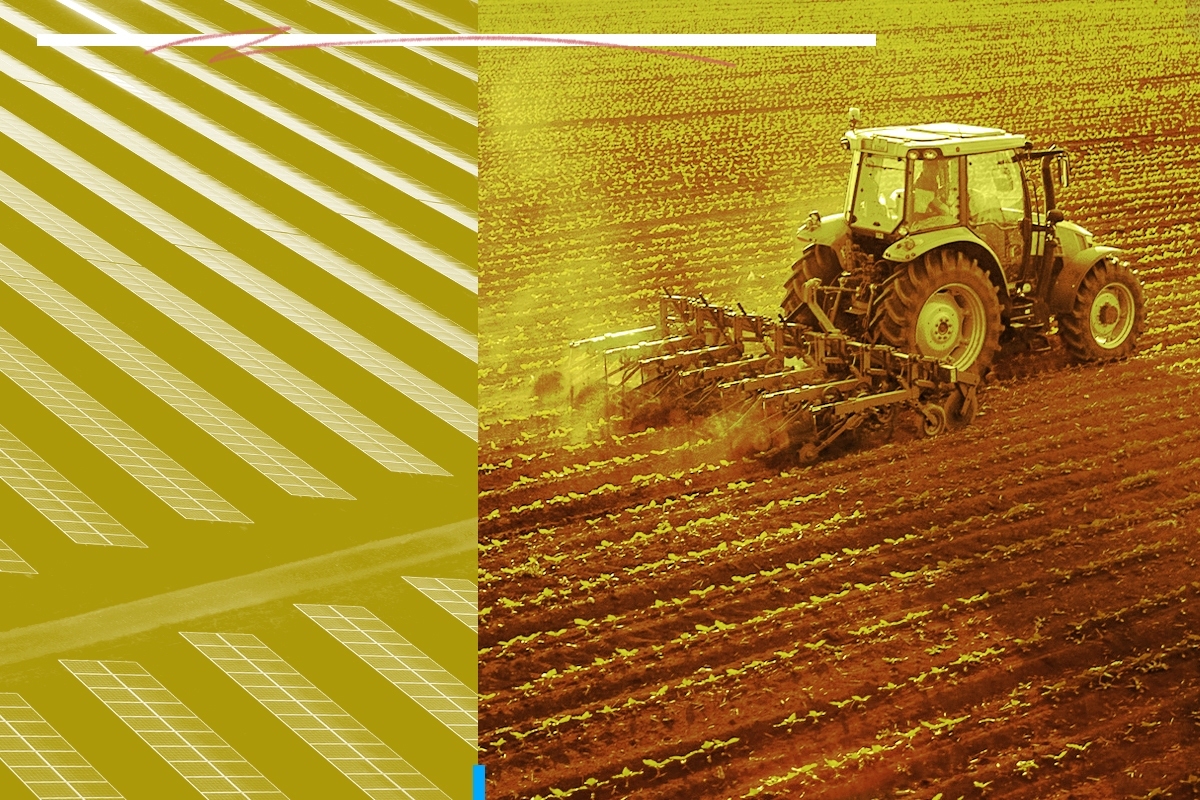
As I reported Monday, Senate Democrats claim the department is proposing to expand the definition of “agricultural land” to include all solar and wind projects, as well as pipelines. I’ve since confirmed this is true, as stated in a supplemental document released by USDA. But there’s a lot more causing companies headaches. The plan would drastically expand the pool of entities and people required to report to USDA by lowering the minimum foreign investment threshold for reporting, compel information on rights of ways when it wasn’t asked for before, and force companies to do detailed geospatial mapping of farmland.
You may not have heard of AFIDA, but security hawks in D.C. and the most affected multi-national companies have been agitating to reform the law for years. Their concerns have focused primarily on Chinese firms and the agriculture sector. In 2022, Republicans in Congress anxious about Chinese companies purchasing farmland near military bases requested an independent Government Accountability Office audit of AFIDA compliance. Two years later, the watchdog office found the law was falling significantly short of its stated objective to track relevant land transactions.
Representatives from the energy sector tell me the actual proposed changes would create a severe red tape headache for developers of all stripes.
Over the past week, almost every major industry trade group in renewables and fossil fuels has filed a comment excoriating the plan, with even some oil and gas allies such as the Western Energy Alliance calling for it to be thrown onto the trash heap. The American Petroleum Institute and Interstate Natural Gas Association of America told the USDA that the plan would “chill foreign investment in U.S. energy infrastructure and increase the cost of capital for pipeline projects with no benefit to national security.”
Meanwhile, renewable energy industry representatives seemed particularly frightened by the proposal given existing financial relationships with investors, parent companies, and business partners in U.S.-aligned nations. American Clean Power said it would burden “good faith, low-risk filers from allied countries,” while the Solar Energy Industries Association said the proposal warranted “a full withdrawal” as it had “unintended national security consequences and [would] unnecessarily expose business sensitive information.”
So far, only one large publicly-traded renewables company has commented with criticisms of the proposal: EDP Renewables North America, a subsidiary of a Portuguese company. “We respectfully urge USDA to carefully weigh the compliance burdens imposed by each proposed change against the incremental national security benefit it provides,” wrote Tom LoTurco, an executive vice president for EDP Renewables North America.
Those calling for reform have wanted to streamline the filing process, not add even more bureaucracy. “Solar and wind, they’ve long been considered agricultural land users. But under this rule, costs are going to go way up,” Jeff Hunter, an attorney with Kelley Drye and Warren LLP, told me. “It’s going from a manageable material cost to something that’s going to have a meaningful effect on the bottom line.” Hunter represents the AFIDA Modernization Coalition, an ad hoc coalition of companies that routinely file under the law. Hunter said the coalition includes founders Invenergy and Doral Renewables, both of which have substantial renewables investments in the U.S. as well as investment originating from other countries.
“It’s going from a manageable material cost to something that’s going to have a meaningful effect on the bottom line.”
Many large renewable energy companies have substantial foreign investment because of the European trend towards ESG-minded financing practices, Hunter added. The law was already on developers’ radars, but this proposal presents a wholly different regime.
As Trump re-entered office, it was reasonable to expect his administration would attempt to “protect farmland” from renewable energy development given the issue’s salience in deep red rural pockets of his supporter base. Still, when the Agriculture Department last May released a “National Farm Security Action Plan” stating that it would change AFIDA regulations, I didn’t think much of it. The plan didn’t mention the energy sector at all.
In December USDA solicited public comments on ways to change the rules, but it was a sleepy affair with little conflict involving renewables or anything else. Even the Center for Regulatory Freedom, a conservative policy shop created by the political organization CPAC, sought changes while emphasizing the “United States benefits from foreign capital in agriculture, renewable energy, and rural development, and AFIDA should not become a blunt instrument that discourages lawful and economically beneficial transactions.”
All this is to say, nobody seemed to anticipate the bomb USDA suddenly dropped on the energy industry.
The plan may change between proposal and implementation. But so far only one organization I know of is focused on ensuring that solar and wind are targeted under the new rulemaking: the America First Policy Institute, a Trump-aligned think tank co-founded by Brooke Rollins, the current Secretary of Agriculture. In comments filed by AFPI’s Adam Savit, the conservative think tank recommended the government preserve “the inclusion of solar and wind generation on agricultural land” because it “prevents the conversion of reportable land into unreportable land through a change in use.” The group’s comments did not address the rule’s references to pipelines.
I asked AFPI to ask if it had any additional comment on the rulemaking, and specifically if it had any view on the new definition for agricultural land. In a statement provided by the think tank, its senior director for China policy Piero Tozzi told me that “the proposed change is necessary to address who owns the land and what control it gives the owner.”
“The current reporting framework for foreign acquisition of American farmland before land was understood as a potential strategic perch for foreign adversaries,” Tozzi said.
The Agriculture Department rarely comments on public input received on proposed rulemakings and did not respond to a request for comment for this story. On Monday, the agency sent me the following statement in response to the Senate Democrats’ claims: “As Secretary Rollins has noted before, the regulations governing the Agricultural Foreign Investment Disclosure Act of 1978 are extremely outdated and need to be updated to better reflect today’s conditions. USDA looks forward to considering all public comments before finalizing the rule.”