This article is exclusively
for Heatmap Plus subscribers.
Log in
To continue reading, log in to your account.
Create a Free Account
To unlock more free articles, please create a free account.

Sign In or Create an Account.
By continuing, you agree to the Terms of Service and acknowledge our Privacy Policy
Welcome to Heatmap
Thank you for registering with Heatmap. Climate change is one of the greatest challenges of our lives, a force reshaping our economy, our politics, and our culture. We hope to be your trusted, friendly, and insightful guide to that transformation. Please enjoy your free articles. You can check your profile here .
subscribe to get Unlimited access
Offer for a Heatmap News Unlimited Access subscription; please note that your subscription will renew automatically unless you cancel prior to renewal. Cancellation takes effect at the end of your current billing period. We will let you know in advance of any price changes. Taxes may apply. Offer terms are subject to change.
Subscribe to get unlimited Access
Hey, you are out of free articles but you are only a few clicks away from full access. Subscribe below and take advantage of our introductory offer.
subscribe to get Unlimited access
Offer for a Heatmap News Unlimited Access subscription; please note that your subscription will renew automatically unless you cancel prior to renewal. Cancellation takes effect at the end of your current billing period. We will let you know in advance of any price changes. Taxes may apply. Offer terms are subject to change.
Create Your Account
Please Enter Your Password
Forgot your password?
Please enter the email address you use for your account so we can send you a link to reset your password:
Though the issue already dominates U.S. politics, policymaking has lagged behind.

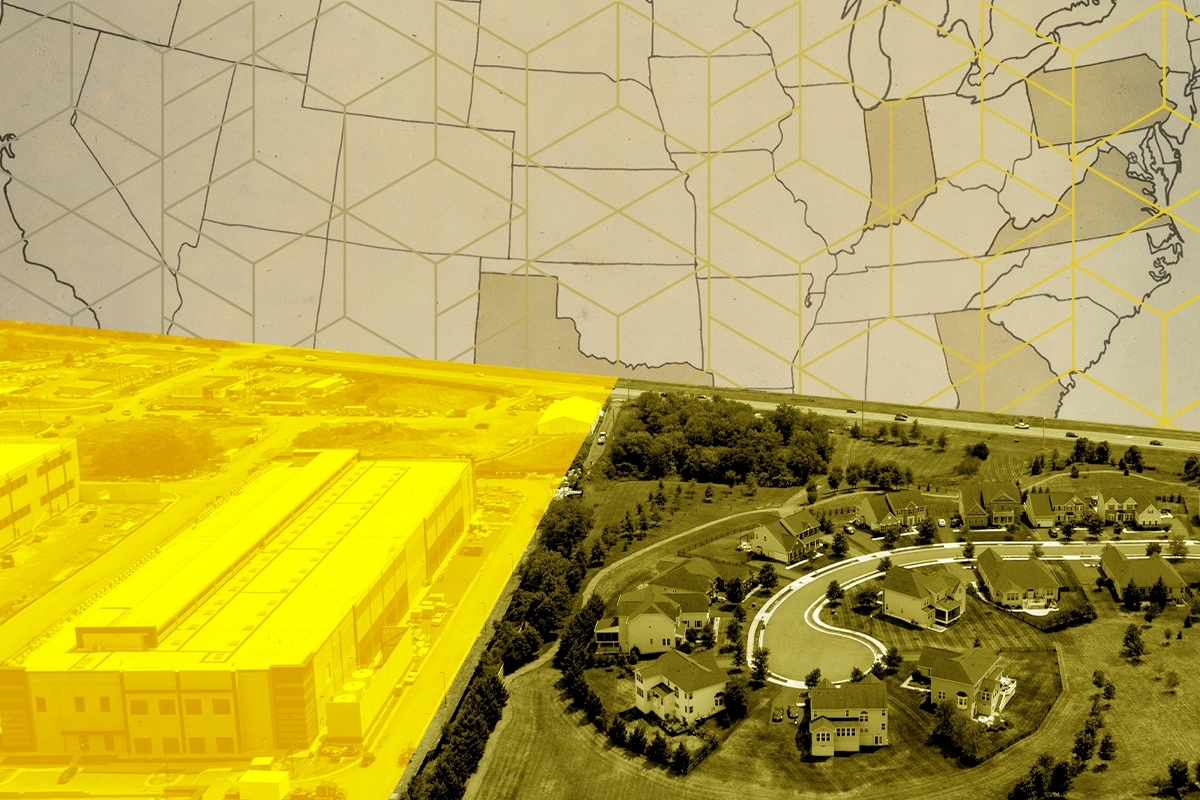
Data centers are swallowing American politics. But on the policy front, states are only in the infant stages of regulating them.
After reviewing legislative responses in the top five states for data center fights – Virginia, Pennsylvania, Texas, Georgia and Indiana – I found the seeds of new rules around sales taxes for computer equipment, project siting, energy and water usage, non-disclosure agreements and grid upgrade costs. But it’s unclear how much can actually be accomplished in any one direction – development restrictions, environmental protections, or tax revenue – in many of these places without changes in political control and approaches to governance.
At the same time, the need for action is only growing more urgent. Polling clearly shows that Americans dislike data centers, especially when they serve artificial intelligence. Thanks to the twin political pressures of inflation and energy prices, this is fast becoming one of the key issues dominating state policymaking.
“This has moved from the world of energy wonks to political crisis,” Costa Samaras, director of the Scott Institute for Energy Innovation at Carnegie Mellon University, told me. Samaras, a former senior policy adviser to the Biden White House, thinks we’re still just at the “first stage” of policymaking at the state level, driven largely by elected leaders’ fear of being dinged at the ballot box should electricity bills continue to rise. “Issues like these can escape containment from one subsector to being a governor’s problem. And it is now a governor’s problem.”
If you ask representatives of the data center sector, they’ll certainly agree that policymakers are in fight-or-flight mode. “There’s a tendency for policies to be reactive in much more of a heavy-handed, negative, we-need-to-stop type of respect,” Dan Diorio, vice president of state policy for the Data Center Coalition, told me Thursday evening in an interview.
Some smaller states like Maine are considering blanket moratoria that would clamp a lid on halt industry growth. But those are the exceptions at the moment. That’s much less likely to happen in a place like Virginia, the industry’s No. 1 destination for new development, which is also the top state for data center conflicts according to Heatmap Pro data. The Commonwealth is almost certainly the furthest ahead on regulating data centers, but is also far from enacting any blanket restrictions.
The three big issues where Virginia lawmakers have focused their attention are site restrictions, water use requirements, and changes to the state’s largest tax exemption for data centers. On siting and water policy, state legislators are moving forward with changes that industry sees as amenable and reached through consensus, Diorio told me. For example, on Tuesday, the state legislature sent a bill to Governor Abigail Spanberger’s desk that would set up a new “high use energy facility” permitting program. If enacted, this special process would provide for data center-centric conflicts to be resolved through a site assessment process, with an eye toward noise and proximity to schools or residential homes. Alongside that bill was another requiring data centers to publicly disclose water use, a nod to calls from activists for greater transparency around H2O consumption.
Beyond those bills, though, the big kahuna in Virginia is the state’s ginormous sales tax exemption for most data centers. The tech sector credits this exemption for the industry’s major growth in the state, as it allows developers to write off computer equipment if they create at least 50 new jobs. An increasing number of lawmakers, however, argue that the tax break costs more than it’s bringing in, both in revenues and in employment gains. The state Senate leadership wants to scale back or scrap the exemption entirely in the state’s next budget, though members of the House have pushed back in response to opposition from the electrical trades.
In Pennsylvania, the No. 2 spot for data center conflicts, there’s a bit more tension on the horizon. State House Democrats shepherded legislation in late March to set up a comprehensive regulatory program that would compel data center companies to cover energy infrastructure upgrade costs, reduce their power usage when there’s higher strain on the grid, and pair any increase in incremental electricity demand with new solar, wind or battery storage. Opposition from industry groups, including the Data Center Coalition, has made legislators skittish, however. The bill now sits in the state Senate, where it has yet to be scheduled for a hearing.
Like Pennsylvania, Georgia is a politically-purple state where significant reform seems unlikely. The state legislature adjourned Friday with lawmakers opting not to advance a bill ending a large tax break for data center computer equipment, and a separate bill banning non-disclosure agreements couldn’t get out of a single committee.
Both states are struggling to resolve the disparate concerns held by cliques of lawmakers, from big business Republicans to moderate Democrats to stalwart anti-data center politicians of either party. In both states, it’s likely that policy – and populist angst – will register most quickly at the local level, at least through the remainder of the year, while broader statewide changes ride on outcomes in the 2026 election, as Pennsylvania and Georgia will each vote on control of the governor’s mansion.
The gubernatorial agenda is a bit of a mystery in both states at the moment, however. Pennsylvania’s Josh Shapiro – a rumored 2028 presidential contender – has claimed in recent weeks that he’ll advance an executive-level suite best practices for data center development called GRID, or the Governor’s Responsible Infrastructure Development standards, though he has not yet disclosed how they will be implemented other than to say they’ll be requisites for accessing faster permitting timelines at the state level. His office did not respond to a request for comment on the matter. But a broad-stroke description of the standards states they’ll force data center developers to “bring their own power generation online or fully fund new generation to meet their needs – without driving up costs.” The standards will purportedly also mandate some sort of “transparency and community engagement,” a nod to the rampant conflict over non-disclosure agreements playing out in pockets across the Keystone State.
Meanwhile, in Georgia, leading Republican candidate Brad Raffensberger has said only that he’ll make data center companies pay more for power they use.
The other two states in the top five – Texas and Indiana – are solidly under Republican control and, for the most part, stable politically. Of the two, Texas is further ahead of the curve; last year, the state passed a bill teeing up new large load interconnection standards that will soon come into effect for facilities using 75 megawatts of power or more. Many of these standards exist to ensure that projects attached to the grid are actually bankable by requiring companies to provide ERCOT with details on siting, permitting and energy use. In March, the Texas Republican Party, which has long been ideologically pro-business, adopted a resolution requesting that state agencies require independent assessments of data center projects and create “planning and regulatory standards” on their water use, potentially by mandating “water-efficient cooling technologies.”
In Indiana meanwhile, the likeliest outcome is no progress towards anything particular. While there is pressure from the grassroots to act on something, the legislative conversation is mostly focused on siting and taxes, with elected leaders split on whether to prioritize streamlining permitting for energy and tech infrastructure or scrapping the sales tax exemption for data centers to plug holes in the state budget. “Its hard to predict whether this different dynamic we’re in right now is going to change things at the state level, shake up major elections, or be confined to local fights,” Indiana environmental activist Ben Inskeep of Citizens Action Coalition told me.
Where this leaves us is holding a grab bag, waiting on the results of elections that may or may not provide any additional clarity. Data centers have become the watchword for politicians trying to invoke the pain of inflation, so they’ll certainly be a factor in campaigns. But where actual policy will go is anybody’s guess and could remain mired in factional tug-of-wars.
“Some folks are trying to attack it from the data center side. Some folks are trying to attack it from the supply side. Some folks are doing both,” Samaras told me. “It’s because inflation is still a high concern for people. They’re focused on prices.”

Log in
To continue reading, log in to your account.
Create a Free Account
To unlock more free articles, please create a free account.
What happens when one of energy’s oldest bottlenecks meets its newest demand driver?
Often the biggest impediment to building renewable energy projects or data center infrastructure isn’t getting government approvals, it’s overcoming local opposition. When it comes to the transmission that connects energy to the grid, however, companies and politicians of all stripes are used to being most concerned about those at the top – the politicians and regulators at every level who can’t seem to get their acts together.
What will happen when the fiery fights on each end of the wire meet the broken, unplanned spaghetti monster of grid development our country struggles with today? Nothing great.
The transmission fights of the data center boom have only just begun. Utilities will have to spend lots of money on getting energy from Point A to Point B – at least $500 billion over the next five years, to be precise. That’s according to a survey of earnings information published by think tank Power Lines on Tuesday, which found roughly half of all utility infrastructure spending will go toward the grid.
But big wires aren’t very popular. When Heatmap polled various types of energy projects last September, we found that self-identified Democrats and Republicans were mostly neutral on large-scale power lines. Independent voters, though? Transmission was their second least preferred technology, ranking below only coal power.
Making matters far more complex, grid planning is spread out across decision-makers. At the regional level, governance is split into 10 areas overseen by regional transmission organizations, known as RTOs, or independent system operators, known as ISOs. RTOs and ISOs plan transmission projects, often proposing infrastructure to keep the grid resilient and functional. These bodies are also tasked with planning the future of their own grids, or at least they are supposed to – many observers have decried RTOs and ISOs as outmoded and slow to respond. Utilities and electricity co-ops also do this planning at various scales. And each of these bodies must navigate federal regulators and permitting processes, utility commissions for each state they touch, on top of the usual raft of local authorities.
The mid-Atlantic region is overseen by PJM Interconnection, a body now under pressure from state governors in the territory to ensure the data center boom doesn’t unnecessarily drive up costs for consumers. The irony, though, is that these governors are going to be under incredible pressure to have their states act against individual transmission projects in ways that will eventually undercut affordability.
Virginia, for instance – known now as Data Center Alley – is flanked by states that are politically diverse. West Virginia is now a Republican stronghold, but was long a Democratic bastion. Maryland had a Republican governor only a few years ago. Virginia and Pennsylvania regularly change party control. These dynamics are among the many drivers behind the opposition against the Piedmont Reliability Project, which would run from a nuclear plant in Pennsylvania to northern Virginia, cutting across spans of Maryland farmland ripe for land use conflict. The timeline for this project is currently unclear due to administrative delays.
Another major fight is brewing with NextEra’s Mid-Atlantic Resiliency Link, or MARL project. Spanning four states – and therefore four utility commissions – the MARL was approved by PJM Interconnection to meet rising electricity demand across West Virginia, Virginia, Maryland and Pennsylvania. It still requires approval from each state utility commission, however. Potentially affected residents in West Virginia are hopping mad about the project, and state Democratic lawmakers are urging the utility commission to reject it.
In West Virginia, as well as Virginia and Maryland, NextEra has applied for a certificate of public convenience and necessity to build the MARL project, a permit that opponents have claimed would grant it the authority to exercise eminent domain. (NextEra has said it will do what it can to work well with landowners. The company did not respond to a request for comment.)
“The biggest problem facing transmission is that there’s so many problems facing transmission,” said Liza Reed, director of climate and energy at the Niskanen Center, a policy think tank. “You have multiple layers of approval you have to go through for a line that is going to provide broader benefits in reliability and resilience across the system.”
Hyperlocal fracases certainly do matter. Reed explained to me that “often folks who are approving the line at the state or local level are looking at the benefits they’re receiving – and that’s one of the barriers transmission can have.” That is, when one state utility commission looks at a power line project, they’re essentially forced to evaluate the costs and benefits from just a portion of it.
She pointed to the example of a Transource line proposed by PJM almost 10 years ago to send excess capacity from Pennsylvania to Maryland. It wasn’t delayed by protests over the line itself – the Pennsylvania Public Utilities Commission opposed the project because it thought the result would be net higher electricity bills for folks in the Keystone State. That’s despite whatever benefits would come from selling the electricity to Maryland and consumer benefits for their southern neighbors. The lesson: Whoever feels they’re getting the raw end of the line will likely try to stop it, and there’s little to nothing anyone else can do to stop them.
These hyperlocal fears about projects with broader regional benefits can be easy targets for conservation-focused environmental advocates. Not only could they take your land, the argument goes, they’re also branching out to states with dirtier forms of energy that could pollute your air.
“We do need more energy infrastructure to move renewable energy,” said Julie Bolthouse, director of land use for the Virginia conservation group Piedmont Environmental Council, after I asked her why she’s opposing lots of the transmission in Virginia. “This is pulling away from that investment. This is eating up all of our utility funding. All of our money is going to these massive transmission lines to give this incredible amount of power to data centers in Virginia when it could be used to invest in solar, to invest in transmission for renewables we can use. Instead it’s delivering gas and coal from West Virginia and the Ohio River Valley.”
Daniel Palken of Arnold Ventures, who previously worked on major pieces of transmission reform legislation in the U.S. Senate, said when asked if local opposition was a bigger problem than macro permitting issues: “I do not think local opposition is the main thing holding up transmission.”
But then he texted me to clarify. “What’s unique about transmission is that in order for local opposition to even matter, there has to be a functional planning process that gets transmission lines to the starting line. And right now, only about half the country has functional regional planning, and none of the country has functional interregional planning.”
It’s challenging to fathom a solution to such a fragmented, nauseating puzzle. One solution could be in Congress, where climate hawks and transmission reform champions want to empower the Federal Energy Regulatory Commission to have primacy over transmission line approvals, as it has over gas pipelines. This would at the very least contain any conflicts over transmission lines to one deciding body.
“It’s an old saw: Depending on the issue, I’ll tell you that I’m supportive of states’ rights,” Representative Sean Casten told me last December. “[I]t makes no sense that if you want to build a gas pipeline across multiple states in the U.S., you go to FERC and they are the sole permitting authority and they decide whether or not you get a permit. If you go to the same corridor and build an electric transmission that has less to worry about because there’s no chance of leaks, you have a different permitting body every time you cross a state line.”
Another solution could come from the tech sector thinking fast on its feet. Google for example is investing in “advanced” transmission projects like reconductoring, which the company says will allow it to increase the capacity of existing power lines. Microsoft is also experimenting with smaller superconductor lines they claim deliver the same amount of power than traditional wires.
But this space is evolving and in its infancy. “Getting into the business of transmission development is very complicated and takes a lot of time. That’s why we’ve seen data centers trying a lot of different tactics,” Reed said. “I think there’s a lot of interest, but turning that into specific projects and solutions is still to come. I think it’s also made harder by how highly local these decisions are.”
Plus more of the week’s biggest development fights.
1. Franklin County, Maine – The fate of the first statewide data center ban hinges on whether a governor running for a Democratic Senate nomination is willing to veto over a single town’s project.
2. Jerome County, Idaho – The county home to the now-defunct Lava Ridge wind farm just restricted solar energy, too.
3. Shelby County, Tennessee - The NAACP has joined with environmentalists to sue one of Elon Musk’s data centers in Memphis, claiming it is illegally operating more than two dozen gas turbines.
4. Richland County, Ohio - This Ohio county is going to vote in a few weeks on a ballot initiative that would overturn its solar and wind ban. I am less optimistic about it than many other energy nerds I’ve seen chattering the past week.
5. Racine County, Wisconsin – I close this week’s Hotspots with a bonus request: Please listen to this data center noise.
A chat with Scott Blalock of Australian energy company Wärtsilä.
This week’s conversation is with Scott Blalock of Australian energy company Wärtsilä. I spoke with Blalock this week amidst my reporting on transmission after getting an email asking whether I understood that data centers don’t really know how much battery storage they need. Upon hearing this, I realized I didn’t even really understand how data centers – still a novel phenomenon to me – were incorporating large-scale battery storage at all. How does that work when AI power demand can be so dynamic?
Blalock helped me realize that in some ways, it’s more of the same, and in others, it’s a whole new ballgame.
The following chat was lightly edited for clarity.
So help me understand how the battery storage side of your business is changing due to the rise in data center development.
We’re really in the early stages for energy storage. The boom is really in generation – batteries aren’t generators. They store, they shift, they smooth power, but they don’t generate the power from fuel. In this boom right now, everyone is trying to find either grid connections or on-site power generation. Those are the longest lead time items – they take a while – so we’re still in the early stages of those types of projects coming back and saying, we need to start procuring batteries. We need to start looking at the controls and how everything’s going to work together. That’s still a little bit in the future.
Are you seeing people deploy batteries responsibly, in an integrated way, or is it people unsure what they need?
There’s definitely uncertainty as to what they need. The requirements are still hard to nail down. A lot of the requirements come from the load curve of the AI workloads they’re doing, and that’s still a bit of a moving target. It’s the importance of knowing the whole system and planning that out in the modeling space.
The biggest space of all this is the load profile. Without a load profile, there’s uncertainty about what you’re going to need –
When you say load profile, what do you mean?
The AI workload. The GPUs. The volatility. In a synchronized training load, all of the GPUs are generally doing the same thing at the same time. They all reach a pause state at the same time, and you’re close to full power on the data center, and then they say, okay now we go idle. It has a little bit of a wait and then starts back up again.
It’s that square wave, very sharp changes in power – that’s the new challenge of an AI data center. That’s one of the new uses of BESS that’s being added compared to the traditional data center doing data storage. They’re more stable which use less power and are more stable.
The volatility is where some of the friction comes in, and that has to be handled by some technology.
So what you’re telling me is that data center developers do not know how much they need in terms of battery storage? Simply put, they don’t know how much power they need?
Traditionally, utility-scale batteries – the projects we’ve been doing – come from a PPA, an interconnect agreement. There’s something in place where they know exactly how many batteries they can install. They know how many megawatts they’re allowed to install. Then they come to us and they say, I need a 4-megawatt battery for two hours. Tell me how many batteries you’re going to give me.
In a data center, they don’t know that first number. They don’t know how many megawatts they need. So that’s the first question: well, how big of a battery do you need?
If you have a 1-gigawatt data center that means the load change is 60% of that – 600 megawatts is the step up-and-down. The starting point is 600 megawatts for two hours. That’s the starting point that’ll cover being able to take care of that volatility. The duration is a part of it, too. From there you get into more detailed studies.
When it comes to transmission, how much of a factor is it in how much storage a data center needs?
The first thing is whether it’s connected at all. The battery is a shock absorber for the whole system. If you are grid-connected, the BESS is still a stability asset – it’s still improving the power quality and stability at an interconnect. If you’re doing on-site generation, it becomes vital because you have only one system being controlled.
As far as when you talk about permitting and transmission, the details of that don’t really play that much into the BESS, but it’s tangentially related. The BESS is an important part of how you handle that situation. Whether you get to interconnect or not, it’s an extremely important asset in that mix.
With respect to the overall social license conversation, how does battery storage fit into the conversations around energy bills and strain on the grid?
Bias aside, I think it’s the most important piece.
If you look at the macro scale, it’s like transitioning to renewables where they’re intermittent; batteries turn intermittent generation from renewables into firm, dispatchable power. It’s still not going to be available all the time – you’re not going to turn a solar plant into a 24-hour baseload plant – but a battery allows you to shift the energy. It greatly alleviates the problem.
The other aspect is it’s a stability asset. The short version of that is you have big thermal plants – rotating metal masses that have momentum to them that stabilize everything on the grid. As you take those offline, the coal plants and the gas plants, the grid itself loses that inertia so it is more susceptible to spikes and failures because of small events. Batteries are able to synthesize that inertia.