We’re about to find out whether progressive energy populism can flip control of Congress.
Graham Platner, the presumptive Democratic nominee for the U.S. Senate from Maine, released an energy plan on Friday calling for a “national electricity rate freeze” to deal with high power prices, which many fear is in no small part from the scramble to build out new generation to meet new demand from data centers. Notably, however, the plan did not address data centers themselves.
In an interview the next day, the candidate revealed more of his views about the controversial technology, and told me his campaign is working on an artificial intelligence and data center-specific policy plan.
“I am extremely worried about, one, just AI as a general concept — the impact it’s going to have on the labor force, its impact on things like mass surveillance and manipulation of people and markets. Those things terrify me,” Platner told me. “We are dealing with a technology and a reality that we have done absolutely no regulatory preparation for, and that is utterly terrifying with something that seems to be as big and expensive and impactful as AI and the infrastructure necessary to power it.”
While he was careful in our conversation not to explicitly back a nationwide data center moratorium, he has previously given the idea his full-throated support. During a March 6 interview with environmental activists considering whether to endorse the candidate, Platner was asked whether he supports a “halt” to the fast-paced buildout of data centers. He was also queried on whether he would cosponsor legislation authored by Vermont Senator Bernie Sanders and New York Representative Alexandria Ocasio-Cortez that would temporarily ban new data center projects. (The interview occurred before the bill was introduced.)
“Yes and yes. That’s probably the easiest question I’m going to get asked today,” Platner replied, according to a recording of the internal conversation shared with me by Food and Water Action. FWA was one of the four organizations involved in the call, all of which endorsed his campaign Tuesday morning. Platner’s camp declined to comment on the video.
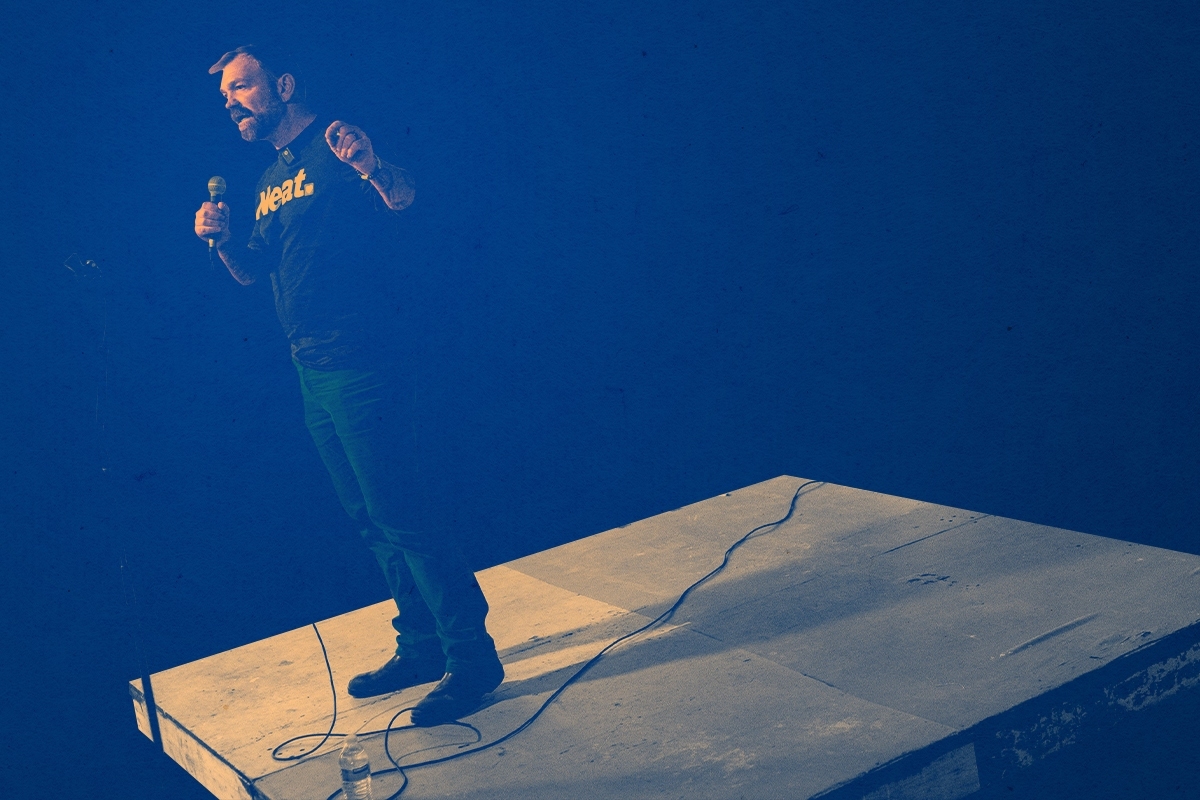
The stakes of Platner’s campaign couldn’t be higher for Democrats. The seat is one of a handful that will determine control of the U.S. Senate. Platner, a 41-year-old oyster farmer and first-time politician, is fighting against 73-year-old five-term incumbent Republican Senator Susan Collins. While Maine voted for Kamala Harris in 2024 by about seven points and early polls indicate a competitive race that Platner could win, Collins has lasted this long in office for a reason.
Maine is a frontline battleground for modern energy politics in many ways. The northernmost New England state suffers some of the highest electricity rates in the country. The state has also seen some of the country’s steepest yearly cost increases; bills there have risen at least 8.3% just in the past year, according to Heatmap and MIT’s Electricity Price Hub. And prices are only expected to go higher.
Though the state has seen far less data center development than, say, Virginia or Indiana, the facilities have nevertheless become a hot issue for Mainers. Multiple towns have rejected large AI infrastructure projects over the past year. Earlier this year, the Democratically-controlled state legislature passed a statewide moratorium on new data center development. Governor Janet Mills — who was at the time vying with Platner for the Senate nomination — vetoed the moratorium, arguing for protections so one former mill town could still build a data center. She suspended her campaign soon after, conspicuous timing she blamed on dwindling finances.
“Her veto of the bill that was going to put stringent limits on AI centers was something that bothered a lot of people in the Democratic Party,” Jim Melcher, a political science professor at the University of Maine at Farmington, told me.
Meanwhile, Platner supporters “are the kind of people that are nervous about the effects on the environment from data centers, particularly electricity usage and the water usage,” he said. “It’s something Susan Collins hasn’t made much of.”
In addition to the activist groups, leading climate and labor organizations have also endorsed Platner, including Sierra Club’s Maine chapter and the AFL-CIO. (LCV Action Fund, the campaign finance arm of the League of Conservation Voters, told me it hasn’t formally endorsed Platner but is “working with his campaign” and “excited about the opportunity to elect a clean energy champion in Maine this year.”)
Some of the policies in the energy plan were table-stakes bipartisan stuff, like repealing the gas tax to deal with higher gas prices from the Iran War — something Trump says he wants to do, too. Other ideas were quintessential Maine, like a “strategic marine fuel reserve” to quell price increases during fishing season. Unsurprisingly for a Democrat, Platner supports permitting reform for renewable energy projects including solar and offshore wind.
But one big proposal caught my eye — a so-called “national electricity rate freeze.” According to the plan, a combination of “repurposed” fossil fuel funding and a new oil industry “windfall tax” would fund “low-cost energy infrastructure financing to any state that freezes or lowers electricity rates for four years.”
“Not only would this relieve Americans of the burden of Trump’s war,” the document stated, “but it would also reduce the political impetus on the part of Big Oil to continue to push America into costly Middle East interventions that just so happen to reap them billions in profit.”
Though it did not mention data centers explicitly, the proposal echoed a similar policy from New Jersey Governor Mikie Sherrill, whose campaign pledge last year to freeze electricity rates was a direct response to data center impacts.
A moratorium on data center development would be a step far beyond taking action on electricity prices. When I asked about the Sanders proposal in our interview, Platner told me he supports “anything” that would slow down data center development. But on the general idea of temporarily banning these projects, he clarified, it “can’t be a moratorium for the sake of being a moratorium.”
“If we’re just slowing it down to assuage people’s fears but we’re not also building legislation at the exact same time, that kind of defeats the point,” he said. “What might be — I’m still a little skeptical — but what might be the single most transformational technology around productivity of our time, the idea that’s just going to happen and we don’t have any regulatory structures around it and we’re not even having the time to have the conversation while it gets built and utilized? That’s insane. Except that’s exactly what’s happening right now.”
Platner’s plainclothes populism came through when I asked why he thinks energy prices are going up. On the one hand, he said, “People need more energy and we’re not producing enough of it.” But he added: “It’s that, connected with corporate consolidation and greed. These two things together [are] what’s primarily driving how expensive energy is.”
Collins, meanwhile, has started sketching her own approach to energy in campaign season — promoting domestic natural gas. Speaking at a manufacturing business summit on Friday, Collins countermessaged with support for new pipeline infrastructure to carry gas from Pennsylvania up north to increase supply and hopefully lower prices. “We have the highest dependence in the country on home heating oil for our homes. Natural gas is cleaner, it’s cheaper, and it should be more available in our state,” she told reporters.
Collins has pursued her own reform efforts around AI, including a call to ban AI-generated depictions of candidates in election ads. Mainers haven’t gotten much from Collins about data centers, though. Neither her campaign nor her Senate office responded to requests for comment. “She really hasn't talked much about it,” Melcher said of Collins’ approach to energy and data centers.
Prior to releasing his energy plan, Platner took a Zohran Mamdani-like approach to climate and energy, focusing primarily on cost of living issues.
When he did speak on those subjects, it was with the same unapologetically anti-corporate approach that leads him to say companies like Google and Palantir “shouldn’t exist.” In a clip posted to YouTube in February, Platner outlines his position on fossil fuels, arguing that the federal government must “pull back” on financing for the industry in order to “buy us the future we need to deal with the problems of climate change.” The responsibility for addressing climate change rests not at the feet of individual citizens, he says, but rather with “the structures and the corporations that have made an immense amount of money out of destroying the planet.”
It remains to be seen whether Platner’s populist pugilism will prove successful for Democrats in a crucial race. Collins has a powerful perch atop the Senate Appropriations Committee, which allows her to argue on the trail that she’ll bring Mainers home more bacon.
Both Melcher and Mark Brewer, a political science professor at the University of Maine, told me they’re confident Platner is relying on the support of voters who want him to support a blanket data center ban. They each told me Collins’ relative silence on this topic is something Platner could use to his advantage, especially as energy prices continue to rise.
“They’ll probably both try to stake out a position that says we're clearly concerned about environmental issues and the cost of electricity,” Brewer said. “I don’t know if it’ll be at the top of the agenda, but at some point in this campaign, we’ll all be talking about AI data centers.”
Editor’s note: This story has been updated to correct the name of Food and Water Action.






 A crew cleans power lines at Israel’s Ashalim solar plant.EMMANUEL DUNAND/AFP via Getty Images