This article is exclusively
for Heatmap Plus subscribers.
Log in
To continue reading, log in to your account.
Create a Free Account
To unlock more free articles, please create a free account.

Sign In or Create an Account.
By continuing, you agree to the Terms of Service and acknowledge our Privacy Policy
Welcome to Heatmap
Thank you for registering with Heatmap. Climate change is one of the greatest challenges of our lives, a force reshaping our economy, our politics, and our culture. We hope to be your trusted, friendly, and insightful guide to that transformation. Please enjoy your free articles. You can check your profile here .
subscribe to get Unlimited access
Offer for a Heatmap News Unlimited Access subscription; please note that your subscription will renew automatically unless you cancel prior to renewal. Cancellation takes effect at the end of your current billing period. We will let you know in advance of any price changes. Taxes may apply. Offer terms are subject to change.
Subscribe to get unlimited Access
Hey, you are out of free articles but you are only a few clicks away from full access. Subscribe below and take advantage of our introductory offer.
subscribe to get Unlimited access
Offer for a Heatmap News Unlimited Access subscription; please note that your subscription will renew automatically unless you cancel prior to renewal. Cancellation takes effect at the end of your current billing period. We will let you know in advance of any price changes. Taxes may apply. Offer terms are subject to change.
Create Your Account
Please Enter Your Password
Forgot your password?
Please enter the email address you use for your account so we can send you a link to reset your password:
Why local governments are getting an earful about “infrasound”

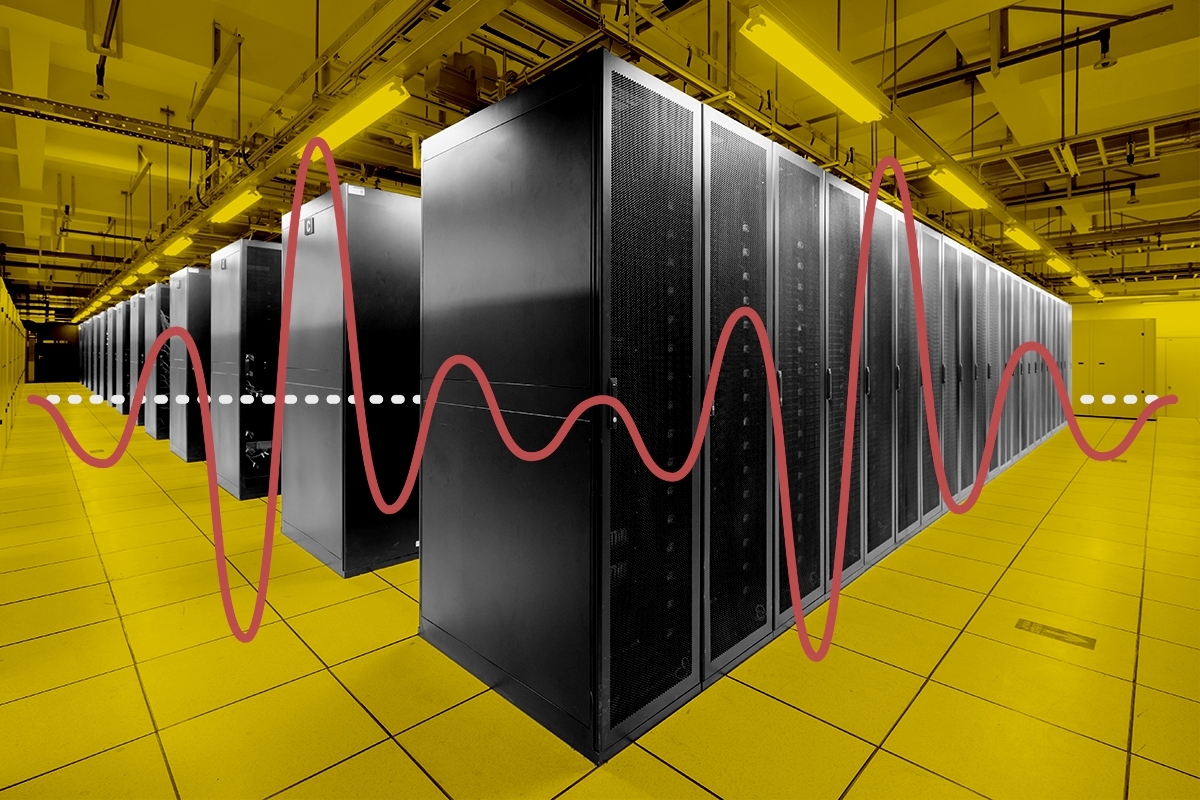
As the data center boom pressures counties, cities, and towns into fights over noise, the trickiest tone local officials are starting to hear complaints about is one they can’t even hear – a low-frequency rumble known as infrasound.
Infrasound is a phenomenon best described as sounds so low, they’re inaudible. These are the sorts of vibrations and pressure at the heart of earthquakes and volcanic activity. Infrasound can be anything from the waves shot out from a sonic boom or an explosion to very minute changes in air pressure around HVAC systems or refrigerators.
Knowing some of these facilities also have the capacity to produce significant audible noise, growing segments of the population’s more tech-skeptical and health-anxious corners are fretting some data centers could be making a lot of infrasound, too. The whizzing of so many large computational machines combined with cooling fans and other large devices creating so many new columns of air flow. Add onto that any rotational onsite power generation – think natural gas turbines, for example – and you get quite a lot of movement that could potentially produce what they say is infrasound.
Some of the virality of this chatter about infrasound and data centers comes from a video about infrasound created by audio engineer and researcher Benn Jordan. Currently sitting at more than 1 million views, this short YouTube film documents claims that some data centers are operating like “acoustic weapons” through infrasound and harming people. Andy Masley, an “effective altruist” writer, has become the chief critic of the Jordan video, getting into a back-and-forth that’s raised the issue to Internet discourse territory.
The Jordan-Masley infrasound debate is honestly a bit of a mess. So I want to be clear: I’m not going to get into the science of whether or not infrasound poses any kind of public health risk in this article. We can get to that later. It’s worth saying that this subject may need more study and that work is ongoing. Also, talking about infrasound at all can make you honestly sound a little wacky (see: this study blaming people seeing ghosts on infrasound). It might also remind you of another panic in the Electric Age: electromagnetic fields, also known as EMFs. Developers of transmission lines and solar projects have long had to deal with people worried about transmission lines and large electrical equipment potentially glowing with invisible, unhealthy radiation.
In late 2024, I wrote about how an RFK Jr. supporter worried about this form of electrical emission was helping lead the fight against a transmission line in New Jersey for offshore wind. Maybe that’s why it didn’t surprise me one bit when the Health and Human Services secretary himself told a U.S. Senate Committee last week that he was asking the Surgeon General’s office to “do either meta reviews” or “base studies” on noise pollution and EMF radiation from data centers “so we can better inform the American public.”
“There’s a range of injuries that are very, very well documented. They’re neurological – very, very grave neurological injuries, cancer risk,” Kennedy Jr. told the Senate Health, Education, Labor and Pensions Committee on April 22 in response to a request from Sen. Josh Hawley of Missouri to study the issue. “The risks, to me, are tremendous.”
There’s also the unfortunate reality that infrasound impacts have previously been a cudgel to slow down renewable energy deployment. Wind turbines create infrasound because of the subharmonic frequencies created when one turbine rotates at a slightly different pace than another, producing a slightly dissonant low frequency noise. Groups like the Heartland Institute proudly list this infrasound as one of the reasons wind energy “menaces man and nature.”
But regardless of merit, this concern is already impacting local government decisions around data center projects, much like how one Michigan county sought to restrict solar energy on the same basis.
In February Adrian Shelley, the Texas director for environmental group Public Citizen, implored the city of Red Rock to study changing their noise ordinance to take into account infrasound. “It has effects on sleep patterns, on stress, on cardiovascular health, and it is potentially a very serious concern,” Shelley said at a February 11 city council discussion on data center rules. “It will not be covered by the city’s noise ordinance, which only deals with audible sound.”
Earlier this month in Calvert County, Maryland, a volunteer for their environmental commission recently told the county government that infrasound needs to be factored into their future data center planning. “It will have significant impacts on our region and the Chesapeake and the Patuxent because infrasound isn’t stopped by walls,” commission member Janette Wysocki, a proud land conservationist, said at an April 15 hearing. “It will keep going, it will move through anything. It’s a very long wavelength. So we need to protect our ecosystem.” Wysocki implored the county to consider whether to adjust its noise regulations.
Around the same time, similar concerns were raised in Lebanon, a small city in east-central Pennsylvania. “It permeates through concrete walls, it permeates through the ground,” Thomas Dompier, an associate professor at Lebanon Valley College, said at an April 16 Lebanon County commission hearing on data centers.
Lastly, last week I explained how Loudon County wants to rethink its noise ordinance to deal with low-frequency “hums” from data centers – a concern echoing those who fret infrasound.
Ethan Bourdeau, executive director of standards at Quiet Parks Intentional and a career acoustician and building standards writer, told me that what makes data centers unique is the “constant drone” of noise that could potentially carry subharmonic frequencies. Bourdeau said cities or counties could possibly factor concerns about infrasound into noise ordinances to address those who are most concerned. One way they could do it is by changing how decibels are weighted in the government’s measurements. A-weighting decibel meters are a common form of sound measurement geared toward perceptible noise. Using different systems, like C-weighting or G-weighting, would avoid ways that A-weighting can filter out sub-hearing frequencies.
“These are reporting and weighting systems where a sound level meter taking background noise receives all the unweighted sound and then you apply all these filters afterwards, like an EQ curve,” Bourdeau said.
So I guess if those most concerned about infrasound have their way, a lot of country commissioners and local elected leaders will be heading to the mixing booth.
Log in
To continue reading, log in to your account.
Create a Free Account
To unlock more free articles, please create a free account.
And more on the week’s top fights around project development.
1. King County, Washington – The Moss Landing battery backlash is alive and well more than a year after the fiery disaster, fomenting an opposition stampede that threatens to delay a massive energy storage project two dozen miles east of Seattle.
2. Prince Williams County, Virginia – It was a big week for data center troubles. Let’s start with Data Center Alley, which started to show cracks this week as data center developer Compass announced it was pulling out of the controversial Digital Gateway mega-project.
3. Washtenaw County, Michigan – Turning to Michigan, real estate firm Sansone abandoned plans to purchase land owned by Toyota to build a hyperscale data center campus after the local township instituted a 6-month moratoria.
4. Okeechobee County, Florida – The backlash to data centers is killing projects in deep-red Florida too, as this county’s commission decides to kill a 205-acre prospective data center campus led by a state college.
.
A conversation with Holly Jean Buck, author of a buzzy story about Bernie Sanders’ proposal for a national data center moratorium.
This week’s conversation is with Holly Jean Buck, an associate professor at the University of Buffalo and former official in the Energy Department’s Office of Fossil Energy and Carbon Management. Buck got into the thicket of the data center siting debate this past week after authoring a polemic epistemology of sorts in Jacobin arguing against a national data center ban. In the piece, she called a moratorium on AI data centers “a massive strategic blunder for the left, and we should think through the global justice implications and follow-on effects.” It argued that environmental and climate activists would be better suited not courting a left-right coalition that doesn’t seem to have shared goals in the long term.
Her article was praised by more Abundance-leaning thinkers like Matthew Yglesias and pilloried by some of the more influential people in the anti-data center organizing space, such as Ben Inskeep of Citizens Action Coalition of Indiana. So I wanted to chat with her about the discourse around her piece. She humbly obliged.
The following conversation was lightly edited for clarity.
So my first question is kind of a broad one and perhaps a suitable polemic to open with: are data center moratoria (bans) “slopulism”?
Haha, oh no. I don’t know if I have a working definition of that term.
“Slopulism” is colloquially known as low-effort or performative populism slop that is focused on emotional gratification and elite resentment instead of substantive policy.
I think, sometimes? Moratoria have been proposed at a lot of different levels in a lot of different forms. With the national moratorium, as written in the AI Data Center Moratorium Act [proposed by Senator Bernie Sanders and Representative Alexandria Ocasio-Cortez], I thought from a rhetorical and textual standpoint it was a pretty amazing document. I just don’t think it’s a great policy proposal, so maybe that’s a little bit closer, but I don’t think people working on that theory of change would see it as slopulism. They’re thinking of this as a negotiating tactic and thinking, how do we leverage this moment and make it clear to the tech industry they don’t have social license?
I wouldn’t personally call it slopulism. I just don’t think it’ll work. I don’t think it's effective but I'm not big on labels.
Personally, I come down sort of where you’re at on the yes-and-no kind of tack. There’s definitely some vibes based stuff going on, which you address in your piece, but historically there’s a pretty long legacy of advocacy campaigns for, well, let’s ban this until we’ve finished regulating it.
You write part of why a moratoria push can be a dead end is that the right and left coalitions pushing to stop data centers have different interests on other issues and that it may not follow that stopping data centers will result in a clean energy buildout, or the social policies to address job displacement.
When you talk about the left-right coalition, help me understand what’s driving the opposition and why you think it’s happening the way it is?
I think there’s a lot of layers here. It’s pretty complex. It’s well established there are left-right coalitions. I don’t think we have a great body of social science research but I think that is a solid working assumption. So I think the people who are a part of this, it’s easy for them to come together and stop a thing that’s happening near them. But I don’t think they’re going to agree on how we build a decarbonized, resilient grid. The people in that coalition are going to have vastly different perspectives on whether we want to decarbonize, what measures are feasible and worth paying for to get there. Same thing when it comes to the thornier questions about AI governance. The solution set is just not something the members of that coalition are going to agree on.
So it feels maybe on the ground like this really cool moment about rising up against these big forces. It’s cool. I get it. I was actually very much on board with that a while ago. And my views on that have shifted. I don’t think it’s going to be productive unless it’s coupled with a lot of very real coalition building work I don’t see happening.
I’ve had conversations with environmental activists about that issue. I did a Q&A with someone from Public Citizen about this particular issue right after the national data center moratoria was introduced with Senator Sanders. I asked, do you have any concerns about pushing for a moratoria on new tech infrastructure when this tool is also used by those trying to stop solar, wind and batteries? Is there any concern that in some communities it’ll go from data centers to renewables?
I wondered reading your piece if this is part of what you’re getting at here, that this backlash doesn’t necessarily seem to be rooted as much in a transition away from fossil fuels or building lots of new renewable energy.
I think in the absence of systematic research, it’s one of these things where people can see it the way they want, through their own lens.
I’ve been following this in a few different places in the country, especially through online Facebook groups, and there is a noticeable overlap between some of those Facebook groups and the content and many of the anti-renewable groups I follow. Some of the themes remind me of this piece I wrote about para-environmentalism. There’s a lot of places where it dips into conspiracy and fears about new technology, electro-magnetic radiation, sorts of places where a data center is mundane but can take on creepy, supernatural overtones in some of these groups. Before I was studying para-environmentalism more generally I was thinking we really need this left-right coalition to rise up against these companies. Now I’m much more cautious about where it’ll lead.
I know Twitter isn’t real life, but the discourse around your work – those who have criticized it – are saying, why can’t we do both? Why can’t we go after the data center sector without potentially heading towards that form of politics you’re afraid of?
I don’t think it's the moratoria necessarily but the left-right blocking approach.
There’s a couple things I want to make discernments about. I want to make a discernment between people who want to stop a data center and a moratorium that’s more of a blanket, larger regional or national thing. I do think there are data centers being sited in really bad places, under really bad agreements. They shouldn’t move forward.
There’s bad data centers and there’s okay data centers and we need to be discerning between them. There’s also normal processes in this country for siting large facilities, whether they’re county level zoning commissions and something else.
But to your question of why can’t we do both, we could have a viable left-right anti-tech organizing that makes real demand for how we go about the lithium and AI age if people were investing in the social infrastructure necessary to make that happen. We’re very far from it because the framing of stopping a thing… We need people who are convening real conversations about what to do. I think they’re focused on stopping a thing.
I don’t know if they’re focused on whether we need universal basic income, a public wealth fund or something else, in a way that’s across the aisle. That would be a whole movement building infrastructure and it’s one we need if we’re going to decarbonize.
But that’s not what I am seeing – I’m seeing NGOs funded by wealthy and non-transparent donor-advised funds focused on some parts of the country and not others. We’re not getting to having those conversations happening or even having a shared media reality.
Can you go a bit deeper on how a situation where there is a national moratoria results in equity concerns? How are those less fortunate hurt by that?
There are three things I am concerned about. The first thing is that people who are better organized because they have more resources say we need a national moratoria which pushes development to regions with weaker organizing. Maybe they have weaker environmental and social regulations. I’m concerned about that because there’s a huge history of that happening across different regions and industries.
The second thing I am concerned about is driving up the cost of computation in ways that would make AI less affordable and accessible for people who may be able to use it for a variety of things. I realize that’s controversial for the segment of the population who thinks AI is useless but I think it’s tremendously valuable and I want a world where everybody has access to these capabilities and I think it’s made less likely by making computation less expensive.
The third thing, which I didn’t have room in my piece to address, is to what extent this moment is about the data centers. This is a new focus for the climate movement, which is understandable because there’s been a sideshift away from climate and the Trump administration has put everything in such a dire place that they need wins to hold on to. I’m worried about whether that displaces energy and funding away from other environmental issues. Are we taking space away from other priority areas? I’m not saying we know about those things but these are concerns we need to focus on. And if they’re not concerns, that’s good news. But we should think of them.
On that note, on the bigger question, do you believe artificial intelligence and these data centers are a net positive or a net negative for the effort to solve for climate change?
I think it’s too soon to say what the net effect will be and that net effect will be indirect. We can count the carbon emissions from these and say, great we have a whole new industrial sector to contend with among all these other industries we’re trying to decarbonize. And it’s bad from that point of view.
Then you have efficiencies that AI might discover. I have no clue about the extent of that.
Then you have AI impacting the information ecosystem, what they want to believe and what they want to do. Maybe the greatest impacts of AI will be it causes people to take climate more seriously. Or ways through social media that convince people it is a hoax.
It’s hard to measure all these factors and speculations against each other. So I have no idea what the net effect will be on climate and I don’t believe anyone who says they know what it’ll be at this point.
But the data centers – from your perspective, is this boom helping or hurting?
I think it’s definitely a setback. But if I look at the whole picture of climate change I think this is more tractable than some of the challenges we have with decarbonization. Number one, we know how to decarbonize data centers. It’s a lot harder than something like cement where we don’t know how to stop the emissions themselves. I think agriculture is really challenging to decarbonize – it’s mixed up in what people eat and land use. Data centers is a problem. But it seems tractable because of that.
We also have all these people working on this. All of these climate professionals who’ve pivoted to framing their work into being about AI. I think we have the knowledge and the personnel to do it. If I compare data centers to other parts of decarbonization, it’s not on the top of my list of things I’m worried about. But it is tough – we knew we had this many tonnes to deal with and now we’re adding things. It’s a challenge but I want to have perspective about the challenge.
Can I close on a fun question?
Sure.
What’s the last song you listened to?
Oh, gee. It was some terrible ‘80s song because my kind is really into that kind of music right now. The one that sticks out is “Sunglasses At Night,” which is always playing in the Buffalo airport.
Noise ordinances won’t necessarily stop a multi-resonant whine from permeating the area.
What did you do for Earth Day this year? I spent mine visiting a notoriously loud artificial intelligence campus in Virginia’s Data Center Alley. The experience brought home to me just how big a problem noise can be for the communities adjacent to these tech campuses – and how much further local officials have to go in learning how to deal with them.
The morning of April 22, I jumped into a Toyota Highlander and drove it out to the Vantage VA2 data center campus in Sterling, Virginia, smack dab in the middle of a large residential community. The sensation when I got out of the car was unignorable – imagine an all-encompassing, monotonous whoosh accompanied by a low rumble you can feel in your body. It sounds like a jet engine that never stops running or a household vacuum amplified to 11 running at all hours. It was rainy the day I visited and planes from nearby Dulles International Airport were soaring overhead, but neither sound could remotely eclipse the thudding, multi-resonant hum.
If you want to hear the sound for yourself, this video accurately sums it up.
After parking nearby I walked to one of the residential enclaves adjacent to VA2. One resident of a home across the street, who declined to give me her name, said she moved there before the project was completed. When asked how she felt about the noise, she told me, “It’s not as bad as it could be on the other side [of the data center], where all the equipment is.” (While the sound does get louder on the other side, I could clearly hear VA2 from her driveway.)
VA2’s noise has been causing problems for months, as documented by numerous social media posts, local news clips, and a feature published in Politico. It’s doubtful many of those living near the data center wanted it there. The project was built quite quickly – so quickly that Google Earth still shows undeveloped woodlands on the site. Per public filings, Vantage first proposed the facility in 2022 under the county’s fast-track commercial incentive program, an expedited permitting process for specific preferred industries. It was under construction as recently as October 2024, according to images captured by Google Street View.
Noise is one of the most common issues associated with data centers. At least a third of all conflicts over data centers are over noise complaints, and noise is the number one reason for opposition in cases where projects were ultimately canceled, according to Heatmap Pro data.
This issue goes back almost a decade. In 2019, residents of the Phoenix ex-urb Chandler, Arizona, became irate after a loud monotonous hmmmm began emanating from a CyrusOne data center. In that case, CyrusOne traced the noise back to chilling fans, and the company reduced the sound with muffling devices.
Chandler wound up adopting a new ordinance in 2023 requiring sound mitigation measures to prevent companies from exceeding certain ambient noise levels in the surrounding areas. That did nothing to improve the mood of the people who live there, however. Now Chandler, once known as a potential data center development hub, is now firmly in the anti- camp. The city council unanimously rejected a proposed $2.5 billion data center campus in December over noise concerns, despite an expensive lobbying push backed by former Arizona Senator Kyrsten Sinema.
As data centers spread across the U.S., noise is becoming an ever-more-common complaint. You can hear the familiar hum at a DataOne data center project in Vineland, New Jersey. DataOne told us they “understand concerns about ambient noise in the area” and are operating within the limits of local noise ordinances.
The hum is also in Dowegiac, Michigan, where people living nearby are calling their new Hyperscale Data facility a “noise trap,” with little explanation to date for the issue. Hyperscale Data did not respond to a request for comment.
And the hum is in Mount Pleasant, Wisconsin, where the sound from a new Microsoft data center campus rises above any din from rain. The hyperscaling giant is doing more to mitigate the issue than I’m used to seeing from data center developers, however.
On April 15, the company published an update on its own internal investigations into noise complaints. “Although the facility noise levels meet the requirements set by local ordinance, we take this feedback seriously and understand the impact this has had on our neighbors,” the update read. “We anticipated that our systems would need adjustments and create some noise as part of the datacenter startup, but we did not expect the tonal quality of the sound to travel as far as it has.”
To address the noise, Microsoft said it was “manually adjusting the cooling fans” to reduce noise, and that “we expect this change to address community concerns about the tonal humming.” On top of that, the company said it will install “additional sound reduction components” to “provide even further reductions in measured sound levels.” A Microsoft spokesperson told me in an email: “We’ve identified the source of the noise concerns and have implemented changes to significantly reduce sound from our facility.”
It isn’t cooling fans causing the noise at Vantage’s VA2 in Virginia, however. The sound, according to media reports, is coming from gas turbines powering the data center.
VA2 is one of the first in Virginia to function entirely off-grid, a design companies are adopting in order to avoid lengthy grid connection processes. Company spokesman Mark Freeman told me the facility is “fully compliant with all local noise ordinances, and this has been verified by third-party sound studies.”
“Additionally, in line with our commitment, we are actively working with third-party engineers to explore additional sound mitigation options,” Freeman continued. Freeman said “Our goal is to further reduce noise levels where possible and continue to foster a positive environment for everyone.”
Here’s the thing, though: I visited the Vantage campus after initially hearing from the company, and it was loud. Very loud.
I did not bring a decibel meter with me, so I cannot know whether they were operating within legal limits that day. What I do know is that noise ordinances struggle to properly capture sounds in multiple frequency ranges, making high and low frequencies challenging to regulate, according to the Environmental and Energy Study Institute, a bipartisan non-profit think tank. Officials representing Loudon County, where VA2 is located, have acknowledged that the local ordinance may need to change in order to address the most distressing frequencies from the data center campus.
“We can change the zoning ordinance and noise ordinance,” Loudon County supervisor Mike Turner told local TV station WUSA9 last week. “Noise can be mitigated. I just don’t believe that the noise problem cannot be solved.”
I wrote Freeman, the Vantage spokesman, to tell him I had visited the VA2 campus and found the noise to be “quite foul.” He replied soon after, telling me that Vantage is going “above and beyond what is required in order to address concerns from nearby residents.” The company is using “targeted enhancements to turbine-related equipment such as dampening equipment, enclosure inlets and enclosure exhausts.” These measures “represent meaningful progress and will help us better evaluate the effectiveness of the broader solutions under consideration.” Freeman also said the company is “actively assessing additional options” focused on “targeted frequency ranges.”
As we continue to track local regulation of data centers, I’m we’ll see many more cases like VA2, in which obtrusive sound prompts forms of regulation we may have never seen before.
Or, people will just hear these noises and say no to more data centers.