This article is exclusively
for Heatmap Plus subscribers.
Log in
To continue reading, log in to your account.
Create a Free Account
To unlock more free articles, please create a free account.

Sign In or Create an Account.
By continuing, you agree to the Terms of Service and acknowledge our Privacy Policy
Welcome to Heatmap
Thank you for registering with Heatmap. Climate change is one of the greatest challenges of our lives, a force reshaping our economy, our politics, and our culture. We hope to be your trusted, friendly, and insightful guide to that transformation. Please enjoy your free articles. You can check your profile here .
subscribe to get Unlimited access
Offer for a Heatmap News Unlimited Access subscription; please note that your subscription will renew automatically unless you cancel prior to renewal. Cancellation takes effect at the end of your current billing period. We will let you know in advance of any price changes. Taxes may apply. Offer terms are subject to change.
Subscribe to get unlimited Access
Hey, you are out of free articles but you are only a few clicks away from full access. Subscribe below and take advantage of our introductory offer.
subscribe to get Unlimited access
Offer for a Heatmap News Unlimited Access subscription; please note that your subscription will renew automatically unless you cancel prior to renewal. Cancellation takes effect at the end of your current billing period. We will let you know in advance of any price changes. Taxes may apply. Offer terms are subject to change.
Create Your Account
Please Enter Your Password
Forgot your password?
Please enter the email address you use for your account so we can send you a link to reset your password:
Though the issue already dominates U.S. politics, policymaking has lagged behind.

Data centers are swallowing American politics. But on the policy front, states are only in the infant stages of regulating them.
After reviewing legislative responses in the top five states for data center fights – Virginia, Pennsylvania, Texas, Georgia and Indiana – I found the seeds of new rules around sales taxes for computer equipment, project siting, energy and water usage, non-disclosure agreements and grid upgrade costs. But it’s unclear how much can actually be accomplished in any one direction – development restrictions, environmental protections, or tax revenue – in many of these places without changes in political control and approaches to governance.
At the same time, the need for action is only growing more urgent. Polling clearly shows that Americans dislike data centers, especially when they serve artificial intelligence. Thanks to the twin political pressures of inflation and energy prices, this is fast becoming one of the key issues dominating state policymaking.
“This has moved from the world of energy wonks to political crisis,” Costa Samaras, director of the Scott Institute for Energy Innovation at Carnegie Mellon University, told me. Samaras, a former senior policy adviser to the Biden White House, thinks we’re still just at the “first stage” of policymaking at the state level, driven largely by elected leaders’ fear of being dinged at the ballot box should electricity bills continue to rise. “Issues like these can escape containment from one subsector to being a governor’s problem. And it is now a governor’s problem.”
If you ask representatives of the data center sector, they’ll certainly agree that policymakers are in fight-or-flight mode. “There’s a tendency for policies to be reactive in much more of a heavy-handed, negative, we-need-to-stop type of respect,” Dan Diorio, vice president of state policy for the Data Center Coalition, told me Thursday evening in an interview.
Some smaller states like Maine are considering blanket moratoria that would clamp a lid on halt industry growth. But those are the exceptions at the moment. That’s much less likely to happen in a place like Virginia, the industry’s No. 1 destination for new development, which is also the top state for data center conflicts according to Heatmap Pro data. The Commonwealth is almost certainly the furthest ahead on regulating data centers, but is also far from enacting any blanket restrictions.
The three big issues where Virginia lawmakers have focused their attention are site restrictions, water use requirements, and changes to the state’s largest tax exemption for data centers. On siting and water policy, state legislators are moving forward with changes that industry sees as amenable and reached through consensus, Diorio told me. For example, on Tuesday, the state legislature sent a bill to Governor Abigail Spanberger’s desk that would set up a new “high use energy facility” permitting program. If enacted, this special process would provide for data center-centric conflicts to be resolved through a site assessment process, with an eye toward noise and proximity to schools or residential homes. Alongside that bill was another requiring data centers to publicly disclose water use, a nod to calls from activists for greater transparency around H2O consumption.
Beyond those bills, though, the big kahuna in Virginia is the state’s ginormous sales tax exemption for most data centers. The tech sector credits this exemption for the industry’s major growth in the state, as it allows developers to write off computer equipment if they create at least 50 new jobs. An increasing number of lawmakers, however, argue that the tax break costs more than it’s bringing in, both in revenues and in employment gains. The state Senate leadership wants to scale back or scrap the exemption entirely in the state’s next budget, though members of the House have pushed back in response to opposition from the electrical trades.
In Pennsylvania, the No. 2 spot for data center conflicts, there’s a bit more tension on the horizon. State House Democrats shepherded legislation in late March to set up a comprehensive regulatory program that would compel data center companies to cover energy infrastructure upgrade costs, reduce their power usage when there’s higher strain on the grid, and pair any increase in incremental electricity demand with new solar, wind or battery storage. Opposition from industry groups, including the Data Center Coalition, has made legislators skittish, however. The bill now sits in the state Senate, where it has yet to be scheduled for a hearing.
Like Pennsylvania, Georgia is a politically-purple state where significant reform seems unlikely. The state legislature adjourned Friday with lawmakers opting not to advance a bill ending a large tax break for data center computer equipment, and a separate bill banning non-disclosure agreements couldn’t get out of a single committee.
Both states are struggling to resolve the disparate concerns held by cliques of lawmakers, from big business Republicans to moderate Democrats to stalwart anti-data center politicians of either party. In both states, it’s likely that policy – and populist angst – will register most quickly at the local level, at least through the remainder of the year, while broader statewide changes ride on outcomes in the 2026 election, as Pennsylvania and Georgia will each vote on control of the governor’s mansion.
The gubernatorial agenda is a bit of a mystery in both states at the moment, however. Pennsylvania’s Josh Shapiro – a rumored 2028 presidential contender – has claimed in recent weeks that he’ll advance an executive-level suite best practices for data center development called GRID, or the Governor’s Responsible Infrastructure Development standards, though he has not yet disclosed how they will be implemented other than to say they’ll be requisites for accessing faster permitting timelines at the state level. His office did not respond to a request for comment on the matter. But a broad-stroke description of the standards states they’ll force data center developers to “bring their own power generation online or fully fund new generation to meet their needs – without driving up costs.” The standards will purportedly also mandate some sort of “transparency and community engagement,” a nod to the rampant conflict over non-disclosure agreements playing out in pockets across the Keystone State.
Meanwhile, in Georgia, leading Republican candidate Brad Raffensberger has said only that he’ll make data center companies pay more for power they use.
The other two states in the top five – Texas and Indiana – are solidly under Republican control and, for the most part, stable politically. Of the two, Texas is further ahead of the curve; last year, the state passed a bill teeing up new large load interconnection standards that will soon come into effect for facilities using 75 megawatts of power or more. Many of these standards exist to ensure that projects attached to the grid are actually bankable by requiring companies to provide ERCOT with details on siting, permitting and energy use. In March, the Texas Republican Party, which has long been ideologically pro-business, adopted a resolution requesting that state agencies require independent assessments of data center projects and create “planning and regulatory standards” on their water use, potentially by mandating “water-efficient cooling technologies.”
In Indiana meanwhile, the likeliest outcome is no progress towards anything particular. While there is pressure from the grassroots to act on something, the legislative conversation is mostly focused on siting and taxes, with elected leaders split on whether to prioritize streamlining permitting for energy and tech infrastructure or scrapping the sales tax exemption for data centers to plug holes in the state budget. “Its hard to predict whether this different dynamic we’re in right now is going to change things at the state level, shake up major elections, or be confined to local fights,” Indiana environmental activist Ben Inskeep of Citizens Action Coalition told me.
Where this leaves us is holding a grab bag, waiting on the results of elections that may or may not provide any additional clarity. Data centers have become the watchword for politicians trying to invoke the pain of inflation, so they’ll certainly be a factor in campaigns. But where actual policy will go is anybody’s guess and could remain mired in factional tug-of-wars.
“Some folks are trying to attack it from the data center side. Some folks are trying to attack it from the supply side. Some folks are doing both,” Samaras told me. “It’s because inflation is still a high concern for people. They’re focused on prices.”
Log in
To continue reading, log in to your account.
Create a Free Account
To unlock more free articles, please create a free account.
This week’s conversation is with Duncan Campbell of DER Task Force and it’s about a big question: What makes a socially responsible data center? Campbell’s expansive background and recent focus on this issue made me take note when he recently asked that question on X. Instead of popping up in his replies, I asked him to join me here in The Fight. So shall we get started?
Oh, as always, the following conversation was lightly edited for clarity.
Alright let’s start with the big question: What is a socially responsible data center?
So first, there’s water, which I think is pretty solvable.
Part of me thinks water is not even the right thing to be focusing on necessarily, and it’s surprising that it became at least for a while the center of the controversy around data centers.
I think there’s energy, which is mostly a don’t-raise-people’s-bills kind of thing. Or in extreme cases, actually reducing people’s access to energy.”
I think air pollution is another key. This is one of the biggest own-goals our [climate] space is making, because people are installing behind-the-meter power and we can talk about why they’re doing that, the shifting reasons, but the real shame in it is you really shouldn’t have to run those 24/7. If you’re building your own power plant, it should enable you to get a grid connection, because you’re bringing your own capacity and they can provide you firm service, and you should only have to run that gas plant 1% of the year, so air pollution is a non-issue. If only the grid and its institutions could get their act together, this is a no-brainer. But instead people run them 24/7.
There’s noise, which has been very misunderstood and bungled on a handful of well-known projects. That’s just a do-good engineering and site layout type of problem.
And then there’s other. Beyond the very concrete impacts of a data center, what else can it do for the community it's siting itself in? That’s going to be specific for every community.
There’s going to be a perspective that data centers are takers. They get tax incentives. They’re this big new thing. If data centers were to bring something compelling when [they’re] siting in communities, and it is specific to whatever they’re dealing with, maybe they’d be considered socially responsible.
I don’t think I have the master answer here. Everyone’s trying to figure it out.”
What do you hear from other folks in decarb and climate spaces when you ask this question? Do you hear people come up with solutions, or do they knock down the entire premise of the question — that there isn’t such a thing as a socially responsible data center?
You get both. You definitely get both. It depends on who you're talking to.
I can understand both sides of the equation here. There’s definitely solutions, first of all. I do think there’s a group of people whether it is in the energy world or the data center world or tech who would have this incredulous disbelief that anyone could not want what they’re doing. And that then, after being poked and prodded enough, transforms into a very elitist, almost pejorative explanation of everybody’s just NIMBYs.
I think that’s really unproductive. It kind of just throws gas on the fire.
But there’s a lot of people working on solutions, too. The non-firm grid service thing is just a huge opportunity. To be able to connect these sites to the grid in such a manner they either get curtailed some small amount of hours per year or they show up with accredited capacity, absolving them from curtailing. I mean, we can do that. It’s very doable.
The second question becomes, what are the forms of accredited capacity that can be deployed quickly? I think that’s where there’s a lot of cool stuff around VPPs and such. Sure, build a gas power plant, run it once or twice a year. If anything that’s good for a community — back-up power at grid scale.
There’s also other solutions. A really cool effort right now, former Tesla people building a purely solar and battery DC microgrid in New Mexico.
And there’s also a lot of inertia. The folks making decisions about data centers have been doing stuff a certain way for 20 years and it’s hard to change. The inertia within the culture combined with the enormous pressure to deploy just makes it less dynamic than one would hope.
On my end, I’ve been grappling with the issue of tax revenue. We’re seeing a declining amount of money for social services, things that can really help people for both personal and academic reasons. There's quite a bit a lot of people could say on that topic. At the same time, this is another form of industrial development. People are upset at the amount of resources going to this specific thing.
So when it comes to the data center boom in general, where do you stand on social cost-versus-benefit analysis?
That’s a good question. I’m not an expert. I’m mostly just someone who designs energy projects. But I can say where I’m at personally.
Yeah, but isn’t everyone in the energy space talking about data centers? Shouldn’t we all be thinking about this?
Of course. I’m not in a place to proclaim what is right but I’ll tell you where I’m at right now.
With any large-scale industrial build out it is tough relative to other technological changes that were simpler at the infrastructure layer. Like, the smartphone. Massive technological change but pretty straightforward in a lot of ways. But industrial buildout stresses real physical resources, so people have much more of an opinion of whether it’s worth it or not.
I’m pretty optimistic about AI generally. It’s very hand-wave-y. It’s hard to cite data or anything, because we’re talking about something that hasn’t happened yet, but I’m very optimistic about increasing the amount of intelligence we have access to per person on Earth.
A similar thing I think about is when everyone stopped getting lead poisoning all the time, we all jumped five IQ points and killed each other less. Intelligence is good. A lot of our story as a species is about increasing intelligence and learnings-per-person so we can do more. The idea that we would be able to synthesize it, operate it as a machine outside of our own bodies. It feels pretty inevitable.
There’s questions about what that [AI] will do to the economy and jobs, which is what people are really concerned about and is the case with any major technological change.
Are data centers being deployed at a rate and in a way that is responsible? Like, does it need to be this fast? That’s a question people ask and that’s in a way the question being posed by the moratoriums. They’re not saying let’s ban this forever. They’re saying, let’s take a breather. And I do understand that.
There’s a lot of good solutions that could just be pursued and it’s hard for me to separate my feelings about the current path data centers are taking from what I think is objectively right. We could just be doing way better.
On the energy front, what do you make of the way our energy mix — carbon versus renewables, our resilience — is headed? And where do you think we’re heading in five years?
For the energy and climate world, this is the real question. Data centers are a complicated thing but at the end of the day, for us, they’re a source of electricity demand.
From an electricity perspective, there’s been no growth for 20 years. So the theory of addressing climate change was, as the old stuff breaks we’ll replace it with new clean stuff. That was what we were doing, while saying, a lot of the old stuff we’ll keep around. We’ll layer on the new clean stuff.
It was always the case though that we could enter a new phase of electricity growth. Actually, five years ago, when the phrase “electrify everything” was coined, it explicitly became our goal! We were going to massively and rapidly grow the electricity system in order to switch industry, heating, and transport off of fossil fuels. That’s the right prescription, the right way to do it.
My understanding of it is that while this feels really big, because we haven’t grown in so long, compared to the challenge we were all talking about doing is not big at all. It increases the challenge by 15% or 20%. That’s meaningful. But it just seems like we should be able to do this.
From a climate perspective, as someone who’s been trying to do everything I can on it for a while now, I can’t help but feel a little dismayed that today the growth we’re experiencing is some tiny, tiny percentage of what we actually set out to do. And it’s causing chaos. We’re institutionally falling apart from a single percent of what our goals should be.
This is the time for the electrification case. We can all demonstrate this is possible over the next few years. I think confidence in the electricity system as our energy path can remain high. Or this utterly fails, where it’s really hard to imagine governments and businesses making any sincere attempt at a high electrification pathway.

Plus the week’s biggest development fights.
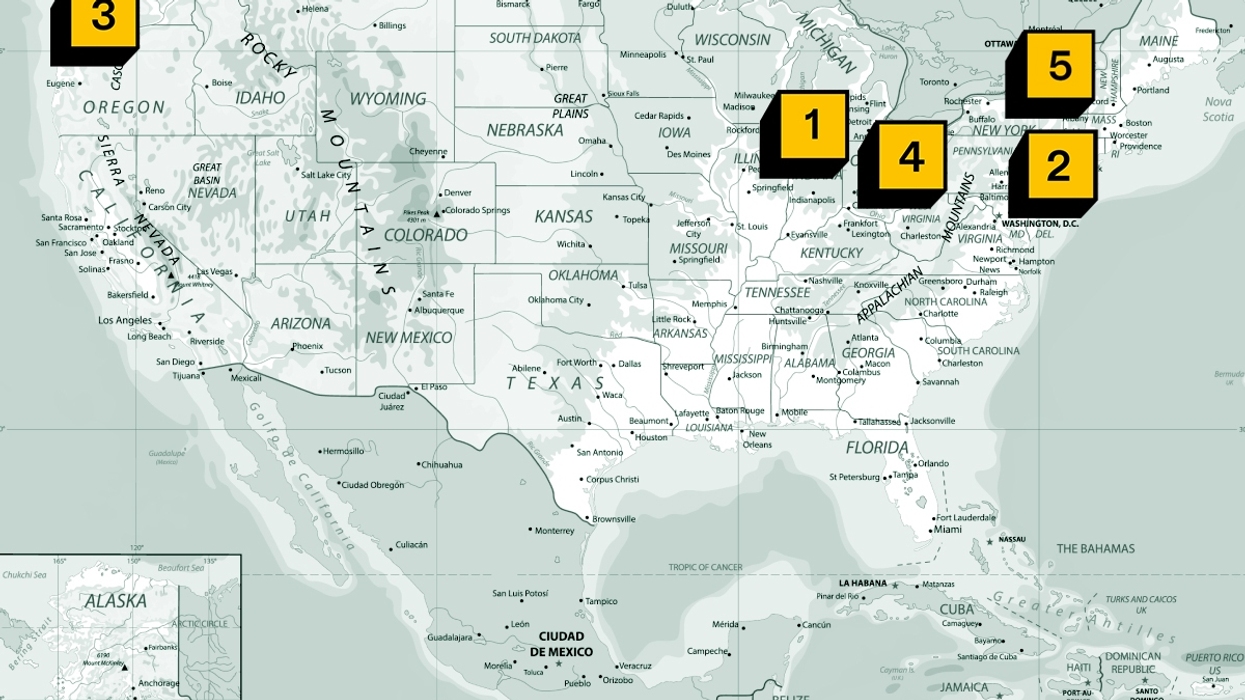
1. LaPorte County, Indiana — If you’re wondering where data centers are still being embraced in the U.S., look no further than the northwest Indiana city of LaPorte.
2. Cumberland County, New Jersey — A broader splashback against AI infrastructure is building in South Jersey.
3. Washington County, Oregon — Hillsboro, a data center hub in Oregon, is turning to a moratorium.
4. Champaign County, Ohio — We’re still watching the slow downfall of solar in Ohio and there’s no sign of it getting any better.
5. Essex County, New York — Man oh man, what’s going on with battery storage in rural pockets of the Empire State?
Mounting evidence shows that Republican voters are rapidly turning against artificial intelligence.
The data center backlash is causing a crisis of faith amongst American conservatives over land use, energy abundance, and corporate regulation. The Republican Party — not to mention the politics of AI infrastructure — may never be the same.
In the last week, I’ve seen a surge of Republican politicians pushing to temporarily ban data centers in conservative states. In South Carolina, Representative Nancy Mace, a leading GOP gubernatorial primary candidate, called for a statewide moratorium on new data centers. In Texas, the sitting agriculture commissioner Sid Miller proposed the same for the Lone Star State. Ditto in North Dakota where the idea got backing from a GOP primary candidate for a Public Service Commission seat.
I also witnessed a wave of anti-data center sentiment bursting forth online over the last few weeks. Major figures in the online right like Matt Walsh and Tucker Carlson have been posting videos lambasting the pace and practices of the data center boom, joined by a flood of commentary on YouTube and conservative video platforms like Rumble. On X and Facebook, the right has split into factions with figures like Marjorie Taylor Greene siding with activists while other pundits and personalities play data center defense, mocking critics as misinformed and antithetical to free market conservatism.
“Right now, frankly, anti-AI politics, anti-data center politics, that’s working for some people in some campaigns,” right-wing pundit Scott Jennings said Wednesday on his Salem News Channel show in a discussion with Republican Senator Dave McCormick of Pennsylvania, one of the biggest AI boosters in Congress.
Conservative and GOP-aligned political and policy advisers told me all of this ruckus is a lagging indicator for genuine anger amongst their voters. “It’s a collision between the Republicans’ traditional pro-business identity and a new populist identity,” Chris Wilson, CEO of political data firm EyesOver, told me in an interview Wednesday. “The old Republican consensus would’ve been pretty straightforward. The challenge is you have this emerging Republican electorate asking who owns this? Who is consuming it? Who is it going to benefit?” Wilson previously founded GOP polling firm WPA Intelligence.
It’s all in the data, pun intended. On Friday, GOP pollster Frank Luntz posted about this anxiety over data center development spreading to “regions led by both Democrats and Republicans.” Luntz pointed to a new Gallup poll confirming a trendline we reported in February using Heatmap Pro data: Opposition to data centers in GOP areas rose more than 300% over the previous six months.
Other recent data points make it obvious Trump Country is turning against data centers, such as in New Jersey, where a Stockton University poll found nearly half of Republican voters would support a data center ban “in the town where they live.” Meanwhile, new analysis out of Houston University in Texas found roughly 45% of Republicans in that city’s metro area would oppose a data center within a mile of their home.
Let’s be honest, here — those are approaching offshore wind-levels of abysmal support.
“The fact the polling has changed so negatively so quickly has shown there is very real concern, very real worry about what these data centers are doing and how they affect a region,” said Will Reinhart, a senior fellow at the American Enterprise Institute. Reinhart admitted that with the way winds are blowing, there may be a “very real” possibility that a major 2028 Republican candidate for president supports a national data center moratorium. The fact Florida Governor and 2024 candidate Ron DeSantis has been so critical of data center development “is a bellwether.”
“I would imagine there’s going to be more support for [moratoria], especially as energy prices are going to continue to rise. To me it feels like this is coming. What this portends for a larger electorate is you’ll have a push and pull. You’ll have some regions that want to see development and know they can benefit from a data center. Some regions are going to say no, we don’t want this.”
This level of profound opposition threatens to disrupt what was once Republican political consensus behind land use policy and energy development. Plainly, even once catnip for the GOP like a fossil-friendly permitting approach could face political hurdles in the future if Republican voters don’t want pipelines to power the largest driver of new energy demand.
Perhaps it’s understandable then why so many figures on the Right are coming to defend data centers. The leading counterargument? Data center opponents are agitators armed with misinformation and backed by foreign governments trying to undermine American dominance in artificial intelligence. Pro-AI advocates are seizing on the idea, as is Shark Tank magnate Kevin O’Leary (with lackluster results). Conservative energy pundits in D.C. are asking GOP lawmakers to investigate whether foreign funding is playing a role in the backlash. It’s even endorsed by Interior Secretary Doug Burgum, who said last week at a conference in Alaska that some of the opposition was funded by “foreign-sourced dark money.”
“I worry about us on the Build Baby Build where we’re still running into this thing where there are some states that are literally passing bans on AI data centers,” Burgum said, “and it’s not organic and local.”
When it comes to swaying skeptical members of the public, blaming outsiders for local conflicts over energy and tech infrastructure development is unlikely to work. The past is very much prologue here; some Republicans have long argued — with scant evidence — that foreign adversaries and wealthy Europeans are quietly puppeteering the American environmental movement. But we’ve never seen the national discourse ever pick up the topic, really. Meanwhile, we all know this strategy never really worked when defending solar farms from opposition in rural areas.
Republican energy politics strategist Chris Johnson told me that ironically, the solar and wind fights of recent years laid the groundwork for openness to conspiracies about technology as well as “muscle memory built for NIMBYism, to fight against anything.”
“There has to be this much more empathetic effort to meet people where they’re at,” Johnson said, adding he believes the conflicts over solar and farmland became an example of a “mistake” that wound up undermining other GOP priorities.
“The overemphasis on solar’s land use and the imagery of farmland being taken by solar panels like a scene out of Blade Runner, that is not helpful when you’re now seeing an environment with such tremendous growth in energy demand,” he told me. “I think it was a mistake for folks on the right to go so hard against some technologies we clearly need right now.”
All this being said, all hope is not lost for the right-coded AI and data center optimists out there.
David Blackmon, a longtime lobbyist for oil and gas based in Texas who writes about energy for The Daily Caller, told me how this backlash reminded him of the fracking boom of the 2010s. Perhaps famously to those in oil and gas, scares about water and air pollution from fracking were plentiful throughout that era, typified by the film Gasland — specifically a viral segment from the film involving flammable water from a faucet. The fracking boom ran through rural and often conservative-leaning towns and counties, and Blackmon remembers companies were “pretty close to losing our license to operate” in major parts of the shale patch “because of the ham-handed way we handled communications and public outreach.”
“This pretense that all the opposition to their projects is somehow bussed in from other places, or amounts to astroturf, is the down-playing of real, valid public concerns that are raised related to their projects,” he said. “The data center industry, at least in a few high profile cases, has really made a mess of things. It’s a lack of understanding of the industry. The case hasn’t been effectively made at a national level, or a local level. Why is this big industrial complex being plopped down?”
Blackmon and many others in conservative political circles believe the pathway to regenerating support for data centers rests in effectively communicating local benefits. The Rainey Center, another right-leaning D.C. organization, shared new polling with me that shows educating voters about policies like President Trump’s Ratepayer Protection Pledge makes them overall more likely to support AI data centers. “The public isn’t opposed to data centers, they’re opposed to paying for them on their power bill,” Hunt told me. “The industry’s social license is being written right now.”
This is also how some Republican AI and data center optimists in Congress seem to think.
Speaking with Scott Jennings on his show Wednesday, Dave McCormick expressed his belief data centers can be “economic engines.” But he, too, stressed that data center developers should fulfill a “covenant” with the communities hosting them.
“When these data centers come to town, they need to bring more energy than they use. So they should lower energy prices, not raise them. They need to have water recycled so it’s a closed-loop system. They need to make commitments on what they’re going to bring to the tax base. They need to promise to use local workers. I think if that covenant is in place most communities are going to opt in,” McCormick said. “But there’s a lot of disinformation, a lot of lies out there about it. And frankly the Chinese are behind a lot of it, Scott. ”
So where does this leave us? I believe we’ll see more Republican-led counties, states, and congressional offices back restrictions of some kind on data centers, as well as new rules and regulations on the burgeoning sector’s energy and water impacts. Whether the GOP’s traditionally business-friendly orthodoxy is permanently fissured by the data center backlash is yet to be determined. But we might be about to see a Republican race to a populist top on this issue — or bottom, depending on where you’re sitting.
“If they’re just pro data centers, that’s a problem,” Wilson, the GOP pollster, told me. “If they’re pro-AI, that idea is still politically safe, and it’s safer than being anti-growth or anti-technology. You don’t want to be perceived that way as a Republican.” Republican voters will still be supportive of AI competitiveness, beating China, domestic infrastructure, and lower energy bills, he said. But they’ll be skeptical of taxpayer subsidies for data centers, straining on energy and water supplies, secrecy around data center deals, or use of eminent domain.
“Vulnerabilty emerges when support for data centers is perceived as support for big corporate interests over local control,” Wilson concluded.
Editor’s note: This story has been updated to correct Wilson’s title.