You’re out of free articles.
Log in
To continue reading, log in to your account.
Create a Free Account
To unlock more free articles, please create a free account.
Sign In or Create an Account.
By continuing, you agree to the Terms of Service and acknowledge our Privacy Policy
Welcome to Heatmap
Thank you for registering with Heatmap. Climate change is one of the greatest challenges of our lives, a force reshaping our economy, our politics, and our culture. We hope to be your trusted, friendly, and insightful guide to that transformation. Please enjoy your free articles. You can check your profile here .
subscribe to get Unlimited access
Offer for a Heatmap News Unlimited Access subscription; please note that your subscription will renew automatically unless you cancel prior to renewal. Cancellation takes effect at the end of your current billing period. We will let you know in advance of any price changes. Taxes may apply. Offer terms are subject to change.
Subscribe to get unlimited Access
Hey, you are out of free articles but you are only a few clicks away from full access. Subscribe below and take advantage of our introductory offer.
subscribe to get Unlimited access
Offer for a Heatmap News Unlimited Access subscription; please note that your subscription will renew automatically unless you cancel prior to renewal. Cancellation takes effect at the end of your current billing period. We will let you know in advance of any price changes. Taxes may apply. Offer terms are subject to change.
Create Your Account
Please Enter Your Password
Forgot your password?
Please enter the email address you use for your account so we can send you a link to reset your password:

This transcript has been automatically generated.
Subscribe to “Shift Key” and find this episode on Apple Podcasts, Spotify, Amazon, or wherever you get your podcasts.
You can also add the show’s RSS feed to your podcast app to follow us directly.
Robinson Meyer:
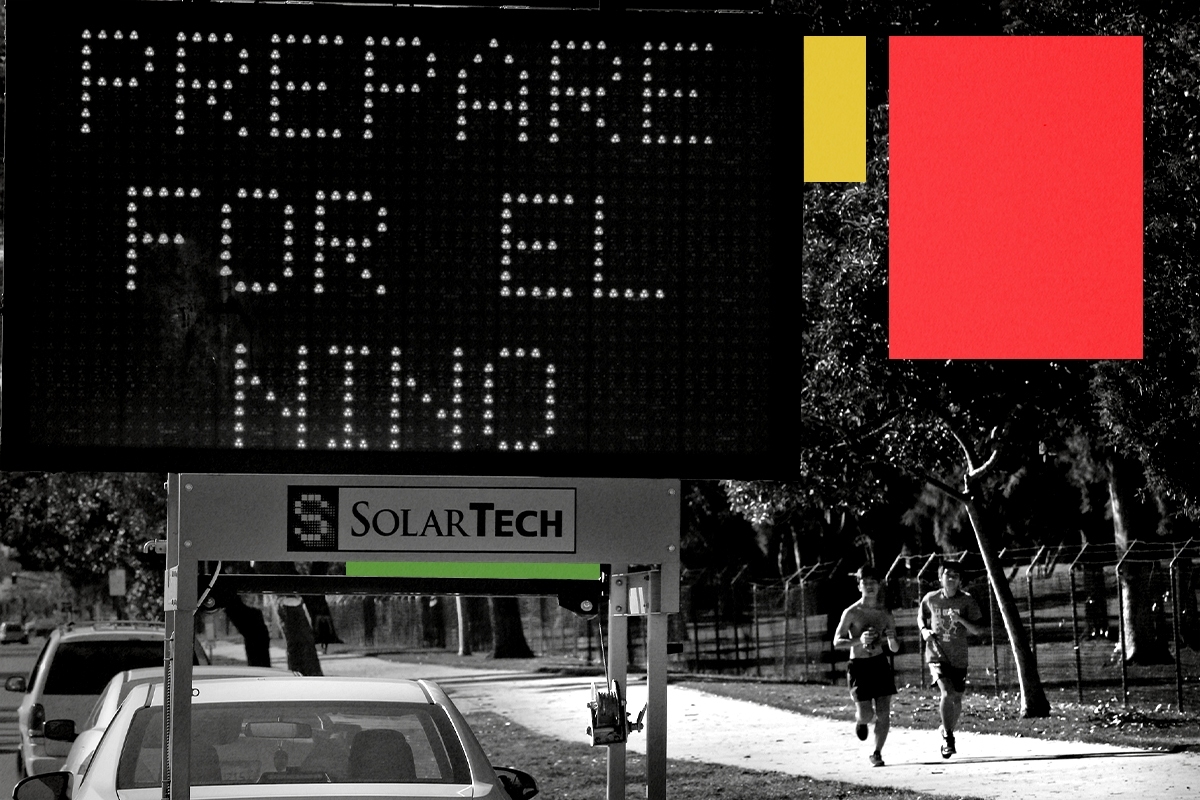
Hello, it’s Wednesday, August 12, and the Pacific Ocean is officially in El Niño. According to the National Oceanic and Atmospheric Administration, sea surface temperatures in the key region of the Pacific are now above average, and the agency expects they’ll remain that way through early spring 2027. Now, even a normal El Niño can be a big deal. They can cause very wet winters in California, huge rainfall events in South America, and droughts or even famines in parts of Africa and Asia.
Robinson Meyer:
But if you’ve been paying attention, you know that this El Niño seems like it’s not going to be normal. It seems like it will be a super El Niño. Forecasters are now warning we could see the largest El Niño in years or decades, if not in a century or more. The last time we had a super El Niño event in 2015 and 2016, it caused almost $4 trillion in global economic damages. This one now seems like it could be even bigger. So I wanted to learn more about what might be coming down the pike, why we think this El Niño, even though it hasn’t happened yet, or has only just begun, could be so big and what it could all mean. And we have a great guest. Zeke Hausfather is a climate research lead at Stripe and a research scientist at Berkeley Earth. He’s also an IPCC author. He’s a climate scientist with a strong interest in observational temperature records, climate modeling, mitigation and emission scenarios, and carbon removal. He’s kind of working on all sides of the climate problem at the same time, which is why I always enjoy talking to him. And I can’t believe we’ve never had him on Shift Key before. On this show, we talk about why we think this El Niño will be so big, why it will be a kind of preview of sorts of the climate of the 2030s, and whether climate change now seems to be accelerating and getting worse. I’m Robinson Meyer, the founding executive editor of Heatmap News, and it’s all coming up on Shift Key. Zeke Hausfather, welcome to Shift Key.
Zeke Hausfather:
Thanks, Rob. Great to be on.
Robinson Meyer:
One reason I always enjoy talking to you is because you’re at this nexus of, let’s say, climate science and the physical systems and physical processes that happen in the world and mitigation and carbon removal and decarbonization and the various processes we need to master to tackle climate change. You’ve been tracking recently a particularly worrying set of developments around this year’s El Niño. And I think over the past few weeks, it’s gone from something watching you write and share what the models are saying, what we can know about the coming El Niño, has gone from making me think that it was, oh, that’s kind of interesting to, wow, this is a massive story that’s unfolding in front of us that’s going to shape this. Not only the next year of how we talk about weather and climate, but really the coming year of global events. So I want to just start by asking you, what do we know about this year’s coming Monster El Niño, as it has recently been described? And how has it developed over the past few weeks and months?
Zeke Hausfather:
Yeah, so it’s funny you call it a Monster El Niño. We’ve traditionally said super El Niño but this is going to be so far beyond a super El Niño if the models are right that we sort of need a new term for it i prefer monster to godzilla El Niño which is the other one thrown around but in terms of this year’s El Niño so we knew an El Niño was coming by late 2025 but we didn’t know how strong and so there’s a set of different dynamical models this year some of them are actual climate models some of them are you know more simple sort of adapted weather models But there’s about 14 or so different groups around the world that publish these sort of dynamical models of El Niño behavior. And so we knew that there was something in the pipeline. But at least initially, you know, circa January, February, it looked like it would be a pretty moderate event, you know, something maybe akin to... What we saw in 2010 may be enough by itself to drive a record warm year. And we’ll talk about the relationship later between El Niño and global temperatures, but not something that would be record setting by any stretch of the imagination. But by April or so of this year, we really started getting a big shift in the models. Back then, they showed something that could potentially tie 2015-2016 as the strongest El Niño event on record. Actually tie both 2015-2016 and the sort of storied El Niño of 1877-1878,
Zeke Hausfather:
Which is a particularly disastrous event in the early part of the record. But with every month that has come since, the models have been projecting higher and higher and higher estimates for this El Niño event. And the observations have been consistently overshooting what the models previously had projected. So, it’s not just the models that are going up, the observations are also skyrocketing and leaving the previous model projections in the dust. And there’s this thing in El Niño forecasting called the spring predictability barrier, which essentially is the fact that we’re just not very accurate at predicting El Niño during the spring. And so for a while there, everyone was kind of debating, like, is this another, you know, because there have been some historical cases where particularly individual models have gotten things really wrong in the spring. They’ve said the super strong El Niño event is coming, and it never came for one reason or another. The westerly wind bursts didn’t happen, or there’s changing patterns of circulation that led to the El Niño not developing. But now we’re well out of the spring predictability barrier, right? And we’ve seen observations already go into record territories. In fact, as of today, we are currently in the third strongest El Niño event ever recorded, maybe fourth if you go back to the 1800s.
Robinson Meyer:
Well, this actually gets to a key follow-up, which is how much at this point are we in an El Niño that is record-breaking? Like how much do we see in observations, physical observations of the ocean or the atmosphere and the rest of the climate system? And how much do we think from the models that it is going to get even hotter?
Zeke Hausfather:
So the way that we track the strength of an El Niño, there’s a few different ways to track it. But the most common one is from this particular region of the tropical Pacific called the Nino 3.4 region, which is sort of like about a third of the way into the Pacific off the coast of Chile, right around the equator. And that’s where this sort of tongue of warm water forms during El Niño events. That’s sort of the characteristic signal of El Niños. And temperatures in that region, as of today, are at 2.8 degrees centigrade above normal, normal meaning the average of the last 30 years. So it’s sort of a sliding window that tries to remove some of the human-caused warming.
Robinson Meyer:
Are we comparing temperatures from that region to another region, or they’re just in that region two or more degrees above normal?
Zeke Hausfather:
So it’s a good question. The traditional way that El Niño has been defined is to just compare that region to itself, but with a sort of 30-year moving average applied to remove the effects of human-caused warming. There is another metric that was introduced by NOAA last year called the relative El Niño index, which is a variant where you sort of subtract out the average over the tropical ocean as a whole from that region. So you’re sort of looking at the difference between that region and the rest of the tropics. There’s pros and cons of that approach. Arguably, it removes the human warming signal a bit better, but it also can overly penalize really strong El Niño events. That reach outside of that region because they start warming the whole tropics. So anyway, the details are technical, but the point on the observations is that we’re already seeing a very strong event occurring there today. You know, temperatures as of today, when we’re recording, August 10, are 2.8C above normal. To put that in perspective, the strongest ever anomalies we’ve recorded, at least daily in the satellite record since the 1980 or so, were in 2015, 2016 …
Zeke Hausfather:
And those were about 3.1 degrees above normal. And so as of today, by itself, it would be the third strongest El Niño signal ever recorded in that region. But what’s different is that El Niño almost always peaks near the end of the year. So if you look at all the El Niño events on record, you know, there’s been one or two that have peaked in October, but the vast majority peak in November or December and a couple as late as January. You know, it’s a very persistent pattern of these events. And so the fact that it’s only the beginning of August now and we’re already at this extremely high level, we’re essentially running two to three months ahead of any other El Niño on record in terms of how quickly it’s developing. Which is one of the reasons why we’re increasingly convinced that this is going to be a record setting event. It’s going to blow, you know, any event we’ve seen previously out of the water. And if you look at the latest models that came out this morning, actually, it’s good timing. They’re predicting a peak of around 4C in the Niño 3.4 region, which will be, you know, more than a degree above the previous record and could end up being the strongest El Niño in, you know, 500 or a thousand years. We don’t have great proxy estimates going back, but, you know, it certainly is something well outside of anything we’ve seen since records began in 1850.
Robinson Meyer:
The swimmer Katie Ledecky swims a race sometimes in the Olympics and she’ll be out swimming and then behind her there’s like a there’s a computer generated line which is the current world record and she’s way out in front of the current world record and you’re watching her and then she does she turns around in the pool and then the world record is behind her that is the current El Niño this is the Katie Ledecky style El Niño. This seems like as good a juncture as any to ask what physically is an El Niño? We talk about it as an event. We talk about it as a kind of phenomenon that can develop within the global climate system. I think people know that it has to do with the temperature of the Pacific, but what actually is physically happening on the planet when an El Niño occurs?
Zeke Hausfather:
So El Niño is a natural phenomenon. There is arguably some contribution of climate change to El Niño intensity and frequency, but it’s a topic that’s pretty heavily debated and we can talk about that in more detail later. But El Niño itself happens every three to seven years. It’s got a sister event called La Nina, which is essentially the inverse of it, which is unusually cold temperatures in the tropical Pacific instead of warm temperatures. And El Niño is driven by a combination of wind and currents. You have what we call westerly wind bursts that are changing the ocean mixing behavior in the Pacific. And so during an El Niño event, effectively the ocean takes up less heat, and so the atmosphere ends up being warmer, or the ocean even releases some heat. During La Niña, which is the inverse, the ocean, the deeper ocean, I should say, takes up more heat, And so the surface is cool. And so interestingly enough, during strong El Niño events, you tend to have a smaller increase or even in some extreme cases, a loss of ocean heat content, whereas the surface temperatures where we all live end up being much warmer. And so, you know, this isn’t necessarily something that is being caused by humans, but it’s happening on top of human driven warming. And a lot of the year to year variability in global temperatures, which many folks are familiar with looking at, are driven by the sort of El Niño-La Niña cycle.
Robinson Meyer:
What is driving this shift within the model? If the models believe that it’s going to be very warm, then it seems like there are probably signals within the physical system that are pushing them to believe the sea surface will get even hotter than it is right now. And so what are those signals that they seem to be responding to as we understand them?
Zeke Hausfather:
So there’s a couple factors going on here, right? One is, as I mentioned earlier, observations are persistently running above what previous model runs predicted. So observations themselves of the El Niño region sea surface temperatures are persistently running above. Driving projections for a strong event. But we are not just measuring sea surface temperatures. We are also measuring meteorological conditions that are favorable to the sort of westerly wind bursts that drive growing El Niño strength. And we’re modeling and observing what’s happening in the ocean below the surface. And so there we see this sort of pulse of warm water coming from the Western Pacific into the Eastern Pacific and moving up toward the surface. And that warm water is quite warm. You know, some regions are nine degrees centigrade above normal in sort of the deeper ocean temperatures. And that’ll emerge at the surface off the coast of Chile and then spread out across the El Niño tongue into the sort of eastern and central Pacific in the tropics. And so just seeing this warm water moving under the surface toward the El Niño region gives us a little sneak peek to, you know, what’s going to emerge in the next few weeks.
Robinson Meyer:
Because when you see the satellite imagery. That’s thermal coated of an El Niño, it looks like this big tongue of warm, I mean, you just called it the El Niño tongue, but it looks like this big, you know, stalactite of warm water is jutting out into the ocean, and then fading into the kind of baseline temperature mix. But it looks like this big warm tongue that I guess is aligned with the equator or just below the equator or?
Zeke Hausfather:
It’s right around the equator. Yeah. And I think tongue is generally the term that’s and used by folks. But under the surface, the sort of opposite is happening, right? So at the surface, it’s spreading out from the coast of Chile to the west. But under the surface, you have water moving eastward, like warm water in the deeper ocean. And then that’s coming up at the surface in Chile and then spreading westward. And so it’s almost a circulation you could think of it as.
Robinson Meyer:
Let’s bracket out what this El Niño might mean. But what does an El Niño generally mean for the rest of the world. I realize it has lots of these local effects, but one thing I’ve observed, and even reading about El Niño and covering El Niño, is it seems to be both understood as maybe the biggest annual variable in the climate system. And that means it’s both strongly described and also there’s a lack of specificity sometimes about what exactly it will do or what a large El Niño means as opposed to a small El Niño.
Zeke Hausfather:
So what we can most directly say is what’s happening in the tropical Pacific. You know, we’re measuring the sea surface temperatures. There’s that tongue that is very visible. It stands like a sore thumb in any global temperature map during an El Niño event. But when you shift temperatures in the ocean, in the tropical Pacific, it has a whole bunch of teleconnections to the rest of the planetary climate. It’s going to move the jet stream around, it’s going to lead to changing precipitation patterns. And again, some of these are more deterministic than others.
Zeke Hausfather:
It increases the odds of things. It doesn’t necessarily always cause things. But the things that we do tend to see most often associated with El Niño events are or in the El Niño tongue itself,
Zeke Hausfather:
And directly around it, things get a lot wetter. So coastal Peru and Ecuador see a huge amount of rainfall, the Horn of Africa. There’s a few other areas that tend to get quite a bit wetter. But, and in some ways more importantly, the area around that tongue to the north and the south of it and to the west of it get a lot drier. And this is probably the single biggest and most problematic impact of El Niño is its effects on rainfall in those regions. So places like Indonesia and Southeast Asia, India, Southern Africa, Northern Amazon, Eastern Australia, they all tend to get quite a bit drier during El Niño events. And if you look at some of the bigger El Niño related catastrophes in history, like the,
Zeke Hausfather:
You know, mass deaths following the 1877-1878 El Niño event, when depending on what study you look at, somewhere between, you know, three and 50 million people died, that was largely due to crop failure associated with drought in those regions. So that’s the one I’d be most worried about. But, you know, there are also a bunch of other effects. So the western U.S. famously gets wetter during El Niño years. We tend to have mudslides here in California. Route 1 is probably going to get washed away more than usual. You know, we tend to have a bit warmer temperatures in the northern parts of the U.S. and northwest Canada. You know, the oceans as a whole get warmer. One thing that we’ve started seeing during El Niño events starting in 1997, 1987-1988 is these sort of globally widespread coral bleaching events. So the first time this was observed was in 97-98 during that El Niño event. And it’s since then become sort of a common occurrence every time we have a strong El Niño and even some summers when we don’t because the oceans have
Senator Martin Heinrich:
Gotten so hot.
Zeke Hausfather:
And so certainly this year, that’s something that a lot of people are concerned about in the winter in the tropics. There’s also a bunch of different effects on storms associated with changes in wind shear and circulation patterns. A very strong El Niño event will suppress Atlantic hurricanes. It’s one of the reasons that our forecast for Atlantic hurricanes has been cut in half already and might be cut significantly further. But it does tend to lead to more cyclones in the eastern Pacific. So cyclones that might hit Japan or Hawaii or China are going to become more common this year. And then globally, it tends to warm the climate as a whole. So a strong El Niño event tends to be associated with a boost in global temperatures of up to 0.4C for four or five months, and for the year as a whole of around 0.2C. Though this event, because it’s so unprecedented, might push it much further than that. There’s also a bit of a lag in time between when El Niño peaks in the tropical Pacific and when the global temperature effects have felt of about three to five months. So that’s one of the reasons why, even though El Niño is going to peak this year, it’s next year, 2027, that’s likely to be the record shattering one in terms of global temperatures. And that’s a pattern that we persistently see in, you know, 1997 was warm and 1998 was record shattering. 2015 was warm and 2016 was record shattering. It’s the year after El Niño peaks that we really see this big boost in temperatures.
Robinson Meyer:
And that’s because basically we’ve added all this anthropogenic CO2 to the atmosphere. We already know the Earth is kind of out of temperature balance where there’s more heat captured in the atmospheric system than there would be in a kind of a thermostatic way. And normally how that’s dealt with is that heat gets dumped into the ocean and water goes down to the ocean, the ocean acts as a kind of planetary sink for heat from the atmosphere. Exactly. And if the ocean everywhere is unusually warm, but also if the world’s largest ocean is really, really warm at its warmest point, with heat radiating outward from there into the rest of the marine system, then it stops absorbing heat.
Zeke Hausfather:
If the ocean is absorbing less heat, which is sort of the major effect of El Niño, or even releasing heat in some extreme cases, that’s going to lead to a much hotter atmosphere. And so if we didn’t have El Niño and La Nina, almost every year would set a new record in a warming world. It would be monotonic, as we say. The line would just go up. But because we have El Niño and La Nina on top of that, some years are a bit cooler, some years are a bit warmer. And so you can even think of it as like a sine wave driven by El Niño and La Nina cycles on top of an upward line.
Robinson Meyer:
You referenced the 1877-1878 event. You referenced that this could be the biggest El Niño in 500 or 1,000 years. How do we know about El Niño events before the satellite record begins in let’s say around 1980 or even before I think modern 1877, 1878 is within the realm of modern temperature reconstructions where we take land records and put them together and some ocean records and put them together and then simulate the Earth’s climate and get a decent sense of what was happening in the climate system. But how do we know about these historical events?
Zeke Hausfather:
Yeah. So there’s, for a record like 1877, 1878, there’s sort of two ways we know about it. One is that we did have a decent amount of ocean measurements that far back. And so at least on trade routes, the sailing ships were throwing buckets over the side of the ship and pulling them up with a rope and sticking a thermometer in them. So we have some measurements in the El Niño region during that event. Not very many. So there still is a pretty big uncertainty there. But we also have a reasonable estimate of global temperatures. And so you can sort of back out to an extent the strength of an El Niño from its effect on global temperatures as well. And then when you go before 1850, we don’t really have any observations. I mean, there’s some land observations, but there’s not much in the way of ocean observations. And so there you’re relying on some individual proxy measurements like corals that can tell you something about temperature at a particular time. And you’re also looking at these overall global temperature reconstructions and trying to back out the strength of an El Niño event based on, you know, how spiky global temperature is. But certainly the further you go back, the lower the resolution those things are. So like 500 years, we can probably get at least a fuzzy picture.
Zeke Hausfather:
You know, a thousand years, you’re starting to push it just because it’s hard to pick up an event that’s only a year in duration in those proxy records that might have a resolution of 10 years or 15 years. And then obviously, if you push, well, before 1,000 years, you know, you’re starting to get into the realm of a single proxy observation is going to tell you something about 50 or 100 year average. And at that point, El Niño is just going to wash out. So it does limit the extent to which we can say something about the El Niño record.
Robinson Meyer:
Want to advance your career and transform the clean energy sector? Discover the Yale Clean and Equitable Energy Development Online Certificate Program from our sponsor, the Yale Center for Business and the Environment. In this fully online five-month program, you’ll dive into key phases of development while learning how to center community engagement. In just five hours a week, learn from leading experts, develop practical skills, and grow a powerful network. By engaging in video lectures, live sessions, and a capstone project, Yale ensures you have the expertise to respond to clean energy demand and drive economic resilience. Visit cbey.yale.edu to learn more and apply to the Clean and Equitable Energy Development Program. That’s cbey.yale.edu. Or check out the link in the show notes.
Robinson Meyer:
It’s interesting because to me the 2015-2016 event was right around the same time i started covering climate change and i think it actually marked a big moment in climate discourse if i’m allowed to historicize off the top of my head about these things december 2015 which is i really right as that El Niño event was peaking was the same month the paris agreement was signed obama had just issued and was about to fight in the courts for greenhouse gas regulations on power plants under the Clean Air Act. Then, of course, we had the 2016 election, of which a large amount of the content was about climate change. And I think an underrated amount of that election was about climate policy. And then we had the first Trump administration, during which climate became a more and more salient topic politically. And so 2015, 2016, that El Niño, the earth has had most of the warmest years on record have actually happened since that El Niño. That is still the decisive event to me. And I still remember, for instance, those mass coral bleaching events of the 2015-2016 period.
Robinson Meyer:
What do we know, if anything, about El Niño now that we didn’t know 10 years ago during that event? Or what do we know about El Niño’s relationship to climate change, if anything, that we didn’t know for the 2015-2016 event?
Zeke Hausfather:
Before I answer that, I’ll answer another related question, which I think is like why these sort of events have such salience in the public discourse. And I think, you know, part of that is that climate is a slow and gradual problem and our politics are not designed around slow and gradual problems. And so when we do have these acute events, which El Niño on top of global warming represents, you know, it’s a big spike upward. It gives us a sneak peek of, you know, what the new normal global temperature condition is going to be in a decade or so. You know, it tends to focus the attention. And so I think it is important for us to use that to the extent we can, because it is a little sneak peek of what’s coming soon. But in terms of the question you asked around what we know in addition about El Niño and climate, so there certainly have been a number of papers suggesting that climate change could be making strong El Niño events more common. There’s some physical mechanisms that have been proposed, but it isn’t something that shows up particularly robustly in our climate models today. And there are a number of scientists who also argue that there’s those physical reasons that have been proposed are not super strong. So I’d put this in the same category as the debates around like wavy jet stream from global warming and its effects on cold air outbreaks, for example.
Robinson Meyer:
And the way we jet stream, just for listeners, is the idea that climate change is making those extreme cold snaps that we have had recently in North American winters where it’s suddenly negative 10 for a day or two more common because the jet stream is less stable and it dips down, allowing the so-called polar vortex to dip down over more populous parts of North America than where it normally lives.
Zeke Hausfather:
I’d put both of those ideas in this category of very active scientific debate, like the jury is out. And so hopefully in another decade, we’ll have a stronger answer in both of them and more modeling and observations. But I don’t think we can say today that there’s particularly strong evidence that climate change is going to make El Niño’s stronger outside, of course, of, you know, the background warming, just making the impacts of everything worse.
Robinson Meyer:
Right. It’s so funny. I mean, it’s one of those classic climate science discussions where it would be great to know it would be an interesting answer that we’d learn about the Earth climate system. But it wouldn’t really, I don’t know that it would have policy relevance as maybe it would. I mean, maybe we’ll learn about key El Niño mechanisms that could come important later. But the key takeaway of climate science is and remains that we should, you know, reduce anthropogenic greenhouse gas emissions as fast as we possibly can while avoiding overall harms to humanity.
Zeke Hausfather:
And the climate impacts of human emissions are just so much bigger over time than the climate impacts of El Niño, right? You know, a strong El Niño event will add about 0.2 degrees centigrade to global temperatures for a year. You know, human emissions are adding that every eight years. So every eight years, we’re adding a permanent Super El Niño worth of heat to the climate system, which just helps put things in perspective. Or 1998, which at the time was a record-shattering year, would be an exceptionally cool year if it occurred this year.
Robinson Meyer:
Given the monotonic increases of human greenhouse gas emissions every year, at least so far, what does this El Niño event mean for global temperature rise? You’ve been involved in a debate with the, I would say, storied NASA, former NASA climate scientist Jim Hansen, about whether 2026 will be the hottest year ever. Maybe fill us in on that, but generally, what does this event mean for global temperature?
Zeke Hausfather:
Yeah. So El Niño provides a temporary boost in global temperatures. We know how it’s happened historically. It’s a little harder to predict this year because we’re so far out of sample. You know, if the models are right, we end up with a peak at 4C, which is more than a degree above anything we’ve ever seen before. We don’t have analogs to draw on. But if we assume the world is linear, which we get in trouble for sometimes, we would expect a boost in global temperatures in 2027 of, you know, 0.25, maybe even up to 0.3C. And so at least my latest estimate is that this year, 2026, will be pretty neck and neck with 2024. Probably still going to be the second warmest, but, you know, maybe a 40% chance it’s the warmest, 60% chance it’s the second warmest. So getting closer and closer to a coin toss. Next year, 2027, though, is going to shatter records. So the warmest year we’ve had to date was 2024, and that was about 1.5 degrees, 1.5, 2 or so above pre-industrial levels across the average of six different data sets that the scientists have put together. 2027 in those same data sets, given what the models expect El Niño to do, would end up around 1.7 degrees C.
Zeke Hausfather:
So even compared to the previous El Niño event, which was a big boost, you know, this event is going to shatter records. And so the air bars are still pretty big on that, in part because, you know, the models have a wide range of projections. If it ends up being an El Niño that only breaks a record by a small margin instead of shattering it, the global temperature response is going to be smaller. But under any of the El Niño forecasts, 2027 is going to be a record warm year. I think the last time I checked, there was about a 95% chance it sets a new record.
Robinson Meyer:
One of the multi-year running conversations in climate science, and I would say among climate analysts as well, is that this year, as you said, temperatures will be on average about 1.5C warmer than their pre-industrial average. I believe last year we were over 1.5C as well, or very close. And one way I’ve tried to be rigorous as this has happened in the climate system is to say, look, like just because you have one year, you know, of course, at this point, about eight or nine years ago, the IPCC came out with its 1.5C report, which basically said the effects of climate change at making the planet a degree and a half warmer than their pre-industrial average will be more severe than we thought will be bad. Well, it’s a thing that’s worth avoiding. One thing I’ve been carefully rigorous about is like a single year where the global average temperature is more than 1.5C above pre-industrial average doesn’t actually mean we’ve cleared this sort of conceptual 1.5C threshold. I mean, to be clear, we are definitely going to clear the 1.5C threshold, but the first year you do it is not when you actually clear that threshold. You need several years of data above 1.5C to bring the five or 10-year moving average above 1.5. It seems like with this big El Niño, though,
Robinson Meyer:
We are going to have warm temperatures. We’re going to really push that moving average a fair amount and at least could temporarily get the threshold to be pretty close. I realize it’s hard to predict more than beyond 2027. We don’t know what 2028. We could have a big La Nina in 2028 and it could push temperatures back down below 1.5C. But maybe to tie this into another conversation. I think for the past four years or five years at this point, really since the pandemic, global warming has appeared to accelerate. And there’s been this question about whether it was caused by reductions in particulate pollution or whether it’s some other process that’s being revealed as human emissions continue to drive it. I guess the other takeaway from this big El Niño event is like that acceleration is going to continue given that we’re going to be above 1.5C this year and we could be above 1.6 or 1.7 next year.
Zeke Hausfather:
Certainly, our estimates of when the world is going to cross 1.5C have been moving closer and closer to present. One of the challenges, I think there is broad agreement now that global warming is accelerating. In fact, I went out on a bit of a limb in 2023 and published a piece in the New York Times arguing that it was accelerating back when the evidence was much more mixed than it is right now. I think the debate is less today about is it accelerating and more about exactly how much and how quickly it is accelerating. And how much of that acceleration is being driven directly by human emissions, the combination of greenhouse gases that warm the planet and cutting emissions of aerosols, sulfur dioxide in particular, that have masked a portion of historical warming. And how much of it is being driven by feedbacks to the warming process, which in many ways are the more worrying factor, right? You know, is cloud changes that we’re observing, you know, all being driven by cutting air pollution and sulfur and shipping fuel and Chinese particulates from their coal plants? Or is that change in cloud behavior and clouds being less reflective a response to the warming itself? Because it turns out that the biggest driver of how sensitive climate models are to our emissions, this factor we call climate sensitivity, essentially how much warming you get if you double CO2.
Zeke Hausfather:
The biggest determinant of that in climate models is how clouds respond in a warming world. So if the cloud feedback is strong, if clouds become less reflective, if there’s less low-lying clouds, potentially more high clouds in a warming world, then you get a lot more warming for the same amount of CO2. And so we can’t say for sure today, what mix of factors we’re seeing. But I think a lot of us are really concerned that we might be seeing an emergence of a stronger cloud feedback, which would, all things being equal, tend to imply a higher climate sensitivity.
Zeke Hausfather:
But in terms of when we’re going to pass 1.5 degrees, unfortunately, the Paris Agreement didn’t actually define what they meant by 1.5 degrees, which has caused a lot of challenges after that. And then the IPCC decided to fill in the gap. And they said, OK, we’ll define 1.5 degrees as the midpoint of a 20-year period. So 20 years is long enough that El Niño and La Nina effects will cancel each other out, and you’ll just have the human warming, the long-term effects in there. The problem with that, of course, is that means you won’t know when you’ve passed 1.5 degrees until 10 years after the fact, which is not the most useful definition. So there’s a big paper in the works that myself and like 40 other people are co-authors of that hopefully is going to come out later this summer or fall that is trying to actually answer this question and say, how do we as a community figure out a way to define when we’ve crossed 1.5 degrees that doesn’t require waiting 10 years in the future to know? There’s still a bunch of different options you could choose and different methods and ways to combine observations and models or statistical smoothing or linear or exponential projections. Anyway, there’s a million different approaches one could take. The approach we took in this paper was essentially say, okay, which of these methods got previous periods right? Like when we passed one degree or when we passed 0.5 degrees, how resilient are they to like volcanic eruptions or weird El Niños or these other sort of things. But I do think the world is probably going to firmly pass 1.5 degrees by about 2028 or so, you know, it’s coming up pretty darn quickly.
Robinson Meyer:
I’ve always felt like we needed a number that was not just how much warmer is it than average. We need a kind of global warming index number, like a climate changey index that can spit out one number that says how much worse are things right now. The issue is that once you start thinking about what such an index would look like, you realize that you basically just want the global temperature average and also that it’s basically going to go up all the time. And so it doesn’t really have a useful function, except You know, when Europe is having a giant heat wave, you could be like, oh, it’s especially climate changey right now.
Zeke Hausfather:
We do have this human-induced warming estimate that we publish every year in the sort of climate change indicators report that Pierce Foster leads. And I think this year is about 1.4 degrees of pre-industrial levels was our
Zeke Hausfather:
best estimate for 2025, which is, you know, pretty darn close to 1.5.
Robinson Meyer:
We’re talking about this question of climate sensitivity, which is how responsive is the climate system when one doubles atmospheric CO2? CO2. And in many ways, it’s one of the core questions in climate science. And for a long time, we kind of had a distribution for it. We knew what the range of climate sensitivity might be, but we hadn’t made a lot of progress in cutting off the tails. You were a co-author on a 2020 paper that cut off the extreme low end and extreme high end estimates using a number of different lines of evidence. Given what we’ve seen since 2020, where there’s been this seeming acceleration in global warming, does that affect the conclusions of that work at all? Are you more worried that we’re on the high end or that there are more extreme high end possibilities within the climate system that maybe weren’t countenanced by how that paper was run? Or are we just landing, I believe that paper was found that climate sensitivity was somewhere between 2.6 and 3.9 Celsius, are we like pointing more toward the 3.9 side than the 2.6 side, given what we’ve seen over the past few years?
Zeke Hausfather:
So we rounded those numbers a bit in terms of what ended up in the IPCC sixth assessment report. But the IPCC report said that the likely range of climate sensitivity and likely in the IPCC’s parlance means there’s a roughly two-thirds chance it’s in that range was between 2.5 and 4C per doubling CO2. And the very likely range, the 90th percentile range, which I find more useful, to be honest, because a lot of things happen outside of a two thirds chance is somewhere between 2C and 5C if we double CO2. And that’s a pretty big range, right? A lot of stuff can happen between 2C and 5C, but...
Zeke Hausfather:
You know, we are doing an updated report, hopefully in time for the IPCC 7th assessment report that’s going to incorporate all of the evidence that’s come out since 2020, because, you know, it is a big question in climate science. And there’s been a lot of work that has come out in the last six years on this topic. And, you know, I don’t want to spill the beans early, so to speak, in terms of what we’re going to find. But I will say that there’s sort of two countervailing factors, one supporting higher sensitivity and one constraining it a bit. So the thing supporting higher climate sensitivity is what we’re seeing with earth energy imbalance. So this measurement we get from satellites of how much heat is being trapped in the climate system, which is something that’s a fairly new instrument. You know, we don’t have a super long record of it, but it is in some ways the most important measure because it is capturing the sum of the whole climate system. Now, it has shown values that are a bit on the high side of what most climate models expect. And so is an indication that climate sensitivity might be on the higher end, but it is also one satellite and a relatively short record. And so there’s reasons not to just use that as the only bit of information we have. The other thing that we have is the paleoclimate records. So the Earth’s more distant past, particularly the last ice age,
Zeke Hausfather:
The Pliocene, the Eocene, these sort of periods in the Earth’s more distant past that we have measurements of both carbon dioxide and greenhouse gas concentrations, but also of temperatures from proxy records. And those tend to suggest that climate sensitivity is not much above 5 degrees C. You know, if you have a really sensitive model, for example, it’s going to run away to snowball earth if it tries to simulate the last ice age. And there’s been a lot of work by that community to use things like pattern effects and sort of how the continents and ice sheets and everything were different in that period than they are today to try to infer what the relationship in that period means for climate sensitivity today. And I think that has not necessarily been pointing toward very high climate sensitivity. But that said, 5C warming for doubling CO2 is still very much in the range of possibilities. And so there’s been a bit of a heated debate between myself and Jim Hansen and a number of other folks in the community about this topic. And Hansen’s been arguing that climate sensitivity is probably close to 5C. And the rest of us have been saying that it could be. But across all the lines of evidence we have, we don’t necessarily think that it’s more likely to be 5C than 3C, right? I personally wouldn’t be surprised if at the end of the day, in the next IPCC report, we move the best estimate up to closer to 3.5 degrees C for doubling of CO2 from three. But it’s early days, and that’s not my chapter, so I don’t get to decide that.
Robinson Meyer:
Well, speaking of emissions, you recently published a blog post on the emissions intensity of using AI. And I appreciated it for a number of reasons, including the fact that you drew on this John Bistline paper, who’s a researcher at Watershed, trying to estimate the emissions intensity of AI, which was in turn covered by my colleague, Emily Panacorvo. So always great to see heat map in the mix. But your general takeaway from this paper and also from your own estimates was that AI, probably at this point, given how we use it, is much more emissions intensive than maybe early estimates or is somewhat more emissions intensive than early estimates and you were able to put some error bars around how we should think about electricity use associated with both chatbot ai and then also agentic and cloud code style ai and describe a little bit what you think the discourse is missing right now around those topics and why you think speaking of estimates coming in on the high end why some of the more popular estimates around the emissions intensity of AI may underestimate its emissions.
Zeke Hausfather:
So when you’re looking at AI energy use, there’s sort of top-down and bottom-up approaches you can take. I think the top-down numbers are broadly right, and those are the ones that give like, I don’t know, 15% of U.S. electricity use by 2030 going to AI data centers on the high end. I’m not arguing that estimates like those are too low. What this piece was more about is, what is the impact of me as an individual using AI tools? And there, the numbers that were published last year in 2025 by folks like Google or by OpenAI are not very realistic to the way people are actually using AI today. So these numbers that were published in 2025 were that AI per prompt, and by prompt, they mean typing something in a chat GPT text box and hitting enter and getting a response without a reasoning model, important distinction. So just one shot. But those take about 0.3 watts of energy, which really isn’t much, right? At 0.3 watts, you could do many, many, many thousands or tens of thousands of AI prompts and still have much lower impact than, you know. Running your air conditioner in the afternoon or, you know, driving to work.
Robinson Meyer:
That’s less than how a light bulb used to be. So if you didn’t feel bad about adding a single new lamp to your home, then you shouldn’t feel bad, so to speak, about using AI under that estimate. Yeah.
Zeke Hausfather:
But the problem, of course, is that some people are still using AI that way, but increasingly AI is being used in an agentic form. And that more means that you give AI a set of instructions or a goal to achieve. And then AI goes off and does many, many, many, things to try to achieve that goal. AI agents are, at least in the corporate world and the software engineering and scientific world, the vast majority of AI use today. And those agents make both much more complicated calls than the prompts would suggest and many, many more calls. And so when you look at the actual energy use of these AI agents, it’s something on the order of 600 times larger per prompt than the traditional, like, type something in a chat box and got to get an immediate response. And so that does end up adding up. I actually looked at two months of my own AI use because I had local logs of all of the numbers there.
Robinson Meyer:
When you say local AI use, these are calls you’re making locally to ChatGPT or Claude that you’ve retained a record for but the ai is still being run on an external device you don’t have a power meter hooked up to your desktop
Zeke Hausfather:
Yeah my desktop is using next to nothing this is some data center spinning up to process the call i made on my local cloud code but i found that on average i was using about three kilowatt hours a day for my agentic energy use which is the equivalent of running two refrigerators so that’s not nothing in big days when i was really doing some complicated like geospatial analysis or big data crunching exercise, I was using upwards of 10 kilowatt-hours per day. So maybe a third of the typical US household energy is just going to AI agents. And if you annualize that over the entire year, you end up with numbers that they’re not crazy. So for an entire year, my estimate is that my agentic AI energy use is about 1.1 megawatt-hours. If you convert that to CO2, again, using sort of a roughly average grid intensity, It’s about 370 kilograms of CO2. So that’s roughly half of a transcontinental flight. So again, it’s not enormous in terms of my overall emissions, but it’s also not trivial, like some of these initial estimates that came out last year would suggest.
Robinson Meyer:
Carbon emissions with average U.S. grid intensity or with the likely kind of it’s all coming from gas that...
Zeke Hausfather:
All coming from gas and average U.S. grid intensity are not that far apart at the moment.
Robinson Meyer:
Yes.
Zeke Hausfather:
Yeah. So this is using a bit of location-based analysis, but it’s pretty close to the all-gas assumption now. Where I’ve gotten some criticism there is people who said, well, if you account for the fact that these AI companies are buying RECs to cover their data center energy use by building clean energy elsewhere, even if it’s not directly powering the data center, then the number is probably lower. Which, you know, might be fair if they actually disclosed what those numbers would be, I would be happy to use them. But unfortunately, at the moment, AI companies are really not telling us much about the actual energy use of their products. And so we’re having to infer all this with very indirect methods. One of the main takeaways from this piece should be a plea for AI companies to be more transparent and actually tell us how much energy their systems are using.
Robinson Meyer:
I think this is very striking, particularly by Anthropic, which I think has published absolutely no estimates per token of its emissions intensity or energy use, even though it’s the quote unquote kind of good AI company. We just are kind of completely in the dark about what Claude uses. And in fact, we know that Anthropic is contracted with one of the Colossus data centers built by XAI, which is one of the worst offenders in terms of particularly emissions-intensive generation.
Robinson Meyer:
We’re going to have to leave it there. As El Niño continues to develop, maybe we’ll have you back to talk about just how bad it is. Zeke Hausfather, thank you so much for joining us on Shift Key.
Zeke Hausfather:
Thanks, Rob. It was a great conversation.
Robinson Meyer:
And that will do it for us this week, but we’ll be back next week with a new episode of ShiftKey. Until then, Shift Key is a production of Heatmap News. Our editors are Jillian Goodman and Nico Lauricella. Multimedia editing and audio engineering is by Jacob Lambert and by Nick Woodbury. Our music’s by Adam Kromelow. Thanks so much for listening. We’ll see you next week.

Log in
To continue reading, log in to your account.
Create a Free Account
To unlock more free articles, please create a free account.
Rob talks with Amanda Levin, head of climate science and policy at the Natural Resources Defense Council, about why we shouldn’t give up on renewable subsidies just yet.
Two years ago, Donald Trump made an outlandish campaign promise: He would cut Americans’ power bills in half.
It was a ridiculous, impossible pledge — but even so, the affordability problem didn’t need to get this bad. A new report, out this week from the Natural Resources Defense Council, looks at the economic, environmental, and public health costs of Trump’s regulatory and legislative clean energy policies, including his rollback of the wind and solar tax credits.
The report’s author, Amanda Levin, joins Rob on this episode of Shift Key. Levin is a Director of Policy Analysis at the NRDC’s Science Office. They discuss why Trump’s repeal will have long-term effects, the underrated public health impacts of the rollback, and why Levin believes the credits should be restored.
Shift Key is hosted by Robinson Meyer, the founding executive editor of Heatmap News.
Subscribe to “Shift Key” and find this episode on Apple Podcasts, Spotify, Amazon, or wherever you get your podcasts.
You can also add the show’s RSS feed to your podcast app to follow us directly.
Here is an excerpt from their conversation:
Robinson Meyer: So you’ve said that we should have tax credits that buy down the cost of technologies while we’re installing them. We had Lily Bermel on Shift Key a few weeks ago with her report, and she looked at a different set of questions here, and I think it’s worth kind of talking about them in a second. But her view of the data — which I would say I’ve also heard now from some solar developers, who obviously represent the interests of their industry — but her view of the data was like, look, there’s a lot of solar and batteries that are about to get built as developers rush to hit a deadline, rush to hit the deadline in the One Big Beautiful Bill Act. Her view is, if you look at this from an emissions perspective, you don’t need wind and solar tax credits. So really ,money would be better spent elsewhere. It would be better spent buying down the cost of clean firm technologies like advanced geothermal, like fusion, perhaps, that can run 24/7 and start to push gas out of the system.
You’ve written an op-ed for Heatmap kind of taking issue with some of those claims, and I want to actually lean into that disagreement. Why should the U.S. restore wind and solar tax credits? Because I would say we’ve learned one thing, actually, in the past month since Lily was on the show. It is that deficit concerns are going to be even more pressing for lawmakers, it seems like, in 2029, even in 2027, than they were in 2024 or 2022, because interest rates are going to be high. They seem to be getting higher. Among the crises that Democrats will have promised to solve is this deficit crisis that is of Trump’s own creation. And so why should a scarce dollar go to wind and solar tax credits?
Amanda Levin: I think it’s important to remember that renewables have a lot of benefits, and not all of them are reflected in the decisions that a utility might make on behalf of its customers. Renewables both lower pollution, which can help reduce the costs and the burden that we have both from public health pollution as well as from climate pollution. They also can enhance energy security and increase economic opportunities.
But I think importantly, it’s a recognition of, one, we need to build a lot of energy fast, and we want to build it clean, as well. And that is going to take quite a bit of money up front. Even if wind and solar are some of the cheapest, lowest cost options over the life of their investment, when looking at something more simplistic, like a levelized cost of energy, it doesn’t mean that they don’t have large upfront costs that need to then be recovered from someone. And in the structure of many of our states, that someone is going to be ratepayers. And often the way that we recover money through electricity bills and rates is not progressive. It’s pretty regressive. So I think the way that we see the kind of tax credits playing into this is it’s an essential part of ensuring that as we transition towards a cleaner system, it remains affordable for everyone by moving costs off of ratepayers, who are going to be much more regressively taxed, and putting them onto the federal government, when we know that we need to be spending more on clean energy to meet our growing load, and also just to invest in our grid that is, in many cases, reaching the end of its life for certain investments.
And so I think to that kind of question of what are we trying to solve here? Obviously, wind and solar, we still see that they are being built, and they make up the bulk of anything that’s going to be built in the next decade. But we’re definitely not building enough.
There was a paper that I was part of at the beginning of 2025 that found that in order to meet our climate commitments, we would need to quadruple the amount of wind, solar, and battery storage that was being added to the system compared to recent day records. The IRA got us basically halfway there. And if you look at where we are now with Trump, we’ve basically lost that halfway there. But what we know is, if we want to actually tackle our societal challenges — climate, health, everything — and affordability, we’re going to both need to build a lot of clean energy, but also we can’t put that on the backs of ratepayers. We need to explore other ways to mitigate the near-term affordability shock that will come from just having to invest in our system.
You can find a full transcript of the episode here.
Mentioned:
Amanda Levin’s new report: An Affordability Crisis of Trump’s Own Making
A ‘Glass Half Full’ Isn’t Enough to Fight Climate Change
Previously on Shift Key: The New Paper Arguing Biden’s Power Sector Emissions Cuts Are Largely Intact — Even Under Trump
This episode of Shift Key is sponsored by ...
Discover the Yale Clean and Equitable Energy Development online certificate program at the Yale Center for Business and the Environment. In this fully online, 5-month program, you’ll learn from leading experts, develop practical skills, and grow a powerful network. Visit cbey.yale.edu to learn more and apply.
Verse's software platform Aria helps data centers connect to the grid faster and optimize power operations in real time. Learn more at verse.inc.
Music for Shift Key is by Adam Kromelow.
This transcript has been automatically generated.
Subscribe to “Shift Key” and find this episode on Apple Podcasts, Spotify, Amazon, or wherever you get your podcasts.
You can also add the show’s RSS feed to your podcast app to follow us directly.
Robinson Meyer:
Hello, it’s Thursday, August 27, and two years ago when he was running for president, Donald Trump made a ludicrous promise. He said he would cut electricity bills in half, cut Americans’ energy costs in half. Now, obviously, that was never going to happen, but it has backfired on the president tremendously in the years since. Energy costs are up, and it’s driven his polling to all-time lows. Now, I was thinking about it because we recently passed a major anniversary of the Inflation Reduction Act. It was signed into law by President Biden in August 2022 and partially repealed, as you surely know, on July 4, 2025 by President Trump. We’re still getting a bead, I think, on just how bad that repeal was. Of course, the big Trump tax and spending bill, which was passed last year, carved out the solar and wind tax credits from the IRA, as well as consumer incentives for electric vehicles. That turned out to be enormously poorly timed, not only because we were about to enter a self-inflicted oil crisis, but because the country is in the middle of an explosion in electricity demand caused by data centers. There’s a new report out this week from the Natural Resources Defense Council that argues the Trump law will be even worse for the country than we thought last year, and it’s going to cut to this key energy affordability problem the president’s been dealing with. The report argues that Trump’s repeal will cost consumers $30 billion a year by 2035, and increase some household power bills by as much as 25%.
Robinson Meyer:
The report also ties into a very important argument that climate wonks are having right now. A few weeks ago on this show, we had the energy analyst, Lily Burmel. She argued that the glass, quote, remained half full on climate policy, that most of the Inflation Reduction Act’s emissions benefits, its emissions cuts, were going to survive the Trump repeal, or at least compared to a 2021 baseline. She said that policymakers shouldn’t focus, therefore, in future administrations on restoring the solar and wind tax credits, but adding new policy to areas of the energy system that need more help. This new report from the NRDC doesn’t look at the same exact set of questions. It starts the clock in 2025, not 2021. But its author recently argued in a piece on Heatmap that will stick in the show notes that we should restore the solar and wind tax credits and that glass half full, quote unquote, is the wrong outlook to take here. Our guest today is the author of that new report and the author of that heat map piece. The report’s called An Affordability Crisis of Trump’s Own Making. And the author is Amanda Levin. She’s director of policy analysis at the Natural Resources Defense Council’s science office, where she oversees the development of modeling, analyses, and materials for the organization’s advocacy on climate and clean energy priorities. On this show, we talk about what her new report found, what it means for the future of climate policy, as well as the importance of talking about conventional air pollution like particulate matter.
Robinson Meyer:
I’m Robinson Meyer, the founding executive editor of Heatmap News, and you are listening to Shift Key. Amanda Levin, welcome to Shift Key.
Amanda Levin:
Thank you for having me, Robinson.
Robinson Meyer:
So I just want to start, you came out with this new report this week that I think has Like, look, we all knew that the impacts of the Inflation Reduction Act’s repeal and the passage of the one big, beautiful bill was going to mean bad things. But I think your new report is able to put some numbers on just how bad it will be, especially since at this point, it’s been about a year since OBBBA was passed. And we have a little more clarity on what it’s going to mean for the power sector. And so just to start, can you walk us through what you found in this new report and what it might mean?
Amanda Levin:
Yes. So our new report is basically the fullest assessment yet of what the actions that this administration is taking to curtail clean energy and promote fossil fuels might mean for the country. Our analysis goes beyond just analyzing the effect of Trump’s regulatory rollbacks or the one big beautiful bill and adds on top the impact from many of the administration’s other actions to block progress. That includes things like levying tariffs, remanding offshore wind permits, and other attempts to block onshore wind through regulatory hurdles and permit obstacles.
Amanda Levin:
What our modeling shows is that the Trump administration’s policies, to stop renewable energy, promote fossil, is just going to mean higher costs for consumers, less new investment in the power grid, especially when we need it most, and a dramatic increase in deadly pollution. Just to put some numbers out there, what we find is that under Trump’s policies, as compared to a January 2025 snapshot, essentially what would have happened if the policies that were in place on January 19, 2025 were still in place today, is that we will spend $125 billion, more on electricity over the next decade, amounting to energy bills increasing by $230 a year by 2035.
Amanda Levin:
We’re going to lose $700 billion in new power sector investment, and with it, over half a million jobs in clean energy, and over 40% of all the new power capacity that was expected to be built before Trump took office. And without this new power, what it means is we’re just going to have to keep and run a lot of our older, aging, more expensive coal, gas, and oil plants more, leading to quite a lot of extra pollution. Our health modeling found that over the next decade, the extra pollution from these power plants could amount to 69,000 additional early deaths and over 85,000 more ER visits and hospital emissions. All told from a climate perspective, power sector emissions could be twice as high under Trump by 2035 as they were expected to be under the past administration’s policies.
Robinson Meyer:
And that’s starting from a 2025 baseline, basically. So that’s looking at everything that would have happened after Biden left office.
Amanda Levin:
Exactly. Our model really focused on 2025 to 2035, looking at three scenarios. What would have happened under that snapshot, January 2025 policies in place, but still seeing the same level of data center load growth and other macroeconomic trends. And then we leveled on top two different Trump scenarios. One, we call a limited impact case. That is really just the big marquee actions that Trump has taken. The rollback of different regulations from the Environmental Protection Agency and one big, beautiful bill. And then our full impact to really try to assess what do all the other smaller things that this administration is doing mean? Adds on top, those tariffs, those other permitting headwinds to get a bigger picture of what that might be happening and where we might be headed, given everything that the administration is throwing in the way of our clean energy transition.
Robinson Meyer:
Okay, so in a word, bad. You know, it’s bad. How is the model thinking through these regulatory actions? Because I think this has been one of the hardest parts of the Trump administration to wrap your mind around. There’s the wind and solar tax credits. Those have been excised from tax law under the big Trump tax and spending bill. I should say under the big Trump tax and spending law. There’s a deadline for them that’s coming up. And so a lot of developers are rushing to build projects ahead of the deadline now. But within the universe of things that we can model, It’s among the things that we’re better at modeling. But then you have all these regulatory actions that are slowing down various project pipelines anywhere from it’s a little more inconvenient to do a project than it used to be to it’s basically impossible to do. It seems like a wind project now. It’s basically impossible to move forward on. And there’s a lot of questions, too, about how long are those going to last? Are those going to stick around till 2028? How easy are they to reverse? So just like, how does the model countenance the universe of these regulatory policies and bureaucratic policies and kind of additional red tape that has been such a big part of this administration?
Amanda Levin:
Yes, that’s a really good question. Obviously, the administration is doing a lot of different things, and some of them are already being stopped by the courts. And then they attempt to find other workarounds to get to the same result, which is more expensive clean energy and less on the grid. For our approach here, we recognize that things are moving so quickly and changing pretty rapidly all the time, that what we wanted to do was have a range of scenarios. And I think that’s why we came to the idea of, we need to model two different cases. One that is much more limited in impact, that looks just at the things that we really can easily model. We know what the one big, beautiful bill text looks like. We know how to model those types of impacts. We know what the EPA standards look like and what they will look like when they’re repealed. And we know that the administration wants to repeal those standards. And then we chose a worst case, which is, let’s assume the tariffs stick, similar to the levels that the Trump administration has tried, even if it might be that there’s more minimum import prices.
Robinson Meyer:
Or something else. I didn’t mention this in the setup, but among the different policies here are that the Trump administration has placed tariffs and threatened to place them on various inputs to the electricity generation process, on various renewable inputs. And you kind of assume that they stick in one of these scenarios.
Amanda Levin:
Yes, we assume that they stick in the full impact case. And I’ll note that it’s not just solar, wind, and battery storage that gets affected by tariffs. It affects all power sector technologies, including also things like natural gas, which rely on minerals and metals that are affected. And then, for example, with the offshore and onshore wind, right? Our assumption for the onshore wind is essentially that that blockade that’s kind of caused today by the Department of Defense kind of permit freeze sticks. Makes you know, yes, it’s a worst case assumption, but I think.
Robinson Meyer:
In advance administration, the Department of Defense continues to not basically allow any wind farms to get built.
Amanda Levin:
And I’ll note that that only lasts through 2029. We do not make assumptions about what happens after that. Everything that the Trump administration would do that is more on the administrative level does end January 19th, 2029. But those are huge delays in just the ability for clean energy to make up lost time, especially on the onshore wind side where the production tax credits do play an important part in the economics of how much wind might be built. And they essentially miss that window if anything that’s not already under construction or an advanced development past that kind of DOD permit phase can’t be built until 2029.
Robinson Meyer:
Got it. What does the model think about data center demand? How do you model the role of data centers here? And when you talk about, for instance, greenhouse gas emissions being twice as high in 2035 as they would have been under a, let’s say, Harris administration scenario, do you include in that the behind the meter gas that seems like it’s getting built at quite large scale to service computing demand?
Amanda Levin:
Yeah, so I’ll just kind of start with the headline, which is data center growth is the same across all three classes and cases. What we’re essentially trying to understand is not how do data centers change the picture, but how do the policies in place change the outcomes given that we are now in a high load growth scenario. In our model, we’re using the Lawrence Berkeley National Lab data center forecasts, which is about a 10% year-over-year compound annual growth rate between now and 2035. By 2035, data centers are about 15% of total power demand in all three of our cases. So all of our cases have to meet quite high levels of data center growth. I will note that we do not have some of the behind-the-meter gas included in the model. That’s something that is really hard to put into … And so instead, our modeling has to meet that growing demand through a combination of utility scale resources, whether that’s building new gas plants or building more solar storage or keeping existing coal, gas online and running more to meet that higher level of demand.
Robinson Meyer:
Where is most of the shortfall between these different model runs coming from? So when you call it snapshot 2025, but let’s call it Harris administration, since I think that’s.
Amanda Levin:
Yeah, it’s essentially continued policies.
Robinson Meyer:
Continued policies. The world, the American government is frozen in amber on January 19, 2025, and the world continues as it will. Where is most of the lost capacity coming from in the power grid?
Amanda Levin:
So the largest kind of total amount of capacity that we lose is from solar, which was just projected to be the dominant source of new power being added to the grid under that kind of, continued policies stuck in amber scenario. The largest kind of percent decline is going to come from wind, which is in particular, like really hard hurt by the Trump administration, which not only, cut the tax credits, but also just given other permitting headlocks makes it a lot harder for the wind sector to just see any growth at all over the next 10 years under the Trump administration.
Robinson Meyer:
What most surprised you in the report?
Amanda Levin:
There are two things that really surprised me. The first is just how little investment overall we see in these Trump cases. It’s not just that we’re losing hundreds of gigawatts of renewables, wind, solar, battery storage. I expected that. I think what was crazy is we don’t really see any new investment in natural gas beyond what was going to happen in the continued policies. And that is in part a function of the 10-year window of which there are some near-term supply constraints that make it really hard for natural gas to be built above the kind of levels that were already put into the continued policy scenario. And that instead of kind of seeing different investment, the action really is we lose all this clean and instead we just have to stick with the old stuff. There isn’t really new investment at all. I think the other thing that I found in a more positive way, shocking, was despite everything that the Trump administration is doing.
Amanda Levin:
We still see massive growth of wind, solar and battery storage compared to where we are today. Just to put that into perspective, even in that full impact case, which levels on top some of these permitting constraints, tariffs, we still go from about 25% renewable to 46% renewable electricity mix by 2035. We would be at closer to 65% if we were, you know, with the kind of continued policy scenario, but there’s still a lot of progress that gets made, even when we add on top all these other things that the administration is doing.
Robinson Meyer:
Talk a little bit more about the gas relationship, because among the policies that the Biden administration was trying to implement at the end of 2024 were EPA regulations on gas. I don’t believe they were ever finalized. Now it’s ancient history. But it would have changed the investability environment for gas. I mean, these rules would have more or less required some degree of carbon capture and storage on site with natural gas power plants, it would have been an incredibly litigated rule. It was being litigated at the time they lost the election. Does your model assume that those rules or something like those rules were in effect? And what is the difference then between a world where those rules were in effect through the 2020s and 2030s, and we got all this data center demand, and the world that we’re getting where those rules aren’t in effect and we’re getting all this data center demand anyway.
Amanda Levin:
Yeah, so I think that’s a really good question. And it’s important to clarify what happens with capacity versus generation. In our modeling, we do include the finalized EPA rules, which were both on existing coal and new gas. What never ended up getting finalized was a standard on existing gas. So it just covered those two pockets of the power sector. For the new gas standard, it was kind of separated into three different levels. For baseload gas plants, essentially gas plants running about 40% or more a year, they would need to have installed CCS, I think, by 2032 and beyond. For anything running below that, the standard was more based on efficient turbine design and heat rates. So they didn’t need to install CCS, but they just couldn’t run as a baseload facility. They served more for peaking and kind of load following. And I think that helps explain some of the weird gas pieces here, which is one, under the continued policy cases, you also have a really strong standard on existing coal that would have required coal plants to either co-fire with natural gas or install CCS if they wanted to run past 2032. In our model, there are some coal plants that install CCS, but essentially another 100 gigawatts of coal retires by 2032 compared to the Trump administration.
Amanda Levin:
What we see is the model does build some new gas in that scenario, not for generation. It has enough wind, solar to meet kind of growing energy demand. But what it wants is kind of those peaking load following resources that can help not run all the time, but just run in those kind of grid periods where they’re needed the most. And so in the Biden era or continued policy scenarios, yes, there’s new gas investment, but it’s gas investment that’s designed not to meet really our energy needs, but to meet our demand needs and that kind of capacity to keep our system reliable and resilient as we build out a lot of renewables and storage. In the Trump scenario, we don’t have those same kind of constraints on how much new gas can actually run. And so you get a similar level of capacity, but we’re running our existing coal, our existing gas, and our new gas a lot more, resulting in much more emissions, much more fossil generation, even if the kind of capacity picture is not as different as you might expect.
Robinson Meyer:
It is interesting because I think back during the Biden administration, rules, as you said, would have required that the most efficient gas plants run as baseload and you couldn’t run a peaker plant as a baseload plant, right? And I think at the time, a kind of savvy thing that one could have said was like, well, who’s going to run a peaker plant as a baseload plant anyway? That would be crazy. That would be completely uneconomical. Like, why would you ever do that? If you did that, the structure of electricity markets would look totally different than it does right now. But of course, then what happened is we got a massive secular shock to electricity demand in the form of data centers. And now people run peaker plants all out 24-7 all the time.
Amanda Levin:
Yeah, I have been involved in modeling not only of kind of this kind of current policy, but also I was part of some of the multi-model studies run by EPRI and John Bistline for both the IRA and the kind of EPA carbon pollution standards. And I think what I can see is as we add in those other shocks, the way that a model responds, given that we now have much higher demand load growth, some different costs, different supply chain constraints, does result in some differences in how the model has to meet these standards and just meet load more generally, given all of these other things that are happening in the energy sector today.
Robinson Meyer:
What is your interpretation of what this means for policy? If anything, I mean, I think it’s enough to say, look, The Trump regulatory and administrative policies are even worse than we thought. They are driving up your energy bills. I thought your intro made this great point that is like often forgotten, but should really be in every story about Trump’s energy policy, which is the man ran on cutting electricity bills in half. That was the campaign promise he made. It was a risible campaign promise at the time, but it was obviously he was not going to be able to do it, but he has not only, he’s completely failed. And I would add it’s blown up in his face. It’s in some ways a testament to like why you shouldn’t make campaign promises like that, because the whole politics of the grid have completely blown up in his face. But what is your interpretation of what this model means for policy? And what would you hope policymakers take away from what you found here?
Amanda Levin:
Yeah. So when I look at this, I think what I’m shocked by is just the number of crises that any next administration, next Congress will have to face. It’s not just going to be that we are off track from a climate perspective. We definitely will be. But we also are going to have to contend with a serious cost of living issue. Our analysis both kind of looked at what it might mean for retail rates, which in certain areas could be as much as 25% as high due to Trump’s policies by 2035, but also looked at the healthcare spending side of things as well, which, given the extra pollution, the extra illness will also be higher because of Trump’s agenda. And beyond that, the next administration is going to have to figure out how do we not only move forward, but double our attempts to get back to where we were supposed to be. And I think that is something that.
Amanda Levin:
Is really important for policymakers to keep in mind, which is we need solutions that can address essentially a multifaceted set of crises all at once. It will not be just one single piece of policy. We are going to need to look at things like tax credits that can help reduce the upfront cost and help keep costs for ratepayers lower as we build out and invest in an aging system that needs to grow in both pace and scale. We’re going to need things like permitting reform and new transmission because we do not have the system that we need to be able to have a reliable decarbonized clean grid of the future. And we’re also going to need to look at things like standards that will require utilities to put the best interests of their consumers and society at the forefront as they make long-term planned investments to meet growing load growth over the next few years. I think one thing I want policymakers to take away from this is we still have the ability to shift and to make progress. I think one silver lining from this is Trump tried to have a death blow to the clean energy industry, and it didn’t work. The economics are still there, but the market won’t get us where we need to go at the time and scale.
Amanda Levin:
That we need to get there unless we have policies that not only unlock new transmission, permitting, interconnection, but that also push more clean energy onto the grid to hit the levels of deployment that we need to have an affordable, clean system that avoids the worst of climate change.
Robinson Meyer:
Let’s lean in on one of those points. So you’ve said that we should... Have tax credits that buy down the cost of technologies while we’re installing them. We had Lily Bermel on Shift Key a few weeks ago with her report, and she looked at a different set of questions here. And it’s almost, I think it’s worth kind of talking about them in a second. But her view of the data, which I would say I’ve also heard now from some solar developers who obviously represent the interests of their industry, but her view of the data was like, look,
Robinson Meyer:
Look, there’s a lot of solar and batteries that are about to get built as developers rush to hit a deadline, rush to hit the deadline in the One Big Beautiful Bill Act. Her view is if you look at this from an emissions perspective, you don’t need wind and solar tax credits. So really money would be better spent elsewhere. It would be better spent buying down the cost of clean firm technologies like advanced geothermal, like fusion perhaps, that can run 24-7 and start to push gas out of the system. You’ve written an op-ed for Heatmap kind of taking issue with some of those claims, and I want to actually lean into that disagreement. So why should the U.S. restore wind and solar tax credits? Because I would say we’ve learned one thing actually in the past month since Lily was on the show. It is that deficit concerns are going to be even more pressing for lawmakers, it seems like, in 2029. Even in 2027 than they were in 2024 or 2022, because interest rates are going to be high. They seem to be getting higher. Among the crises that Democrats will have promised to solve is this deficit crisis that is of Trump’s own creation. And so why should a scarce dollar go to wind and solar tax credits?
Amanda Levin:
I think it’s important to remember that renewables have a lot of benefits and not all of them are reflected in the decisions that a utility might make on behalf of its customers. Renewables both lower pollution which can help reduce the costs and the burden that we have both from public health pollution as well as from climate pollution. They also can enhance energy security and increase economic opportunities.
Amanda Levin:
But I think importantly, it’s a recognition of, one, we need to build a lot of energy fast. And we want to build it clean as well. And that is going to take quite a bit of money up front. Even if wind and solar are some of the cheapest, lowest cost options over the life of their investment, when looking at something more simplistic, like a levelized cost of energy, it doesn’t mean that they don’t have large upfront costs that need to then be recovered from someone. And in the structure of many of our states, that someone is going to be rate payers. And often the way that we recover money through electricity bills and rates is not progressive. It’s pretty regressive. So I think the way that we see the kind of tax credits playing into this is it’s an essential part of ensuring that as we transition towards a cleaner system, it remains affordable for everyone by moving costs, off of rate payers who are going to be much more regressively taxed and putting them onto the federal government when we know that we need to be spending more, on clean energy to meet our growing load and also just to invest in our grid that in many cases.
Amanda Levin:
Reaching the end of its life for certain investments. And so I think to that kind of question of what are we trying to solve here? Obviously, wind and solar, we still see that they are being built and they make up the bulk of anything that’s going to be built in the next decade, but we’re definitely not building enough. There was a paper that I was part of at the beginning of 2025 that found that in order to meet our climate commitments, we would need to quadruple the amount of wind, solar, and battery storage that was being added to the system compared to kind of like recent day records. The IRA got us basically halfway there. And if you look at where we are now with Trump, we’ve basically lost that halfway there. But what we know is if we want to actually tackle, our societal challenges, climate, health, everything, and affordability, we’re going to both need to build a lot of clean energy, but also we can’t put that on the backs of ratepayers. We need to explore other ways to mitigate the near-term affordability shock that will come from just having to invest in our system.
Robinson Meyer:
When we talk about air pollution, about actually kind of two different types of air pollution, right? There’s conventional air pollution. That’s stuff like nitrous oxides, sulfur oxides, particulate matter being particularly important there. All of those types of air pollution have local health effects. And that means they have local effects on the medical system, the public health system. And one thing I really like about your report is that you pull out and say, look, Trump’s policies here are going to cause 69,000 additional early deaths and 85,000 extra emergency room visits. Obviously, that’s quite significant. It has a big impact on people’s lives, obviously, as well as the health system overall, the economy. You project health care spending could increase by up to $1.7 billion a year. But there’s also these climate impacts that they avoid as well. I mean, this is why we care about them at Heatmap. I mean, we care about local air pollution, too. Not that Machiavellian. Renewables are important because they produce a decarbonized energy system and they avoid carbon dioxide emissions, which contribute to global climate change. One interesting thing that the Obama administration did back when it was trying to pass EPA regulations on power plants during its second term was that it was able to justify its
Robinson Meyer:
Power plant rules entirely on the back of what we would call co-benefits. That is, it said even if you ignore the climate benefits, you can actually justify their cost entirely on the back of their improvements to public health outcomes in the United States. Like people will be healthier and that will produce fewer medical costs and that will pay for the administrative burden of these rules on utilities.
Robinson Meyer:
Do we know if we can justify the benefits of these wind and solar tax credits entirely on their public health outcomes? Because I think that’s actually quite an important input here if we’re thinking about kind of justifying them in a federal budgetary context.
Amanda Levin:
I haven’t done the math on whether or not we can fully justify them through public health costs. But I think we should be thinking about both public health and climate when we talk about renewables. I think often we sometimes silo those emissions impacts and don’t recognize that there are a lot of different benefits that these types of clean energy investments can make. And it is part of the reason why I really wanted to emphasize that when we think about the value of tax credits or anything that can support clean energy that can be built today in the next few years, There is both a climate benefit to that, especially in the long term, but there are also nearer term benefits, just from an air quality perspective as well, that should be, considered by policymakers and the government that want to promote climate. Resources and technologies that will make a healthier environment and a healthier country.
Robinson Meyer:
The electricity system is so unusual because it is this big socialized natural monopoly, which we pay for kind of through user fees, but also kind of just because the system cost is like divvied up and then like chucked into the user fees. And this is not a show about rate making. But I think you and I agree that like the more we can do to get some of these socialized costs out of the rate base, which people pay for in their electricity bill and onto the tax base, which is more progressive,
Robinson Meyer:
Generally the better within reason. I guess one of my questions is like, is the right way to do that through directly subsidizing renewables? It might be. Or is it like through other forms of infrastructure, like building out a power grid? That we know utilities are really reluctant to do that could allow electricity grids more broadly to function in a kind of cleaner and more streamlined way. And that it seems to me that there are a lot of people who would like to build solar farms and are being stymied in those goals by the Trump administration. And that isn’t to say that there should be more of them, but like nobody’s building large scale transmission who number one doesn’t kind of believe in it ideologically. Or number two, it just seems like there’s a better role for the government there. Or at least it seems like there’s a big role for the government there. And that doing so would unlock a lot of wind and solar. And I wonder how you think about that trade-off.
Amanda Levin:
So I guess I tend to see it not so much as a trade-off versus these are complementary things that we need to do. I 100% agree that we need a modern review and approval process that can support the level of clean energy deployment that we need. And that today’s interconnection and permitting processes have resulted in thousands of gigawatts of new power kind of just being... Waiting to enter the grid and that we’re going to need a lot more transmission. Our own deep decarbonization modeling found that we would need to quadruple the transmission grid between now and 2050 if we were to meet our decarbonization, a net zero future.
Amanda Levin:
And so I think that that is incredibly important and that we are going to need, a transmission system and an interconnection process, which I’m not sure always has to go through federal policy versus what can be done through RTO reform and other types of things to be able to deploy the clean energy that we need.
Amanda Levin:
But I don’t know if just building out the transmission is going to result in the level of renewables and other investments that we need to meet, these types of big climate and renewable energy goals. I think it’s important to remember the intent of the clean electricity tax credits in the IRA, which were designed to last until the later of 2032, or when emissions, CO2 emissions in this case, from the power sector were 75% below 2022 levels. It wasn’t an arbitrary date for when we were going to continue to incentivize any clean energy technology, which was wind, solar, but also things like advanced nuclear or geothermal, there was a purpose behind those tax credits. It was, we have to meet and build a decarbonized grid, and it’s going to take a lot of clean electricity, whether that’s wind and solar and batteries in the near term, because those are technologies available today, or things like advanced nuclear geothermal that might be available in the next 15, 20 years. And a lot of the modeling that was done during the IRA times suggested that those tax credits would likely extend until the early 2040s, providing.
Amanda Levin:
Long timelines for us to figure out how do we build out the clean energy that we need. And yes, you need transmission, but I think we still need something else to deploy the level of clean energy once we have a grid that can handle it as well.
Robinson Meyer:
I totally, because I agree. I mean, I found that when the IRA was passed, I found the commitment made in those tax credits really significant. And I felt like it was often ignored, that the fact that the U.S. Congress and the president were committing to an open subsidy of clean energy technologies up until the point that basically the power sector was more or less decarbonized, basically 95% below or 90% below its emissions peak. And I realize you’re not here to comment on the politics, but I think that part of what we’re trying to wrestle with here are the politics. Because what I found was that, yeah, I could tell that to people, but like,
Robinson Meyer:
And if all things were equal, would I love to see the U.S. make a similar commitment in the future? Yes, obviously. You know, I’m not a climate reporter because I don’t care about this. But I did find the political environment to be completely unresponsive to this commitment made by lawmakers.
Robinson Meyer:
And a year after the IRA was passed, I found that the rhetoric from environmental groups, the present company accepted, a number of groups accepted. I don’t think everyone was a bad actor here, but I think the nature of the current media environment is that institutional groups that are here to kind of make policy happen have less sway over the discourse than groups that maybe see climate change not as a problem to be solved, but as a sin of our industrial capitalistic system. A year after the IRA has passed, what people were talking about was not this commitment that the U.S. had made. It was the fact that the president had allowed the Willow Project to go through, which was going to cause emissions. But the scale of those emissions was dwarfed by the emission reductions that were coming from the IRA. And by the way, the big constituency for the Willow Project was, yes, ConocoPhillips and also the indigenous communities on the north slope of Alaska that were begging for this project. And so, you know, there were other progressive reasons one might approve this project, but those didn’t factor into the discourse. What factored into the discourse was that the president was doing, President Biden, who’s very old and could barely talk, obviously that factored into it too, like was approving this project. But the,
Robinson Meyer:
My takeaway from this has been, and I don’t want to believe this, has been that, like, look, climate change is a global problem. And I want the U.S. to reduce its emissions because I think it makes the global politics of decarbonization easier. But if push came to shove, what I really want the U.S. to do is develop decarbonized net zero clean technologies that make it easier for all these other countries, that make it so that all those other countries have no choice but to choose clean. And while I think it’s great for us to build a lot of solar, like the scale of our demand isn’t really like meaningful compared to the scale of Chinese capacity on solar. They’re going to make a lot of solar panels. And so I guess my big lead up question here, and I encourage you to challenge any part of this, is like, shouldn’t the marginal dollar be spent on like enhanced geothermal or fusion or like a version of the AP1000 that’s as cheap as the Chinese have made their version of the AP1000? Because actually what matters is the global scale of the problem, not the U.S. emissions, which isn’t to say U.S. emissions are unimportant, just that, like, we’ve seen how the political sphere responds to U.S. emissions, and the answer is... I don’t know that people care.
Amanda Levin:
Yeah, I’ll just start by saying I am very happy that my job at NRDC is more on the policy and the modeling rather than the politics, because I think it is, you know, I think it is something that is hard to like, how do we sell what really are about future impacts and future generations? Yes, we feel the impact of climate change today already, and I think we look at the drought and the heat this summer as evidence of that, but so much of the cost that we bear today to try to avoid climate change is to avoid something that doesn’t always feel real. That being said, NRDC, and I think from my own deep decarbonization analysis, I know that we’re going to need more than just wind, solar, and battery storage. We need something that’s going to be firm and hopefully clean, whether that’s advanced nuclear, geothermal, long-duration energy storage.
Amanda Levin:
I think what I struggle with is what is the right mix between.
Amanda Levin:
Investing in the things today that can help with the problems that we face today, that can bring emissions down this decade when we really need it, and emissions both from a CO2 perspective, but also from all the other things, soot, smog, and that can help with affordability of our rates in the next 10 years. When we talk about advanced nuclear or geothermal, those aren’t things that will be online by 2035, at least at any massive scale. They are solutions for a system that is highly renewable that won’t even exist until the 2040s at scale. And yes, I do think that we should continue to invest in these emerging technologies because, the more options we have in the future, the better, especially not just for the U.S., but for the entire world that’s going to need to figure out how to meet growing demand in a much more clean way. But I think we already have given a lot of money to nuclear in particular there’s a lot of private interest in advanced nuclear right now especially from the hyperscalers and the question I have is how much more focus and how much more money should we put towards these things that won’t be around to help with the near-term issues today, and just to kind of put a piece on that near-term impact The one other thing I wanna emphasize is.
Amanda Levin:
We are already seeing some of this health pollution increase pretty significantly between 2024 and 2025. Sulfur dioxide emissions from the power sector were up over 18% just year over year, as we saw coal plants increase their generation, but also become dirtier. So it’s not just that not investing in wind and solar will increase emissions, but that the power sector can actually see pretty substantial changes just in a single year, based on what is available and what utilities are deciding to run. And so I do think that there is a near term value add to continue to invest in the things that actually can make a bite today versus solely focusing or, really heavily focusing on those technologies that we want to be around in the future, but are still years away from being part of the conversation.
Robinson Meyer:
From a policy standpoint, why does the near-term focus, why is that the more binding constraint?
Amanda Levin:
So I think I look at it in two ways. One is, Honestly, more of a messaging perspective, which is if we’re already past 1.5C, what is the incentive for countries, for individuals to really focus in on climate change? If the message is we’ve already lost, what do we just never end up accomplishing because we’ve given up? And I think that’s where some of the near term, just from a perspective, like a messaging perspective, can be really valuable, which is we can still make progress. We haven’t reached a tipping point yet. And there are things that we can do and that we should be doing now to start to bend the curve, whether it’s the U.S. specifically or the world as a whole. There are a lot of positive stories happening across the world right now on clean energy and on emission reductions.
Amanda Levin:
And I think the other piece is just the reality of there’s a lot about climate science that we may not fully understand. And I am talking, for example, about some of those tipping points of are we going to run into a world if we keep on increasing our emissions every year, where we actually have hit a point where we can’t turn back? And in addition to all the advanced technologies emerging clean from technology, of course, there’s also in that discussion things like direct air capture and other things that could help reduce emissions in the future. But I think there is a need to focus on the near term solutions to show that, one, we can make progress. It’s not hopeless. And two, to also start to bend the curve when we know that we haven’t gone too far.
Robinson Meyer:
I think those are great. I will observe that they’re a little politics adjacent. That a lot of this does kind of come back down to like where one kind of assesses messaging to be or what’s going to get people involved here. And it just seems to me to speak to the difficulty of policy on this issue.
Amanda Levin:
Yes, there always has to be a sense of, what is able to motivate both individuals, but also countries to address this problem, because it is just such a big problem that will also require quite a bit of changes from countries, from individuals, as they figure out what this future system has to look like if we actually tackle climate change. And maybe it’s partly because I have spent enough time around other advocates, especially on deep decarbonization. But I think there is a part of it that where I do think about, like, how do we actually get people to listen and what are the ways that we can, get people to change in the time that we have?
Robinson Meyer:
I just think all of, I’ve become very dubious that this kind of messaging can work on the mass public. I think that the mass public has to be addressed as a bit of a, we are doing these things because they are best for you, for health reasons, for air pollution reasons, for cost reasons, for lots of reasons. And then you can go to the elite audience. You can go to the fellow policymakers at COP69 or whatever, and be like, look at how we’ve reduced our emissions. I guess I feel like, and maybe this is wrong, but I feel like one of the lessons I’ve learned from China is that between energy independence, energy security, affordability, and fighting air pollution, conventional air pollution, you can get really far. And then if you’re far on those policies alone, maybe then you can strike the kind of bargains that are going to be crucial to actually achieving global decarbonization. But you have to get there first via self-interest, because otherwise it’s just too easy for a future JD Vance or Marco Rubio to go look at all these policies that we’re doing basically for the good of the world and not for the good of you as an American worker. And we’re going to get rid of them and we’re going to bring you cheap energy, even though they’re not really able to deliver on that promise. Anyway, I’m not sure how relevant that is to the wind and solar tax credit discussion, but it is where my brain is at the moment.
Amanda Levin:
I will just kind of to bring it back to the Inflation Reduction Act.
Robinson Meyer:
Yes.
Amanda Levin:
I do think that was part of the way that they tried to approach this during the IRA days, which was solar and wind is not just about climate. It is about local manufacturing and domestic manufacturing and energy security, having all of the pieces of the supply chain onshored and being able to build our own clean energy that won’t keep us vulnerable to price shocks, whether it’s Russia invading Ukraine or a war in Iran. I know, obviously, the Inflation Reduction Act was not around for long. It was designed to be around for many more years than what we had. But I do want to emphasize that I think that was actually a part of the IRA that saw pretty early success was the fact that we saw 380 manufacturing facilities announced. We doubled our battery manufacturing capacity. We quadrupled our solar manufacturing capacity.
Robinson Meyer:
And a lot of those policies remain on the books.
Amanda Levin:
On the books, yes.
Robinson Meyer:
I mean, they might be harder to access them. Yeah, exactly.
Amanda Levin:
And maybe that also speaks to how that kind of perspective that Hook worked is that this is about energy security. This is about domestic opportunities. But I think, you know, there’s a lot to build off from there as well, which is we now have more solar manufacturing capacity. We now have more battery manufacturing capacity.
Robinson Meyer:
Well, and I think it’s interesting that when Republicans, at least in the 2024 primary for the brief time that we got it, when they attacked the IRA, it was not on the back of I mean, it was on the back of climate change. We actually don’t hear as much that climate change isn’t real. What we hear is that it’s not worth it. And when Doug Burgum, for instance, attacked the IRA, it was actually an energy security argument about EVs and the role of Chinese mineral refining and processing. The point is that the energy security constraints, I think, rhetorically bind in the political sphere in a way that was then reflected by the fact that a lot of those policies stuck around, though not in total form.
Amanda Levin:
Yeah. And obviously, I think the war in Iran puts new light into energy security when thinking about electric vehicles.
Robinson Meyer:
Yes, totally. Totally.
Amanda Levin:
I think the only thing to stress there is just... The IRA did have some impacts, even in its early days. We saw 115 gigawatts of wind, solar, battery storage get deployed in just the first three years, which was record breaking amounts every year. And we expect to continue to see clean energy being built at record levels, at least for the next few years, as developers try to meet the new deadlines and timelines that have been set in the One Big Beautiful Bill Act. And I think that is important when thinking about what is the impact from this administration is.
Amanda Levin:
It’s going to take some time for all of the policy rollbacks to actually be noticeable in modeling. It isn’t about what happens next year. It’s about how much further behind we are by 2030, 2032, 2035, and 2040. These were policies that were designed to fundamentally shift what our power sector and the broader U.S. energy system looked like in the long term, to move us towards more electric vehicles, more electric buildings, away from coal and gas and towards renewables and other clean technologies. And it’s always going to take time to be able to see the impacts from those types of policies in the data and in the modeling. And so I think one of the things when trying to grade, what were the impact of these policies and what does it mean now that the Trump administration has either repealed or significantly weakened some of these policies is you need to think about it in that five- to 10-year window of, what have we lost and how far behind are we going to be, within the next few years.
Robinson Meyer:
I think it’s a great point because it’s almost like compound growth, right? You have this stock of energy consuming technologies out there. And the longer you have that stock of fossil consuming technologies, and the more you add to it, the longer the effect persists into the future.
Amanda Levin:
Yeah. And I think it is one of the things that policymakers and other advocates are going to have to deal with, which is we are going to have, three more years, two more years of at least of investment in the wrong things, in the dirty things that might not be the smartest, least cost options for us in the long term. And how do we deal with both the emissions that come from that, as well as the costs that are going to be born in the future because we made potentially really bad bets today. And I think when I put it all together, the main takeaway I get, from kind of this report and thinking about where are we headed now that we have these new policies in place, this administration in place, is that Trump’s kind of assault on clean electricity, the ways that he is fundamentally altering the political environment for energy and clean energy in the U.S. is going to drive up our bills and stifle clean energy, at least over the next few years. And it’s going to leave us in a place where we need to redouble our approach to actually not only make up for lost time and try to address the harms that have happened, but catch back up to where we were headed before he took office.
Robinson Meyer:
Inshallah, we’ll have to leave it there. Amanda Levin, thank you so much for joining us on Shift Key.
Amanda Levin:
Thank you.
Robinson Meyer:
And that will do it for us this week, but stick around after the show for a conversation between Verse and Heatmap Labs. Shift Key is a production of Heatmap News. Our editors are Jillian Goodman and Nico Lauricella. Multimedia editing and audio engineering is by Jacob Lambert and by Nick Woodbury. Our music’s by Adam Kromelow. Thanks so much for listening. We’ll see you next week.

Mike Munsell:
My name is Mike Munsell and I’m the vice president of partnerships with Heatmap News. I recently sat down with Seyed Madaeni, CEO of Verse, to discuss the state of load growth and how Verse is working with data centers and other large energy consumers to connect to power quickly and efficiently.
Seyed Madaeni:
I’m Seyed Madaeni, CEO and co-founder of Verse. Our software platform, Aria, helps data centers connect to the grid faster and optimize power operations in real time.
Mike Munsell:
Sayed, thanks for joining the podcast, and I will hand it off to you. I’d love to hear more about yourself and Verse.
Seyed Madaeni:
So my background is in software in the energy world, and specifically, I’ve studied, learned, and practiced building software for managing large energy assets at the power grid. Right before Verse, I was the chief digital officer at Fluence, and before that, I used to lead a startup called AMS, and before that, at Tesla. And my career prior to Verse was mostly helping sellers of power increase their economic viability through the lens of software and renewables. But at Verse, we decided to do things differently and we essentially shifted teams and we’re now helping buyers of electricity, mostly large enterprises, to help them with fast, cheap and hopefully clean power. And that’s been a journey for us. I’m blessed to have a sizable team now and a great investors in our cap table and we’re helping some of the largest consumers of electricity to help them access power safer and sooner and also help them with their ongoing electricity spend which is a big topic these days given the enormous amount of data center infrastructure that needs to be connected to the grid in the next couple of years.
Mike Munsell:
Can you talk more about how Verse is solving that problem and even going further just about your background at Tesla and Fluence and these other companies and what sort of sparked the idea that led to Verse?
Seyed Madaeni:
If you look at energy assets, by energy assets, I mean power generating assets like solar or gas plants or what we call energy storage. These physical hardware, they’re capable of solving the most important problems at the grid level, from providing reliability to arbitraging energy spreads to maintaining capacity and participating in capacity markets. But traditionally these assets have been designed and deployed for what we call front of the meter or utility scale infrastructure.
Seyed Madaeni:
Now’s the time to shift that, although this concept has been around, but nowadays we’re placing the same type of assets behind a meter. And by meter, I mean the main meter that an enterprise or data center has. And essentially what it means is customer sighted. So once you deploy these assets, somebody needs to manage them every millisecond. And you manage them for a couple of more important things, such as satisfying the needs of the local utility, satisfying the needs of the host customer, and also creating economic value by participating in different wholesale markets. So my background, since you were asking, was actually doing that stuff for sellers of power. Now we’re bringing in for buyers of power. Plus, we also created, as part of our ARIA platform, a whole host of tools that gives visibility and contract management and risk management to the enterprise. So really, our vision has been how do we become a one-stop shop for enterprises and consumers of electricity through our Aria platform. It ranges from planning to contract management to physically orchestrating and controlling assets in real time. So for the first time, we’re bringing all of that on the one umbrella, and that is called Verse, which is supported by the amazing team that we have.
Mike Munsell:
Can you talk more about Verse’s business models? I know you talk about selling into the large corporates, but where you sit on sort of the energy value chain and who ultimately is paying for the solution within those corporates?
Seyed Madaeni:
Typically, enterprises, 10, 15 years ago, power was an afterthought. You paid your bills to the utility. It wasn’t really a strategic conversation. But nowadays, because of a couple of main reasons, one is the tremendous growth on AI load, which is putting pressure on power prices. Then you have geopolitical tensions. And then you have climate events. All of this have led to power and electricity spend becoming a board-level conversation for many enterprises. So our business model and our product suite tackles this problem from multiple angles. Not all enterprises enjoy all of the products that we offer. Some are mostly focused on contract management and risk management or managing the electricity spend, doing planning, maintaining and managing volatility in electricity markets and their exposure.
Seyed Madaeni:
Some need to take it to the next level and that is getting connected sooner to the grid which is mostly hyperscalers and data centers and new clouds where our business model is we work alongside our partner calibrant energy to help deploy these physical assets which could be solar and storage and gas and we essentially from a software perspective orchestrate and control these assets in real time so connecting from planning to all the way electrons flow we manage for the enterprises typically this is sold into folks who have titles of energy energy and utilities infrastructure or sometimes coos
Seyed Madaeni:
But it’s becoming a very high-level problem and a very critical and strategic problem for these organizations and our pipeline is a mix of traditional enterprises and retail and telecom, also a lot of hyperscalers given the kind of connectivity problems that they’re facing at the power grid level.
Mike Munsell:
That wraps up today’s conversation with Seyed Madaeni, CEO of Verse. Stay tuned after the next two episodes of Shift Key to hear more from Seyed on speed to power and what Verse’s recent series B raise means for its future.
The two economic booms resemble each other somewhat. But data centers have a far more dire PR problem.
This is an edition of Heatmap Daily, an evening review of the day’s news written by our executive editor. Sign up for it here.
In Pennsylvania, the governor required data center developers to comply with new restrictions. Texas began its mandatory audit for grid-connected data centers. And Nebraska limited tax incentives for data centers and started a new task force.
In Wisconsin’s governor race, candidates began posturing over who will treat data centers the toughest; in Michigan’s Senate race, the GOP candidate Mike Rogers called for a statewide moratorium on them. A Politico analysis found that of the more than 100 campaign ads mentioning data centers this election, none have put the technology in a positive light.
It makes sense, then, that when Heatmap published its most recent polling on data centers — finding that 75% of Americans oppose their local development — it seemed to blow up. But there’s one aspect of that polling that I want to discuss here, because I think it has been underacknowledged.
It’s this: According to our polling, data centers are about as unpopular in urban areas as rural areas. They’re slightly less unpopular in the suburbs.
The differences in disapproval, to be clear, aren’t enormous. Local data center development is 63 points underwater in rural areas and 60 points underwater in urban areas. That’s close enough to our poll’s 2.3% margin of error that it may just be noise. Even in the suburbs, data center development is 58 points underwater — a small distinction.
But it represents a big shift from the political geography of recent decades, where cities and rural areas have tended to disagree profoundly over policy. Since the 2000 election or so, cities have elected Democrats, rural areas have picked Republicans, and then the parties have fought over the suburbs.
Data centers, however, appear to unite these two partisan bases against some of the country’s largest companies — and some of our political systems’ odder ducks. Heatmap’s polling earlier this year found that AI YIMBYs tend to be urban, largely Trump-voting men who are optimistic about technology. And in March, the Republican pollster Echelon Insights found that some of data centers’ biggest fans were MAGA Republicans with graduate degrees living in cities.
These results help explain why Republicans have suddenly turned on a dime against data centers: Their base has rejected it. As a political reporter friend put it to me, after looking at our data, you don’t want to be on the wrong side of a trend that’s uniting college-educated and non-college-educated Americans.
In trying to understand this transition, I’ve tried to think about other technologies that have undergone similar investment booms in recent American history. One oft-made comparison is fracking, which expanded quickly across the country in the 2010s. Many commentators — myself included — have suggested that data centers may follow fracking’s example, where blue states ban a new type of economic activity and red states welcome it. The red (and sometimes purple) states then get to reap much of the resulting economic growth — and the tax receipts — while everyone has to deal with the emissions. The revelation that data centers are driving a new natural gas boom only deepens the link.
But there’s one big problem with that analogy: Fracking was never this unpopular. While fracking has rarely commanded a large majority of support among the mass public, its popular nadir came in spring 2020, when 60% of Americans told Pew that they opposed an expansion of fracking. (Its popularity began to recover after President Biden took office — a classic case of thermostatic public opinion.)
In every poll that we could find at Heatmap, too, expanding fracking always commanded a majority of Republican support. Throughout the 2010s and 2020s, rank-and-file Republicans have wanted to “drill, baby, drill.” But they don’t seem to want to “compute, baby, compute.” And that means — among other things — energy and climate analysts like me need to find another analogy.