The United States is set for a divided government for the first time since Donald Trump’s return to the White House last year. Voters across the country overwhelmingly cast ballots for Democrats, handily securing the party’s control of both the House of Representatives and the Senate. The victory came hours before polls closed in the nation’s westernmost reaches as Democrats flipped seats held by the GOP for decades in states such as Georgia, South Carolina, and Texas.
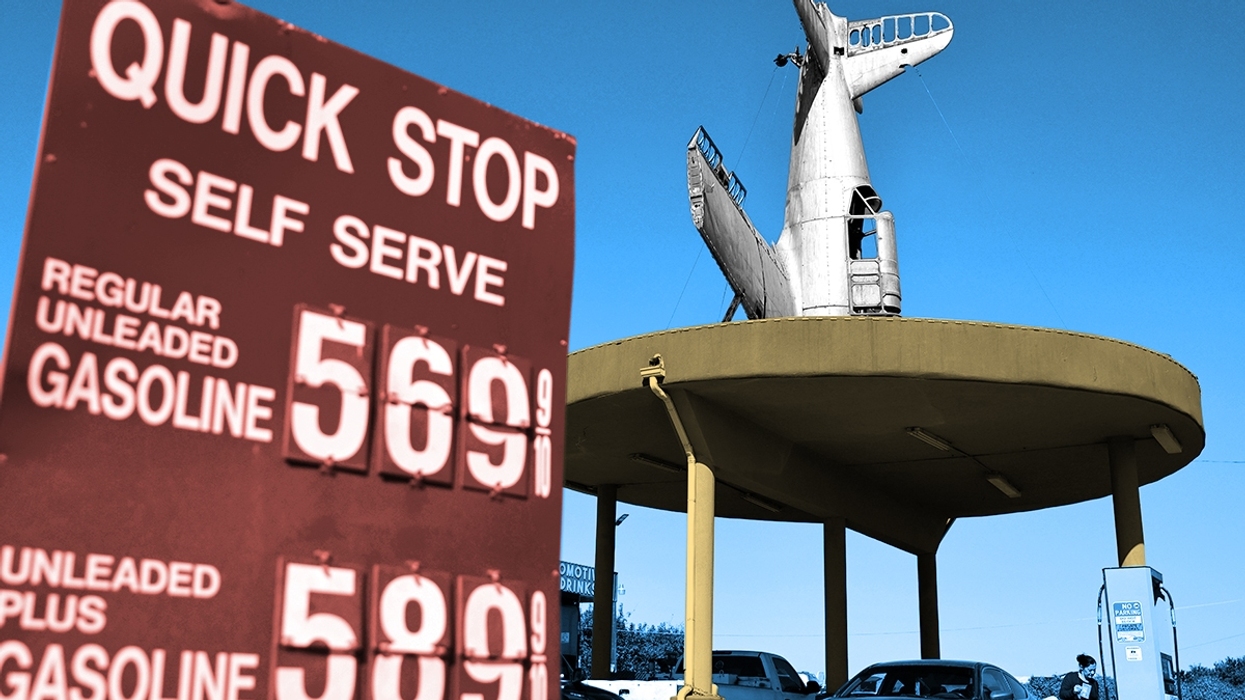
It was a seismic national shift to the left, spurred in no small part by voters’ opposition to infrastructure supporting artificial intelligence and anger over rising gas and electricity prices, particularly since Trump launched a war on Iran.
In an election widely seen as a referendum on Trump, Democrats trained their fire on the administration’s energy policies. Those include its moves to eliminate landmark climate regulations, its oversight of the U.S. buildout of data centers, its legally dubious deals to kill offshore wind farms, and repeals or redirections of funding for decarbonization.
Much of what the next Congress focuses on when it comes to energy policy hinges on what happens with the Bipartisan American Affordability and Jobs Act, the permitting reform bill that has dominated Washington dealmaking discussions since the Senate unveiled the legislation at the end of September.
But key provisions in two of the most significant energy laws enacted in the past six decades — the Infrastructure Investment and Jobs Act of 2021, better known as the Bipartisan Infrastructure Law, and the Energy Act of 2020 — have either expired or are set to lapse next year. Reauthorizing the bipartisan measures in both laws will offer a new, Democrat-led Congress the chance to push legislative priorities such as bringing back key subsidies for renewables in a bid to rebalance the country’s energy future following Trump’s AI-fueled gas bonanza. Candidates who flipped districts that previously voted for Trump also vowed to crack down on data centers, which strongly suggests that the party will back legislation to curb the artificial intelligence buildout.
What Democrats want to do
Among the top policies Democrats plan to champion next year on clean energy is the restoration of the investment and production tax credits for wind and solar, which Republicans axed in their signature budget bill last summer.
“There’s broad recognition and an active effort by Democrats to reinstate many things done away with in the One Big Beautiful Bill Act,” Evan Chapman, a former Democratic staffer on the Hill who now serves as the senior director of policy at the think tank Clean Tomorrow, told me.
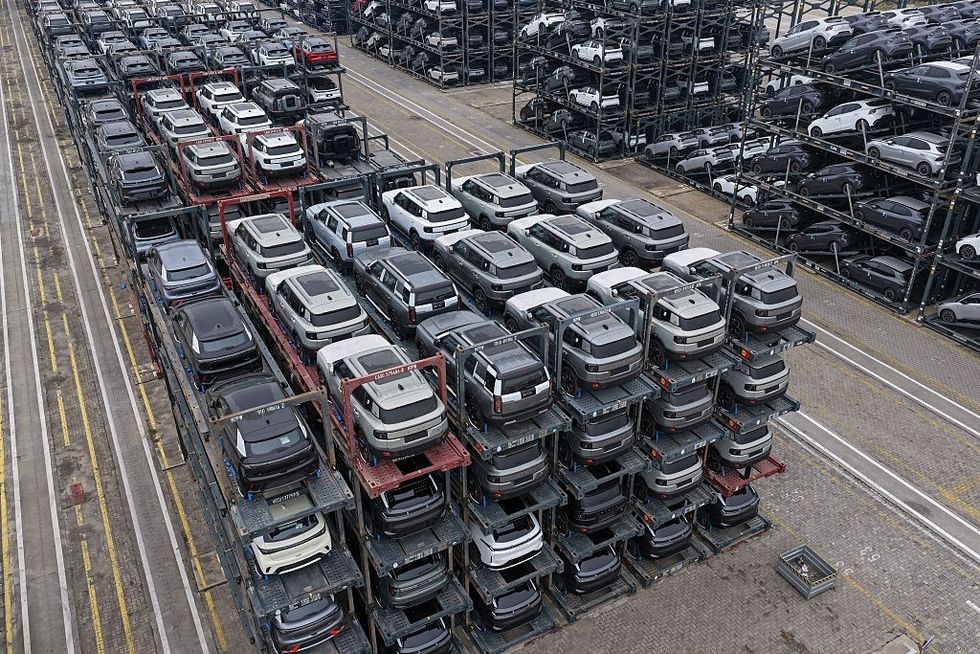
Bringing back the electric vehicle tax credit? Not so much. The provision in the 2022 Inflation Reduction Act gave a far larger write-off for cars made with batteries manufactured with domestically-produced minerals, giving a much-needed boost to U.S. miners. Yet the policy proved difficult to defend against populist anger over its benefits tilting largely toward wealthy drivers who bought electric vehicles as a second or third car.
The EV tax credit was another OBBBA casualty. Without that market signal, it seemed unlikely that all the decades-long mining and minerals projects proposed in the U.S. would find investors, illustrating what my colleague Matthew Zeitlin last year called the “paradox of Trump’s critical mineral crusade.”
But a battery boom is underway nevertheless, as large, standalone lithium-ion packs increasingly patch onto the grid to balance out supply over time, particularly in markets that generate a lot more solar and wind during the day than anyone can use.
“Batteries generally are an area of more and more confluence every day between Democrats and Republicans,” a source with direct knowledge of Democrats’ thinking who spoke on condition of anonymity to speak bluntly told me. “It’s unclear what anyone wants to do. Republicans don’t want to do more EV tax credits, but it could be a battery production tax credit that’s technology neutral.”
Asked whether such a policy could win GOP support, James Dozier, the chief executive of the Republican climate group Citizens for Responsible Energy Solutions, told me that anything that would boost domestic mineralsrepresented an area of broad agreement between the two parties. The Trump administration has strongly supported domestic mining and mineral processing as China retaliated against the president’s trade war by cutting off supplies of metals needed for weapons and batteries.
“Battery technology should be invested in,” he said.
Other bipartisan priorities with a high likelihood of legislative success include federal funding for or regulatory changes to make it easier to deploy geothermal energy, fusion, and nuclear fission.
Another top issue is the expansion of the Department of Health and Human Service’s Low Income Home Energy Assistance Program. Known as LIHEAP, the roughly $4 billion program provides funding to poor Americans struggling to pay utility bills in the winter. The program, administered through states, also funds home renovations to better insulate drafty houses and lower bills, offering a key tool to make good on Democrats’ promises to help rein in soaring utility costs. While Trump has proposed eliminating the program’s funding almost entirely, Congress ultimately added $20 million to LIHEAP’s budget in the last cycle.
The Democratic caucus is poised to include far-left hardliners such as New York’s Darializa Avila Chevalier, whose energy proposals range from a nationwide ban on data centers to calling on the federal government to take ownership stakes in more wind and solar projects. But the larger the Democratic majority, the less power the ideologues on the fringes can wield, Josh Freed, who heads the energy and climate program at the centrist Third Way think tank, told me.
“If Democrats get anywhere close to 230 seats, there’s going to be both a much bigger bloc of New Democrats and moderate Blue Dogs than there is in this Congress,” Freed said. “You’re going to see an agenda much more oriented around delivery and affordability than anything that’s more ideologically rooted.”
For example, he said, progressives may push for a national moratorium on data centers or a freeze on utility rates. “Those are things that won’t pass, but that you might see a handful of members who have a lot of leverage in a very narrow House try to move forward, along with Medicare for All and other issues that are dealing with energy,” Freed said. “But the more seats Democrats have, the more seats you’ll have that represent rural, energy-producing, and blue-collar constituencies. It’s going to be a much more all-of-the-above focus.”
What Democrats want to watch
The potential to pass bipartisan policies through a divided government over the next two years doesn’t mean it’s all kumbaya on the energy and climate front. Newly-enthroned Democratic committee chairs in the House are expected to hold hearings and open probes into a variety of actions by the Trump administration.
Few cuts at the Department of Energy stung quite as painfully as the Trump administration’s decision to terminate the Industrial Demonstrations Program, a $6.3 billion initiative designed to help commercialize emerging technologies to clean up heavy industry. The program funded 29 projects in its initial round, but former officials told me last year that just three looked likely to survive the Trump administration’s cuts. Meanwhile, the Chinese government expanded its own version of the program to more than 100 projects. Expect Democrats to start asking questions.
The billions of dollars in deals the Trump administration has promised to companies that surrender their federal leases for offshore wind projects are already facing legal challenges as states such as New York and California advance lawsuits. These policies are also poised for congressional oversight.
Likewise, the Energy Department’s effort to redirect federal spending earmarked to support decarbonization is ripe for a probe by Democrats. Specifically, lawmakers are expected to query the agency’s use of a $500 million grant to steelmaker Cleveland-Cliffs to support the relining of a coal-fired blast furnace at its Ohio mill rather than the construction of cleaner iron-making equipment at the plant.
One more area set to draw scrutiny is Trump’s move to bring previously independent agencies — the Nuclear Regulatory Commission and the Federal Energy Regulatory Commission — under direct White House control.
“There’s going to be a lot more demand that these independent agencies regain their independence,” Paul Dickman, a former nuclear regulator who served in the George W. Bush and Obama administrations, told me. “Be that FERC, be that the NRC.”
In a statement late Tuesday night, the Sierra Club said its members had “organized, phonebanked, and knocked doors for these candidates up and down the ballot,” and now expected Democrats to “take ambitious action for the climate and our democracy.” The latter, the group made clear, meant going after the White House.
“They must hold the Trump administration accountable for its corruption and unlawful attempts to sacrifice the health and safety of our communities,” Sierra Club Executive Director Loren Blackford said, “and invest in a clean energy future for all of us.”
Editor’s note: This story has been updated to reflect the change in Senate control.



 W-what more can I say? W-wheezing in LA. ROBYN BECK/AFP via Getty Images
 Beep beep. CFOTO/Future Publishing via Getty Images