Current conditions: The heat dome in the Southwest is so widespread that 70 million people are experiencing temperatures that bump up against records for this time of year • A Hawaii-linked atmospheric river known as the Pineapple Express is poised to deluge the Pacific Northwest with rain • A moderate geomagnetic storm alert is in effect due to coronal mass ejections, bursts of plasma and magnetic fields from the Sun that cause disruptions to satellites, radio signals, and GPS.
THE TOP FIVE
1. Projectile lands near Iranian nuclear power plant
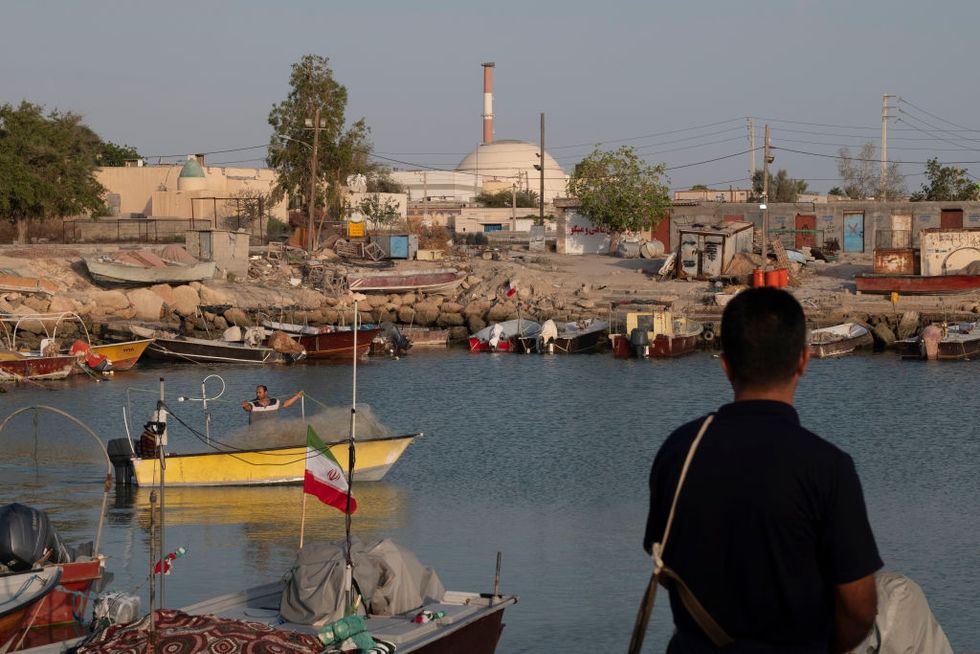
 Fishermen near the Bushehr Nuclear Power Plant. Morteza Nikoubazl/NurPhoto via Getty Images
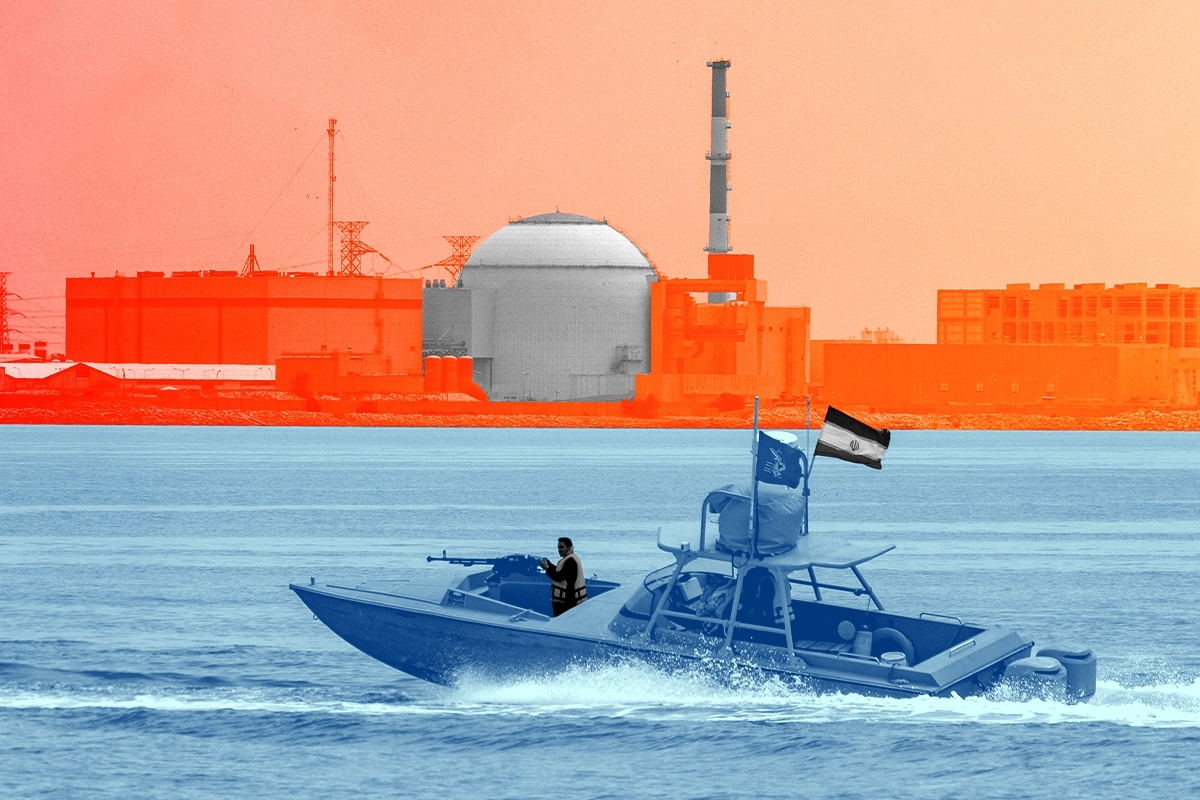
Once again, war has come uncomfortably close to a civilian nuclear power station. But on Wednesday, the International Atomic Energy Agency warned that a missile landed roughly three football fields away from Iran’s Bushehr Nuclear Power Plant. Located on a peninula jutting into the Perisan Gulf, the single-unit station — built with a Russian reactor that came online south of Tehran in 2013 — is Iran's first and only active nuclear station. “Although there was no damage to the reactor itself nor injuries to staff, any attack at or near nuclear power plants violates the seven indispensable pillars related to ensuring nuclear safety and security during an armed conflict and should never take place,” Rafael Mariano Grossi, the IAEA’s director general, said in a statement. The Zaporizhzhia nuclear plant in eastern Ukraine similarly became a scene of intense combat during the early days of the Russian invasion. Grossi visited the front lines at the time and helped oversee the safe shutdown of Europe’s largest nuclear power plant. It’s sitting idle today, still under Russian occupation.
The price of oil and natural gas, meanwhile, soared on Thursday as Iran launched drone attacks on energy facilities in Kuwait, Saudi Arabia, and the United Arab Emirates. President Donald Trump said Wednesday night that he had warned Israel to end attacks on Iran’s South Pars gas field. But if Tehran “unwisely” decided to attack Qatar, the U.S. will “massively blow up the entirety of the South Pars Gas Field at a moment of strength and power that Iran has never seen or witnessed before.” In a post on X, Emma Ashford, a senior fellow at the Stimson Center, warned: “We’re now getting into the tail-end scenarios that usually only merit a sentence at the end of a paper, they’re so unlikely and disastrous.”
2. Chinese automakers are preparing for a rapid North American rollout
In January, Canada reversed years of trade policies to protect its shared automotive industry with the United States from fast-rising Chinese competitors, slashing tariffs to start phasing in imports. To start, Politico reported, Chinese companies can import 49,000 vehicles each year at a tariff rate of 6%. Over five years, annual imports could grow to 70,000 vehicles. At least three Chinese automakers are laying the groundwork to enter the Canadian market as soon as this year, according to an Automotive News report this month citing an advisory firm brokering discussions between Chinese manufacturers and Canadian car dealers.
Chinese electric vehicles are booming across the world in part due to the enormous scale at which the companies can deploy their technologies. “BYD is really a great example of that. They invest so much in R&D that it’s really hard to compete with them on some of these things,” Ilaria Mazzocco, the deputy director and senior fellow with the Trustee Chair in Chinese Business and Economics at the Center for Strategic and International Studies, told Heatmap’s Robinson Meyer on an episode of Shift Key in December.
3. Ormat and Fervo raise a combined $1.3 billion
Ormat Technologies is, to put it in the parlance of today’s youth, the “unc” of geothermal, a seasoned player that’s been around for far longer than the upstarts but has found ways to vibe with the new entrants to its industry. But as interest heats up (forgive the pun) in geothermal, the Nevada-based subsidiary of an Israeli company is raising money to invest in an expansion. On Wednesday, the company pulled in $875 million in its latest fundraise as investors piled onto what was originally announced as a $750 million transaction. While much of the hype around geothermal has focused on next-generation companies that promise to expand the reach of the energy source by tapping into dry hot rocks, conventional resources — underground hydrothermal reservoirs that can be drilled into — are generating more excitement as investors look to deploy new sources of clean power as quickly as possible to meet surging electricity demand. (Read the 101 explainer Heatmap’s Matthew Zeitlin wrote on different forms of geothermal power last year.) “Rather than being treated purely as a niche renewable segment, geothermal is increasingly positioned as: A source of firm, dispatchable power, a complement to variable renewables, and a potential solution for growing electricity demand, including from data centers,” Alexander Richter, the founder of the geothermal trade publication ThinkGeoEnergy, wrote on Wednesday. “At the same time, the Ormat transaction highlights that capital is flowing first to de-risked, scalable platforms, rather than uniformly across the sector.”
That doesn’t mean the darling of next-generation geothermal, Houston-based Fervo Energy, isn’t still the industry’s big magnet for investment. On Thursday, the company announced the close of a $421 million round of non-recourse debt financing to fund the first phase of its flagship Cape Station power plant. Non-recourse financing is a deal structure in which lenders rely entirely upon cash flow from the project to pay back the money used to build it, shielding investors from liability if something goes wrong. “Non-recourse financing has historically been considered out of reach for first-of-a-kind projects,” David Ulrey, Fervo Energy’s chief financial officer, said in a statement. “Cape Station disrupts that narrative.” The project in Beaver County, Utah, is set to deliver its first power to the grid later this year, and reach 100 megawatts of operating capacity in early 2027.
Sign up to receive Heatmap AM in your inbox every morning:
4. Trump’s Homeland Security nominee vows to reverse Kristi Noem’s FEMA policies
Oklahoma Senator Markwayne Mullin, the Republican President Donald Trump nominated to lead the Department of Homeland Security, said he would “absolutely” repeal a policy the agency’s outgoing chief, Kristi Noem, adopted to throttle the Federal Emergency Management Agency. Since June, Noem has required that her office approve any contracts or grants of $100,000 or over, creating what The New York Times called “significant delays and uncertainty for disaster-struck states and communities waiting for recovery assistance.” The policy delayed FEMA projects by at least three weeks, according to an investigation Senate Democrats released this month. “That’s called micromanaging,” Mullin said at a confirmation hearing on Capitol Hill. “I’m not a micromanager.”
5. GE Vernova conducts the world’s first test of powering a gas turbine with ammonia
What will become of all the gas turbines deployed today if ever there is a meaningful penalty in our economy for emitting planet-heating pollution? For a long time, developers have promised to eventually swap fossil gas for green hydrogen, which remains expensive today. But many models require at least some hardware tweaks to switch between fuels. That’s what makes this latest news from U.S. energy giant GE Vernova and the Japanese firm IHI so interesting. The two companies announced the world’s first successful demonstration of 100% ammonia combustion in an industrial-scale F-class gas turbine. Low-free ammonia can be produced by combining green hydrogen with nitrogen. Hydrogen Insight reported that GE and IHI plan to deploy the technology commercially by 2030.
THE KICKER
Tidal power is geographically limited. But unlike other sources of renewable power, it’s predictable and could, proponents say, play a role in balancing the grid. In the Faroe Islands, the tidal energy developer Minesto has started pumping electricity from its 100-kilowatt microgrid-scale power generation onto the Faroese grid. The Swedish firm told Offshore Energy operations will continue through spring and summer in the autonomous Danish island territory.


 Fishermen near the Bushehr Nuclear Power Plant. Morteza Nikoubazl/NurPhoto via Getty Images