Current conditions: The heat wave driving temperatures into the triple digits in the Southwest is moving northward to the Mountain West • Temperatures in Timbuktu are forecast to hit 115 degrees Fahrenheit as Mali devolves into a civil war between the government and Islamist militants • Malé, the Maldives’ densely packed island capital often called the Manhattan of the Indian Ocean, is facing days of intense thunderstorms.
THE TOP FIVE
1. South Korea is coming to help the U.S. build reactors again
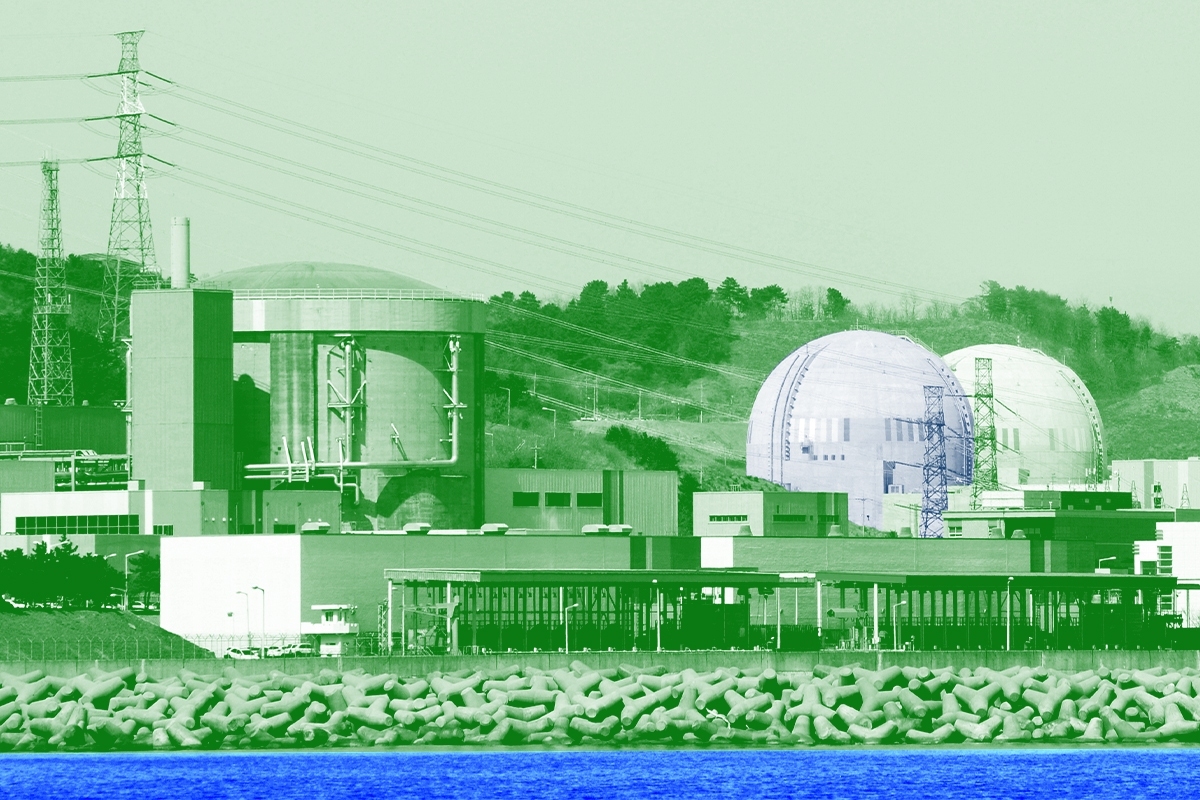
Ever since South Korea built the United Arab Emirates’ first nuclear plant as close to on time and on budget as any democratic country has come in recent years, the East Asian nation has been considered one of the only real rivals to China and Russia on construction of new fission reactors. That’s in no small part because many American engineers whose projects dried up in the late 20th century took their skills there, building out more than two dozen commercial reactors and helping to vault Seoul to the vanguard of technological civilizations. Recently, Washington has wanted to re-shore that nuclear knowhow and learn the new project management tricks perfected by South Korea’s state-owned nuclear firm. But Korea Hydro & Nuclear Power’s flagship reactor mirrors the technology covered under the U.S. nuclear giant Westinghouse’s intellectual property. The yearslong standoff between the two companies came to a head last year with a global settlement that, in a controversial move, barred the Koreans from competing against Westinghouse on projects in Europe or North America. Still, the Trump administration has been trying to court Korean investment in the U.S. nuclear sector.
Now it’s coming closer. On Tuesday, KHNP inked a memorandum of understanding with the nuclear division of U.S. utility giant Southern Company to work together on engineering atomic power stations. It’s not a financing deal. Signed at KHNP’s headquarters in Gyeongju, the companies said the partnership would involve technology exchanges, workshops, and sharing best practices. “This agreement is expected to serve as an opportunity for KHNP engineers to expand their horizons globally and provide a growth chance for the domestic engineering system to take a leap forward,” Kim Young-seung, the head of KHNP’s engineering division, World Nuclear News. “We will continue to do our utmost to complete the Korean-style engineering system through close cooperation with overseas operators and international organisations.”
2. EPA proposes letting data centers and power plants start construction without air permits
The Environmental Protection Agency has come up with a new way to speed up construction of data centers, power plants, and other industrial facilities: Let them start building before they obtain required federal air permits. The proposal would “bring flexibility to building non-emitting components or structures,” including cement pads and wiring, piping, and support structures. “Today’s proposal works to provide solutions to issues that have held up critical American infrastructure and advance the next great technological forefront,” EPA Administrator Lee Zeldin said in a statement. “Through commonsense permitting reform, the Trump EPA is fixing the broken system of government interference, while continuing to uphold our core mission to protect human health and the environment.”
3. Transformers are now backordered four years
Surging demand and shortages of raw materials are pushing lead times for high-capacity electrical transformers to as long as four years, PricewaterhouseCooper analysts said at a Reuters event this week. Demand for step-up transformers, which increase the voltage of electricity as it travels across power lines, increased by 274% between 2019 and 2025, while demand for substation transformers soared by 116%. Prices for essential components, meanwhile, have jumped by roughly 80% in five years. As a result, according to PV magazine, some firms are now paying premiums for production slots on projects that aren’t even finalized yet, while others buy refurbished as a stopgap until newer units arrive.
Transformers aren’t the only grid equipment attracting investment. Just this morning, TS Conductor, a manufacturer of advanced conductors that can bolster the capacity of existing power lines, announced the grand opening of its newest factory in South Carolina. The $134 million facility is now “poised to strengthen U.S. domestic supply chains as utilities work toward building a stronger, higher-capacity, more-efficient power grid — all with the speed that American industry needs and the affordability that American ratepayers deserve,” the company said.
Sign up to receive Heatmap AM in your inbox every morning:
4. Trump installs his fourth FEMA chief since taking office
The Trump administration has removed the acting head of the Federal Emergency Management Agency, replacing the political appointee with a 30-year agency veteran who held senior positions in several previous administrations. On Tuesday, E&E News reported that the exit of Karen Evans, a political appointee put in charge of the embattled agency in December, would be the third such departure since President Donald Trump returned to the White House. Her temporary replacement as acting administrator is Robert Fenton, who began work as a regional administrator in 1996 and held the acting chief job twice under the first Trump and Biden administrations — for six months in 2017 and four months in 2021. “I know this year has been challenging for many across the agency,” Fenton wrote in a staff memo Tuesday, a copy of which the newswire obtained.
FEMA has struggled under Trump. As I told you last summer, the agency cracked down aggressively on internal dissent from staffers. Meanwhile, the funding shutdown at the Department of Homeland Security, where FEMA is housed alongside Immigration and Customs Enforcement, “starved” local disaster responses, Heatmap’s Jeva Lange reported in February..
5. Alsym Energy inks a major deal for sodium-ion batteries
Alsym Energy, as Heatmap’s Katie Brigham reported last year, “thinks it can break the U.S. battery manufacturing curse.” And not just by besting the incumbents already producing the market’s lithium-ion packs, but actually commercializing a whole new type of battery chemistry that instead relies on cheaper and far more abundant sodium as the main energy carrier. On Tuesday, the Massachusetts-headquartered startup inked a deal with the renewable developer Juniper Energy to deploy 500 megawatt-hours of Alsym’s battery systems in California. The deal, the companies said in a press release, “marks a significant shift away from fire-prone lithium-ion dependencies, prioritizing safety, domestic production, and operational efficiency in some of the United States’ most demanding climates.”
THE KICKER
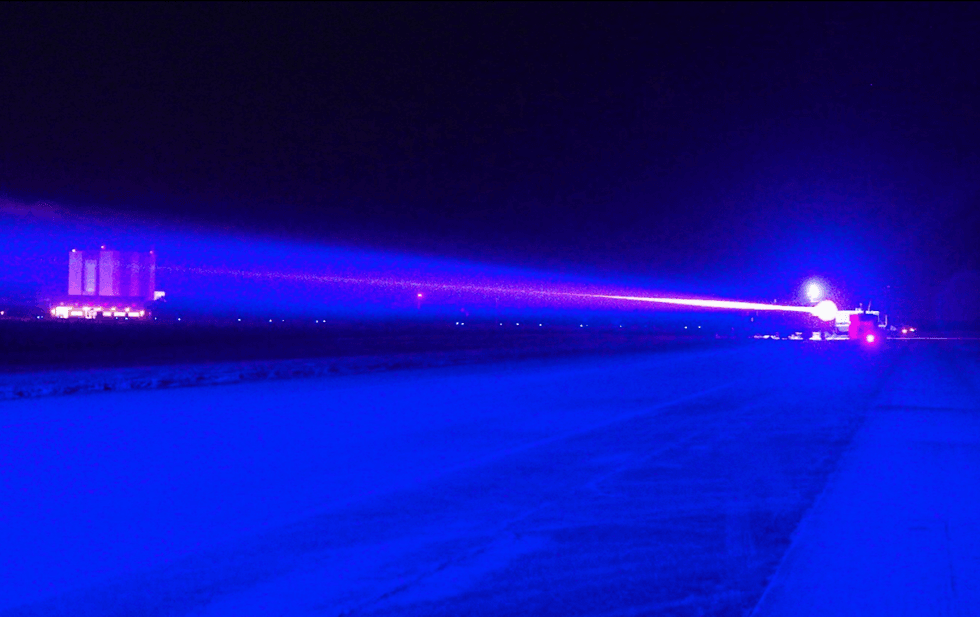
 Star Catcher transfers energy down Space Florida’s Launch and Landing Facility to commercial off-the-shelf solar panels commonly found on spacecraft. Star Catcher Industries
If you thought building batteries or transformers was tricky, how about an electricity distribution network in space? That’s what Star Catcher Industries is promising to do. The Jacksonville, Florida-based startup said Tuesday it had raised $65 million in an oversubscribed Series A round. The investment — led by venture capital firms B Capital, Shield Capital, and Cerberus Ventures — brings Star Catcher’s total capital raised so far to $88 million. Founded less than two years ago, the company is developing space-based infrastructure that can deliver electricity on demand to satellites and spacecraft using optical power beaming, a wireless technology involving high-intensity laser light. “This investment underscores the conviction that orbital infrastructure is now as fundamental as terrestrial infrastructure,” Andrew Rush, co-founder and chief executive of Star Catcher, said in a statement. “Every major application driving the space economy — connectivity, computing, security, sensing — is power-limited today. Star Catcher is lifting that ceiling — making it possible to build in orbit at the scale the next century of life on Earth will demand.”
Editor’s note: This story has been updated to correct the location of Terrapower’s isotope plant.


 Star Catcher transfers energy down Space Florida’s Launch and Landing Facility to commercial off-the-shelf solar panels commonly found on spacecraft. Star Catcher Industries


 A hot deal. Joe Raedle/Getty Images