Current conditions: Upstate New York and New England are facing another 2 inches of snow • A heat wave in India is sending temperatures in Gujarat beyond 100 degrees Fahrenheit • Record-breaking rain is causing flash flooding in South Australia, New South Wales, and Victoria.
THE TOP FIVE
1. Clean energy stocks aren’t seeing a boost yet from the war in Iran
The war with Iran is shocking oil and natural gas prices as the Strait of Hormuz effectively closes and Americans start paying more at the pump. “So despite the stock market overall being down, clean energy companies’ shares are soaring, right?” Heatmap’s Matthew Zeitlin wrote yesterday. “Wrong. First Solar: down over 1% on the day. Enphase: down over 3%. Sunrun: down almost 8%; Tesla: down around 2.5%.” What’s behind the slump? Matthew identified three reasons. First, there was a general selloff in the market. Second, supply chain disruptions could lead to inflation, which might lead to higher interest rates, or at the very least slow the planned cycle of cuts. Third, governments may end up trying “to mitigate spiking fuel prices by subsidizing fossil fuels and locking in supply contracts to reinforce their countries’ energy supplies,” meaning renewables “may thereby lose out on investment that might more logically flow their way.”
The U.S. liquified natural gas industry is certainly looking at boom times. U.S. developers signed sale and purchase agreements for 40 million tons per year in 2025 from planned export facilities, according to new Department of Energy data the Energy Information Administration posted. That’s the highest volume since 2022, when Russia’s invasion of Ukraine sent demand for American LNG soaring. That conflict, too, is still having its effects on global fossil fuel supplies. A Russian-flagged LNG tanker is on fire in the Mediterranean Sea as the result of a drone strike by Ukraine, The Independent reported Wednesday.
2. Aluminum supplies stung by the conflict
It’s not just fossil fuels. Qatari smelter Qatalum started shutting down on Tuesday as 50% shareholder Norsk Hydro issued a force majeure notice to customers. “The decision to shut down was made after the company’s gas supplier informed it of a forthcoming suspension of its gas supply,” the company said in a statement to Mining.com. QatarEnergy — which owns 51% of Qatalum’s other shareholder, Qatar Aluminum Manufacturing Co. — had previously suspended production after halting output of natural gas due to Iranian drone attacks.
Sign up to receive Heatmap AM in your inbox every morning:
3. Solar manufacturer in South Carolina suffers chemical spill
Panel manufacturer Silfab Solar paused production at its South Carolina factory in Fort Mill after a chemical spill triggered a regulatory investigation. The plant accidentally spilled approximately 300 gallons of a water solution containing less than 0.3% potassium hydroxide. Experts told WCNC, the Charlotte-area NBC News affiliate, that the volume of the caustic chemical that spilled will be harmless. But the state Department of Environmental Services “asked Silfab to cease receipt of additional chemicals at their facility until an investigation is complete.” Such accidents risk political backlash at a time of heightened public health anxiety over clean energy technologies. As Heatmap’s Jael Holzman wrote last summer, the Moss Landing battery factory fire sparked a nationwide backlash.
4. Leases signed for the world’s largest floating offshore wind farm
Two-thirds of offshore wind potential is located at sites where the water is too deep for traditional turbine platforms. But the first wind farm with floating platforms only came into operation nine years ago. The largest so far, located in Norway’s stretch of the North Sea, is just under 100 megawatts. So, if completed, Spanish developer Ocean Winds’ in the United Kingdom would be by far the largest plant. The company took a step forward on the 1.5-gigawatt project when the company signed the lease agreement this week, according to OffshoreWIND.biz.
In Denmark, meanwhile, right-wing politicians are campaigning against the country’s offshore wind giant, Orsted. The country’s conservative Liberal party campaigned on divesting from the company, which claims the Danish government as its largest shareholder, back in 2022. Now, Bloomberg reported, the party is once against renewing its calls to exit Orsted after this year’s election.
5. Taiwan takes a big step toward reversing its nuclear phaseout
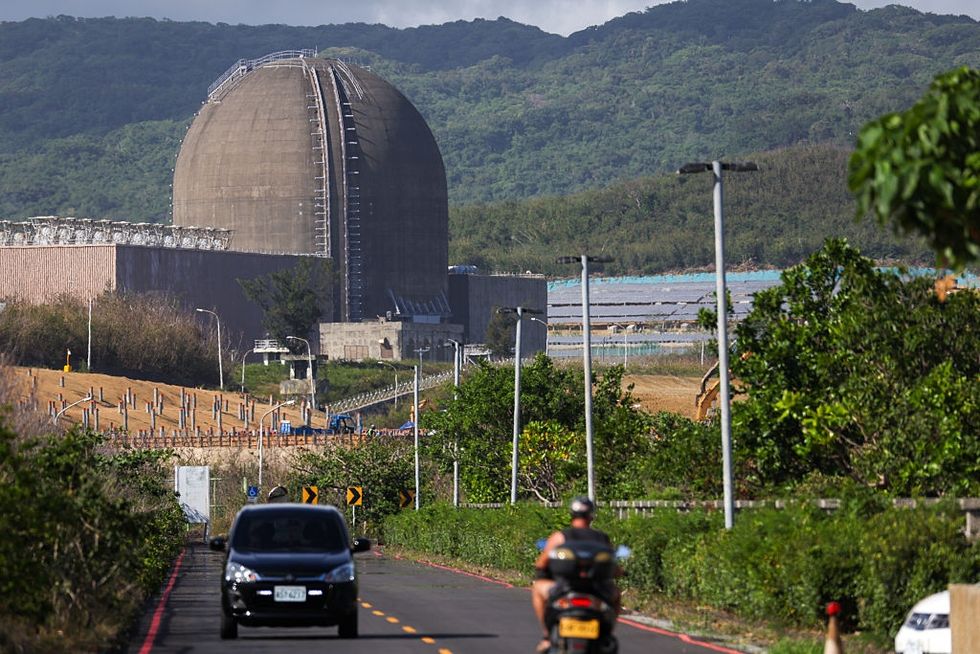
 The Maanshan nuclear plant in southern Taiwan.Daniel Ceng/Anadolu via Getty Images
Facing surging electricity demand and mounting threats of blackouts from Chinese attacks on energy imports, Taiwan is taking yet another step toward reversing its nuclear phaseout. Nearly a year after the island nation’s last reactor shut down, Taiwanese Premier Cho Jung-tai, a member of the ruling Democratic Progressive Party that has long opposed atomic energy, announced new proposals to allow the state-owned Taiwan Power Company to submit plans to restart at least two of the country’s three shuttered nuclear stations. (A fourth plant, called Lungmen, was nearly completed in the late 2010s before the DPP government canceled its construction.) The government report also said Taiwan may consider building new nuclear technologies, such as small modular reactors or fusion plants.
THE KICKER
In June 2023, thousands of lightning strikes in heat wave-baked Quebec sparked more than 120 wildfires that ultimately scorched nearly 7,000 acres of parched forests. Lightning, in fact, starts almost 60% of wildfires. Now a Vancouver-based weather modification startup called Skyward Wildfire says it can prevent catastrophic blazes by stopping lightning strikes through cloud seeding. MIT Technology Review found some good reasons to doubt the company’s claims. But experts said preventing wildfires is cheaper than putting them out, so it may have some merit.



 The Maanshan nuclear plant in southern Taiwan.Daniel Ceng/Anadolu via Getty Images