Venture capitalists love a system that fits inside a shipping container. But that kind of modularity has been hard to pull off in the low-carbon fuels industry, where producers have generally remained yoked to the prevailing wisdom of economies of scale as the key to profitability. That’s led to enormous, capital-intensive facilities packed with complex, custom-built machinery churning out fuels and chemicals like hydrogen, methane, and ammonia.
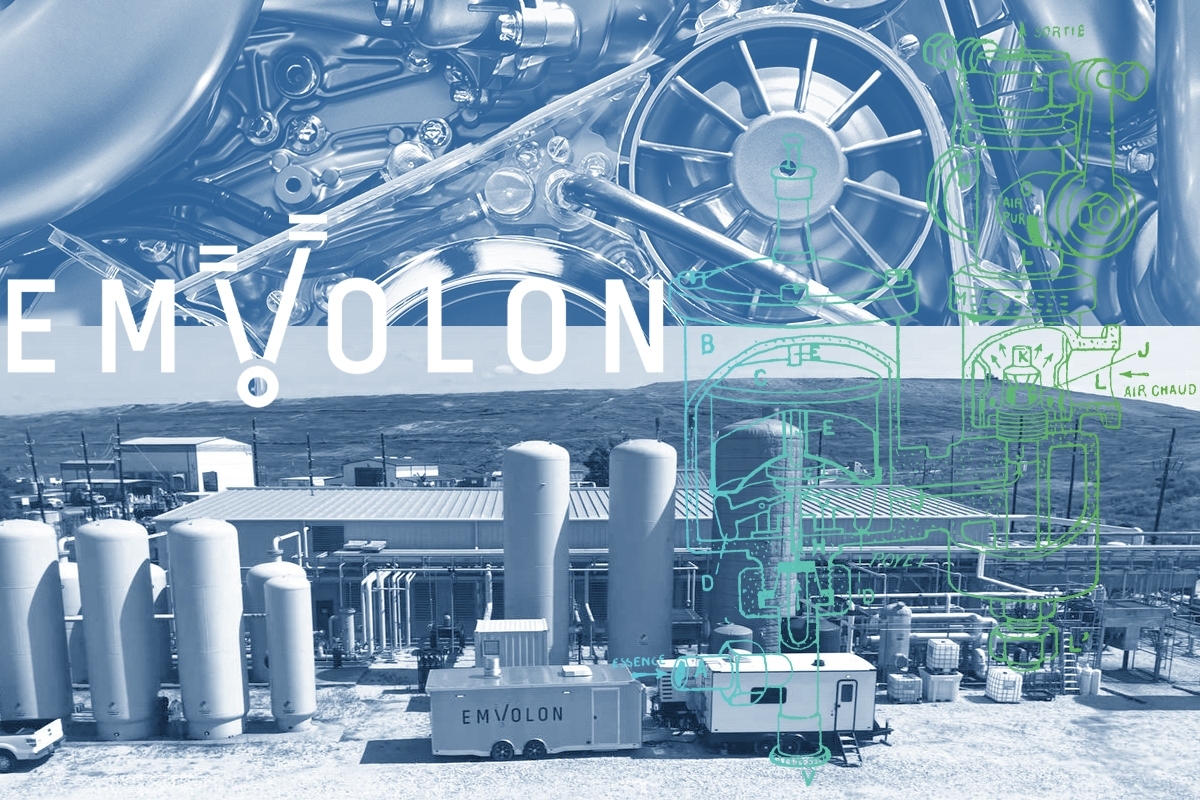
But Massachusetts-based startup Emvolon thinks it can upend this model with its compact, prefabricated chemical plants powered by the likes of repurposed car engines. Its modular systems convert methane captured from landfills and other sources into energy-dense liquid methanol on-site, making it easier to transport to customers. On Tuesday, the company announced $22 million in new funding — an undisclosed mix of Series A equity and non-dilutive federal and state grants — to build its first commercial-scale system at a landfill near Houston, in partnership with biogas company Montauk Renewables.
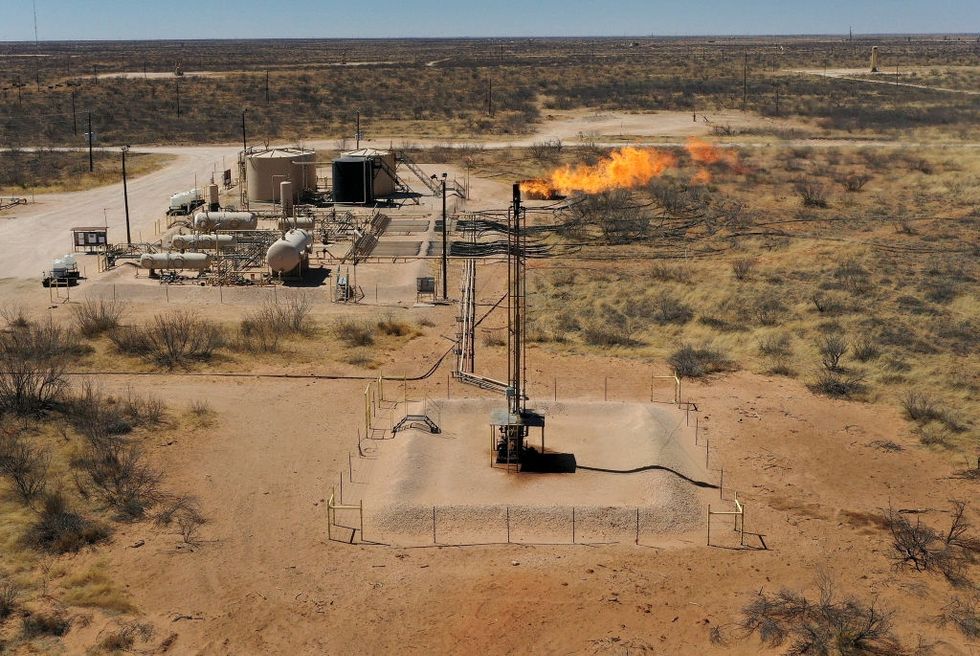
The approach aims to solve a persistent logistics problem. Economics dictate that commodity producers typically locate near a high-volume source of feedstock or a pipeline that can deliver it. But for captured methane — a potential feedstock for lower-carbon fuels, chemicals, and fertilizers — that’s often not an option. The potent greenhouse gas escapes from geographically dispersed landfills, farms, and wastewater treatment plants, many of which are too small to support a large gas-to-liquids facility and too far from existing pipelines. Trucking the gas to a centralized plant is generally prohibitively expensive, often leaving operators to either flare it or let it escape unabated.
“We are really kind of burning money, creating a lot of emissions when we could be capturing this and making high-value products,” Emmanuel Kasseris, Emvolon’s CEO, told me in an August conversation about the company’s technology, which it spun out of MIT.
“We really try to flip the script completely,” Kasseris said of the startup’s modular approach. Rather than one large facility, the company aims to produce “a few tons to maybe tens of tons per day” of methanol for the $40 billion global market. For comparison, conventional gas-to-liquid facilities can produce hundreds of times more product daily.
Emvolon’s technology is “engine agnostic,” running on repurposed engines from used cars and diesel generators as well as new builds modified for the startup’s purposes. The engines take in captured methane from landfills, farms, or gas-flaring sites. But instead of burning the fuel completely like a standard combustion engine, Emvolon limits the oxygen supply, triggering only partial combustion of the methane to produce a mixture of hydrogen and carbon monoxide known as syngas. The company then feeds that mixture into a conventional reactor, where a catalyst converts it into liquid methanol that can be shipped in standard tanker trucks.
The process requires relatively few modifications to standard internal combustion engines, Kasseris told me, thereby bringing the economics of mass production to small-scale chemical production. “You’re taking something that comes from an assembly line, you repurpose it — changing sensors, controls, simple things that require a lot of [intellectual property] but are not expensive — and you build the plant around it,” he explained. The goal is to offer customers a four-year payback period sans low-carbon fuel subsidies.
Emvolon is now attempting to push that logic a step further. For the second stage of the conversion process, the company is working to swap out its conventional reactor with another modified engine in order to “replace even more one-off process equipment” with mass-produced components. The Department of Energy’s Advanced Research Projects Agency–Energy awarded Emvolon a $2.3 million grant to develop this part of its system.
But the startup doesn’t need to have this additional piece of technology dialed in to start securing customers. In August, global commodities merchant Freepoint Commodities signed on as the startup’s primary buyer, securing priority rights to purchase at least $450 million worth of Emvolon’s biomethanol for use across maritime shipping, aviation, heavy transport, and specialty chemicals. The agreement also gives Freepoint priority rights to invest in or lend to future Emvolon projects, a provision Kasseris described as the anchor for the startup’s project financing platform.
The company’s first commercial projects are designed to produce up to 50,000 metric tons of biomethanol annually across multiple sites, with the Freepoint agreement structured to scale that output to 300,000 metric tons per year. Because each plant should cost only “a few million dollars,” Kasseris said, the company can spread out its risk rather than bet on “the half a billion dollar e-fuels plant” common to the alternative fuels industry. If one plant runs into trouble, the setback should be manageable, and the company can keep churning out and deploying its modular units elsewhere.
“This is great for scaling,” Kasseris told me. “It’s just very different. It’s just more boxes.”






 A hot deal. Joe Raedle/Getty Images